The Bright Blue Origin: Blue Origin’s Lunar Push and New Glenn Ambitions Heat Up This May
Blue In The News
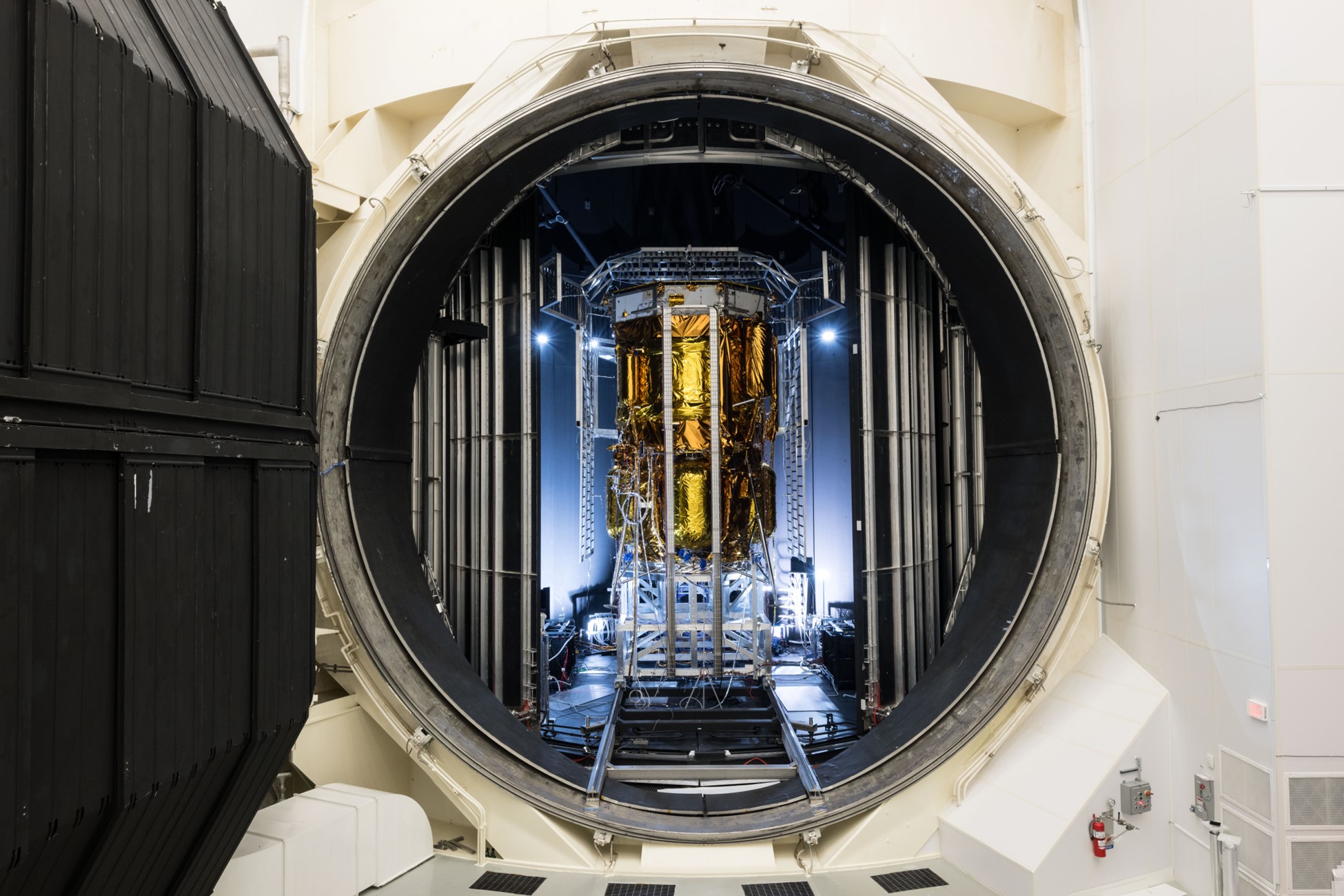
May 2026 finds Blue Origin deep in preparation for its most ambitious phase yet—simultaneously scaling its New Glenn launch system and advancing its lunar lander programme in support of NASA’s Artemis campaign. The company’s uncrewed Blue Moon MK1 lander, also known as Endurance, recently wrapped up thermal vacuum testing at NASA Johnson Space Center’s Chamber A. This critical milestone validated the lander’s structural and thermal integrity under simulated space conditions and represents a major step toward its planned launch later this year to the lunar South Pole.
Endurance will carry two NASA payloads under the Commercial Lunar Payload Services (CLPS) initiative: the Stereo Cameras for Lunar Plume-Surface Studies and a Laser Retroreflective Array. These instruments aim to capture high-resolution imagery of engine plume interactions with the lunar surface and improve orbital navigation accuracy—key data for future human landings.
In parallel, Blue Origin is hard at work on its Mars ambitions. CEO Dave Limp spotlighted the company’s Mars Telecommunications Network concept in mid-May, touting its compatibility with NASA’s existing Electra UHF radio and ability to support rovers like Curiosity and Perseverance. A follow-up tweet outlined plans for a Mars Telecommunications Orbiter based on Blue Origin’s Blue Ring platform, capable of carrying up to 500 kg of science instruments—including ESCAPADE-class spacecraft or CubeSats—while providing vital relay services.
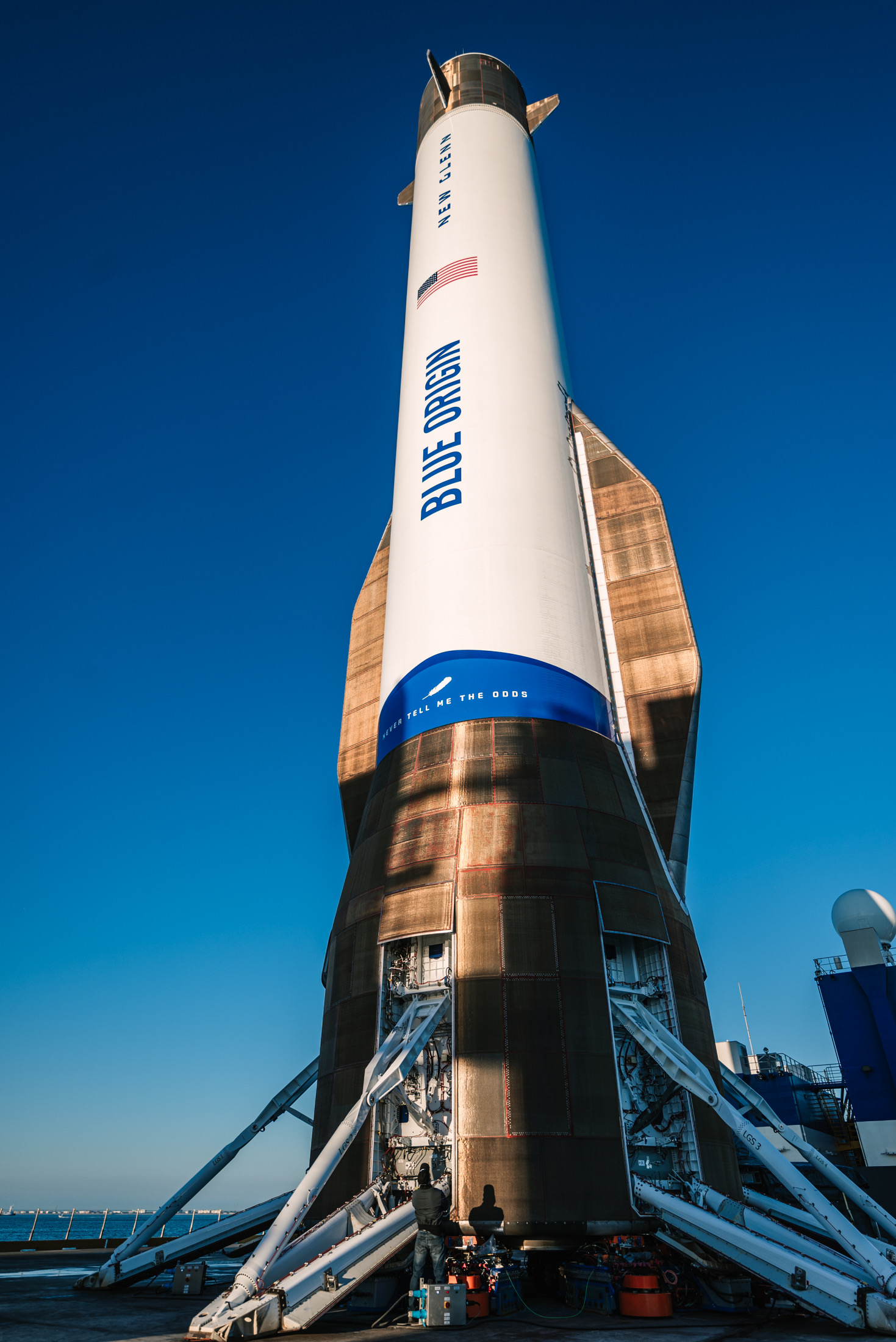
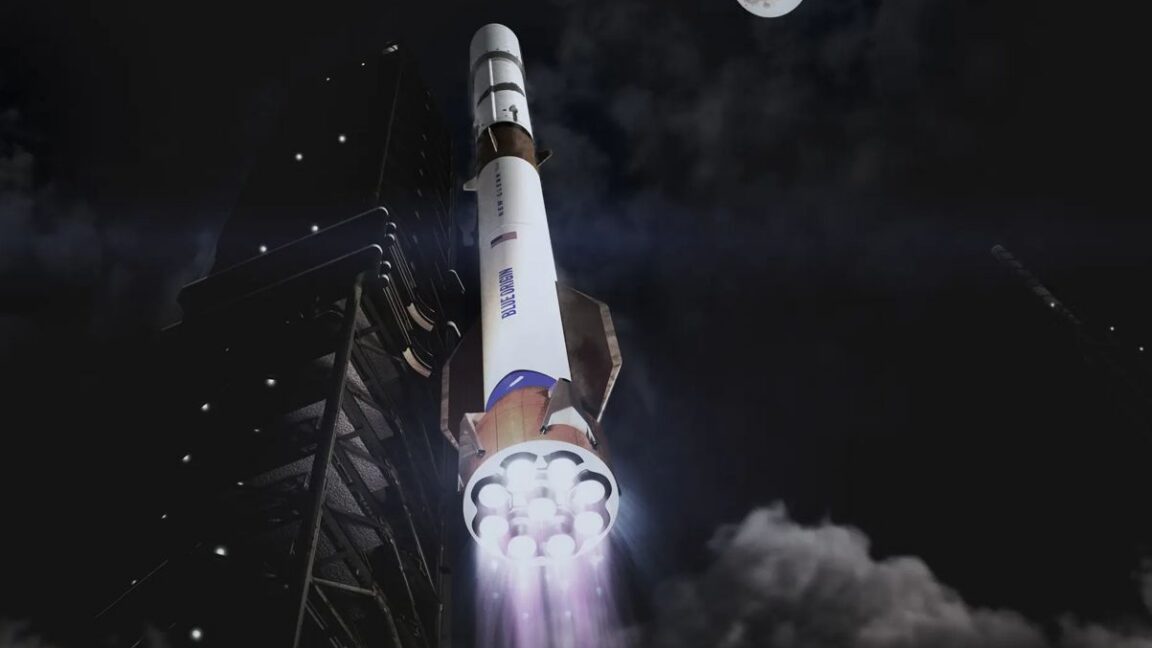
On the infrastructure front, Blue Origin is staffing up for scale. A recent job posting for a “Senior Manager of Gen 2.0 Tank Fabrication” revealed internal targets of producing 60 New Glenn 9×4 rockets annually by 2028. While ambitious—especially given that New Glenn has only flown three times since its 2025 debut—the goal signals serious intent. The 9×4 variant, featuring a more powerful upper stage with four BE-3U engines (nicknamed “Quattro”), is slated to support lunar missions and could debut as early as 2027.
Bright Blue Updates
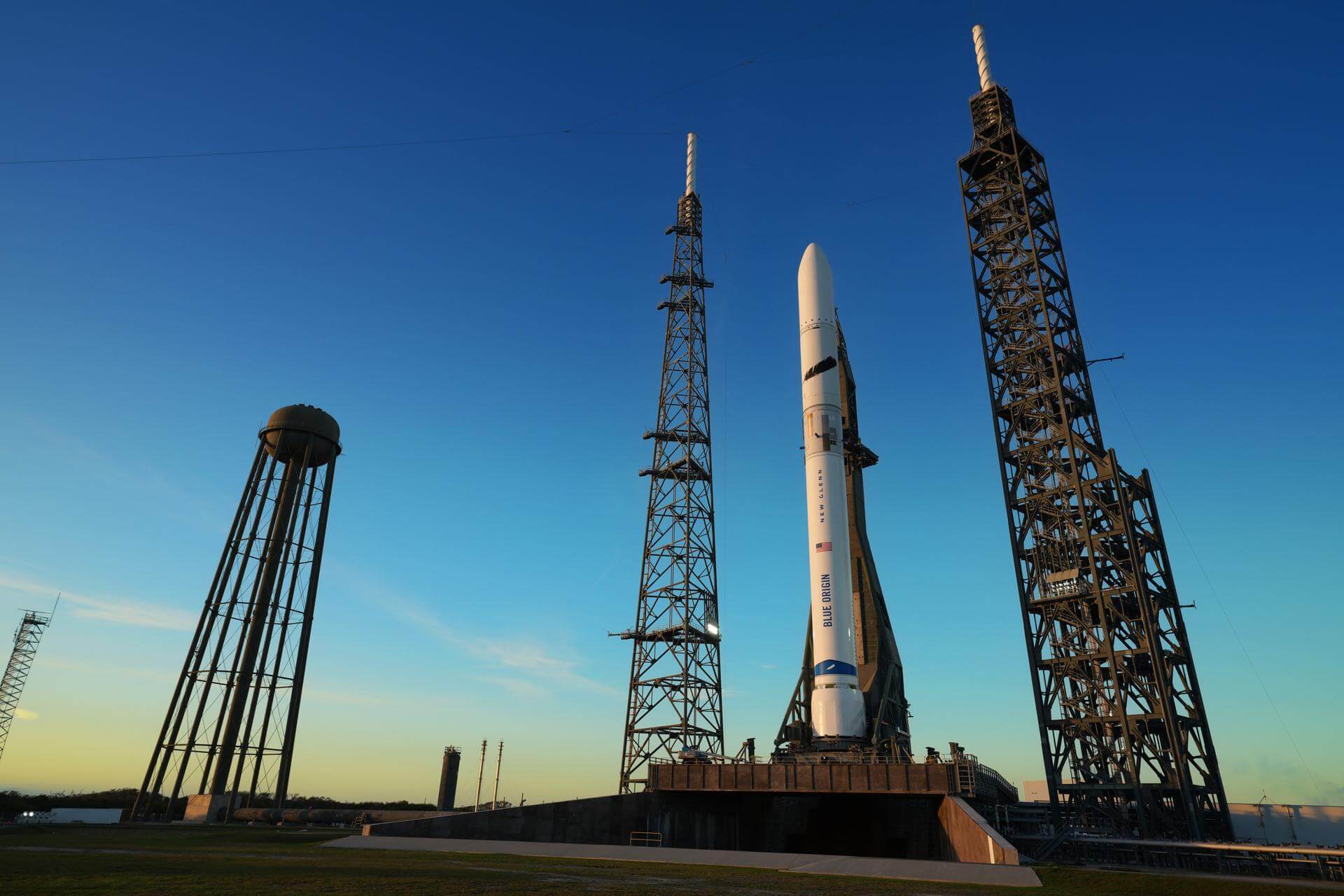
Blue Origin’s New Glenn rocket completed its third mission in April 2026, marking a mixed success. While the first stage landed nominally—an encouraging sign for reusability—the upper stage experienced an anomaly during its second burn, preventing the payload (for AST SpaceMobile) from reaching its target orbit. CEO Dave Limp acknowledged the shortfall in a 20 April tweet, noting that early data pointed to insufficient thrust from one of the BE-3U engines. An ongoing FAA-overseen investigation aims to return New Glenn to flight swiftly.
Despite the hiccup, Blue Origin is pushing forward with recovery innovations. On 1 May, Limp shared video of the fairing’s controlled re-entry during the NG-3 mission, highlighting the use of an exo-atmospheric reaction control system (RCS). The company plans to attempt parachute-assisted fairing recovery later this year, which could further reduce launch costs.
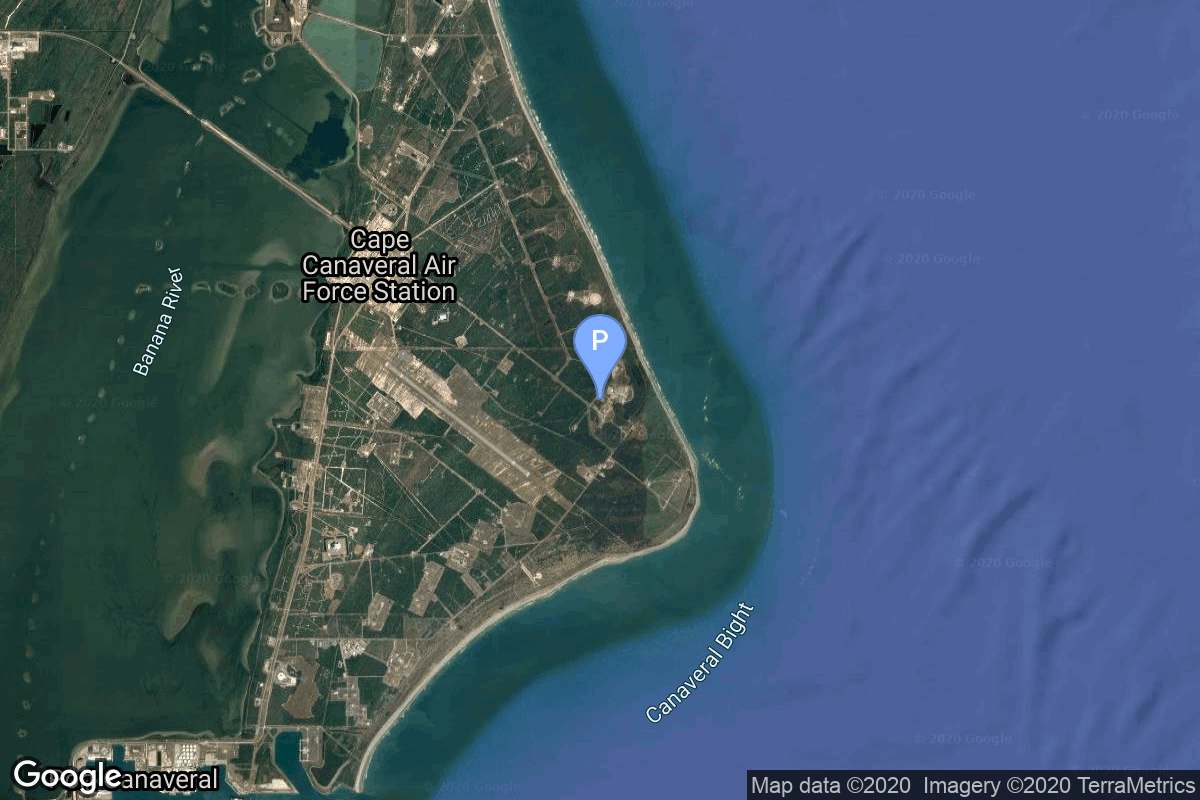
Looking ahead, Blue Origin has not yet announced a firm date for its next New Glenn launch. However, given the company’s recent pace—launches in January, November 2025, and April 2026—a mid- to late-summer mission appears plausible. No launch is currently scheduled within the next 30 days, but teams at Launch Complex 36 in Florida are actively preparing hardware, including Booster 3, nicknamed “No, It’s Necessary,” which was spotted rolling toward the integration facility in early May.
Meanwhile, testing continues on key subsystems. On 24 April, Blue Origin confirmed that BE-7 Flight Engine 3 had completed hotfire validation and would soon join the lunar lander engine fleet at “Lunar Plant 1” in Florida. This engine will power future Blue Moon landers, including the crewed MK2 variant intended to carry astronauts under Artemis.
The Internet Of Amazon
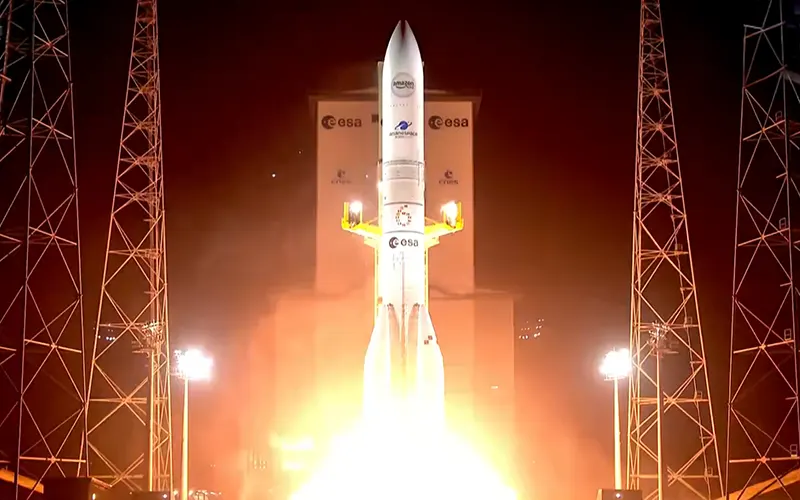
While Blue Origin focuses on New Glenn and lunar systems, its corporate sibling Amazon is accelerating deployment of its LEO satellite constellation. In late April and early May, Amazon launched 61 additional satellites via United Launch Alliance’s Atlas V and Arianespace’s Ariane 6, bringing its total in orbit to over 300. These missions—Leo Atlas 6 (29 satellites) on 27 April and Leo Europe 2 (32 satellites) on 30 April—were completed successfully and mark steady progress toward global broadband coverage.
Notably, none of these recent Amazon LEO launches used Blue Origin rockets. However, given New Glenn’s intended role as a heavy-lift workhorse, Canadian readers may soon see payloads from home—such as MDA-built components or Telesat equipment—hitch a ride once New Glenn’s manifest fills out. For now, Amazon relies on SpaceX, ULA, and Arianespace, with Vulcan Centaur and upgraded Ariane 64 variants coming online this year.
Blue Side Projects
Blue Origin is also expanding its international footprint. On 23 April, CEO Dave Limp welcomed Luxembourg’s Prime Minister Luc Frieden and U.S. Ambassador Feinberg to the grand opening of the company’s new Luxembourg office—a strategic move that aligns with Europe’s growing interest in lunar and cislunar infrastructure. The tweet from Blue Origin’s official account simply read “🇱🇺🤝🚀,” but the message was clear: the company is positioning itself as a global partner.
On the outreach front, Blue Origin launched a new podcast this month called Ascending Node, co-hosted by ULA CEO Tory Bruno and Blue Origin’s Tabitha Lipkin. The first episode dropped on 14 May and explores “the people, ideas, and breakthroughs building a road to space.” It’s an unusual collaboration given ULA and Blue Origin’s competitive roles in launch services, but it underscores the industry’s intertwined nature.
Finally, in a lighter moment, Jeff Bezos posted a tongue-in-cheek video on 4 May titled “Booster Parking Only,” showing New Glenn’s first stage neatly parked at the landing site—a playful nod to the company’s growing confidence in reuse. Between lunar landers, Mars concepts, and rocket refinements, Blue Origin’s 2026 is shaping up to be anything but subtle.

Citations
- “Blue Origin certainly has ambitious launch targets for New Glenn” – https://arstechnica.com/space/2026/04/blue-origin-certainly-has-ambitious-launch-targets-for-new-glenn/
- “Blue Origin Moon Lander Completes Testing at NASA Vacuum Chamber” – https://www.nasa.gov/missions/artemis/blue-origin-moon-lander-completes-testing-at-nasa-vacuum-chamber/
Blue Moon Pathfinder
Provider: Blue Origin
Date: September 30, 2026
Time: 12:00 AM UTC
Vehicle: New Glenn
First flight of Blue Origin’s Blue Moon MK1 lunar lander, MK1-SN001 “Endurance”.
Amazon Leo (New Glenn #1)
Provider: Blue Origin
Date: December 31, 2026
Time: 12:00 AM UTC
Vehicle: New Glenn
Amazon Leo, formerly known as Project Kuiper, is a mega constellation of satellites in Low Earth Orbit that will offer broadband internet access, this constellation will be managed by Kuiper Systems LLC, a subsidiary of Amazon. This constellation is planned to be composed of 3,276 satellites. The satellites are projected to be placed in 98 orbital planes in three orbital layers, one at 590 km, 610 km and 630 km altitude.
61 satellites will be carried on each New Glenn launch.
BlueBird Block 2 #4
Provider: Blue Origin
Date: December 31, 2026
Time: 12:00 AM UTC
Vehicle: New Glenn
AST SpaceMobile’s Block 2 BlueBird satellites are designed to deliver up to 10 times the bandwidth capacity of the BlueBird Block 1 satellites, required to achieve 24/7 continuous cellular broadband service coverage in the United States, with beams designed to support a capacity of up to 40 MHz, enabling peak data transmission speeds up to 120 Mbps, supporting voice, full data and video applications. The Block 2 BlueBirds, featuring as large as 2400 square foot communications arrays, will be the largest satellites ever commercially deployed in Low Earth orbit once launched.
This launch will feature 8 satellites.
Blue Moon Pathfinder Mission 2 & VIPER
Provider: Blue Origin
Date: December 31, 2027
Time: 12:00 AM UTC
Vehicle: New Glenn
2nd of the National Team’s Blue Moon MK1 lunar lander test missions to validate the necessary technologies for its HLS lunar module. Some of the life support hardware will travel on this mission in preparation for the first crew Blue Moon flight.
This mission will also carry NASA’s VIPER (Volatiles Investigating Polar Exploration Rover) lunar rover. VIPER is designed to explore the relatively nearby but extreme environment of the Moon in search of ice and other potential resources. This mobile robot will land at the South Pole of the Moon on a 100-day mission, in order to teach us about the origin and distribution of water on the Moon and help determine how we can harvest the Moon’s resources for future human space exploration.
VIPER is designed to roam the Moon using its three instruments and a 1 meter long drill to detect and analyze various lunar soil environments at a range of depths and temperatures. The rover can venture into permanently shadowed craters, some of the coldest spots in the solar system, where ice reserves have endured for billions of years.
The rover was originally slated to launch on Astrobotic’s Griffin Mission One lunar lander (with the Falcon Heavy rocket), but the VIPER mission was cancelled in July 2024 due to budget cuts. After consulting with the industry to find alternative ways to deliver the rover to the lunar surface, NASA ultimately chose to launch it with Blue Origin’s 2nd Blue Moon MK1 lander mission.