
The Daily Broadcast: From the Moon’s Far Side to Earth’s Fast Lane: A Record-Breaking Week in Space

Artemis II Crew Breaks Distance Record During Historic Lunar Flyby
On April 6, 2026, the Artemis II crew aboard the Orion spacecraft Integrity completed a historic lunar flyby—marking humanity’s first return to deep space with astronauts since 1972. The mission, which launched on April 1 aboard NASA’s Space Launch System from Kennedy Space Center, saw Commander Reid Wiseman, Pilot Victor Glover, Mission Specialist Christina Koch, and Canadian Space Agency astronaut Jeremy Hansen soar to a record-breaking distance from Earth.
At approximately 7:05 p.m. EDT on April 6, the crew surpassed the Apollo 13 distance record of 400,171 kilometres, becoming the farthest-traveling humans in history. During their 40-minute communications blackout while passing behind the Moon, they observed never-before-seen views of the lunar far side, including the massive Orientale basin. The crew also captured what may be the most distant “Earthrise” photograph ever taken—a preview of which NASA will release once full data downlinks are complete.
Orion’s European Service Module, built by Airbus for ESA, performed with remarkable precision, eliminating the need for two of three planned trajectory correction burns. Minor issues, including a clogged toilet vent line (resolved by solar thawing), were handled without impacting mission success. The crew is now on a return trajectory, with splashdown expected about nine days and one hour after launch—putting their return around April 10. A symbolic ship-to-ship call with the International Space Station is scheduled for the evening of April 8 UTC, the first such conversation since the Apollo era.
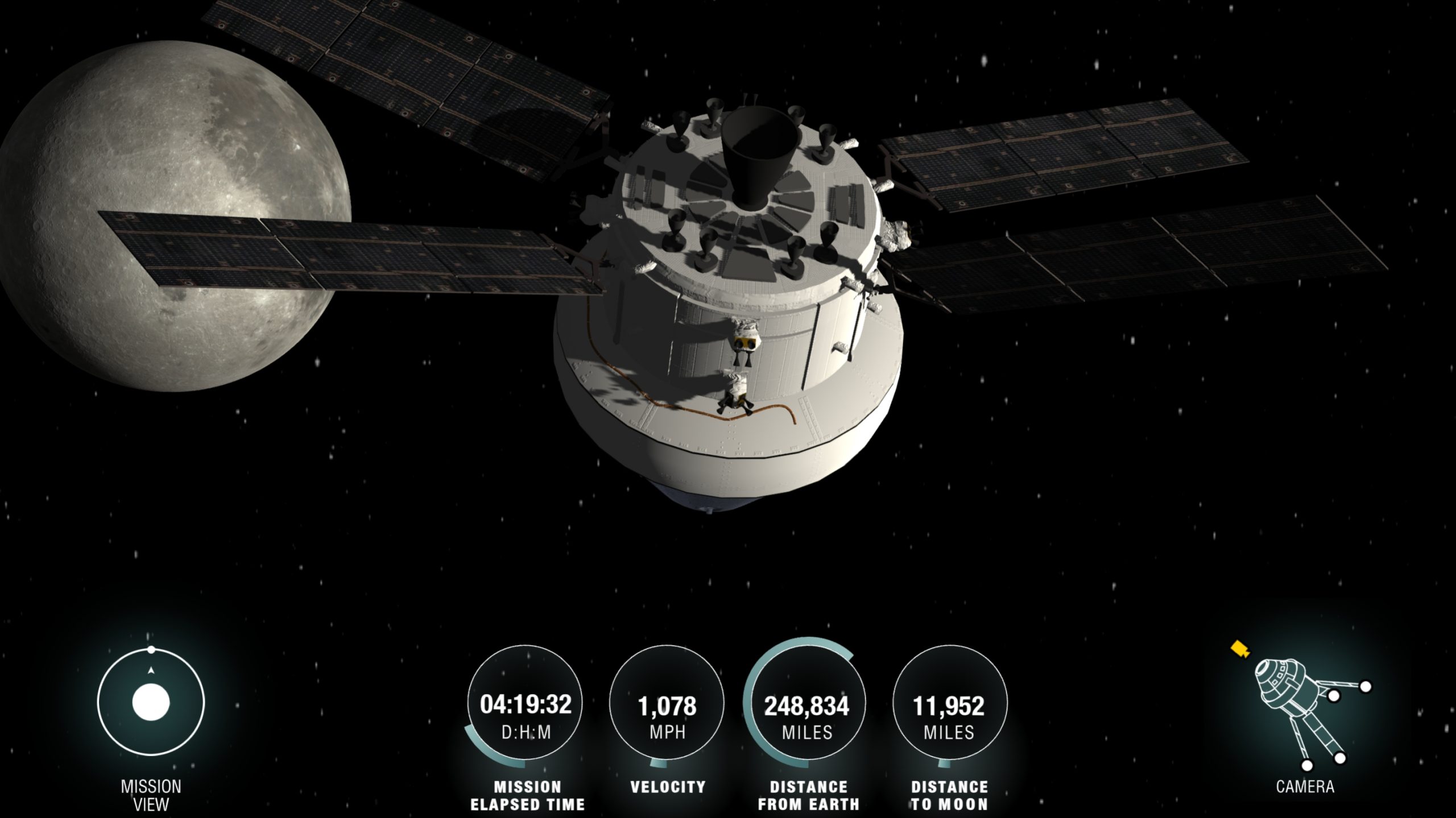
Canadian Astronaut Jeremy Hansen Makes History from Deep Space
Jeremy Hansen, the Canadian Space Agency’s representative on Artemis II, has officially become the first Canadian to travel beyond low Earth orbit—and the first to witness the Moon up close with his own eyes. On Flight Day 5, his crewmates presented him with a gold astronaut pin, a traditional milestone honouring his first spaceflight. The ceremony, guided by fellow Canadian CSA astronaut Jenny Gibbons serving as CAPCOM in Houston, underscored Canada’s growing role in deep space exploration.
Hansen’s participation in Artemis II is more than symbolic. Canada’s contribution to the Artemis programme includes the Canadarm3 robotic system for the future Lunar Gateway, and Hansen’s mission provides critical operational experience for future Canadian lunar missions. During the outbound coast, he assisted in testing Orion’s Crew Survival System under reduced cabin pressure and contributed to visual mapping of lunar terrain never before seen directly by human eyes.
Back on Earth, Canadians from coast to coast have been tuning in to NASA’s coverage, with the CSA hosting live viewing events in Ottawa, Calgary, and Halifax. Hansen’s presence on this foundational mission signals that Canada is no longer just a partner in orbit—but at the frontier of cislunar space.
Earth Observation Firms Race to Deliver Satellite Imagery in Minutes
While Artemis II explores the Moon, Earth observation companies are revolutionizing how quickly we see our own planet from space. In a striking demonstration earlier this year, Vantor delivered a 30-centimetre-resolution image of its own sales meeting—captured by a WorldView Legion satellite—just 13 minutes after acquisition. That speed is becoming the new benchmark.
According to industry leaders, government and commercial clients now demand sub-20-minute latency, with some pushing for under 10 minutes. “This information is being used more and more to drive tactical decisions,” said Emiliano Kargieman, CEO of Satellogic. The urgency stems from real-world applications: disaster response, maritime security, and conflict monitoring all benefit from near-real-time intelligence.
Companies like BlackSky and Planet are responding with integrated architectures—global ground station networks, cloud-based processing, AI edge computing, and even intersatellite links. BlackSky’s Gen-3 satellites, the latest of which launched on March 5, can be fully commissioned in under a week and deliver imagery directly to customer terminals. Meanwhile, Satellogic’s upcoming NextGen satellites, slated for launch next year, will feature onboard AI to detect anomalies and relay alerts within minutes. As James Mason of Planet noted, “The world is getting faster—quickly.”

Citations
- “Artemis II breaks record, conducts lunar flyby” – https://www.nasaspaceflight.com/2026/04/artemis-ii-breaks-record-lunar-flyby/
- “Artemis 2 flight day 6: Lunar flyby coverage begins as Orion prepares for the far side” – https://spaceq.ca/artemis-2-flight-day-6-lunar-flyby-coverage-begins-as-orion-prepares-for-the-far-side/
- “Earth observation operators push to deliver satellite images within minutes” – https://spacenews.com/earth-observation-operators-push-to-deliver-satellite-images-within-minutes/
Upcoming Launches
Starlink Group 17-35
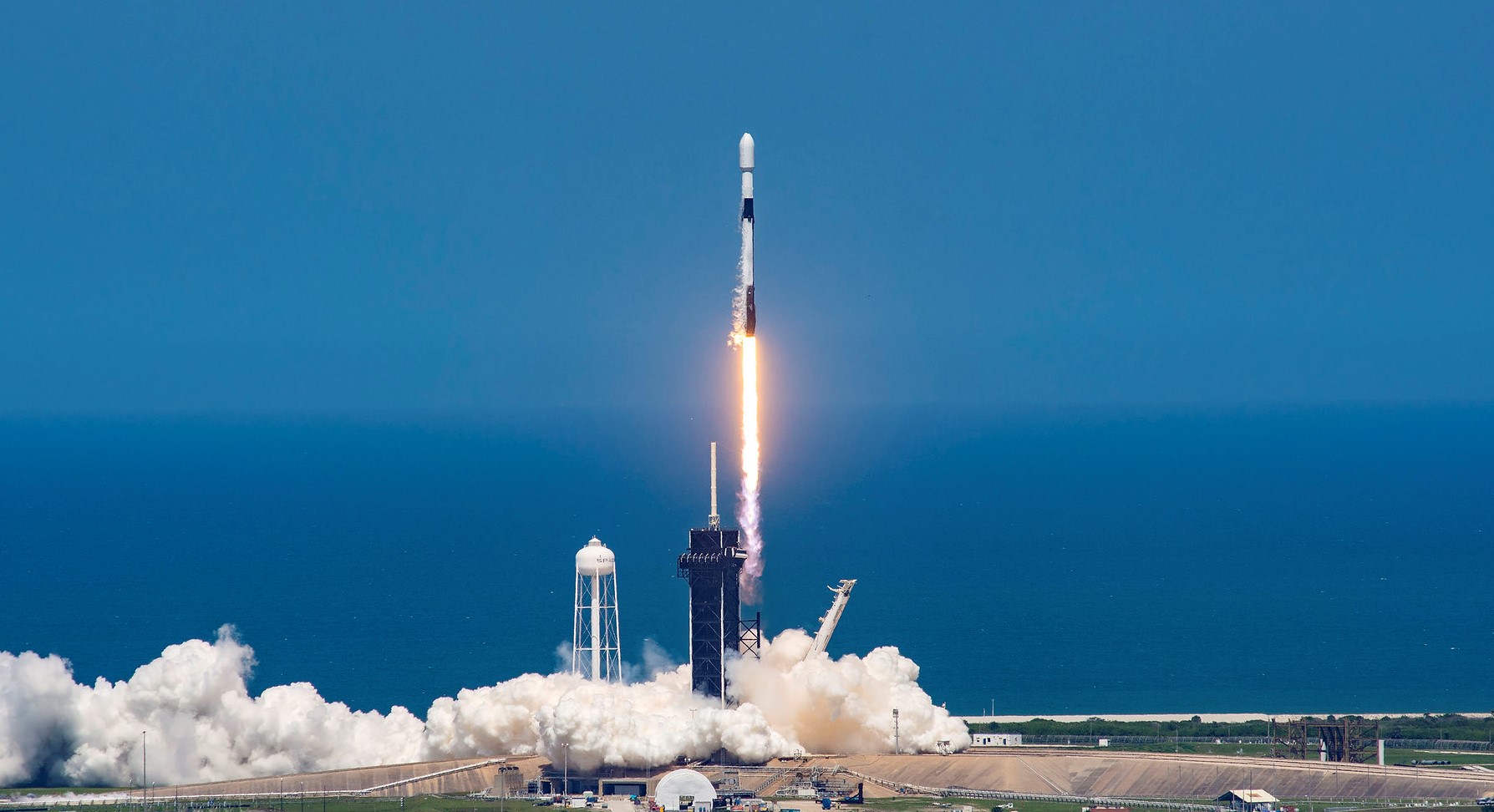
Launch Provider: SpaceX – Commercial
Launch Date: April 7, 2026
Launch Time: 2:50 AM UTC
Vehicle: Falcon 9
Brief: A batch of 25 satellites for the Starlink mega-constellation – SpaceX’s project for space-based Internet communication system.
STP-S29A

Launch Provider: Northrop Grumman Space Systems – Commercial
Launch Date: April 7, 2026
Launch Time: 11:33 AM UTC
Vehicle: Minotaur IV
Brief: STP-S29A is a mission under the U.S. Department of Defense’s Space Test Program (STP) that will deliver technology demonstrations to orbit and contribute to future space system development, with this launch delivering up to 200 kg of STP cubesats to Low Earth Orbit.
The main payload will be STPSat-7, an ESPA class satellite based on the Aegis Aerospace M-1 satellite bus used on the STPSat-4 mission for hosting research and technology demonstration payloads for the Department of Defense (DoD). One of the payload is U.S. Naval Research Laboratory’s (NRL) Lightsheet Anomaly Resolution and Debris Observation (LARADO) instrument, used to detect and characterize lethal non-trackable orbital debris with lasers in orbit.
Unknown Payload
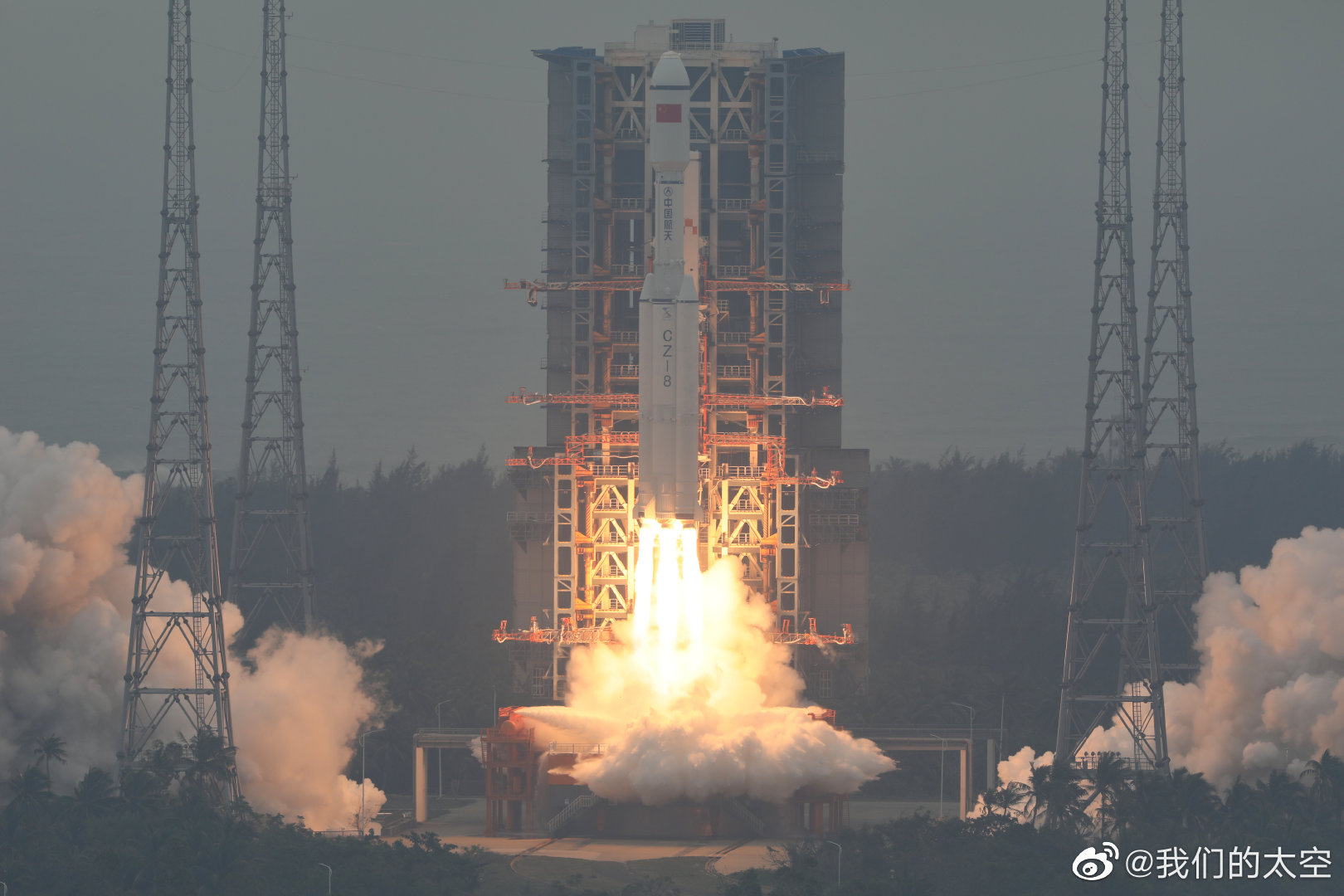
Launch Provider: China Aerospace Science and Technology Corporation – Government
Launch Date: April 7, 2026
Launch Time: 1:30 PM UTC
Vehicle: Long March 8
Brief: Details TBD.
📽️ No Livestream scheduled yet
Unknown Payload
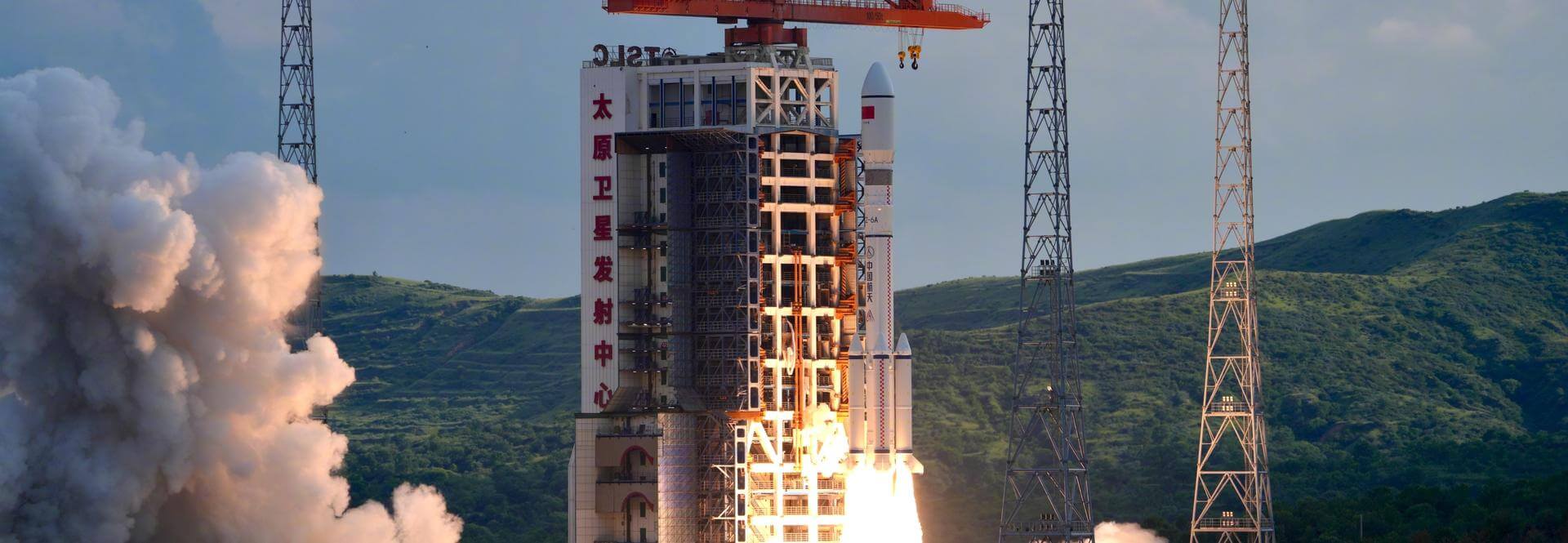
Launch Provider: China Aerospace Science and Technology Corporation – Government
Launch Date: April 8, 2026
Launch Time: 7:35 PM UTC
Vehicle: Long March 6A
Brief: Details TBD.
📽️ No Livestream scheduled yet
Onward and Upward
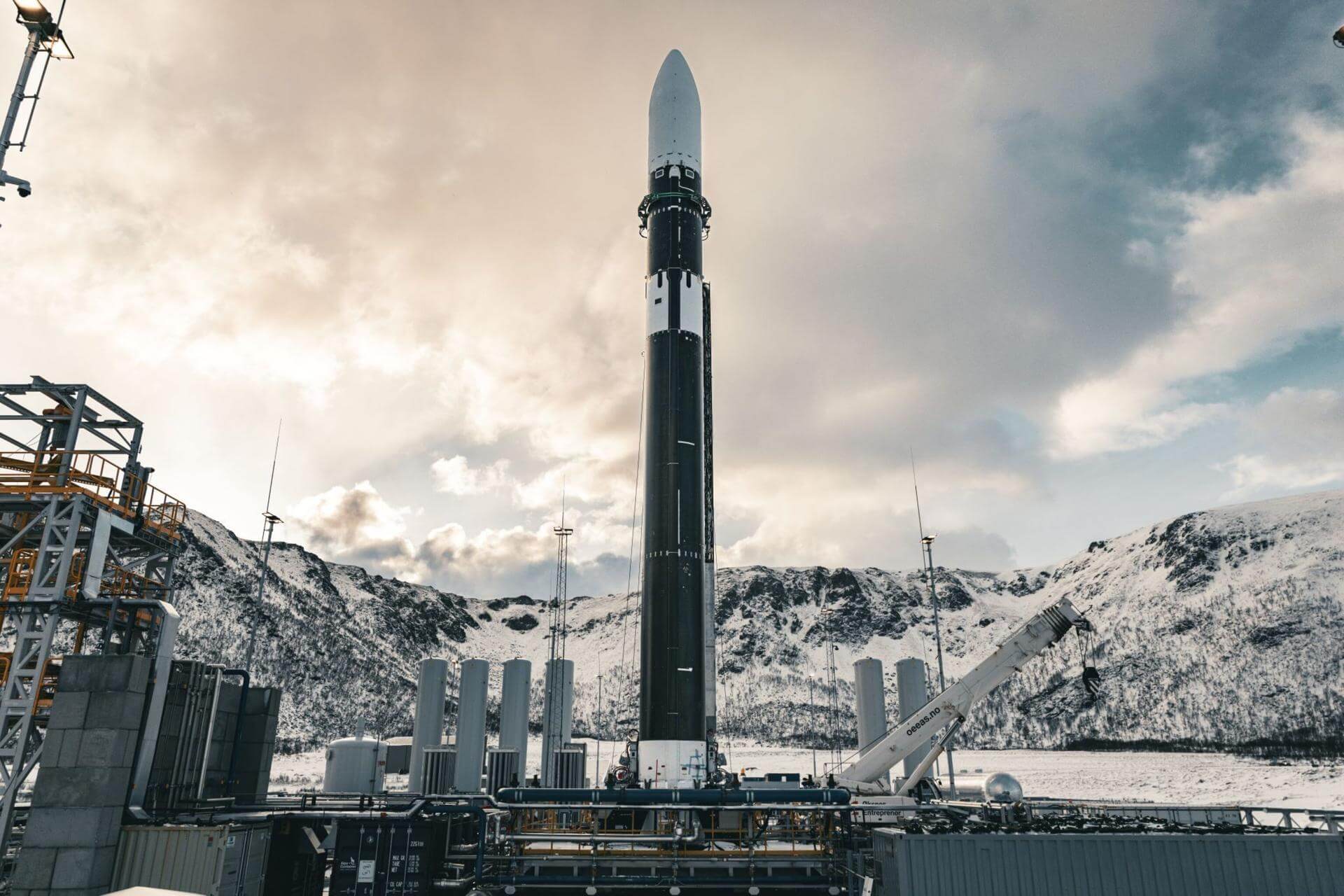
Launch Provider: Isar Aerospace – Private
Launch Date: April 8, 2026
Launch Time: 8:00 PM UTC
Vehicle: Spectrum
Brief: Second test flight of the Isar Spectrum launch vehicle. This launch will carry 5 cubesats and 1 non-separable experiment as part of European Space Agency (ESA)’s “Boost!” program:
* CyBEEsat (TU Berlin)
* TriSat-S (University of Maribor)
* Platform 6 (EnduroSat)
* FramSat-1 (NTNU)
* SpaceTeamSat1 (TU Wien Space Team)
* Let It Go (Dcubed, non-separable experiment)
