
The Daily Broadcast: Orion Soars, Budgets Shift, and Supply Chains Strain

Artemis II Crew Begins Historic Lunar Flyby Today
Right now, as Canadians sip their morning coffee on this crisp April morning, four astronauts—including Canadian Space Agency’s Jeremy Hansen—are executing the most distant human spaceflight since Apollo. The Artemis II crew launched successfully on April 1, 2026, and today, April 6, they are conducting their lunar flyby, a critical milestone in NASA’s return-to-the-Moon programme. At approximately 7:02 p.m. EDT, Orion will reach its closest approach to the Moon, travelling roughly 248,655 miles from Earth—surpassing the Apollo 13 distance record.
The crew will temporarily lose contact with Earth for about 40 minutes as they pass behind the lunar far side. During this time, they’ll observe the Orientale basin, a textbook multi-ring impact crater rarely seen in full by human eyes. What makes this flyby especially unique is that it’s happening on a “free-return” trajectory: if Orion’s propulsion system fails, the spacecraft’s path will naturally loop back to Earth without additional maneuvers.
So far, the mission has gone smoothly—minor issues with a laptop and the toilet were quickly resolved—and the SLS rocket performed so precisely that two planned course corrections weren’t needed. The crew is scheduled to splash down in the Pacific Ocean off California on Friday, April 10, at 8:07 p.m. EDT. Canadians are watching closely, as Hansen becomes the first Canadian to travel beyond low Earth orbit, marking a proud moment for the nation’s space ambitions.

NASA Administrator Defends Deep Budget Cuts for 2027
While Artemis II captures the world’s attention, a quieter but equally consequential drama is unfolding in Washington. NASA Administrator Jared Isaacman is publicly defending a fiscal year 2027 budget proposal that would slash the agency’s overall funding by 23%, to $18.8 billion. In television appearances on April 5, Isaacman argued that the cuts shouldn’t alarm the public because of $10 billion in supplemental funding approved last July through a budget reconciliation bill.
However, that supplemental money is heavily tilted toward human exploration—specifically Artemis and the planned lunar base—while other directorates face steep reductions. Science programmes would see a 47% cut, and space technology would lose nearly one-third of its budget. Dozens of Earth science, astrophysics, and planetary science missions in early development or extended operations could be cancelled, even though high-profile projects like the Roman Space Telescope and the Dragonfly mission to Titan remain funded.
Isaacman emphasized outcomes over expenditure, stating, “NASA doesn’t have a topline problem. We just need to focus on executing and delivering world-changing outcomes.” Yet the strategy risks hollowing out the scientific foundation that has long made NASA a global leader. Notably, the agency released no official statement with the budget—only a dry congressional justification document—leaving Isaacman’s media appearances as the sole public explanation. As Congress returns from recess next week, lawmakers will begin scrutinizing these proposals, with potential pushback expected given their rejection of similar cuts in the 2026 cycle.
U.S. Military Space Programmes Grapple with Fragile Supply Chains
Behind the scenes of America’s ambitious space endeavours lies a growing concern: the space industrial base may not be ready to support the surge in military satellite production. A detailed report published April 5 by SpaceNews highlights serious vulnerabilities in the supply chain for critical components like radiation-hardened microelectronics, optical inter-satellite communication terminals, and high-precision valves.
The U.S. Space Force’s Proliferated Warfighter Space Architecture (PWSA)—a $35-billion constellation of low Earth orbit satellites designed for missile tracking and secure communications—has already run into trouble. During its first deployment (Tranche 0) in 2024, every satellite bus experienced unexpected issues with guidance, thermal control, or checkout validation. “They all had challenges. Every single one of them,” said GP Sandhoo, acting director of the Space Development Agency.
The problem isn’t with prime contractors like Lockheed Martin or SpaceX, but with lower-tier suppliers who produce highly specialized parts. Many of these firms are small, undercapitalized, and operate as single points of failure. The situation is exacerbated by inconsistent government demand signals and budget uncertainties, which discourage long-term investment. Recent events, like xenon propellant shortages after Russia’s invasion of Ukraine, have further exposed the fragility of space-specific supply lines. Industry groups like the Aerospace Industries Association are now urging NASA and the Space Force to create a shared platform to better align government forecasts with industrial capacity—before a wartime crisis reveals just how thin the margin really is.

Citations
- “What’s Happening in Space Policy April 5-11, 2026” – https://spacepolicyonline.com/news/whats-happening-in-space-policy-april-5-11-2026/
- “Isaacman defends NASA budget proposal despite steep cuts” – https://spacenews.com/isaacman-defends-nasa-budget-proposal-despite-steep-cuts/
- “Military space programs confront hidden supply constraints” – https://spacenews.com/military-space-confronts-hidden-supplier-constraints/
Upcoming Launches
Starlink Group 17-35

Launch Provider: SpaceX – Commercial
Launch Date: April 6, 2026
Launch Time: 11:03 PM UTC
Vehicle: Falcon 9
Brief: A batch of 25 satellites for the Starlink mega-constellation – SpaceX’s project for space-based Internet communication system.
STP-S29A

Launch Provider: Northrop Grumman Space Systems – Commercial
Launch Date: April 7, 2026
Launch Time: 11:30 AM UTC
Vehicle: Minotaur IV
Brief: STP-S29A is a mission under the U.S. Department of Defense’s Space Test Program (STP) that will deliver technology demonstrations to orbit and contribute to future space system development, with this launch delivering up to 200 kg of STP cubesats to Low Earth Orbit.
The main payload will be STPSat-7, an ESPA class satellite based on the Aegis Aerospace M-1 satellite bus used on the STPSat-4 mission for hosting research and technology demonstration payloads for the Department of Defense (DoD). One of the payload is U.S. Naval Research Laboratory’s (NRL) Lightsheet Anomaly Resolution and Debris Observation (LARADO) instrument, used to detect and characterize lethal non-trackable orbital debris with lasers in orbit.
📽️ No Livestream scheduled yet
Unknown Payload
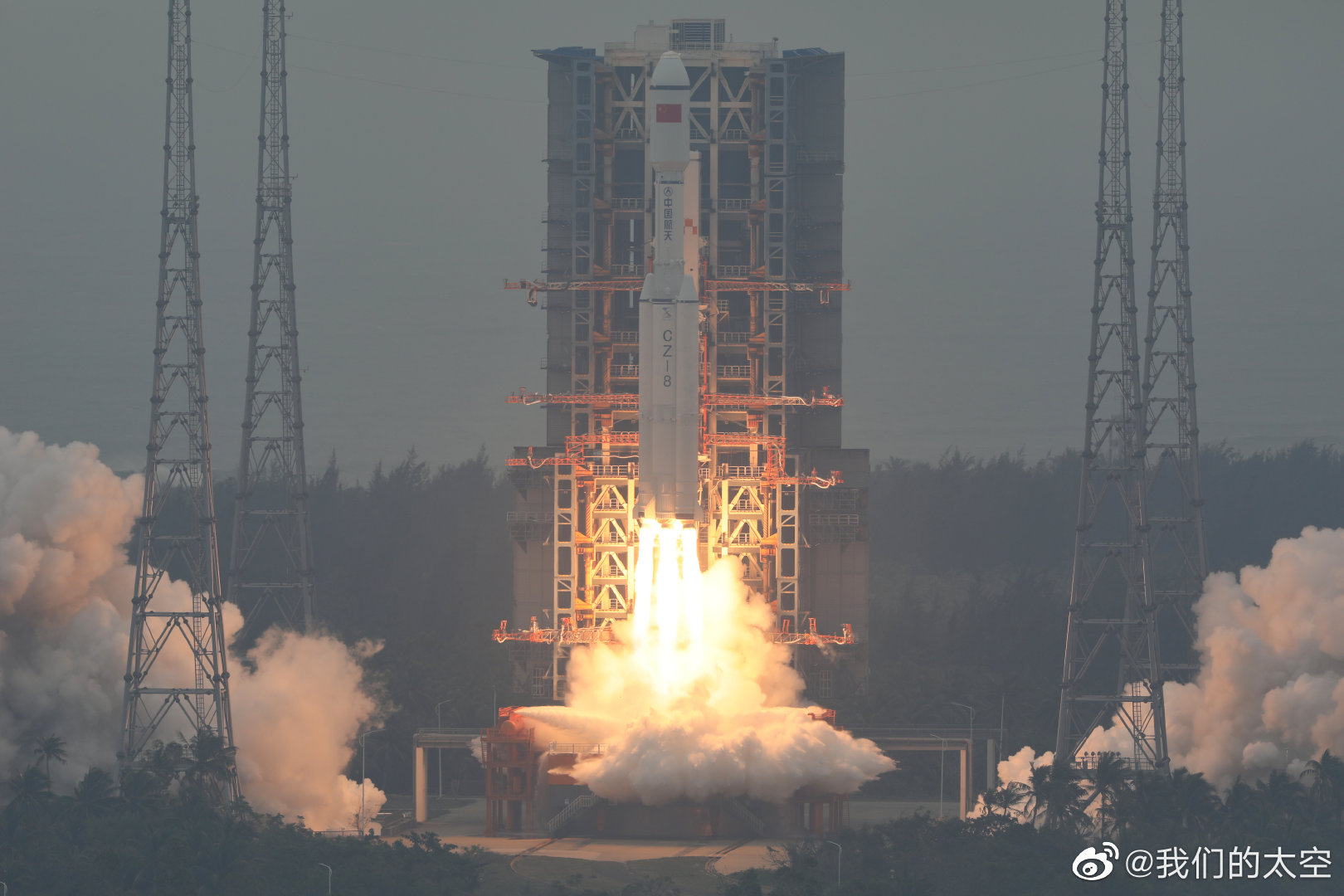
Launch Provider: China Aerospace Science and Technology Corporation – Government
Launch Date: April 7, 2026
Launch Time: 1:30 PM UTC
Vehicle: Long March 8
Brief: Details TBD.
📽️ No Livestream scheduled yet
Cygnus CRS-2 NG-24 (S.S. Steven R. Nagel)
Launch Provider: SpaceX – Commercial
Launch Date: April 8, 2026
Launch Time: 12:51 PM UTC
Vehicle: Falcon 9
Brief: This is the 24th flight of the Orbital ATK’s uncrewed resupply spacecraft Cygnus and its 23rd flight to the International Space Station under the Commercial Resupply Services contract with NASA.
Unknown Payload
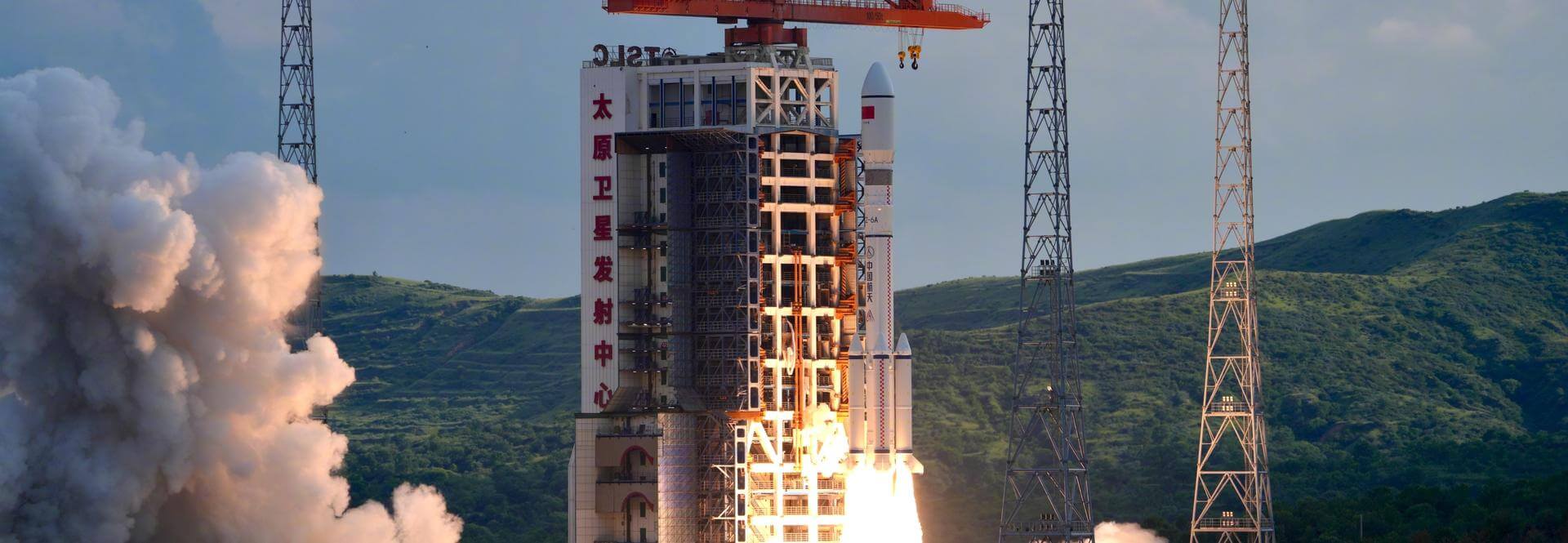
Launch Provider: China Aerospace Science and Technology Corporation – Government
Launch Date: April 8, 2026
Launch Time: 7:35 PM UTC
Vehicle: Long March 6A
Brief: Details TBD.
📽️ No Livestream scheduled yet
