
The Daily Broadcast: Artemis Soars, Budget Bites, and Cargo Countdown Begins
Artemis 2 Crew Cruises Smoothly Toward Lunar Flyby
As of April 4, 2026, the Artemis 2 crew is halfway to the Moon and in high spirits. Following a successful translunar injection burn on April 2, NASA’s Orion spacecraft—carrying astronauts Reid Wiseman, Victor Glover, Christina Koch, and Canadian Jeremy Hansen—is performing “very well” with only minor hiccups, according to agency officials. At an April 3 briefing, Orion program manager Howard Hu reported that subsystems are operating nominally, with propellant usage within 5% of predictions.
One early issue involved cabin temperatures dipping into the mid-60s Fahrenheit after launch-related heater adjustments. Mission controllers quickly corrected this by reactivating select heaters and tweaking airflow, warming the cabin into the low-to-mid 70s. A small anomaly in a helium pressurization system for the service module thrusters also emerged, but NASA emphasized that a redundant system is functioning perfectly, and “no mission impacts” are expected.
Canadian astronaut Jeremy Hansen, on his first spaceflight, shared his enthusiasm during an April 2 media downlink: “It’s just so extraordinary. I really like it up here. I wish I could have gotten here sooner.” The crew will reach their closest approach to the Moon on April 6, during which they’ll observe about 20% of the lunar far side—including features like the Orientale basin and Pierazzo crater—under favourable lighting conditions.
White House Proposes Deep Cuts to NASA’s 2027 Budget
While Artemis 2 makes headlines in cislunar space, back on Earth, NASA faces renewed fiscal uncertainty. On April 3, the White House Office of Management and Budget unveiled its fiscal year 2027 proposal, recommending $18.8 billion for NASA—a 23% reduction from the agency’s 2026 appropriation. This marks the second consecutive year of steep proposed cuts, echoing last year’s request that Congress ultimately rejected.
The proposal would slash NASA’s science budget by $3.4 billion (47%), terminating over 40 missions deemed “low-priority,” including the already troubled Mars Sample Return and smaller programmes like SERVIR. Notably absent from the 384-page budget document are mentions of long-running missions such as the Chandra X-Ray Observatory and OSIRIS-APEX, hinting they may again be on the chopping block. International Space Station operations would also see a $1.1 billion cut, justified by the station’s planned retirement, though NASA would continue funding one of two recently selected Earth Systems Explorer missions (STRIVE or EDGE) within the five-year window.
Reactions were swift and critical. Rep. Zoe Lofgren called the plan “dead on arrival,” while The Planetary Society warned it “needlessly resurrects an existential threat to U.S. leadership in space science.” Notably, exploration funding would rise slightly to $8.5 billion, fully backing Artemis and new robotic lunar base precursors—but even that comes with a caveat: the administration seeks to redirect $2.6 billion originally earmarked for the Gateway space station toward surface infrastructure.
Northrop Grumman’s CRS-24 Cargo Mission Nears Liftoff
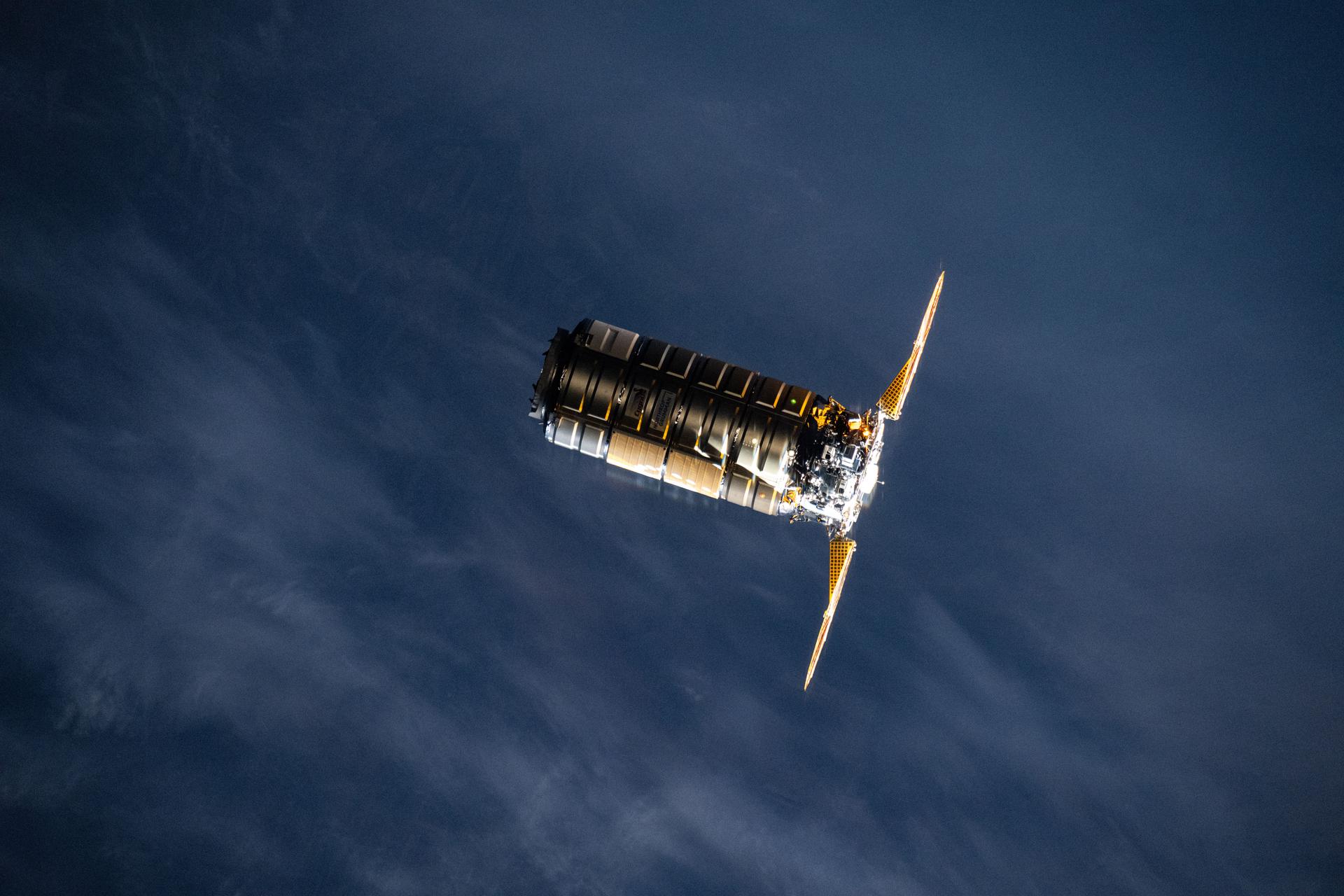
Amid budget debates and lunar voyages, routine yet vital logistics continue. NASA, Northrop Grumman, and SpaceX are targeting no earlier than 8:49 a.m. EDT on Wednesday, April 8, 2026, for the CRS-24 resupply mission to the International Space Station. Launching from Cape Canaveral Space Force Station aboard a Falcon 9 rocket, the Cygnus XL spacecraft—named the S.S. Steven R. Nagel in honour of the late shuttle astronaut—will carry roughly 11,000 pounds of supplies, science hardware, and technology demonstrations.
Once in orbit, astronauts will use the Canadian-built Canadarm2 robotic arm to capture Cygnus on Friday, April 10, before it’s berthed to the Unity module. Among the cargo highlights: a new module for the Cold Atom Lab to advance quantum research, equipment to grow therapeutic stem cells for cancer treatment, and biological samples to study the gut microbiome in microgravity. A specialized receiver aboard will also test improved space weather forecasting—critical for protecting GPS and radar infrastructure.
The spacecraft is scheduled to remain docked until October, after which it will depart filled with trash and burn up harmlessly in Earth’s atmosphere. NASA will provide live coverage starting at 8:30 a.m. EDT on April 8 via NASA+, YouTube, and Amazon Prime. For Canadian viewers, the involvement of Canadarm2 offers a familiar touchpoint in this essential link to the orbiting laboratory.
Citations
- “Artemis 2 in good shape cruising towards the moon” – https://spacenews.com/artemis-2-in-good-shape-cruising-towards-the-moon/
- “White House again proposes steep NASA budget cuts” – https://spacenews.com/white-house-again-proposes-steep-nasa-budget-cuts/
- “NASA Sets Coverage for Northrop Grumman’s CRS-24 Resupply Launch” – https://www.nasa.gov/news-release/nasa-sets-coverage-for-northrop-grummans-crs-24-resupply-launch/
Upcoming Launches
Amazon Leo (LA-05)
Launch Provider: United Launch Alliance – Commercial
Launch Date: April 4, 2026
Launch Time: 5:46 AM UTC
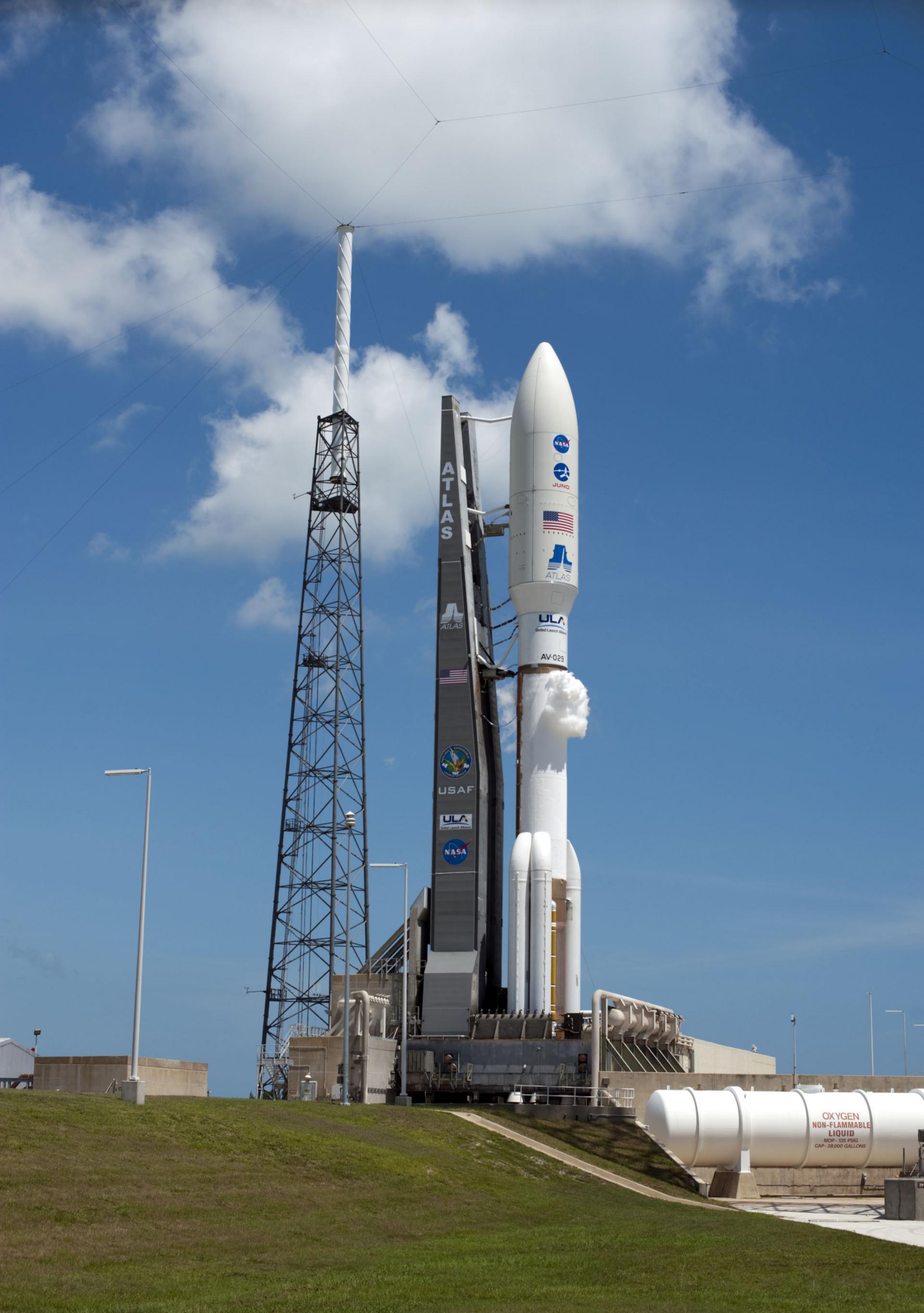
Vehicle: Atlas V 551
Brief: Amazon Leo, formerly known as Project Kuiper, is a mega constellation of satellites in Low Earth Orbit that will offer broadband internet access, this constellation will be managed by Kuiper Systems LLC, a subsidiary of Amazon. This constellation is planned to be composed of 3,276 satellites. The satellites are projected to be placed in 98 orbital planes in three orbital layers, one at 590 km, 610 km and 630 km altitude.
29 satellites are carried on this launch.
Starlink Group 17-35

Launch Provider: SpaceX – Commercial
Launch Date: April 5, 2026
Launch Time: 11:03 PM UTC
Vehicle: Falcon 9
Brief: A batch of 25 satellites for the Starlink mega-constellation – SpaceX’s project for space-based Internet communication system.
STP-S29A

Launch Provider: Northrop Grumman Space Systems – Commercial
Launch Date: April 7, 2026
Launch Time: 11:30 AM UTC
Vehicle: Minotaur IV
Brief: STP-S29A is a mission under the U.S. Department of Defense’s Space Test Program (STP) that will deliver technology demonstrations to orbit and contribute to future space system development, with this launch delivering up to 200 kg of STP cubesats to Low Earth Orbit.
The main payload will be STPSat-7, an ESPA class satellite based on the Aegis Aerospace M-1 satellite bus used on the STPSat-4 mission for hosting research and technology demonstration payloads for the Department of Defense (DoD). One of the payload is U.S. Naval Research Laboratory’s (NRL) Lightsheet Anomaly Resolution and Debris Observation (LARADO) instrument, used to detect and characterize lethal non-trackable orbital debris with lasers in orbit.
📽️ No Livestream scheduled yet
Unknown Payload
Launch Provider: China Aerospace Science and Technology Corporation – Government
Launch Date: April 7, 2026
Launch Time: 1:30 PM UTC
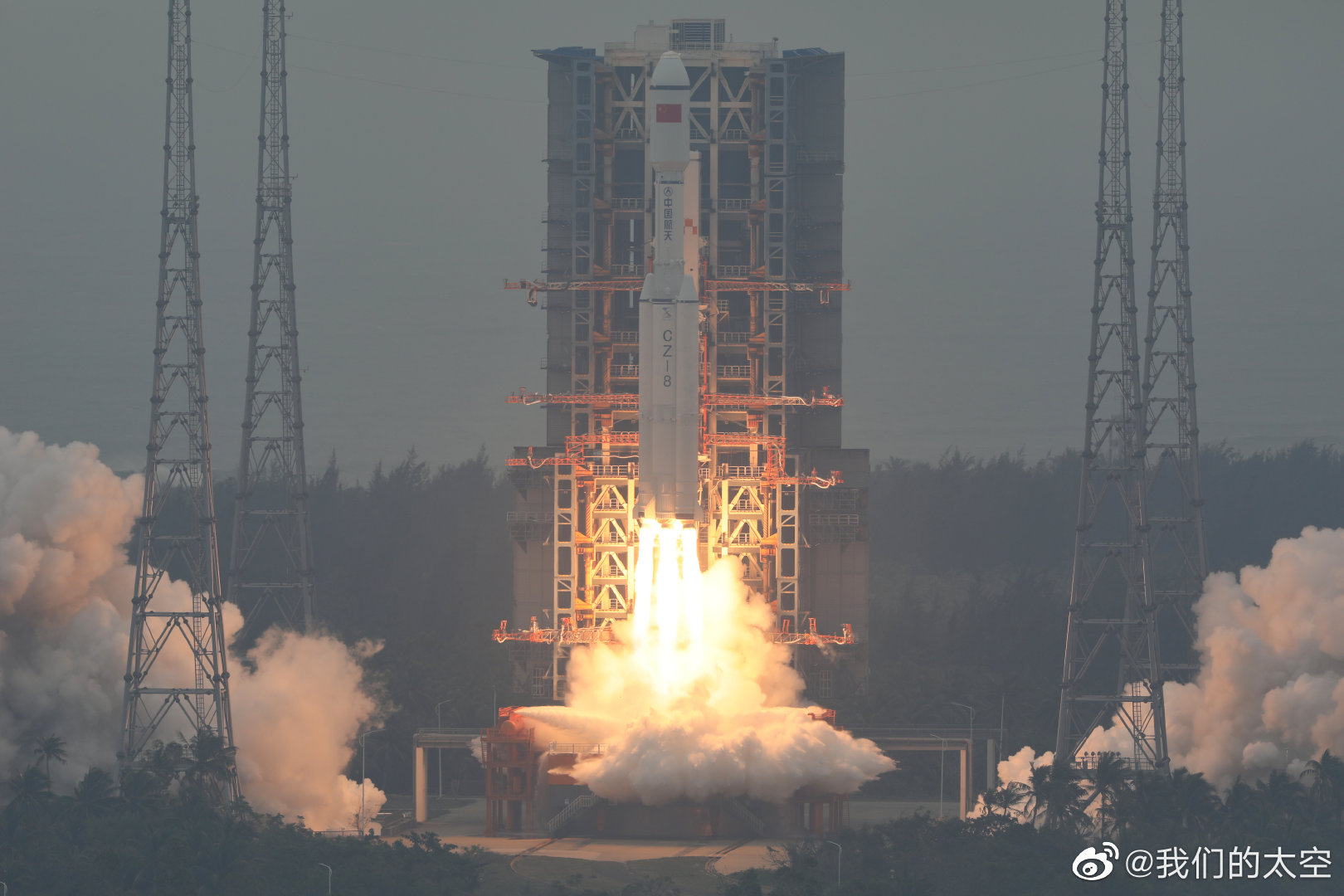
Vehicle: Long March 8
Brief: Details TBD.
📽️ No Livestream scheduled yet
Cygnus CRS-2 NG-24
Launch Provider: SpaceX – Commercial
Launch Date: April 8, 2026
Launch Time: 12:51 PM UTC
Vehicle: Falcon 9
Brief: This is the 24th flight of the Orbital ATK’s uncrewed resupply spacecraft Cygnus and its 23rd flight to the International Space Station under the Commercial Resupply Services contract with NASA.
