
The SpaceX Report: From Orbital Data Centres to GPS Shifts: SpaceX Dominates a Busy Week
Starship V3 and the Orbital Data Centre Vision
While Starship’s 12th integrated flight test remains on the horizon, the spotlight this week shifted to Elon Musk’s ambitious vision for space-based computing. On March 21 in Austin, Texas, Musk unveiled new details about SpaceX’s “orbital data centre” constellation—dubbed the AI Sat Mini—a behemoth spacecraft designed to host high-performance AI processors in low Earth orbit. According to Musk, each satellite would draw 100 kilowatts of power, dwarfing even Starship V3 in apparent size in concept illustrations. The satellite features expansive solar arrays and a 100-square-metre radiator, which Musk insists is more than adequate for thermal management—a frequent point of scepticism among space engineers.
Crucially, this initiative hinges on the “Terafab” project: a proposed chip fabrication facility co-developed by SpaceX, Tesla, and xAI, aiming to produce one terawatt of AI-optimized processors annually. Musk framed the fab as non-negotiable: “We either build the Terafab or we don’t have the chips.” The chips—named D3—are engineered to operate in the harsh radiation environment of space and run hotter than their terrestrial counterparts.
No launch date has been set for the AI Sat Mini, and SpaceX’s January FCC filing requested waivers from standard deployment schedules, acknowledging the experimental nature of the constellation. Musk even teased a distant future where lunar mass drivers launch petawatt-scale data centres from the Moon’s surface. While that remains firmly in the realm of speculation, the underlying message is clear: SpaceX is positioning itself not just as a launch provider, but as a vertically integrated space infrastructure company—with or without Canadian data centres in the mix.

Starbase Infrastructure: Quiet but Preparatory
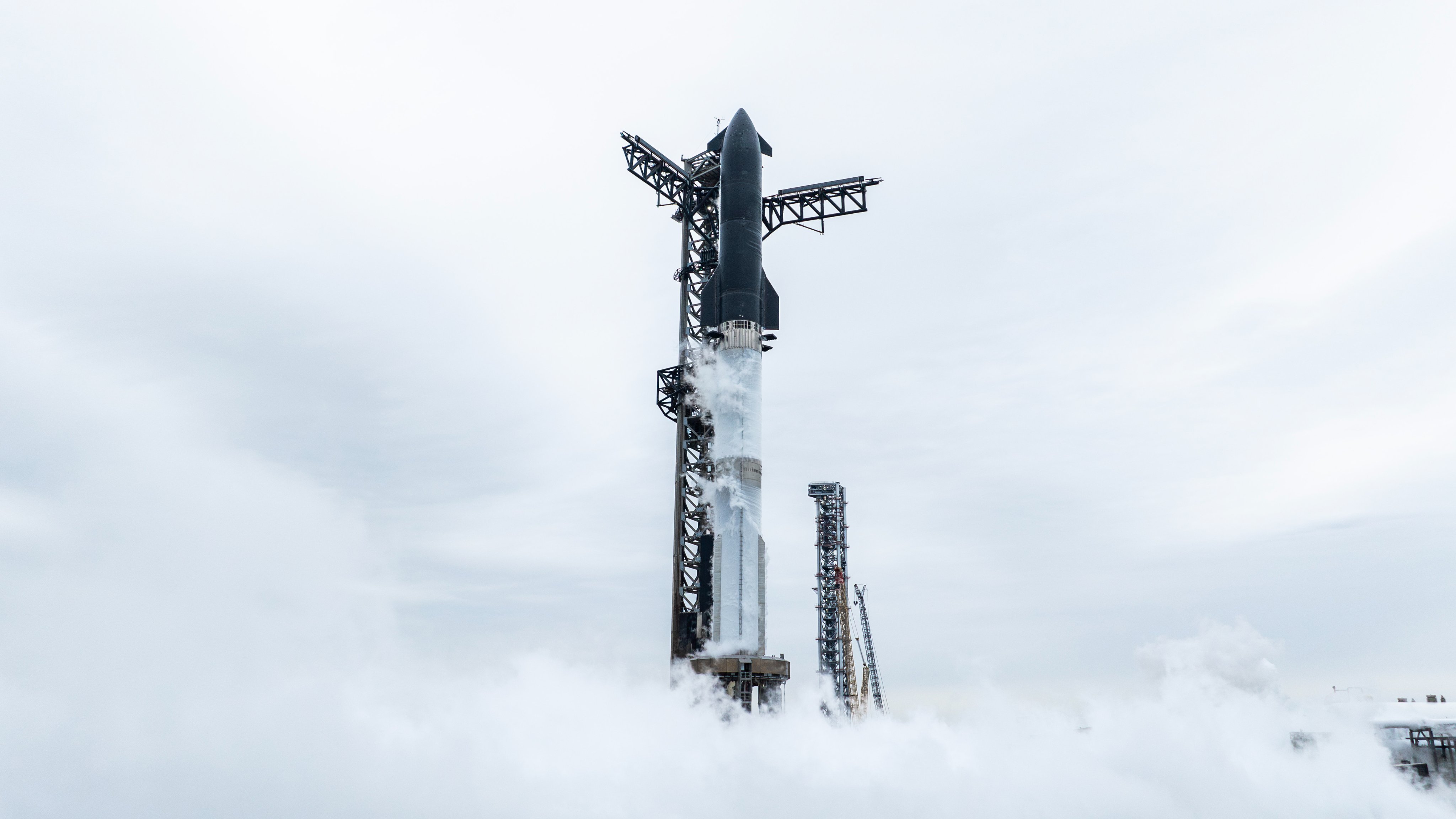
Starbase, Texas, saw a notable milestone on March 16 with the static fire test of Super Heavy Booster 19. This marks a key step in preparations for Starship’s 12th flight test, though SpaceX has not yet announced a target date for the launch. The static fire—conducted at the orbital launch mount—validated the booster’s 33 Raptor engines in a controlled ground test, a standard prerequisite before flight clearance.
At present, infrastructure work continues steadily. While no major pad modifications were reported this week, the focus remains on refining the chopstick catch system and improving rapid turnaround capabilities between launches. The deluge system, which mitigates launchpad erosion during liftoff, is also undergoing iterative upgrades based on data from previous test campaigns. Although Starbase remains a hive of activity, major public updates are pending the next integrated flight.
Falcon 9 Keeps Canada Connected to the Constellation
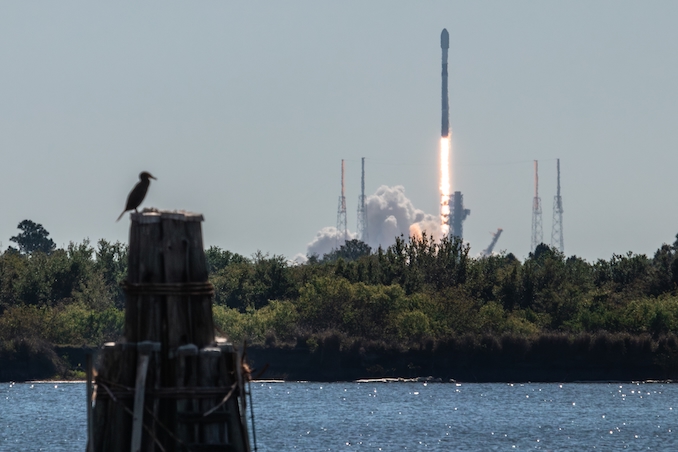
SpaceX wrapped up another high-tempo week with five successful Starlink missions—a reminder that while Starship captures headlines, Falcon 9 remains the company’s workhorse. The most recent launch, Starlink Group 10-62, lifted off on Sunday, March 22, at 10:47 a.m. EDT from Cape Canaveral Space Force Station. The mission deployed 29 Starlink v2 Mini satellites into low Earth orbit and marked the 27th flight for booster B1078, which landed successfully on the droneship A Shortfall of Gravitas.
For Canadian users, this steady cadence matters: each new batch enhances coverage, latency, and capacity across the country—from Newfoundland to the Yukon. Starlink is now a critical connectivity option in rural and remote regions where terrestrial broadband remains unreliable or unavailable. While SpaceX doesn’t break down regional performance publicly, the consistent deployment tempo ensures that Canadian subscribers continue to see service improvements without needing to look south of the border for updates.
GPS Shifts and International Partnerships
In a significant strategic shift, the U.S. Space Force has reassigned the GPS III SV-10 satellite launch from United Launch Alliance’s Vulcan Centaur to SpaceX. The mission is now scheduled for no earlier than late April from Cape Canaveral’s SLC-40. This marks the fourth consecutive GPS launch shifted to SpaceX due to an ongoing investigation into a solid rocket booster anomaly during Vulcan’s February 12 USSF-87 mission.
Meanwhile, international collaboration took centre stage with the European Space Agency’s announcement of the EPIC (ESA Provided Institutional Crew) mission. Slated for early 2028, this dedicated Crew Dragon flight will carry European astronauts—including potentially Canadian partners via ESA’s cooperation with the Canadian Space Agency—to the International Space Station for a month-long stay. Although no Canadian astronaut is currently confirmed for EPIC, the mission underscores the growing reliance on SpaceX’s human-rated systems as the ISS nears its planned 2030 retirement.

Citations
- “SpaceX offers details on orbital data center satellites” – https://spacenews.com/spacex-offers-details-on-orbital-data-center-satellites/
- “Another GPS launch shifts from ULA to SpaceX as Vulcan investigation continues” – https://spacenews.com/another-gps-launch-shifts-from-ula-to-spacex-as-vulcan-investigation-continues/
- “ESA to fly dedicated Crew Dragon mission to ISS” – https://spacenews.com/esa-to-fly-dedicated-crew-dragon-mission-to-iss/
- “SpaceX launches 29 Starlink satellites on Falcon 9 rocket from Cape Canaveral” – https://spaceflightnow.com/2026/03/22/live-coverage-spacex-to-launch-29-starlink-satellites-on-falcon-9-rocket-from-cape-canaveral-12/
- “Launch Preview: Falcon 9, Spectrum, Electron to launch during busy week of launches” – https://www.nasaspaceflight.com/2026/03/launch-preview-031626/
Upcoming Starship Launches
Flight 12

Launch Provider: SpaceX – Commercial
Launch Date: April 30, 2026
Launch Time: 12:00 AM UTC
Vehicle: Starship
Brief: 12th test flight of the two-stage Starship launch vehicle. Maiden Flight of Starship V3
📽️ No Livestream scheduled yet
Flight 13
Launch Provider: SpaceX – Commercial
Launch Date: June 30, 2026
Launch Time: 12:00 AM UTC
Vehicle: Starship
Brief: 13th test flight of the two-stage Starship launch vehicle. Second flight of Starship V3
📽️ No Livestream scheduled yet
Superbird-9
Launch Provider: SpaceX – Commercial
Launch Date: June 30, 2027
Launch Time: 12:00 AM UTC
Vehicle: Starship
Brief: Superbird-9 is a high throughput communication satellite. It is designed to deliver broadcast and broadband missions in Ku band primarily over Japan and Eastern Asia, in response to mobility and broadband demands.
📽️ No Livestream scheduled yet
Starlab
Launch Provider: SpaceX – Commercial
Launch Date: December 31, 2029
Launch Time: 12:00 AM UTC
Vehicle: Starship
Brief: Private space station developed by a joint venture between Voyager Space and Airbus.
📽️ No Livestream scheduled yet
Upcoming Falcon Heavy Launches
ViaSat-3 F3 (ViaSat-3 Asia-Pacific)
Launch Provider: SpaceX – Commercial
Launch Date: April 30, 2026
Launch Time: 12:00 AM UTC
Vehicle: Falcon Heavy
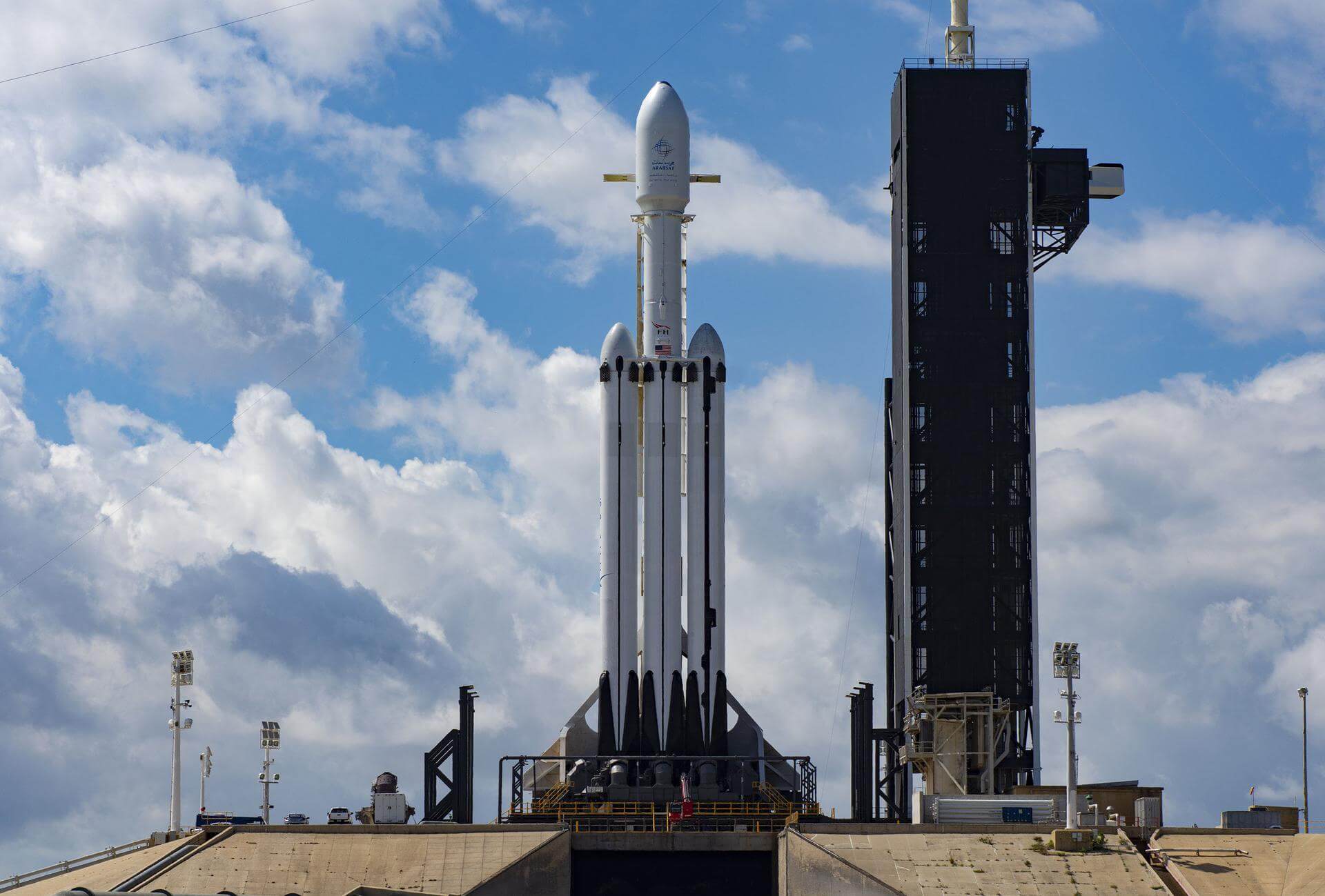
Brief: The ViaSat-3 is a series of three Ka-band satellites is expected to provide vastly superior capabilities in terms of service speed and flexibility for a satellite platform. Each ViaSat-3 class satellite is expected to deliver more than 1-Terabit per second of network capacity, and to leverage high levels of flexibility to dynamically direct capacity to where customers are located.
📽️ No Livestream scheduled yet
Griffin Mission One
Launch Provider: SpaceX – Commercial
Launch Date: July 31, 2026
Launch Time: 12:00 AM UTC
Vehicle: Falcon Heavy
Brief: Demonstration flight of the Astrobotic Griffin lander and its engines, initially contracted for the cancelled NASA VIPER (Volatiles Investigating Polar Exploration Rover) mission. The vacated payload spot will now host the FLIP (FLEX Lunar Innovation Platform) lunar rover from Astrolab.
📽️ No Livestream scheduled yet
Nancy Grace Roman Space Telescope
Launch Provider: SpaceX – Commercial
Launch Date: September 28, 2026
Launch Time: 12:00 AM UTC
Vehicle: Falcon Heavy
Brief: The Nancy Grace Roman Space Telescope is a NASA infrared space telescope with a 2.4 m (7.9 ft) wide field of view primary mirror and two scientific instruments. The Wide-Field Instrument (WFI) is a 300.8-megapixel multi-band visible and near-infrared camera, providing a sharpness of images comparable to that achieved by the Hubble Space Telescope over a 0.28 square degree field of view, 100 times larger than imaging cameras on the Hubble. The Coronagraphic Instrument (CGI) is a high-contrast, small field of view camera and spectrometer covering visible and near-infrared wavelengths using novel starlight-suppression technology. Roman objectives include a search for extra-solar planets using gravitational microlensing, and probing the expansion history of the Universe and the growth of cosmic structure, with the goal of measuring the effects of dark energy, the consistency of general relativity, and the curvature of spacetime.
📽️ No Livestream scheduled yet
USSF-75
Launch Provider: SpaceX – Commercial
Launch Date: December 31, 2026
Launch Time: 12:00 AM UTC
Vehicle: Falcon Heavy
Brief: Classified payload for the United States Space Force
📽️ No Livestream scheduled yet
Astrobotic-3
Launch Provider: SpaceX – Commercial
Launch Date: December 31, 2026
Launch Time: 12:00 AM UTC
Vehicle: Falcon Heavy
Brief: Third Astrobotic lunar mission, details TBA.
📽️ No Livestream scheduled yet
