
The NASA Overview: April Skies, Lunar Preparations, and Record-Low Ice: NASA’s Busy March Turnover
Artemis II: Countdown Begins for Historic Lunar Flyby
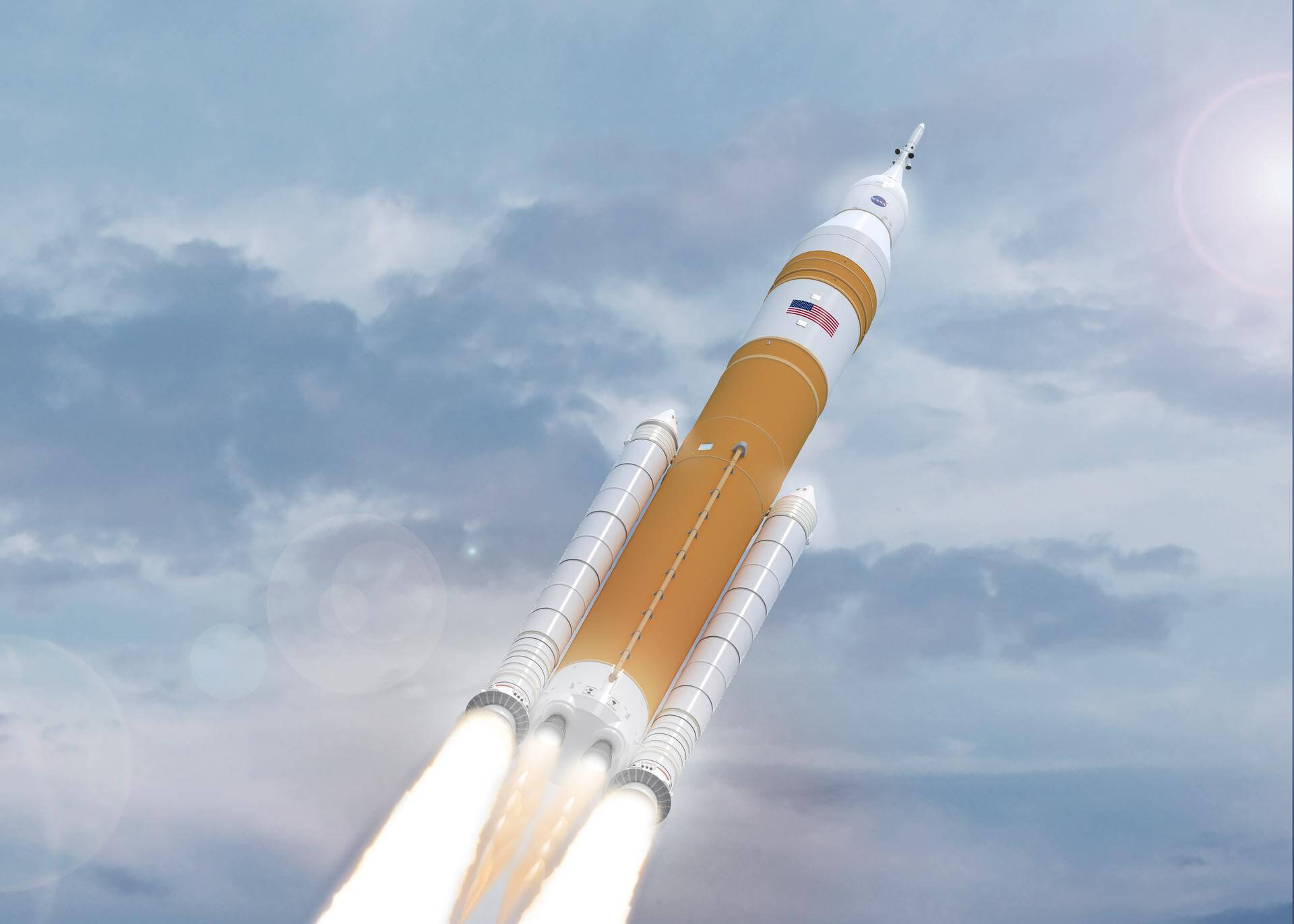
As of March 27, 2026, NASA is in the final stretch of preparations for the Artemis II mission—the first crewed flight of the Space Launch System (SLS) rocket and Orion spacecraft since Apollo. The mission is currently scheduled to launch no earlier than April 1, 2026, sending four astronauts on a 10-day journey around the Moon and back.
This week, teams at NASA’s Kennedy Space Center in Florida rolled the fully stacked SLS rocket and Orion spacecraft back to Launch Complex 39B on March 20—a critical milestone following a brief rollback to the Vehicle Assembly Building for inspection of upper-stage helium tanks. The rollout, which took approximately 12 hours, marked one of the final hardware movements before launch.
Meanwhile, live coverage of prelaunch activities began on March 27 as the Artemis II crew arrived at Kennedy Space Center, kicking off a series of public briefings and simulations. Last week, astronauts practiced lunar flyby imaging procedures based on potential April launch trajectories, refining their approach to capturing high-value scientific data during the mission’s free-return path around the Moon.
Canadian readers may recall that while Canada’s contributions to Artemis II are limited, the Canadian Space Agency (CSA) is deeply embedded in the broader Artemis program through the Canadarm3 robotic system slated for the future Lunar Gateway. Although Canadarm3 won’t feature on Artemis II, this mission is a vital pathfinder for the deep-space operations that will one day rely on Canadian robotics.
For those hoping to leave a symbolic mark, time is running out: NASA’s “Send Your Name to the Moon” campaign for Artemis II closes soon. Submitted names will fly aboard Orion as digital passengers during the lunar loop—a small but meaningful way for Canadians and others around the world to participate in history.

Roman Ready: Flagship Telescope Nears Launch
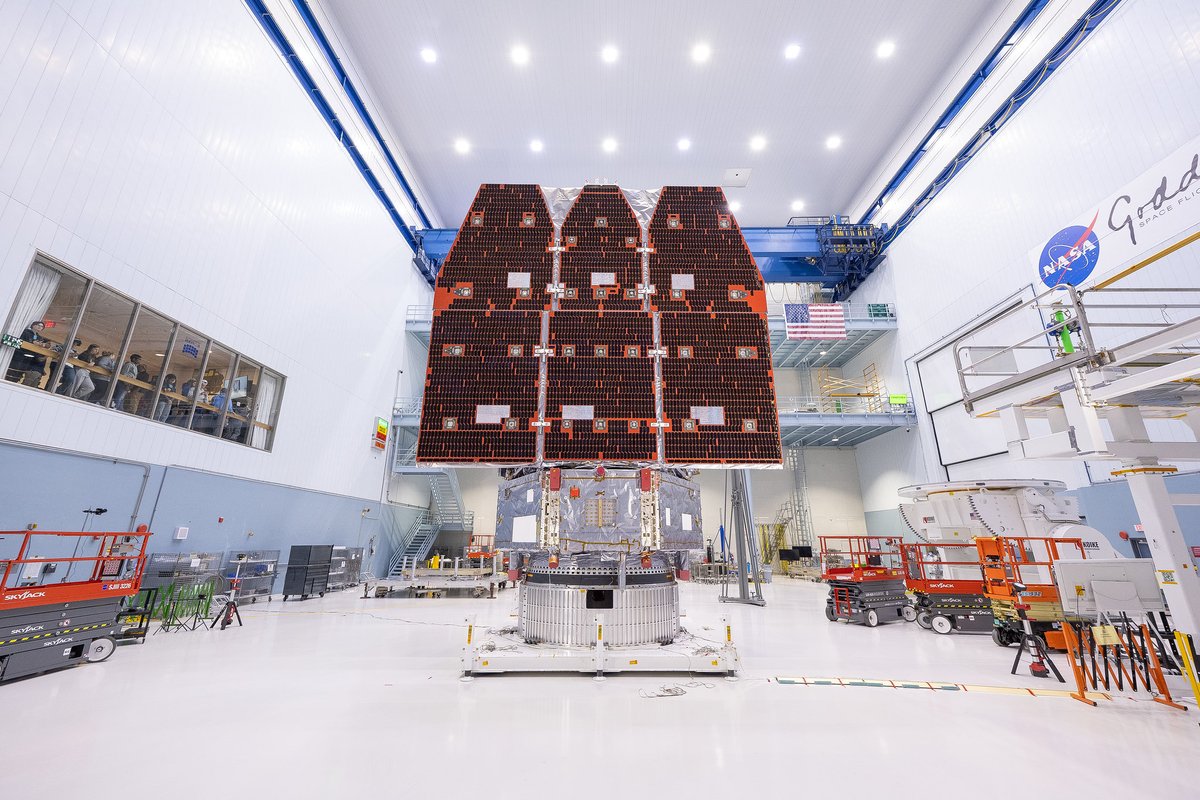
NASA’s next great observatory—the Nancy Grace Roman Space Telescope—has completed construction and is undergoing final prelaunch testing at NASA’s Goddard Space Flight Center in Greenbelt, Maryland. On April 21, 2026, at 4 p.m. EDT, the agency will host a media briefing to unveil the fully integrated telescope in one of the last public viewings before it ships to Kennedy Space Center for a planned launch as early as fall 2026.
Dubbed “Hubble’s wide-eyed cousin,” Roman will survey the cosmos with a field of view 100 times larger than Hubble’s infrared instrument, enabling unprecedented studies of dark energy, exoplanets, and galaxy evolution. A key innovation aboard Roman is its Coronagraph Instrument, which will test advanced technology to directly image planets orbiting nearby stars—an essential step in the search for life beyond Earth.
While Roman is a NASA-led mission, it includes significant international collaboration. The European Space Agency (ESA), Japan Aerospace Exploration Agency (JAXA), France’s CNES, and Germany’s Max Planck Institute for Astronomy all contribute to the mission. Though Canada isn’t listed among primary partners for Roman, Canadian astronomers are expected to access Roman data through international agreements and proposals—continuing a tradition of Canadian involvement in flagship astrophysics missions.
Once operational, Roman will complement other observatories like the James Webb Space Telescope, offering wide-area context to Webb’s deep, narrow-field views. As NASA Administrator Jared Isaacman noted this week, Roman represents “the breakthroughs only NASA can achieve” and will “inspire the next generation.”
ISS Resupply and Research Continue
The International Space Station (ISS) remains a hub of continuous science and logistics, with the uncrewed Progress 94 cargo spacecraft successfully docking on March 24, 2026, at 9:40 a.m. ET. The Russian-built vehicle delivered nearly three tons of food, fuel, water, and scientific equipment to the seven-member Expedition 74 crew.
The docking followed a minor concern during flight: one of Progress 94’s antennas failed to deploy after launch on March 22. However, all primary systems functioned normally, and Roscosmos cosmonaut Sergey Kud-Sverchkov stood by to manually guide the spacecraft if needed. Ultimately, automated systems handled the rendezvous without intervention.
Onboard, astronauts spent the week conducting health studies, maintaining station systems, and preparing for future experiments. On March 18, NASA astronaut Jessica Meir and Canadian Space Agency astronaut Chris Williams completed a spacewalk to service the station’s 2A power channel—critical work enabling future installation of new roll-out solar arrays. Remaining tasks from that spacewalk will be addressed in a future outing.
Canada’s role on the ISS remains strong, particularly through astronaut Chris Williams, who continues to support both U.S. and international science objectives. His presence underscores Canada’s ongoing commitment to low-Earth orbit research—a bridge to future lunar ambitions.

Call Of The Red Planet
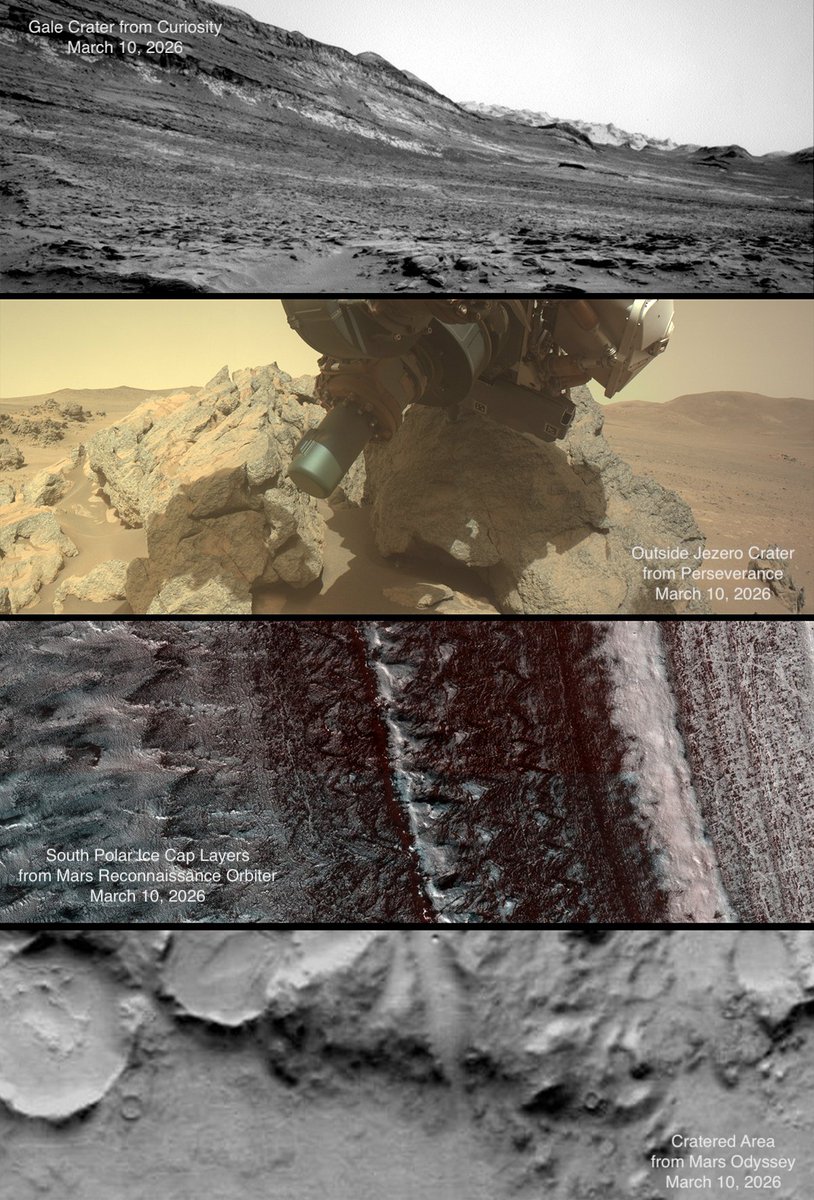
Mars remains a focal point of NASA’s robotic exploration, even as human missions remain years away. This week, NASA Mars highlighted a striking composite: four images of the Martian surface captured on March 10, 2026, by four different spacecraft—Perseverance, Curiosity, MAVEN, and the Mars Reconnaissance Orbiter—showcasing the planet’s varied terrain from cratered highlands to dusty plains.
Looking ahead, Administrator Jared Isaacman confirmed plans for SR-1 Freedom, a nuclear electric propulsion spacecraft set to launch in 2028. It will carry the SkyFall payload—a suite of Ingenuity-class helicopters designed to explore Mars from the air. While this mission is still in development, it signals NASA’s intent to expand aerial reconnaissance beyond the success of the original Ingenuity helicopter.
Canadian scientists continue to contribute to Mars science through instrument collaborations and data analysis, though no Canadian-built hardware is currently en route to the Red Planet. Still, with the CSA’s focus on robotics and autonomy, future Mars missions may well include Canadian technology.
Record Arctic Ice Low and April’s Celestial Show
In Earth science, NASA and the National Snow and Ice Data Center (NSIDC) reported that Arctic sea ice reached its annual winter maximum on March 15, 2026, covering 5.52 million square miles (14.29 million km²)—tying 2025 for the lowest extent since satellite monitoring began in 1979. Data from NASA’s ICESat-2 satellite also show that much of this ice is unusually thin, particularly in the Barents Sea northeast of Greenland.
While Antarctic sea ice saw a modest rebound this year compared to record lows in 2023, the long-term Arctic trend remains stark: winter ice cover is now about half a million square miles below the 1981–2010 average. “A low year or two don’t necessarily mean much by themselves,” said NSIDC scientist Walt Meier, “but viewed within the long-term downward trend… they add to the overall picture of change.”
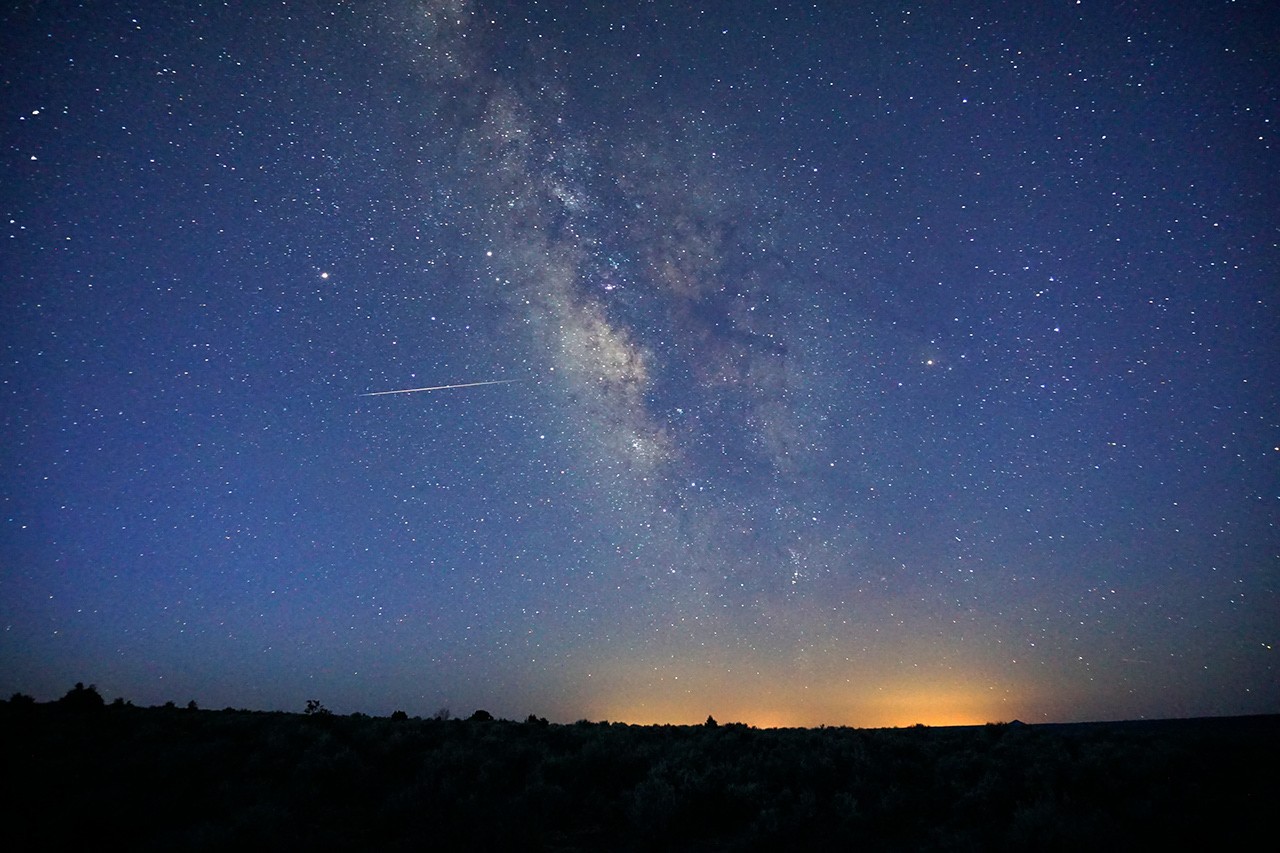
Shifting gaze skyward, April 2026 promises a celestial spectacle visible across Canada. On April 3, Mercury reaches its greatest elongation—its best morning appearance of the year—visible low in the eastern sky before sunrise. The Lyrid meteor shower peaks the night of April 21–22, with up to 18 meteors per hour radiating near the bright star Vega in the constellation Lyra.
Most intriguing is Comet C/2025 R3, which makes its closest approach to Earth on April 27 at a distance of 44 million miles. Though it may reach magnitude 8—requiring binoculars or a small telescope—it will be well-placed for predawn viewing from Canadian latitudes in the constellations Pegasus and Pisces. As NASA’s Chelsea Gohd notes, “April gives skywatchers plenty to look up for.”
Citations
- “What’s Up: April 2026 Skywatching Tips from NASA” – https://science.nasa.gov/solar-system/whats-up-april-2026-skywatching-tips-from-nasa/
- “Arctic Winter Sea Ice Ties Record Low, NASA, NSIDC Scientists Find” – https://science.nasa.gov/earth/arctic-winter-sea-ice-2026/
- “NASA to Unveil Complete Roman Telescope, Host Media Briefing” – https://www.nasa.gov/news-release/nasa-to-unveil-complete-roman-telescope-host-media-briefing/
Upcoming Launches
Artemis II
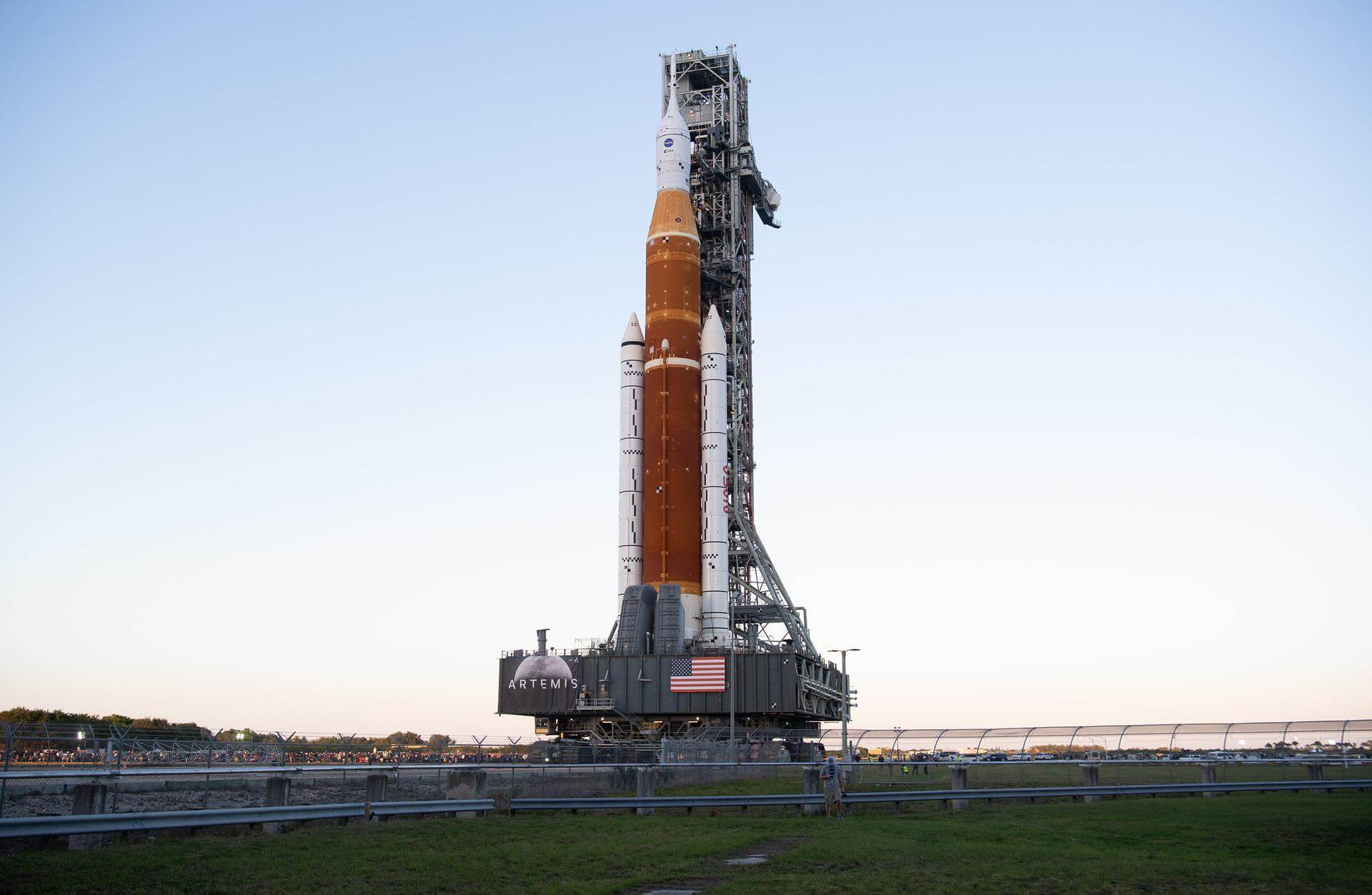
Launch Provider: National Aeronautics and Space Administration – Government
Launch Date: April 1, 2026
Launch Time: 10:24 PM UTC
Vehicle: Space Launch System (SLS)
Brief: Artemis II is the first crewed mission as part of the Artemis program. Artemis II will send a crew of 4 – 3 Americans and 1 Canadian around the moon and return them back to Earth.
The mission will test the core systems of NASA’s Orion spacecraft including the critical life support system, among other systems which could not be tested during Artemis I due to the lack of crew onboard.
Artemis III
Launch Provider: National Aeronautics and Space Administration – Government
Launch Date: June 30, 2027
Launch Time: 12:00 AM UTC
Vehicle: Space Launch System (SLS)
Brief: Artemis III is the second crew mission as part of the Artemis program. Artemis III will send a crew of 4 on a Low Earth Orbit mission, with the Orion rendezvous and dock with one or both commercial lunar landers in development by SpaceX and Blue Origin, performing in-space tests of the docked vehicles, integrated checkout of life support, communications, and propulsion systems, as well as tests of the new Extravehicular Activity (xEVA) suits.
📽️ No Livestream scheduled yet
Artemis IV
Launch Provider: National Aeronautics and Space Administration – Government
Launch Date: June 30, 2028
Launch Time: 12:00 AM UTC
Vehicle: Space Launch System (SLS)
Brief: Artemis IV is planned to be the first human lunar landing mission since the Apollo Program.
📽️ No Livestream scheduled yet
Artemis V
Launch Provider: National Aeronautics and Space Administration – Government
Launch Date: December 31, 2028
Launch Time: 12:00 AM UTC
Vehicle: Space Launch System (SLS)
Brief: Artemis V is planned to be the second human lunar landing mission since the Apollo Program.
📽️ No Livestream scheduled yet
SLS Block 1B | Artemis VI
Launch Provider: National Aeronautics and Space Administration – Government
Launch Date: September 30, 2030
Launch Time: 12:00 AM UTC
Vehicle: Space Launch System (SLS)
Brief: No description available
📽️ No Livestream scheduled yet
