
The Daily Broadcast: Quantum Leaps, Lunar Reboots, and Watching the Watchers

Canadian Startup SBQuantum Set to Launch Quantum Magnetometer
On March 30, 2026, a Canadian quantum sensor will make its way to orbit aboard a Spire Global satellite hitching a ride on a SpaceX Falcon 9 rideshare mission. SBQuantum, a Quebec-based startup, is sending its quantum diamond magnetometer—about the size of a quart of milk—into low-Earth orbit as part of the final phase of the U.S. National Geospatial-Intelligence Agency’s (NGA) MagQuest competition. This isn’t just another cubesat experiment: if successful, SBQuantum’s device could become a cornerstone in the next generation of World Magnetic Models, which underpin global navigation systems on land, air, and sea.
The magnetometer leverages quantum physics principles to continuously and precisely monitor Earth’s magnetic field. Such data could prove crucial in environments where GPS signals are degraded or denied—think polar regions, underground operations, or contested military zones. SBQuantum is one of three finalists in MagQuest, competing against a U.K. team (Iota Technology) and a U.S. team (University of Colorado, Boulder). Each finalist has received $1.55 million from NGA to design, build, and launch their systems. Founder David Roy-Guay called reaching this stage “the most significant technical milestone in our company’s history.”
While the launch is still upcoming, the implications are already resonating. Reliable, high-resolution magnetic data could enhance resource exploration, public safety, and national defence—areas of particular interest to Canada’s vast and remote geography.

ispace Overhauls Lunar Strategy with New ‘Ultra’ Lander
Japanese lunar company ispace has hit the reset button on its Moon ambitions. On March 27, 2026, it announced a major redesign of its lunar lander programme, scrapping the previously planned dual-track approach (Japan’s Series 3 and U.S.-built Apex 1.0) in favour of a single, unified vehicle called the “Ultra” lander. The shift comes after delays in developing the custom VoidRunner engine with U.S. firm Agile Space Industries. Instead, ispace will now use a flight-proven—but currently unnamed—engine from another supplier.
The consolidation means significant schedule slips. The first U.S. mission, originally slated for 2027 under NASA’s Commercial Lunar Payload Services (CLPS) contract with Draper, is now delayed until 2030 and renamed Mission 5. Meanwhile, ispace’s next two Moon landings—both using the Ultra design—are scheduled for 2028 and 2029, backed by Japanese government funding. The company also revealed plans for a new lunar communications constellation, “Lunar Connect Service,” with the first satellite launching in 2027 aboard an Argo Space orbital transfer vehicle (dubbed Mission 2.5).
Importantly, ispace is in discussions with NASA about the lander redesign and schedule change but awaits formal approval. The move reflects a growing realism in the commercial lunar sector: building reliable, scalable systems often requires stepping back before leaping forward. As ispace CEO Takeshi Hakamada noted, they’re positioning to support not just NASA’s Artemis base plans but a broader lunar economy expected to reach $3 billion annually by 2040.
GSSAP Satellites Conduct “Handoff” Surveillance of Chinese Shijian-29 Pair
In the silent theatre of geostationary orbit, 35,786 kilometres above Earth, a carefully choreographed surveillance operation unfolded between March 14 and 18, 2026. U.S. Geosynchronous Space Situational Awareness Program (GSSAP) satellites USA 324 and USA 325 executed a coordinated “handoff” to maintain continuous observation of China’s Shijian-29A and Shijian-29B spacecraft, according to data from commercial space domain awareness firm COMSPOC.
The two GSSAP satellites first bracketed the Chinese pair—one drifting east, the other west—to provide stereo observation angles. By March 19, USA 324 had closed to within 63 km of Shijian-29A, a notably close distance in the vastness of GEO. USA 325 then departed the area, completing the handover. Launched in late December 2025, the Shijian-29 pair are officially described by China’s main space contractor as conducting “verification tests of new technologies for space target detection”—a phrase that suggests they may themselves be space surveillance assets.
This makes the encounter a case of “inspectors watching inspectors,” as COMSPOC put it. The brightness disparity between the two Chinese satellites—Shijian-29A appears significantly brighter than 29B—hints at differing designs or purposes, though their exact capabilities remain unclear. Such manoeuvres underscore a broader trend: as major powers deploy more rendezvous-and-proximity-operation (RPO) capable spacecraft, the line between peaceful observation and potential counterspace activity continues to blur. For nations like Canada, which rely heavily on space infrastructure, maintaining awareness of these “silent dances” in orbit is not just strategic—it’s economic necessity.
Citations
- “SBQuantum and Spire to send quantum diamond magnetometer into orbit” – https://spacenews.com/sbquantum-and-spire-to-send-quantum-diamond-magnetometer-into-orbit/
- “ispace redesigns lunar lander, introduces lunar communications service” – https://spacenews.com/ispace-redesigns-lunar-lander-introduces-lunar-communications-service/
- “U.S. GSSAP satellites execute GEO handoff to monitor China’s Shijian-29 spacecraft” – https://spacenews.com/u-s-gssap-satellites-execute-geo-handoff-to-monitor-chinas-shijian-29-spacecraft/
Upcoming Launches
Starlink Group 17-17

Launch Provider: SpaceX – Commercial
Launch Date: March 26, 2026
Launch Time: 11:03 PM UTC
Vehicle: Falcon 9
Brief: A batch of 25 satellites for the Starlink mega-constellation – SpaceX’s project for space-based Internet communication system.
Shiyan 33
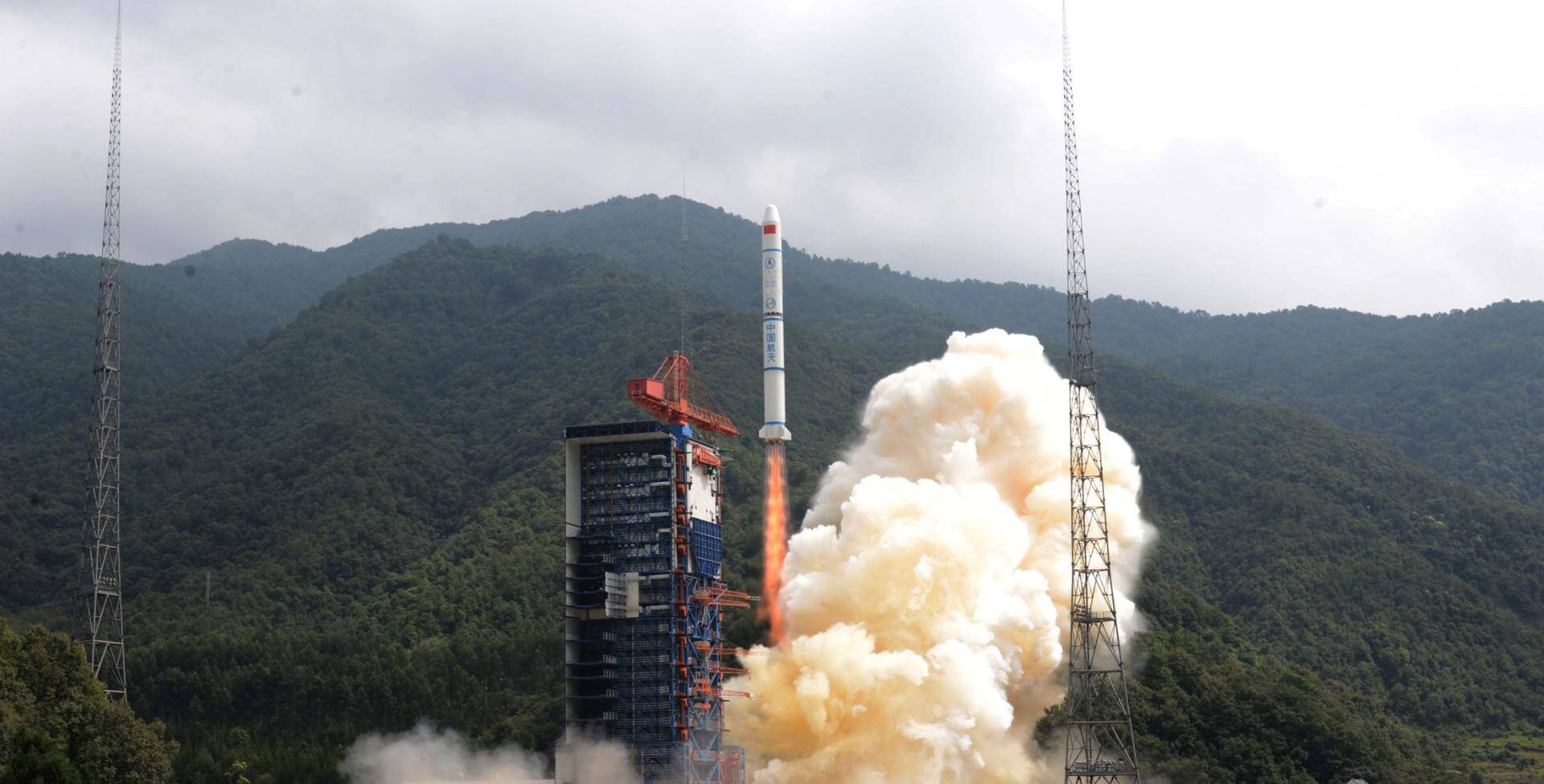
Launch Provider: China Aerospace Science and Technology Corporation – Government
Launch Date: March 27, 2026
Launch Time: 4:11 AM UTC
Vehicle: Long March 2C/YZ-1S
Brief: Chinese satellite reported to be for “space environment research” purposes. Actual usage not known.
📽️ No Livestream scheduled yet
Daughter Of The Stars (LEO-PNT Pathfinder A)
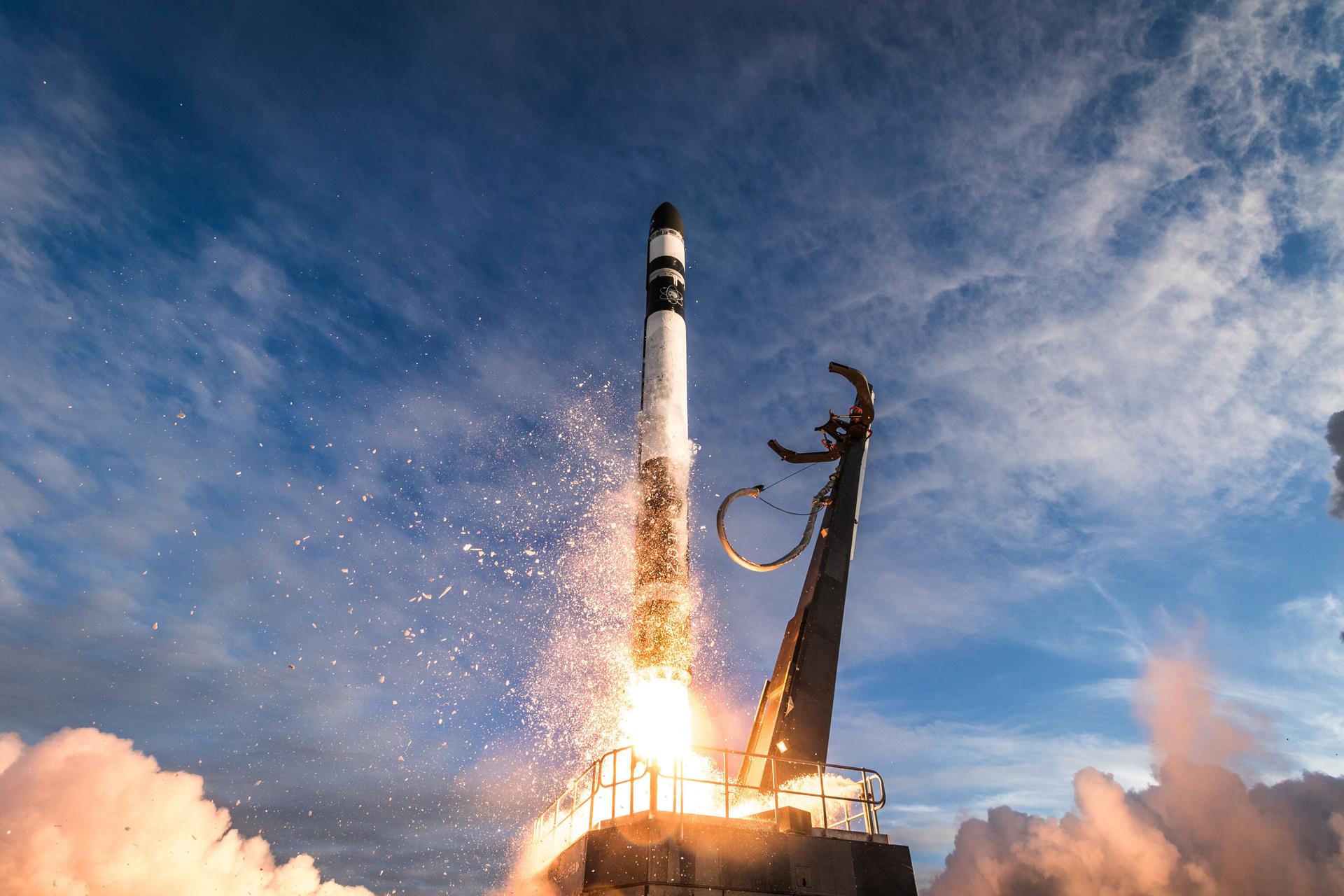
Launch Provider: Rocket Lab – Commercial
Launch Date: March 28, 2026
Launch Time: 9:14 AM UTC
Vehicle: Electron
Brief: The European Space Agency (ESA)’s LEO-PNT (Low Earth Orbit Positioning, Navigation and Timing) demonstrator mission will feature a 10-satellite constellation demonstration mission that will assess how a low Earth orbit fleet of satellites can work in combination with the Galileo and EGNOS constellations in higher orbits that provide Europe’s own global navigation system.
This launch will lift 2 “Pathfinder A” satellites built by Thales Alenia Space and GMV to a 510 km altitude Low Earth Orbit.
Onward and Upward
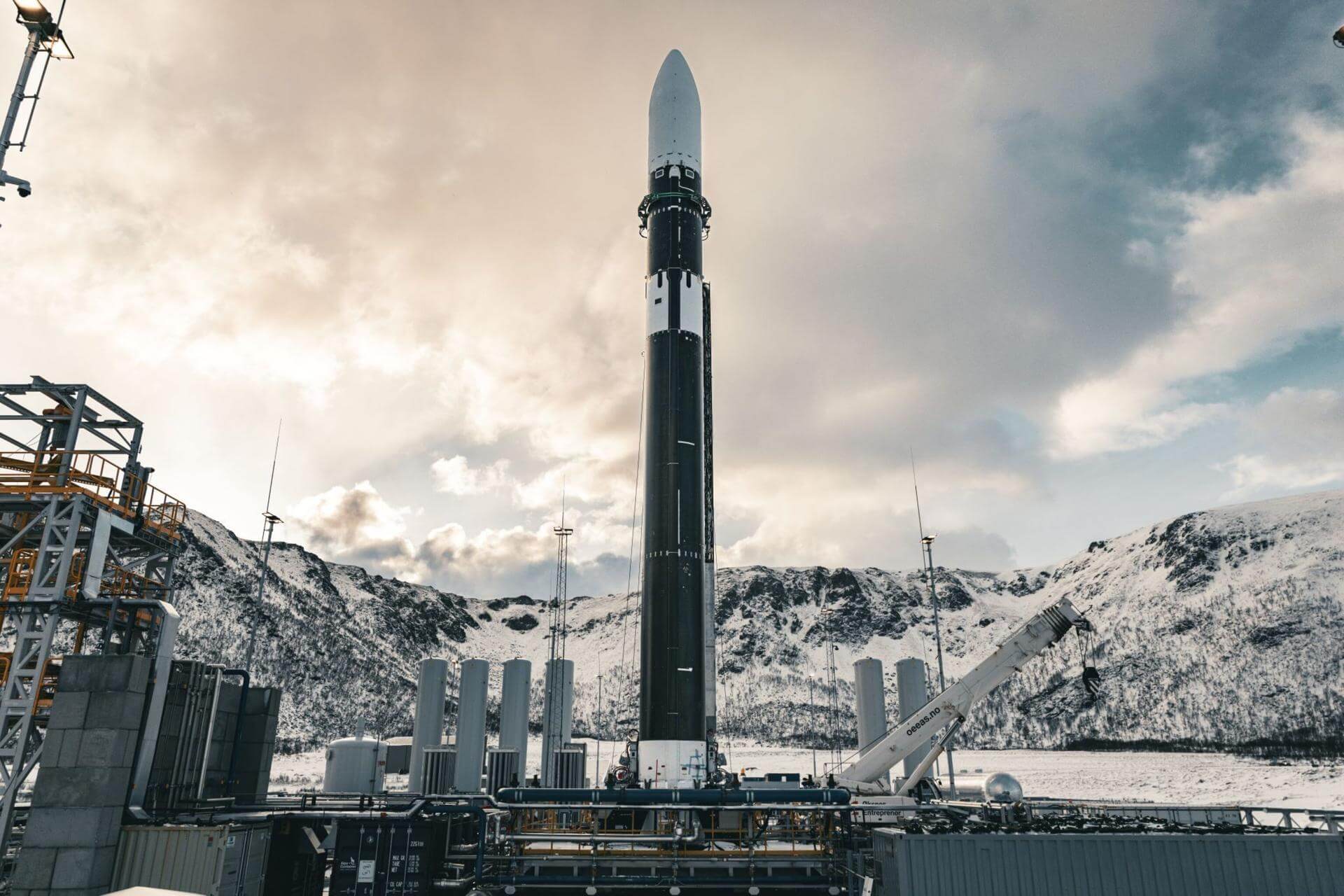
Launch Provider: Isar Aerospace – Private
Launch Date: March 28, 2026
Launch Time: 8:00 PM UTC
Vehicle: Spectrum
Brief: Second test flight of the Isar Spectrum launch vehicle. This launch will carry 5 cubesats and 1 non-separable experiment as part of European Space Agency (ESA)’s “Boost!” program:
* CyBEEsat (TU Berlin)
* TriSat-S (University of Maribor)
* Platform 6 (EnduroSat)
* FramSat-1 (NTNU)
* SpaceTeamSat1 (TU Wien Space Team)
* Let It Go (Dcubed, non-separable experiment)
Amazon Leo (LA-05)
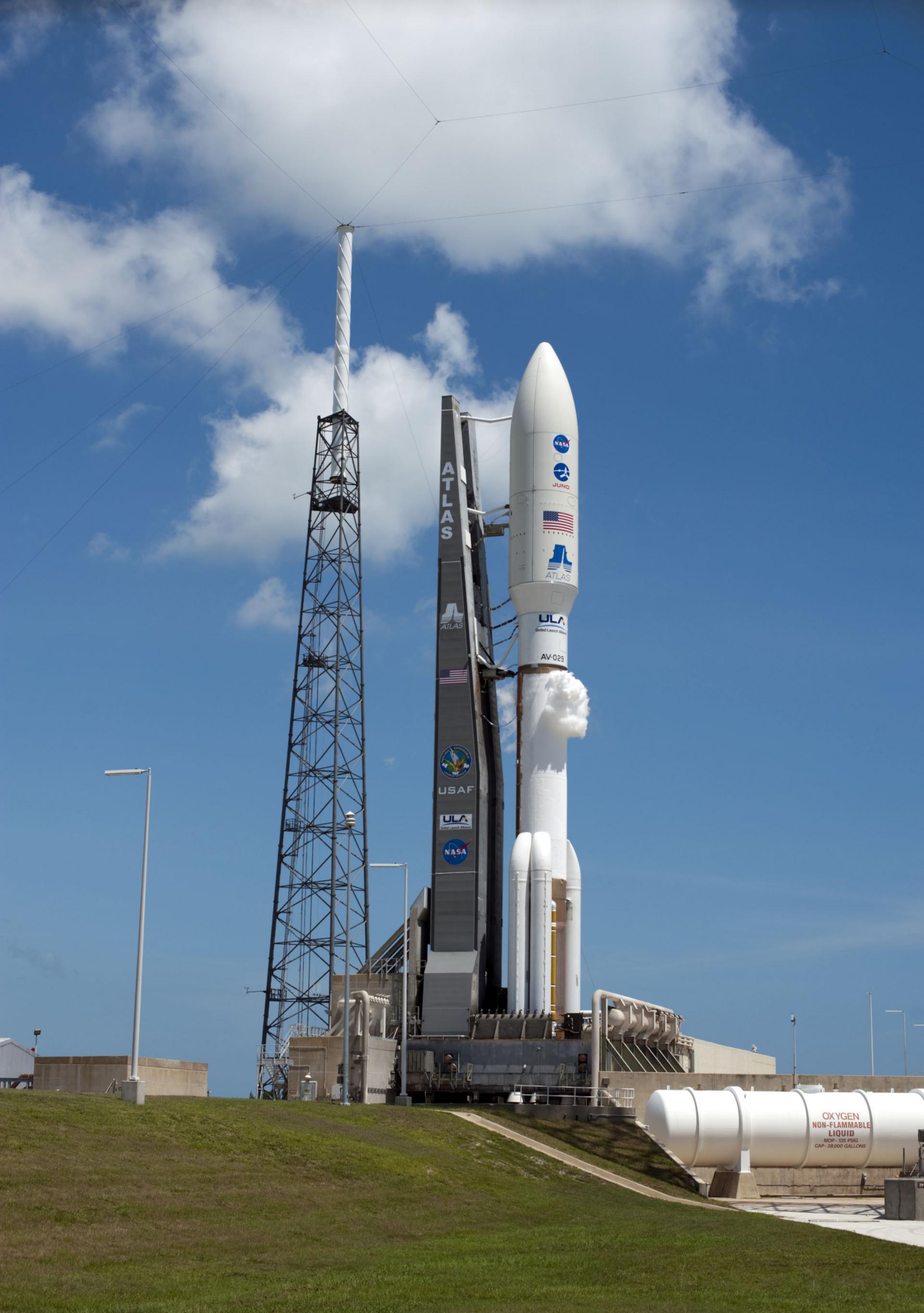
Launch Provider: United Launch Alliance – Commercial
Launch Date: March 29, 2026
Launch Time: 7:53 AM UTC
Vehicle: Atlas V 551
Brief: Amazon Leo, formerly known as Project Kuiper, is a mega constellation of satellites in Low Earth Orbit that will offer broadband internet access, this constellation will be managed by Kuiper Systems LLC, a subsidiary of Amazon. This constellation is planned to be composed of 3,276 satellites. The satellites are projected to be placed in 98 orbital planes in three orbital layers, one at 590 km, 610 km and 630 km altitude.
29 satellites are carried on this launch.
