
The Daily Broadcast: Interstellar Glimpses, Lunar Ambitions, and a Celeste Launch on the Horizon

Juice’s Historic Snapshot of an Interstellar Visitor
Back in November 2025, ESA’s Jupiter Icy Moons Explorer (Juice) pulled off a remarkable feat: capturing close-up observations of 3I/ATLAS, only the third interstellar object ever detected passing through our Solar System. Discovered in July 2025 by a telescope in Chile, 3I/ATLAS gave scientists little time to act—but Juice happened to be in the right place at the right time. Operating under tight thermal constraints during its “hot-cruise” phase following a Venus flyby, the spacecraft nonetheless executed a carefully choreographed observation campaign between 2 and 25 November 2025, with closest approach on 4 November at roughly 60 million kilometres (0.4 AU).
Juice used five of its scientific instruments—JANUS, MAJIS, UVS, SWI, and PEP—to gather 11.18 gigabits of data across seven observation windows. However, due to its Sun-pointing orientation for thermal protection, the data had to wait onboard until mid-January 2026, when Juice entered its “cold-cruise” phase. The long-awaited downlink finally occurred during two 11-hour passes on 17 and 20 February 2026 via ESA’s deep space antennas in New Norcia, Australia, and Malargüe, Argentina. Mission teams are now analysing the data, with initial results expected soon. As Juice prepares for its Earth flyby in September 2026, this unplanned detour has already proven the spacecraft’s agility—a valuable rehearsal for the complex operations awaiting it at Jupiter.

Lunar Lander Firms Gear Up for Monthly Moon Missions
Firefly Aerospace and Intuitive Machines say they’re ready to support NASA’s bold new vision: sending robotic landers to the Moon as frequently as once per month starting in 2027. The proposal, championed by NASA Administrator Jared Isaacman, aims to accelerate learning for sustained lunar presence. Though only Firefly’s Blue Ghost 1 lander has fully succeeded so far—landing safely in March 2025—both companies are confident they can scale up production. Firefly CEO Jason Kim noted recent investments in expanded clean rooms, partly funded by the Texas Space Commission, while Intuitive Machines’ Steve Altemus pointed to their recent acquisition of satellite manufacturer Lanteris Space Systems as key to boosting capacity.
Neither company has flown a lander since March 2025, but upcoming missions are on the calendar: Intuitive Machines’ IM-3 is expected later this year, and Firefly’s Blue Ghost 2 is slated for late 2026 or early 2027. Both firms also highlighted NASA’s planned “CLPS 2.0” contract framework, which could enable block purchases and support larger lander variants. Meanwhile, Firefly is transitioning to its enhanced Alpha Block 2 rocket following a successful return-to-flight launch on March 11, 2026, and continuing work on its medium-lift Eclipse rocket with Northrop Grumman, targeting a no-earlier-than-2027 debut.
Celeste Set to Pioneer Europe’s LEO Navigation Layer
Mark your calendars: on March 25, 2026, at 10:14 CET (4:14 a.m. EDT), Rocket Lab’s Electron rocket will lift off from Māhia Peninsula, New Zealand, carrying the first two satellites of ESA’s Celeste mission. This launch—streamed live starting at 9:53 CET on ESA WebTV and YouTube—kicks off Europe’s first in-orbit demonstration of a Low Earth Orbit Positioning, Navigation, and Timing (LEO-PNT) system.
Celeste aims to complement the existing Galileo constellation in medium Earth orbit by testing new signals across multiple frequency bands from a closer vantage point. The mission, approved at ESA’s 2022 Ministerial Council and reinforced in 2025, involves over 50 entities from 14 countries and forms part of ESA’s European Resilience from Space (ERS) initiative. If successful, Celeste could pave the way for a more robust, jam-resistant navigation infrastructure for both civilian and security applications across Europe. Though the launch hasn’t happened yet, anticipation is building—particularly among those attending the Munich Space Summit, where the event will be broadcast live. This mission may not involve Canadian hardware or astronauts, but as users of precise positioning services from coast to coast, Canadians will ultimately benefit from more resilient global navigation systems.

Citations
- “A rare encounter: How Juice came to observe 3I/ATLAS” – https://www.esa.int/Enabling_Support/Operations/A_rare_encounter_How_Juice_came_to_observe_3IATLAS
- “Lunar lander developers say they are ready to meet anticipated increased NASA demand” – https://spacenews.com/lunar-lander-developers-say-they-are-ready-to-meet-anticipated-increased-nasa-demand/
- “Watch live: First Celeste launch” – https://www.esa.int/Applications/Satellite_navigation/Watch_live_First_Celeste_launch
Upcoming Launches
Starlink Group 10-62

Launch Provider: SpaceX – Commercial
Launch Date: March 22, 2026
Launch Time: 2:47 PM UTC
Vehicle: Falcon 9
Brief: A batch of 29 satellites for the Starlink mega-constellation – SpaceX’s project for space-based Internet communication system.
10 x CentiSpace-1

Launch Provider: China Rocket Co. Ltd. – Commercial
Launch Date: March 22, 2026
Launch Time: 3:49 PM UTC
Vehicle: Smart Dragon 3
Brief: Chinese commercial small satellites by Beijing-based company Future Navigation for providing GNSS augmentation signals services from LEO. They are part of a planned 160 satellites constellation.
Unknown Payload
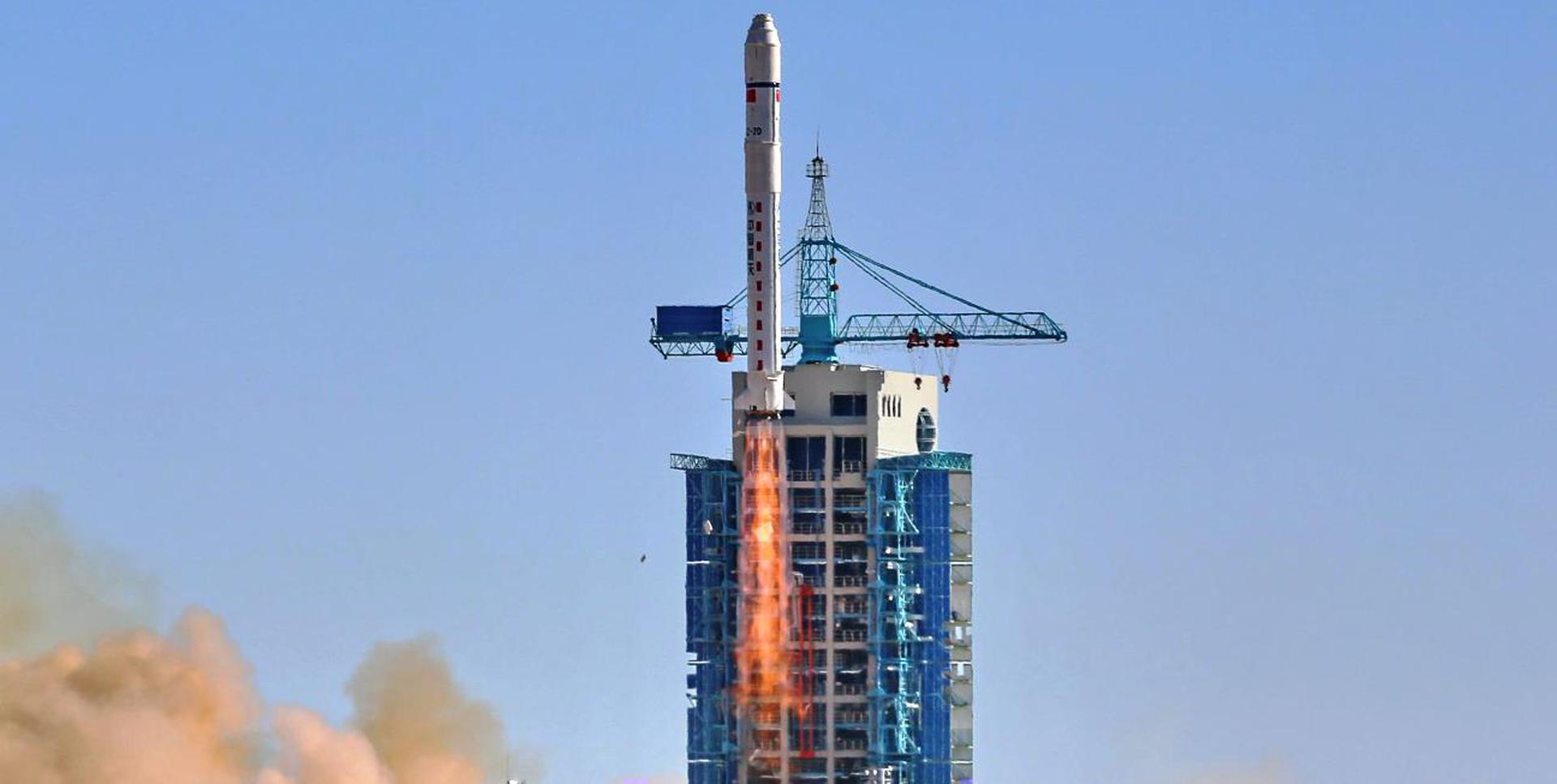
Launch Provider: China Aerospace Science and Technology Corporation – Government
Launch Date: March 23, 2026
Launch Time: 11:00 AM UTC
Vehicle: Long March 2D
Brief: Details TBD.
📽️ No Livestream scheduled yet
Starlink Group 17-17
Launch Provider: SpaceX – Commercial
Launch Date: March 24, 2026
Launch Time: 11:03 PM UTC
Vehicle: Falcon 9
Brief: A batch of 25 satellites for the Starlink mega-constellation – SpaceX’s project for space-based Internet communication system.
Daughter Of The Stars (LEO-PNT Pathfinder A)

Launch Provider: Rocket Lab – Commercial
Launch Date: March 25, 2026
Launch Time: 9:14 AM UTC
Vehicle: Electron
Brief: The European Space Agency (ESA)’s LEO-PNT (Low Earth Orbit Positioning, Navigation and Timing) demonstrator mission will feature a 10-satellite constellation demonstration mission that will assess how a low Earth orbit fleet of satellites can work in combination with the Galileo and EGNOS constellations in higher orbits that provide Europe’s own global navigation system.
This launch will lift 2 “Pathfinder A” satellites built by Thales Alenia Space and GMV to a 510 km altitude Low Earth Orbit.
