
The Daily Broadcast: From Lunar Pivot to Canadian Robotics: Shifting Gears in Space Exploration

NASA Charts Bold New Course: Moon Base Over Gateway
In a strategic pivot officially unveiled during its “Ignition” event on March 24, 2026, NASA has paused its long-standing Lunar Gateway programme and redirected its focus—and funding—toward building a sustained human presence directly on the Moon’s surface. The agency confirmed that the Gateway, an orbiting space station intended to support Artemis missions, is not being outright cancelled but “paused,” with key hardware like the Power and Propulsion Element (PPE), HALO, and I-Hab modules potentially repurposed for surface infrastructure.
The new Moon Base initiative is structured in three phases through 2036, backed by at least $30 billion in planned investment. Phase 1 (through 2028) is already underway and includes up to 21 uncrewed landings via the Commercial Lunar Payload Services (CLPS) programme, one crewed landing, and the deployment of lunar communication constellations offering 500 Mbps bandwidth—more than double the average U.S. home internet speed. Future phases will introduce pressurised rovers (with JAXA contributing a mobile habitat), in-situ resource utilization for oxygen and fuel production, and eventually support crews of four for month-long stays.
Transportation is also evolving: starting with Artemis VI, NASA plans to transition from government-operated Space Launch System (SLS) missions to a commercially sustained lunar transport ecosystem. A Request for Information has been issued to secure at least two launch providers capable of supporting semi-annual crewed landings.

Canada’s Lunar Ambitions Get a Robotic Boost
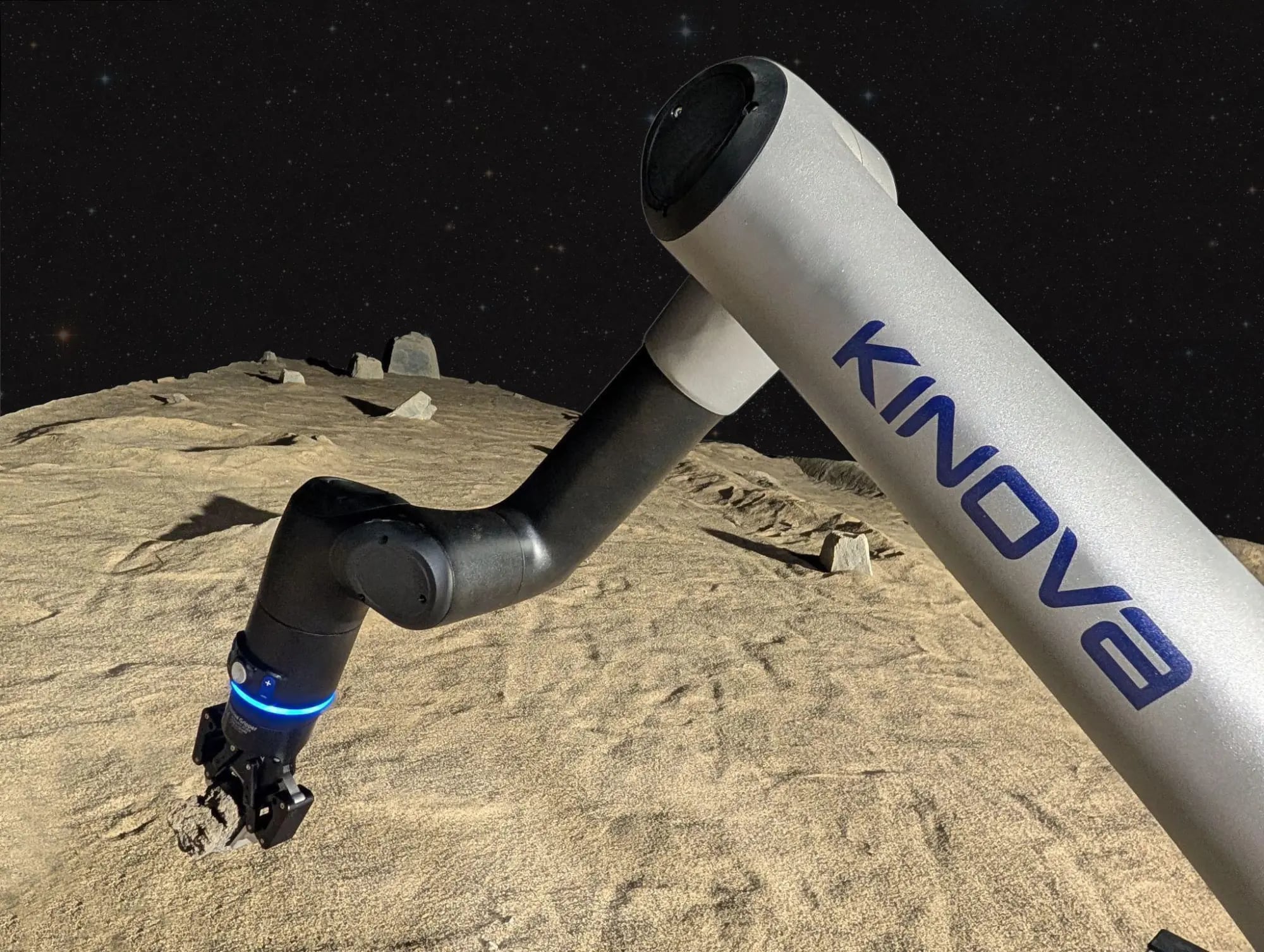
While NASA reorients toward the lunar surface, Canada is stepping up its own contribution through the Lunar Utility Vehicle (LUV)—a 1,000-kilogram “workhorse” designed for a decade-long mission at the Moon’s south pole. On March 25, 2026, SpaceQ reported that Quebec-based Kinova has joined Mission Control’s consortium to develop the LUV’s robotic manipulator system, marking a significant upgrade from the recently shelved 30-kilogram Lunar Rover Mission.
Kinova, known for its medical and industrial robotics, will engineer an arm capable of handling samples, moving cargo, and maintaining infrastructure in the Moon’s extreme environment—where temperatures can plunge to -200°C during the 14-day lunar night. The company joins Mission Control (providing AI-driven flight software) and Alberta’s Indigenous-owned Eagle Flight Network, which will supply sovereign ground-station communications.
This effort aligns closely with NASA’s new Moon Base vision. The LUV is explicitly intended to support Artemis surface operations, and its development is part of Canada’s broader commitment to lunar exploration. The current $4.7 million Phase 0 study contract focuses on defining operational tasks and core technologies ahead of a full prototype. With three consortia in the running—including Canadensys Aerospace and MDA Space—Canada is positioning itself as a key enabler of sustained lunar activity.
Nuclear-Powered Pathfinder Heads for Mars by 2028
Also emerging from NASA’s Ignition event is an ambitious 2028 mission to Mars: Space Reactor-1 (SR-1) Freedom, a nuclear electric propulsion demonstrator that will repurpose Gateway hardware for deep space. Scheduled to launch at the end of 2028, SR-1 Freedom will carry a 20-kilowatt fission reactor using high-assay low-enriched uranium (HALEU), mounted on a truss opposite the repurposed Power and Propulsion Element (PPE).
According to NASA, this mission aims to break decades of stagnation in space nuclear power development. “The lack of an operational space nuclear reactor is not a technology problem. It’s an execution problem,” said Steve Sinacore, program executive for NASA’s Fission Surface Power programme. By taking the reactor development in-house with support from the Department of Energy—and sharing the design openly with industry—NASA hopes to create a scalable blueprint for future lunar and Martian power systems.
Upon arrival at Mars roughly a year after launch, SR-1 Freedom will deploy SkyFall, a science payload featuring three Ingenuity-like helicopters to scout potential human landing sites and search for subsurface water ice. The mission’s ultimate fate remains undecided: it may enter Mars orbit or continue on to test its propulsion system further. Either way, SR-1 Freedom represents a concrete step toward faster, more capable deep-space travel—and a clear signal that NASA’s ambitions now stretch well beyond the Moon.

Citations
- “NASA outlines Moon Base plans, pivots on Gateway” – https://www.nasaspaceflight.com/2026/03/nasa-moon-base-pivots-gateway/
- “Kinova joins Mission Control-led consortium for Canadian Lunar Utility Vehicle bid” – https://spaceq.ca/kinova-joins-mission-control-led-consortium-for-canadian-lunar-utility-vehicle-bid/
- “NASA to test nuclear electric propulsion with 2028 mission to Mars” – https://spacenews.com/nasa-to-test-nuclear-electric-propulsion-with-2028-mission-to-mars/
Upcoming Launches
SuperView Neo 2-05 & 06
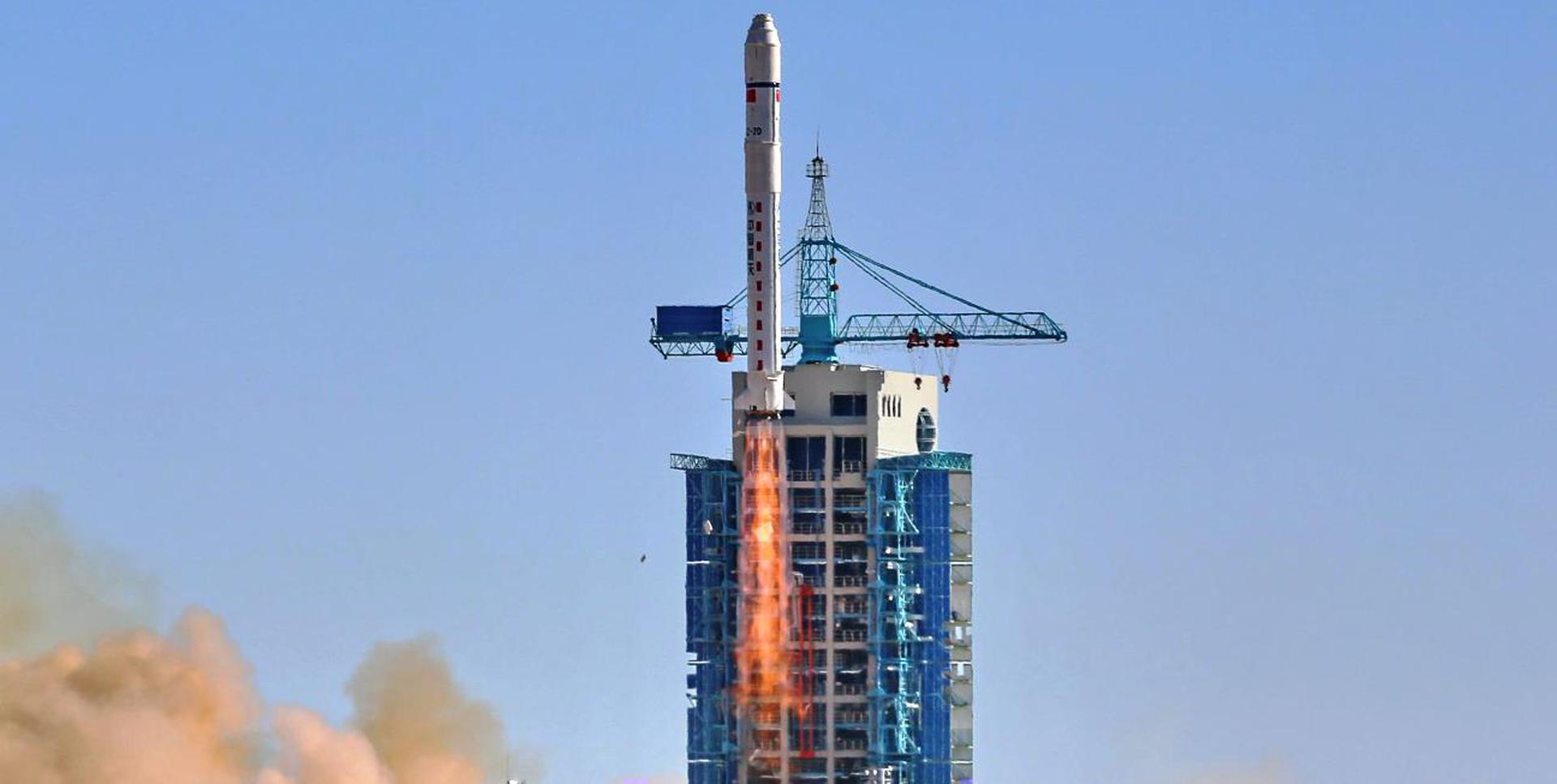
Launch Provider: China Aerospace Science and Technology Corporation – Government
Launch Date: March 25, 2026
Launch Time: 10:51 PM UTC
Vehicle: Long March 2D
Brief: Commercial Synthetic-aperture radar Earth observation satellites built by CAST for China Siwei Survey and Mapping Technology Co. Ltd.
📽️ No Livestream scheduled yet
Starlink Group 17-17
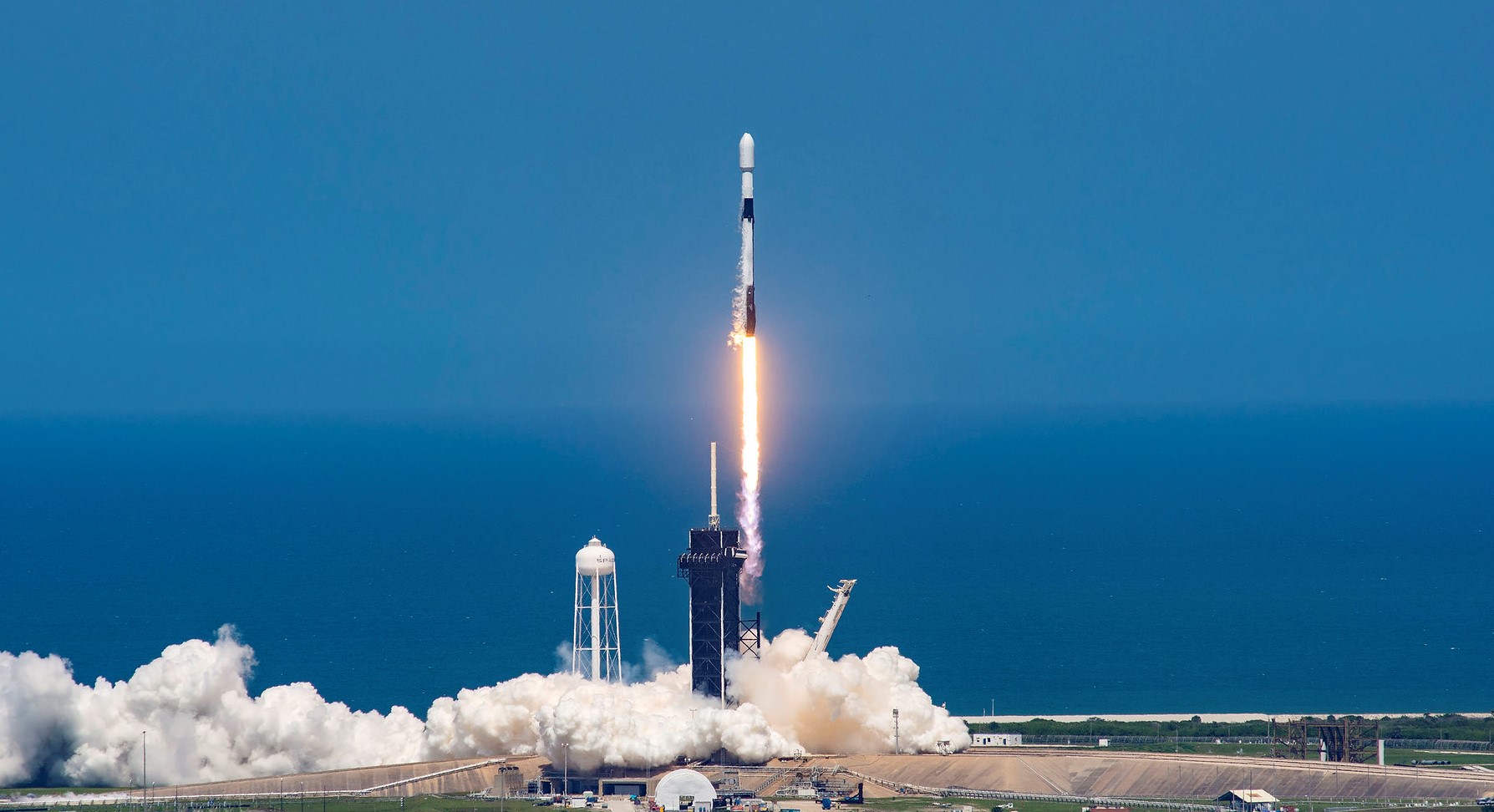
Launch Provider: SpaceX – Commercial
Launch Date: March 26, 2026
Launch Time: 11:03 PM UTC
Vehicle: Falcon 9
Brief: A batch of 25 satellites for the Starlink mega-constellation – SpaceX’s project for space-based Internet communication system.
Unknown Payload
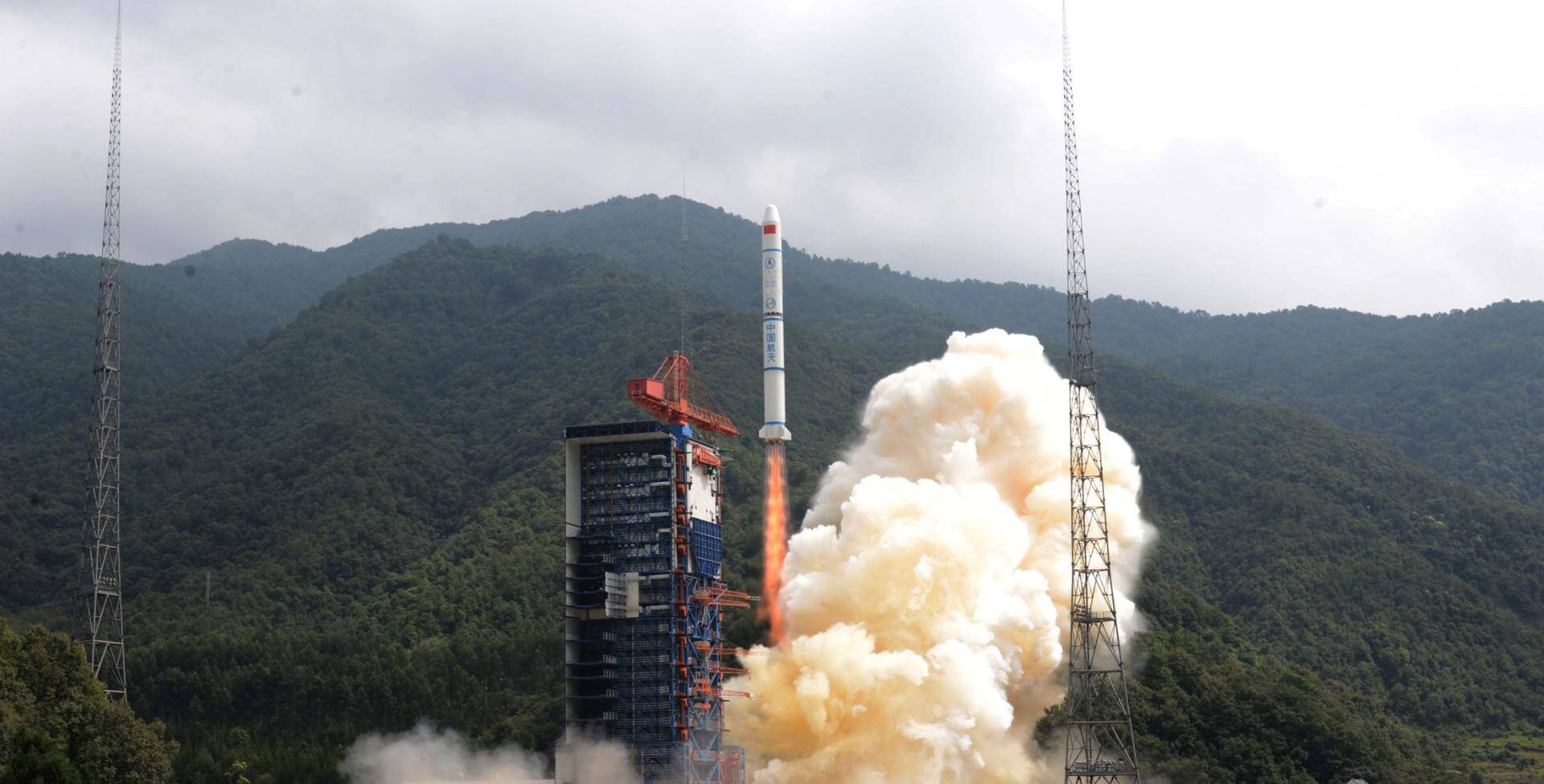
Launch Provider: China Aerospace Science and Technology Corporation – Government
Launch Date: March 27, 2026
Launch Time: 4:10 AM UTC
Vehicle: Long March 2C/YZ-1S
Brief: Details TBD.
📽️ No Livestream scheduled yet
Starlink Group 10-44
Launch Provider: SpaceX – Commercial
Launch Date: March 27, 2026
Launch Time: 11:00 AM UTC
Vehicle: Falcon 9
Brief: A batch of 29 satellites for the Starlink mega-constellation – SpaceX’s project for space-based Internet communication system.
Amazon Leo (LA-05)
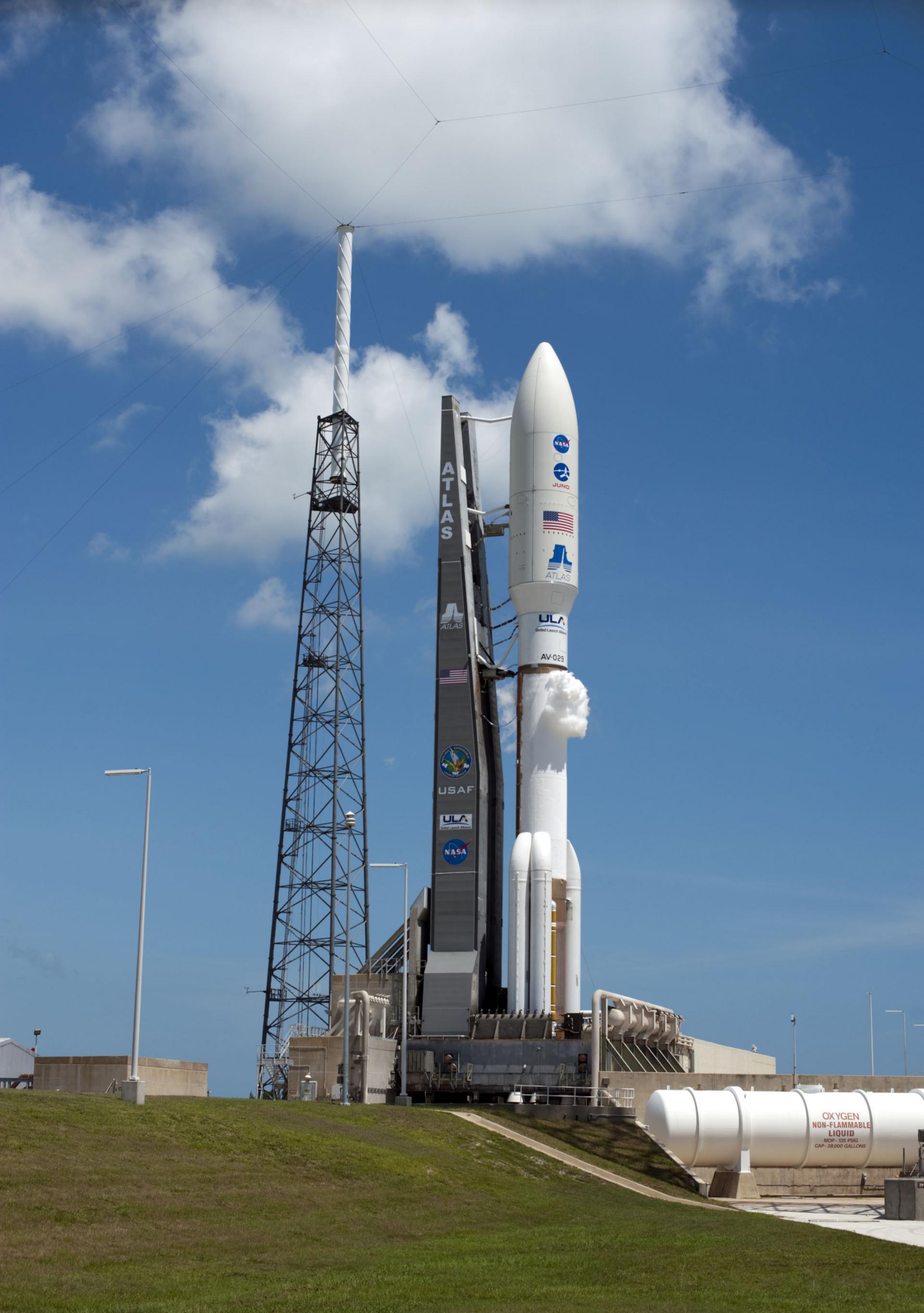
Launch Provider: United Launch Alliance – Commercial
Launch Date: March 29, 2026
Launch Time: 7:53 AM UTC
Vehicle: Atlas V 551
Brief: Amazon Leo, formerly known as Project Kuiper, is a mega constellation of satellites in Low Earth Orbit that will offer broadband internet access, this constellation will be managed by Kuiper Systems LLC, a subsidiary of Amazon. This constellation is planned to be composed of 3,276 satellites. The satellites are projected to be placed in 98 orbital planes in three orbital layers, one at 590 km, 610 km and 630 km altitude.
29 satellites are carried on this launch.
