
The Commercial Space: March 2026: Firefly’s Lunar Triumph, Relativity Builds Toward Flight, and Quiet Progress Elsewhere
Stoked News: Hot Fires and Hardware Forward
Though Stoked Space hasn’t launched anything recently—or announced immediate plans to—they’ve been busy behind the scenes advancing their Andromeda engine and vehicle integration. The past month saw a flurry of activity at their test site in Moses Lake, Washington, where the company conducted a “chirp test” of their thrust vector control system on March 24, 2026. This test involved gimbaling the Zenith engine at increasing frequencies to validate control bandwidth—essentially checking how quickly the engine can respond to flight commands.
Earlier in March, Stoked shipped a flight-ready Andromeda engine to Moses Lake, a milestone celebrated with a nod to local partners like the Port of Moses Lake and Grant County Sheriff’s Office. That engine joins others that have collectively logged over 5,400 seconds of hot-fire testing—a figure the team toasted on March 6 with a literal champagne send-off for their development engine. Fit-check tests also passed successfully in late February, with the second-stage engine mated to the first-stage forward module without issue.
While Stoked hasn’t revealed a launch date for its debut orbital flight, the steady cadence of engine tests and integration milestones suggests hardware is maturing. Canadian observers will note that, for now, the company’s operations remain U.S.-focused, with no announced Canadian payloads or partnerships this month. Still, for a startup building a fully reusable launch system from scratch, consistent ground testing is a promising sign that they’re not just stoking hype—but hardware.

News From a Firefly: Return to Flight and Lunar Legacy
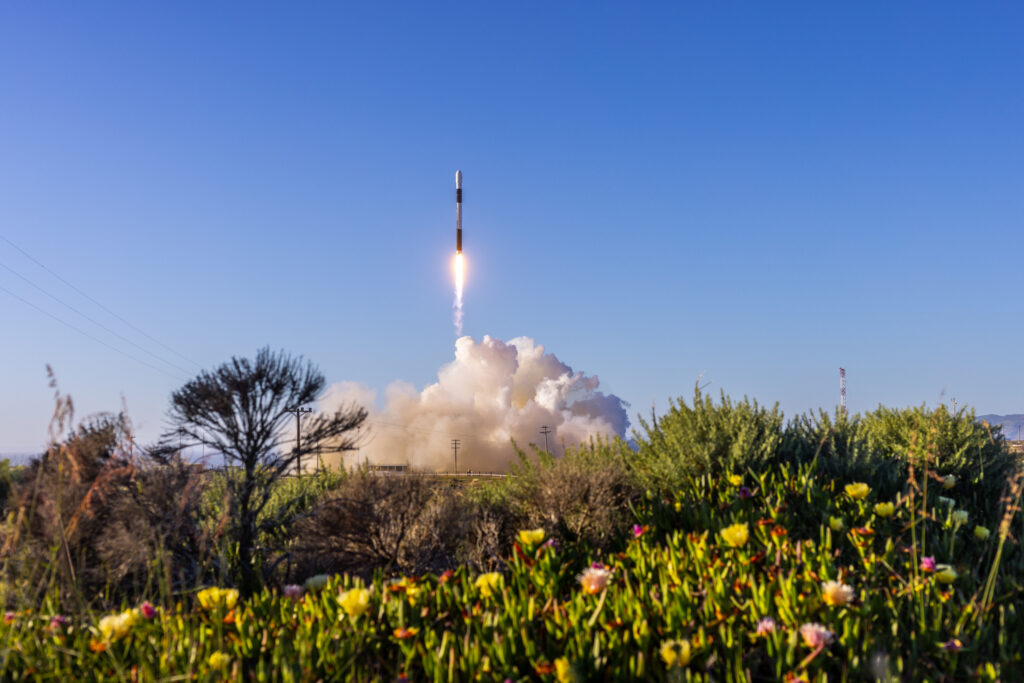
Firefly Aerospace had a banner March, capped by two major achievements: a successful return-to-flight of its Alpha rocket and a prestigious Collier Trophy for its historic Blue Ghost lunar mission. On March 11, 2026, Alpha Flight 7—dubbed “Stairway to Seven”—lifted off from Vandenberg Space Force Base at 5:50 p.m. PDT, delivering a Lockheed Martin demonstrator payload to orbit. The mission validated key upgrades for the upcoming Alpha Block II configuration, including a new in-house avionics suite, enhanced thermal protection, and a stage two engine relight.
Just a week later, on March 18, Firefly was awarded the 2025 Robert J. Collier Trophy for Blue Ghost Mission 1, which last year became the first fully successful commercial lunar landing. The lander operated for two weeks in Mare Crisium, returning nearly 120 gigabytes of data—far exceeding expectations—and earned Firefly a $10 million NASA addendum for the extra imagery, including the first high-resolution photos of a solar eclipse taken from the Moon’s surface.
Looking ahead, Firefly is preparing Blue Ghost Mission 2 and developing Ocula, billed as the first commercial lunar imaging and mapping service. Starting no earlier than late 2026, Ocula will use Firefly’s Elytra orbital vehicles—initially deployed as transfer stages—to capture high-resolution lunar imagery for science, national security, and commercial customers. Though no Canadian entities are directly involved in these missions yet, Firefly’s data-as-a-service model could offer future opportunities for Canadian researchers and firms eyeing lunar resources.
The Relativity Report: Terran R Takes Shape
Relativity Space continues its methodical march toward the inaugural launch of its partially reusable Terran R rocket, with February’s progress detailed in a March 9 company update. Across design, build, test, and launch sites, the company is advancing on multiple fronts. In Long Beach, California, the second stage tank is nearing completion, with harnesses installed, composite raceway covers in place, and the common dome baffle being fitted. The first stage tank has completed weld buy-offs and instrumentation bracket installation, while the thrust structure sees engine feedlines being welded and avionics boxes arriving for low-voltage checkouts.
Propulsion remains on pace: additional Aeon R (first stage) and Aeon V (second stage) flight engines have been manufactured, assembled, and shipped to NASA’s Stennis Space Center for acceptance and development testing. Meanwhile, infrastructure at the A2 test stand is progressing, with the “live ring”—a critical structural interface—now in place.
On the Space Coast, Launch Complex 16 at Cape Canaveral is taking form. The 1.1-million-pound launch mount and transporter-erector upper strongback have arrived on-site, insulation and siding work continues on the horizontal integration facility, and lightning protection piles have been driven 98 feet underground. While Relativity hasn’t announced a launch date for Terran R, the synchronized progress across factory, test stand, and launch pad suggests they’re building not just a rocket, but a scalable launch ecosystem. No Canadian connections were noted this month.

Axiom Updates: Building Stations and Welcoming World Leaders
Axiom Space kept a relatively low profile in March in terms of major hardware milestones, but reinforced its role as a leader in commercial human spaceflight through diplomacy, design, and policy advocacy. The company welcomed Hungarian President Dr. Tamás Sulyok to its Houston headquarters, celebrating Hungary’s participation in Axiom Mission 4 (Ax-4)—which saw the nation’s first astronaut fly to the International Space Station aboard a prior Axiom mission. This visit underscored Axiom’s growing role as a bridge between governments and commercial space access.
Engineering updates continued on Axiom Station, the company’s planned free-flying commercial space station. A March 6 video spotlighted hatch design lead Jonathan Morales, detailing the development of the station’s pressurized hatches—a critical but often overlooked element of orbital infrastructure. CEO Jonathan Cirtain also emphasized Axiom’s vision for low Earth orbit in a SpaceNews interview, framing the company as a catalyst for a vibrant space economy.
Axiom also voiced support for the NASA Authorization Act of 2026, signalling alignment with U.S. congressional efforts to ensure a smooth transition from the ISS to commercial stations. While no new Canadian astronauts or payloads were announced this month, Axiom’s model—enabling national missions like Hungary’s—remains relevant to Canada’s ongoing interest in maintaining human spaceflight capability beyond the ISS era. For now, Axiom’s next mission remains unannounced, but its station hardware continues to take shape on Earth.

Citations
- “Firefly Aerospace Successfully Launches Alpha Flight 7” – https://fireflyspace.com/news/firefly-aerospace-successfully-launches-alpha-flight-7/
- “Firefly Aerospace Selected for the 2025 Robert J. Collier Trophy” – https://fireflyspace.com/news/firefly-aerospace-selected-for-the-2025-robert-j-collier-trophy/
- “Firefly Lights the Way to Lunar Data Services” – https://fireflyspace.com/news/firefly-lights-the-way-to-lunar-data-services/
- “February 2026 Company Update” – https://www.relativityspace.com/press-release/2026/3/8/february-2026-company-update
- Tweet from Stoked Space, March 24, 2026 – https://x.com/stoke_space/status/2036425852510986522
- Tweet from Axiom Space, March 17, 2026 – https://x.com/Axiom_Space/status/2033925826194850012
Upcoming Launches
VICTUS HAZE Jackal
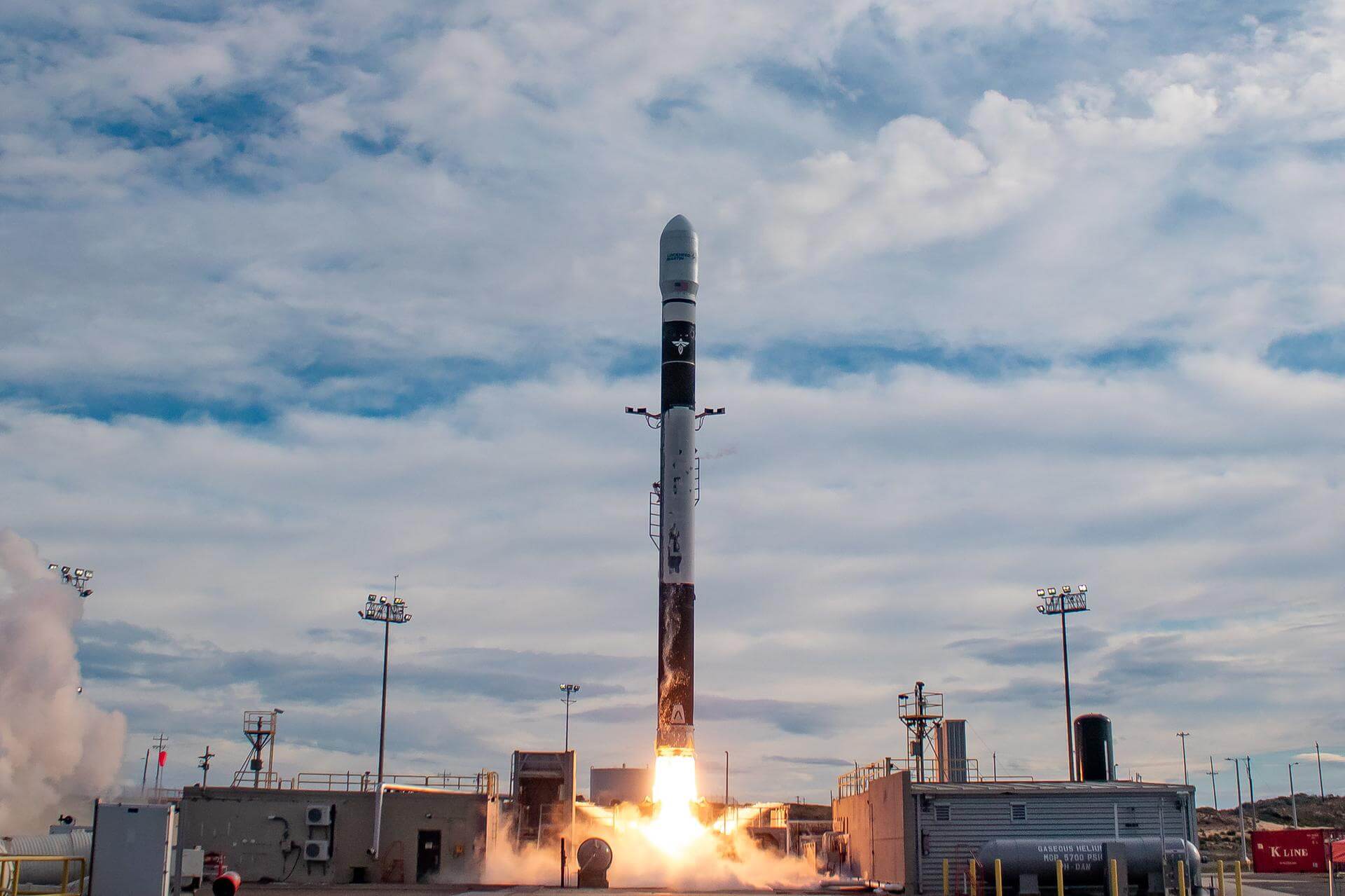
Launch Provider: Firefly Aerospace – Commercial
Launch Date: June 30, 2026
Launch Time: 12:00 AM UTC
Vehicle: Firefly Alpha Block 2
Brief: True Anomaly’s Jackal Autonomous Orbital Vehicle (AOV) will support U.S. Space Force Space Systems Command’s VICTUS HAZE Tactically Responsive Space (TacRS) mission with operations in orbit proximity with another spacecraft built by Rocket Lab National Security.
The spacecraft, once completed, will remain on call until the U.S. Space Force provides the notice to launch. The Firefly team will then have 24 hours to transport the payload fairing to the pad, mate the fairing to the Alpha rocket, fuel the rocket, and launch within the first available window.
QuickSounder
Launch Provider: Firefly Aerospace – Commercial
Launch Date: September 30, 2026
Launch Time: 12:00 AM UTC
Vehicle: Firefly Alpha Block 2
Brief: QuickSounder is the first satellite mission of the Near Earth Orbit Network (NEON) program of the National Oceanic and Atmospheric Administration (NOAA), which aims to replace the current Joint Polar Satellite System (JPSS) series of polar orbit weather satellites. This pathfinder mission will demonstrate NOAA’s ability to launch a small satellite within 3 years, flying a refurbished Advanced Technology Microwave Sounder (ATMS) instrument to polar orbit.
INCUS
Launch Provider: Firefly Aerospace – Commercial
Launch Date: October 31, 2026
Launch Time: 12:00 AM UTC
Vehicle: Firefly Alpha Block 2
Brief: The Investigation of Convective Updrafts (INCUS) is a NASA Earth science mission led by Colorado State University that will investigate the behavior of tropical storms in order to better represent these storms in weather and climate models. It consists of 3 SmallSats flying in tight coordination to study why convective storms, heavy precipitation, and clouds occur exactly when and where they form.
Each satellite will have a high frequency precipitation radar that observes rapid changes in convective cloud depth and intensities. 1 of the 3 satellites also will carry a microwave radiometer to provide the spatial content of the larger scale weather observed by the radars. By flying so closely together, the satellites will use the slight differences in when they make observations to apply a novel time-differencing approach to estimate the vertical transport of convective mass.
TacSat
Launch Provider: Firefly Aerospace – Commercial
Launch Date: December 31, 2026
Launch Time: 12:00 AM UTC
Vehicle: Firefly Alpha Block 2
Brief: First of up to 25 launches of Low Earth Orbit technology demonstration satellites to be built and operated by Lockheed Martin.
TacSat is an intelligence, surveillance and reconnaissance spacecraft with a mission to prove specialized sensing and communications capabilities on orbit. The satellite will participate in exercises that highlight cross-domain kill-web connectivity, enabling timely execution of tactical space missions.
TacSat will host a proven Lockheed Martin infrared sensor on board that brings previously developed technology to space for the first time. This sensor produces high quality imagery and it can interface with federated Battle Management Command & Control (BMC2) combat systems to provide joint forces with a comprehensive view of threats.
The satellite will also feature Lockheed Martin’s first 5G.MIL® payload on orbit. This provides cellular-like networking for military space assets, making satellite constellations more resilient. It also helps enable seamless connectivity with tools in the air, at sea and on land.
Launch operation will also again demonstrate responsive space pre-launch operation capabilities.
