The Commercial Space: April’s Lunar Leap: Commercial Space Advances as Artemis II Returns
Stoked News
Stoked Space may be keeping a low profile in terms of press releases, but the Canadian startup is quietly assembling what it hopes will be a formidable small launch vehicle. Over the past month, the team has shared several behind-the-scenes glimpses of progress on its Zenith engine and first-stage hardware via social media.
On March 24, 2026, Stoked conducted a “chirp test” of its thrust vector control system—a critical demonstration of how quickly the engine can respond to flight commands by gimbaling at increasing frequencies. Later that month, the company fitted one of its Zenith engines into the aft module of the first stage, marking a key integration milestone. Most recently, on April 8, Stoked shared photos of its nearly complete first-stage structure, with one team member joking it resembled “a space hot dog.”
While no launch date has been announced yet, and no major contracts or Canadian payloads have surfaced publicly this month, Stoked’s steady hardware progress suggests it’s moving beyond conceptual design into tangible build-out. For a company still in its early development phase, that’s no small feat—especially while juggling interns and office hot dog rollers.

Firefly’s Lunar Momentum
Firefly Aerospace is hitting its stride on multiple fronts this month—and Canadians have reason to watch closely. While Firefly itself isn’t Canadian, its recent work intersects with Canada’s growing lunar ambitions, particularly through NASA’s Artemis program, which includes Canadian Space Agency (CSA) astronaut Jeremy Hansen on the Artemis II crew.
On April 8, Firefly announced a significant collaboration with NVIDIA to embed a Jetson AI module on its Elytra orbital spacecraft, enabling real-time, on-orbit processing of lunar imagery for its forthcoming Ocula Moon imaging service. The high-resolution telescopes powering Ocula—developed by Lawrence Livermore National Laboratory—have already been delivered to Firefly’s Texas facility for integration. This capability is especially relevant as legacy U.S. lunar imaging satellites approach end-of-life.
Ocula will debut during Firefly’s Blue Ghost Mission 2, currently scheduled for launch no earlier than late 2026. That mission will deliver Firefly’s lander to the Moon’s far side—a first for an American spacecraft—and deploy ESA’s Lunar Pathfinder satellite into orbit. Elytra will then remain in lunar orbit for about five years, serving as both a communications relay and an imaging platform.
Firefly also confirmed plans to test reusability on its upcoming Eclipse medium-lift rocket, which is being co-developed with Northrop Grumman. And on April 6, the company signed a memorandum of understanding with Seagate Space to explore offshore launch infrastructure for its Alpha rocket—potentially opening access to new orbital inclinations beneficial for global customers, including those in Canada.
The Relativity Report
Relativity Space continues its methodical march toward the first flight of its fully reusable Terran R rocket, with March 2026 proving to be a month of significant hardware integration and infrastructure development.
According to the company’s April 13 update, stage two mechanical assembly is nearly complete: the liquid oxygen (LOX) lid, thrust cone, and headband have all been installed. The headband, which extends the common dome skirt, provides critical space for fluid lines and avionics while acting as the structural interface for payloads. Meanwhile, all stage two hardware-in-the-loop (HITL) avionics boxes are ready for pre-installation verification—a key enabler for software testing ahead of flight.
On the propulsion front, multiple Aeon R first-stage engines have been manufactured, assembled, and shipped to NASA’s Stennis Space Center for acceptance testing. The Aeon V second-stage engine recently completed a 526.5-second endurance demonstration—nearly matching the full burn time required for orbital insertion.
Down in Florida, launch site LC-16 is taking shape. Two 246,000-gallon liquid natural gas tanks have been installed to support densified propellant operations, rails between the horizontal integration facility and the pad are in place, and the water tower now stands at 180 feet. The transporter-erector’s upper strongback has also been delivered and is undergoing outfitting.
While no launch date has been set, Relativity’s steady progress across design, manufacturing, test, and launch infrastructure suggests Terran R is transitioning from development to operational readiness—though it remains to be seen whether it will fly before Canada’s next major space policy decisions take shape.

Axiom Updates
Axiom Space is under increased scrutiny—and pressure—as it works to deliver NASA’s next-generation lunar spacesuit, known as the AxEMU. On April 21, CEO Dr. Jonathan Cirtain responded to a recent NASA Office of Inspector General (OIG) report that flagged delays in the spacesuit program, reaffirming Axiom’s confidence in its timeline.
“We’ve logged more than 950 hours of crewed pressurized testing, completed the first thermal vacuum test of the pressure garment, and delivered over 1,300 products toward critical design review,” Cirtain stated. Axiom remains “on track to complete” that review in 2026 and plans an in-space demonstration of the suit in 2027—either aboard the International Space Station or during the Artemis III lunar landing mission.
The stakes are high: the AxEMU is central to NASA’s goal of returning astronauts to the Moon by 2028, and Canada’s participation in Artemis hinges in part on reliable U.S. surface systems. With Canadian astronaut Jeremy Hansen having just returned from the Artemis II lunar flyby on April 11, 2026, the success of future missions—including potential Canadian surface activities—depends on suits like AxEMU performing as promised.
Meanwhile, Axiom continues outreach efforts, including a recent trip to Chile’s FIDAE aerospace expo, where Chief Astronaut Michael López-Alegría met with Chilean officials and astronaut candidate Matilde Gaete. While not directly Canadian, such international engagement reflects the broader commercial space ecosystem in which Canada increasingly participates—both as a technology contributor and potential mission partner.

Citations
- “Firefly Aerospace Enables On-Orbit Processing for Moon Imaging Service with NVIDIA Jetson” – https://fireflyspace.com/news/firefly-aerospace-enables-on-orbit-processing-for-moon-imaging-service-with-nvidia-jetson/
- “Seagate Space Signs MOU with Firefly Aerospace to Collaborate on Offshore Launch Infrastructure for Alpha” – https://spacenews.com/seagate-space-signs-mou-with-firefly-aerospace-to-collaborate-on-offshore-launch-infrastructure-for-alpha/
- “March 2026 Company Update” – https://www.relativityspace.com/press-release/2026/4/13/march-2026-company-updatenbspnbsp
- “NASA and Axiom react to OIG Report on delays in Next-Generation Spacesuit Program” – https://www.nasaspaceflight.com/2026/04/nasa-axiom-react-oig-report-spacesuit/
- “Axiom Space plans 2027 flight test of spacesuit” – https://spacenews.com/axiom-space-plans-2027-flight-test-of-spacesuit/
- Stoked Space Tweet (April 8, 2026) – https://x.com/stoke_space/status/2041862950097477868
- Firefly Aerospace Tweet (April 13, 2026) – https://x.com/FireflySpace/status/2043751110180049119
- Axiom Space Tweet (April 21, 2026) – https://x.com/Axiom_Space/status/2046571273598169579
VICTUS HAZE Jackal
Provider: Firefly Aerospace
Date: June 30, 2026
Time: 12:00 AM UTC
Vehicle: Firefly Alpha Block 2
True Anomaly’s Jackal Autonomous Orbital Vehicle (AOV) will support U.S. Space Force Space Systems Command’s VICTUS HAZE Tactically Responsive Space (TacRS) mission with operations in orbit proximity with another spacecraft built by Rocket Lab National Security.
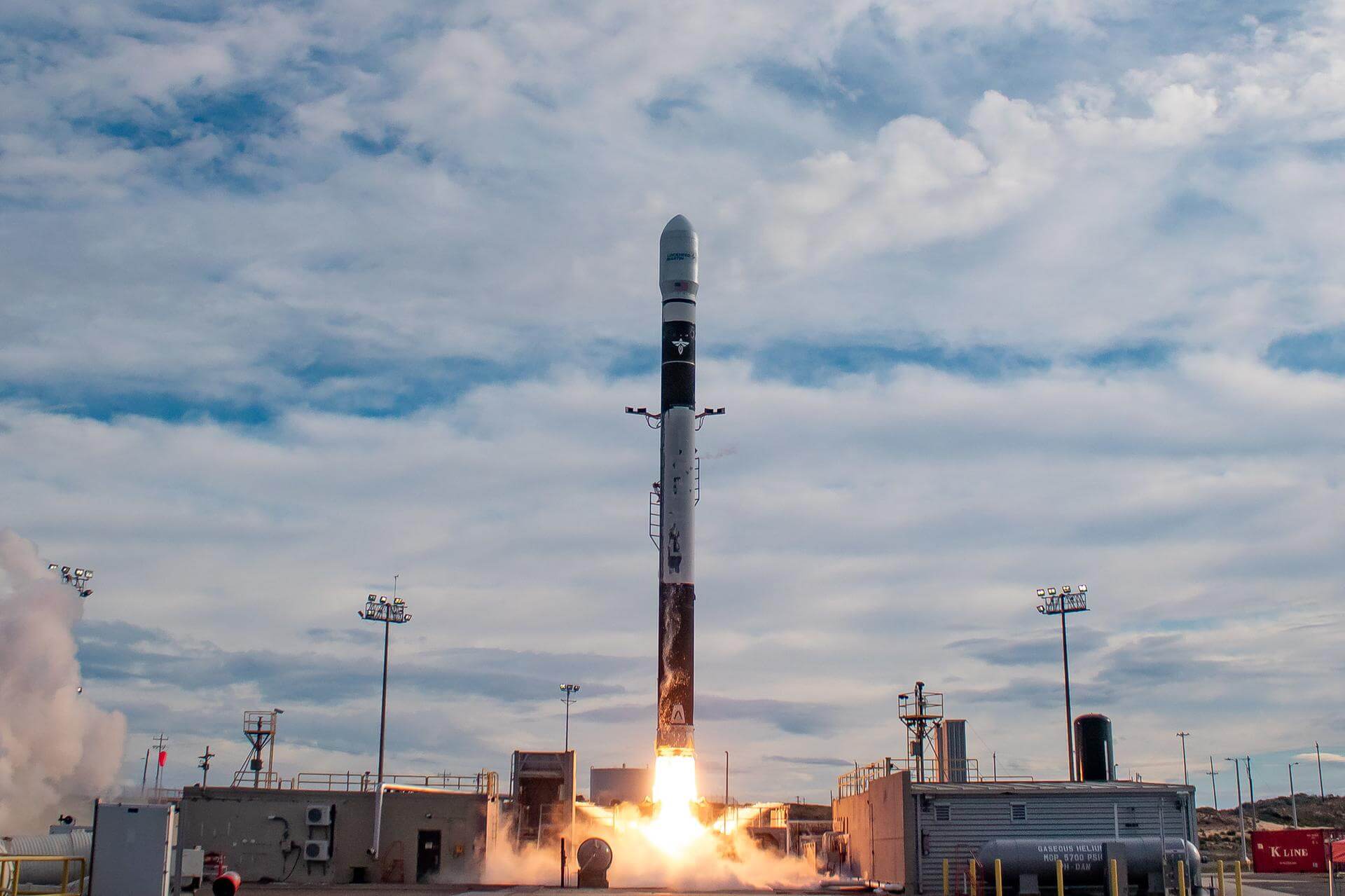
The spacecraft, once completed, will remain on call until the U.S. Space Force provides the notice to launch. The Firefly team will then have 24 hours to transport the payload fairing to the pad, mate the fairing to the Alpha rocket, fuel the rocket, and launch within the first available window.
QuickSounder
Provider: Firefly Aerospace
Date: September 30, 2026
Time: 12:00 AM UTC
Vehicle: Firefly Alpha Block 2
QuickSounder is the first satellite mission of the Near Earth Orbit Network (NEON) program of the National Oceanic and Atmospheric Administration (NOAA), which aims to replace the current Joint Polar Satellite System (JPSS) series of polar orbit weather satellites. This pathfinder mission will demonstrate NOAA’s ability to launch a small satellite within 3 years, flying a refurbished Advanced Technology Microwave Sounder (ATMS) instrument to polar orbit.
INCUS
Provider: Firefly Aerospace
Date: October 31, 2026
Time: 12:00 AM UTC
Vehicle: Firefly Alpha Block 2
The Investigation of Convective Updrafts (INCUS) is a NASA Earth science mission led by Colorado State University that will investigate the behavior of tropical storms in order to better represent these storms in weather and climate models. It consists of 3 SmallSats flying in tight coordination to study why convective storms, heavy precipitation, and clouds occur exactly when and where they form.
Each satellite will have a high frequency precipitation radar that observes rapid changes in convective cloud depth and intensities. 1 of the 3 satellites also will carry a microwave radiometer to provide the spatial content of the larger scale weather observed by the radars. By flying so closely together, the satellites will use the slight differences in when they make observations to apply a novel time-differencing approach to estimate the vertical transport of convective mass.
TacSat
Provider: Firefly Aerospace
Date: December 31, 2026
Time: 12:00 AM UTC
Vehicle: Firefly Alpha Block 2
First of up to 25 launches of Low Earth Orbit technology demonstration satellites to be built and operated by Lockheed Martin.
TacSat is an intelligence, surveillance and reconnaissance spacecraft with a mission to prove specialized sensing and communications capabilities on orbit. The satellite will participate in exercises that highlight cross-domain kill-web connectivity, enabling timely execution of tactical space missions.
TacSat will host a proven Lockheed Martin infrared sensor on board that brings previously developed technology to space for the first time. This sensor produces high quality imagery and it can interface with federated Battle Management Command & Control (BMC2) combat systems to provide joint forces with a comprehensive view of threats.
The satellite will also feature Lockheed Martin’s first 5G.MIL® payload on orbit. This provides cellular-like networking for military space assets, making satellite constellations more resilient. It also helps enable seamless connectivity with tools in the air, at sea and on land.
Launch operation will also again demonstrate responsive space pre-launch operation capabilities.