
RS-25 Engine Fires; Voyager 1 Reaches One Light-Day
RS-25 Engine No. 10001 Fires at Stennis as Orion Faces New Demands
NASA tested RS-25 engine No. 10001 on Wednesday, Nov. 18, on the Fred Haise Test Stand at NASA’s Stennis Space Center near Bay St. Louis, Mississippi. Test teams fired the developmental engine for the planned duration of three minutes and 20 seconds (200 seconds). While this developmental engine will not be used in flight, the hot fire test provides NASA and NASA’s prime contractor L3Harris Technologies with the capability to capture critical data to improve engine performance and reliability for future Artemis missions.
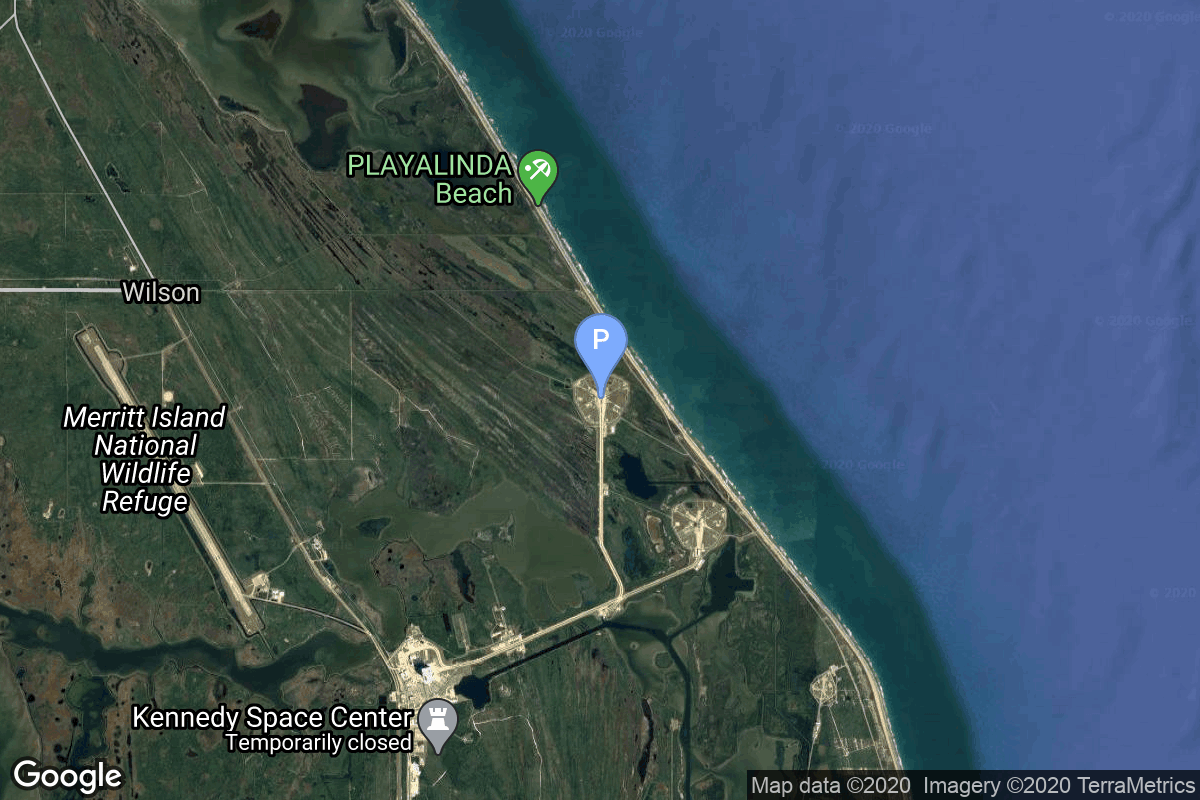
For each Artemis mission, four RS-25 engines produce up to 2 million pounds of combined thrust to help launch the SLS rocket. All RS-25 engines are tested and proven flightworthy at NASA Stennis prior to use. Tests are conducted by a team of operators from NASA, L3Harris, and Nova Space Solutions. For the Artemis IV Moon landing mission in 2028, the SLS rocket will launch astronauts aboard the Orion spacecraft from NASA’s Kennedy Space Center in Florida.
Meanwhile, NASA recently announced a significant shakeup to the Artemis program designed to give the agency’s lunar lander providers—SpaceX with its Starship vehicle, and Blue Origin with Blue Moon—more flexibility in reaching the Moon. For Starship, this means docking with Orion in Earth orbit, and then traveling to the Moon in tandem. For Blue Moon, it shifts the rendezvous with Orion all the way to low-lunar orbit.
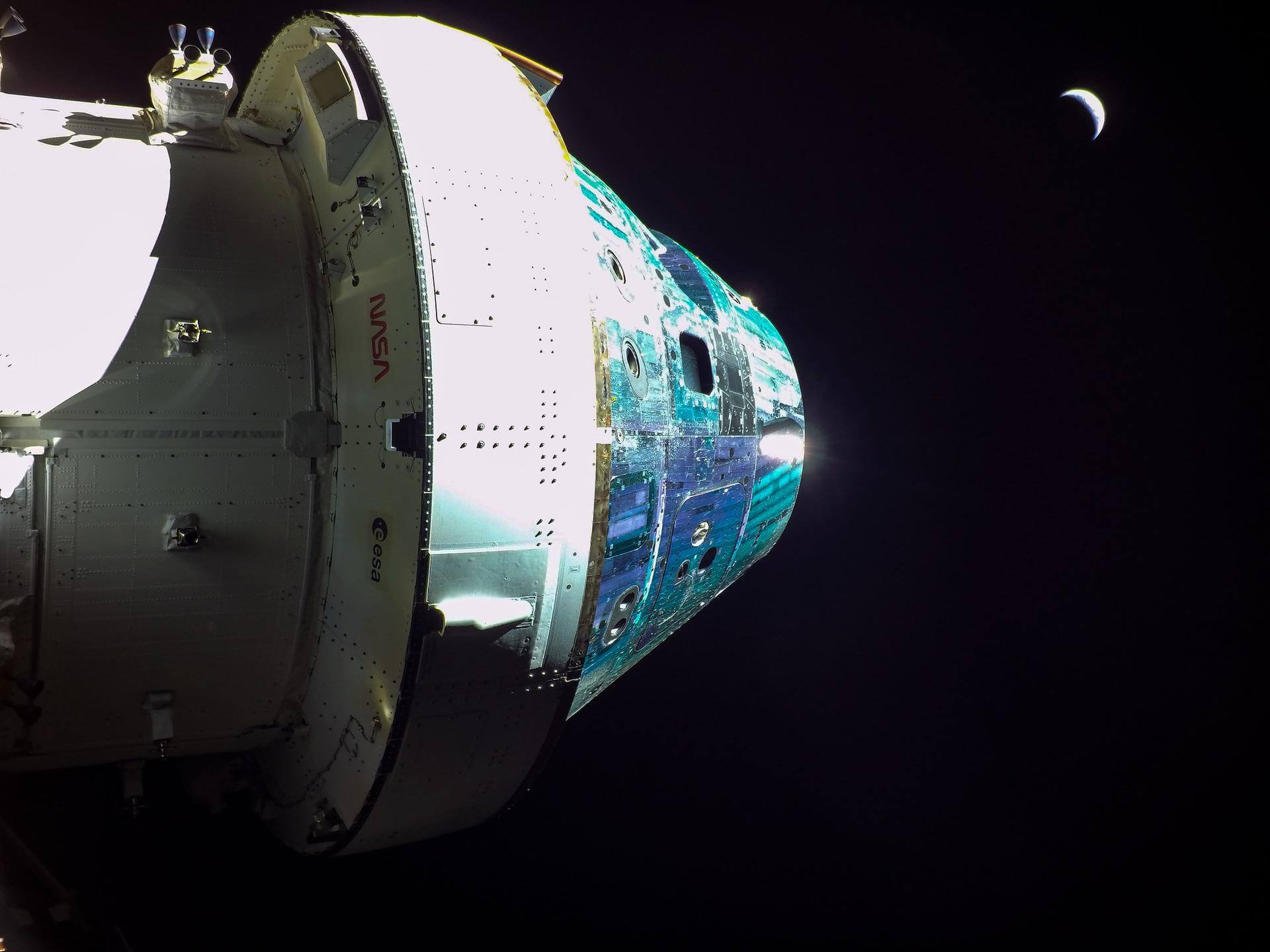
These changes benefit the lunar landers, but in turn impose more of a burden on the Orion spacecraft, which is built for NASA by Lockheed Martin. Due to the docking configuration with Starship, Orion must now fly backward to the Moon, with its Service Module at the top of the stack. This is a fundamentally different flying posture than Orion was designed for, said Kirk Shireman, Human Spaceflight Exploration and Orion program manager at Lockheed. As a result, the Service Module, which is provided by the European Space Agency, will require modifications to its propellant tanks.
NASA and Lockheed engineers have also been studying the impact of increased acceleration on Orion when the vehicle is attached to Starship. Under Orion’s original mission architecture, the spacecraft would experience accelerations of about 0.1 to 0.15 g during the translunar injection burn. But with Starship providing the thrust, the acceleration would increase to approximately 0.8 to 1 g, acting in the opposite direction from the one originally planned. Orion’s structure must be certified to handle a substantially higher acceleration in the opposite direction.
NASA and Axiom Space have also completed the critical design review (CDR) for the Axiom Extravehicular Mobility Unit spacesuit—the first CDR on a NASA EVA spacesuit in over 40 years. And on Monday, Nov. 16, NASA marked four years since the Artemis I test flight launched at 1:47 a.m. EST in 2022 from Kennedy Space Center in Florida.
Johnson Space Center Marks 65 Years, Moon Base Challenge Opens
NASA’s Johnson Space Center celebrated its 65th anniversary on Wednesday, Nov. 18. For 65 years, the centre has helped turn bold ambitions for lunar exploration into extraordinary achievements, with that legacy continuing through NASA’s Artemis and Moon Base efforts.
NASA also launched the Moon Base Challenge, calling on high school and post-secondary students to develop innovative solutions to the challenges of living and working on the Moon. From powering a lunar base to keeping astronauts safe, there are big challenges to tackle when establishing a sustained human presence on the Moon. Students can assemble crews of 2–5, find a team coach, and choose from six challenge topics. Up to $1 million in awards are available to support leading solutions. Registration closes Jan. 25, 2027.
Voyager 1 Reaches One Light-Day From Earth
NASA’s Voyager 1 probe, humanity’s farthest-flying spacecraft, reached one light-day from Earth after more than 49 years of constant travel. A light-day is the distance light travels in 24 hours, equaling about 16.1 billion miles (25.9 billion kilometers). The spacecraft achieved the milestone at 2:16 a.m. PST (5:16 a.m. EST) on Wednesday, Nov. 18.
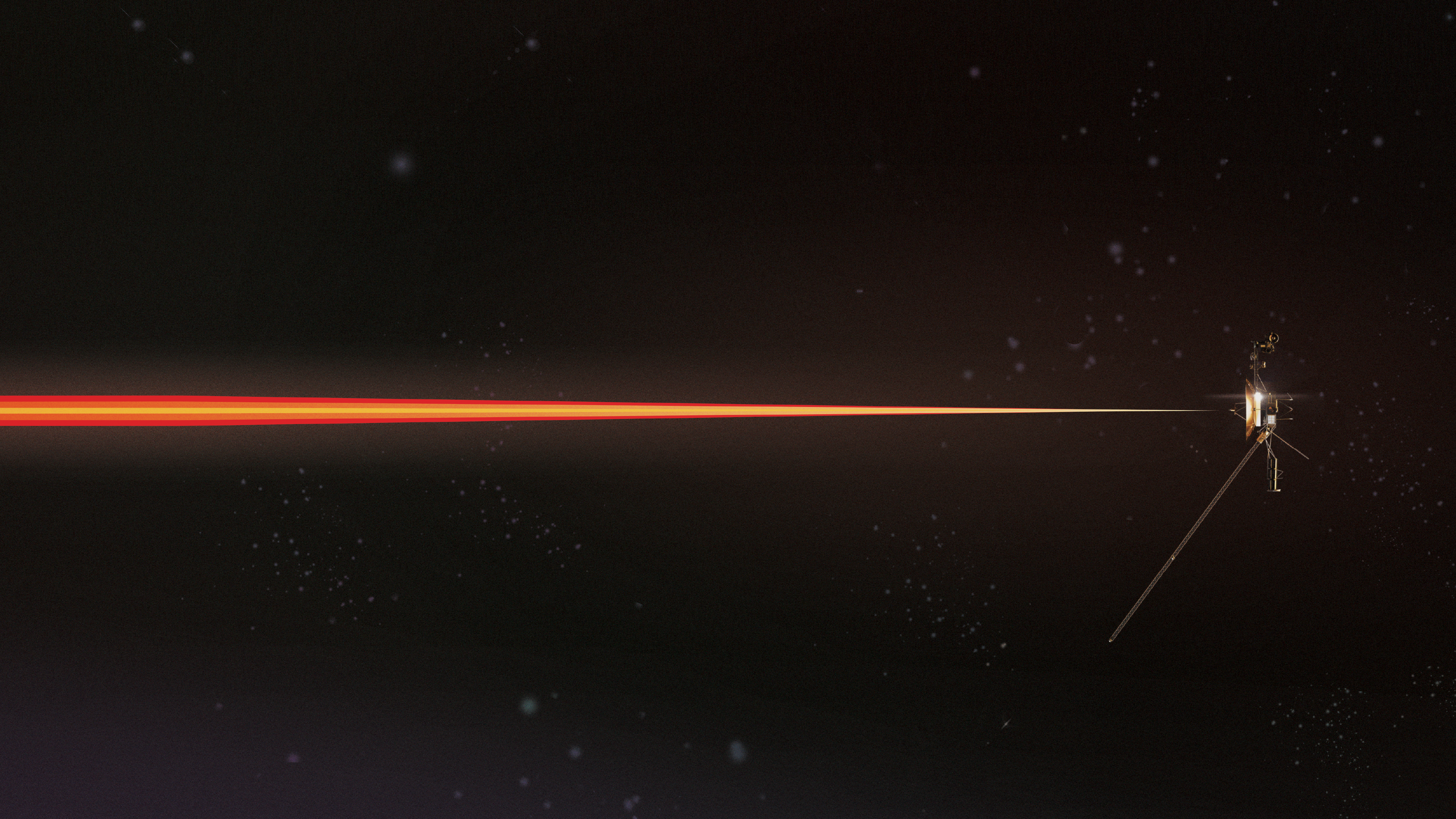
Voyager team members at NASA’s Jet Propulsion Laboratory in Southern California, managed by Caltech, heard from the probe 24 hours later, the time it took for the spacecraft’s radio signal traveling at the speed of light to reach Earth, early Thursday. Even though the team has not received science and engineering data from Voyager 1 since Nov. 14, the spacecraft is sending what is called a carrier signal, which typically conveys that data to Earth. Mission engineers used the carrier signal and trajectory calculations to confirm the light-day milestone. They continue to analyze the issue impacting the science and engineering data.
“Traveling a light-day is a singular feat for a spacecraft, but Voyager is so much more than a distant traveler. The Voyager mission would be remarkable just for what it contributed to planetary science with the Grand Tour of the outer planets,” said Joe Westlake, director, Heliophysics Division at NASA Headquarters in Washington. “But it went on to become central to NASA’s fleet of heliophysics missions offering insights into the star that we all revolve around, the Sun.”
Voyager 1 is down to two working science instruments, its power supply shrinking with each passing year. Last month it went silent for two days before engineers reestablished contact. Kareem Badaruddin, Voyager’s mission manager and one of just three full-time team members keeping the aging Voyagers healthy and on course, reflected on the program’s decades-long history: “I was telling someone about Voyager being like a relay race, and I’m just the guy carrying the baton for now. But you know, thousands and thousands have come before me, and now it’s my turn to do the best I can do for these spacecraft.”
Alan Cummings, a senior research scientist at Caltech who has worked on Voyager’s Cosmic Ray Subsystem since before the twin spacecraft departed Florida in 1977 and the last person to touch the spacecraft before launch, made it clear the one-light-day achievement was “not a scientific milestone.” “It is an engineering milestone, though,” Cummings said. “It’s amazing — these engineers at JPL who designed and built this spacecraft with all the redundancy (Voyager) has in order to last this long and go this far, and it’s also a tribute to the engineers at the Deep Space Network who collect our data and send commands to our spacecraft.”
That data is beamed to Earth from Voyager 1’s 12-foot-wide antenna by a transmitter with roughly the power of a 23-watt light bulb. Voyager 1 lifted off on Sept. 5, 1977, from Launch Complex 41 at what is now Cape Canaveral Space Force Station, atop a Titan 3E-Centaur rocket. Its twin, Voyager 2, had launched 16 days earlier. Voyager 2 is trailing behind the one-light-day mark but was still more than 13.4 billion miles from Earth as of Wednesday, with messages to the spacecraft taking about 20 hours to arrive. It is on pace to reach one light-day from Earth in November 2035.
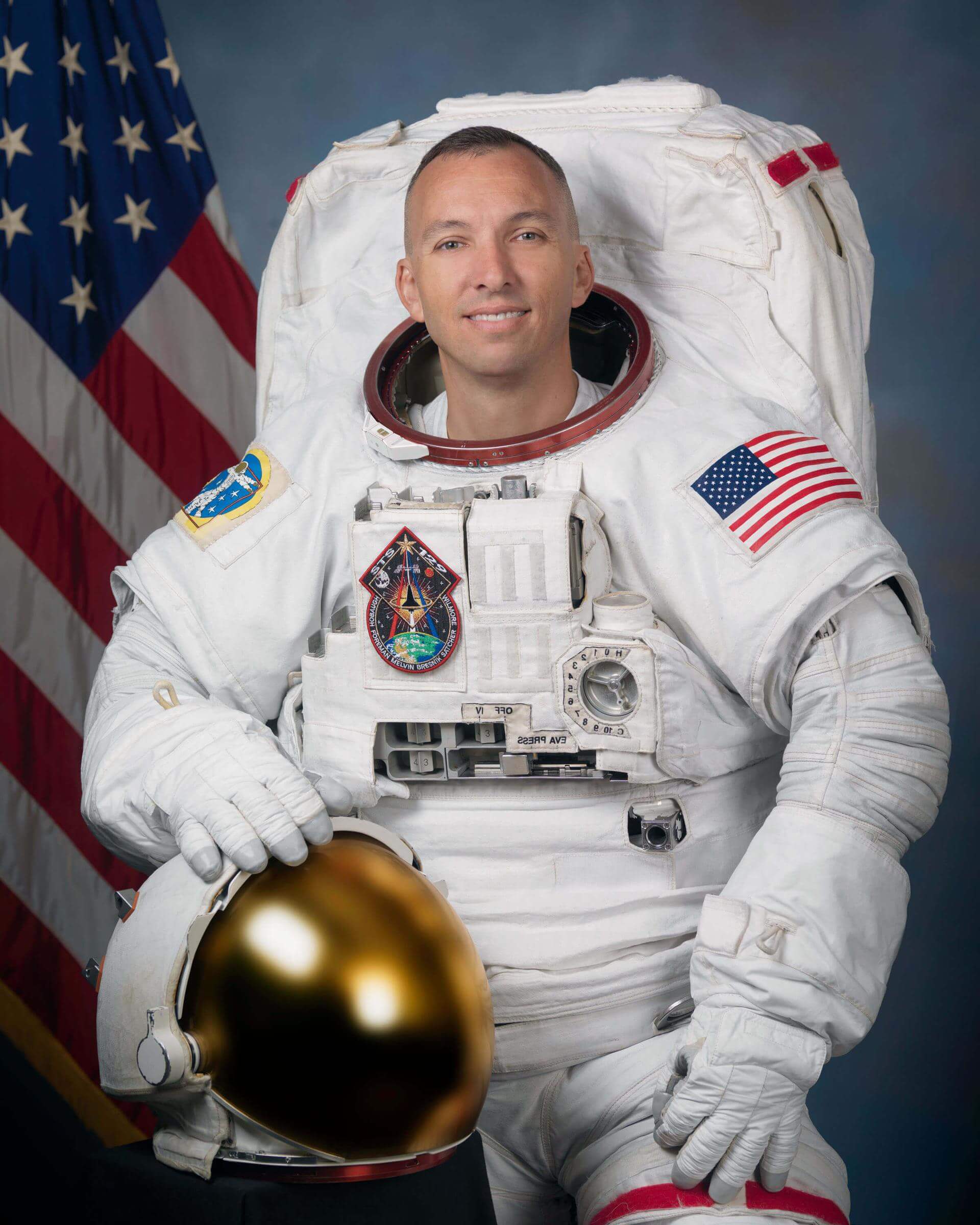
Aboard the International Space Station, NASA astronaut Jessica Watkins delivered a special message to Voyager 1 as the spacecraft reached the milestone. Transmitted through NASA’s Deep Space Network, the message celebrates Voyager 1’s extraordinary journey, nearly 50 years of exploration, and the spirit of discovery that continues to connect us—from astronauts orbiting Earth to a spacecraft traveling through interstellar space.
Webb Data Confirms First-of-Its-Kind Stellar Merger
Researchers recently identified a first of its kind: a star slightly less massive than the Sun spiraled into and merged with a puffy supergiant star at the outskirts of our neighboring Andromeda galaxy. They nicknamed the newly single, potentially “rejuvenated” star Bao. Their NASA-funded discovery was bolstered by quick-turn observations from NASA’s James Webb Space Telescope that were carefully cross-referenced with extensive data from telescopes in space and on the ground.
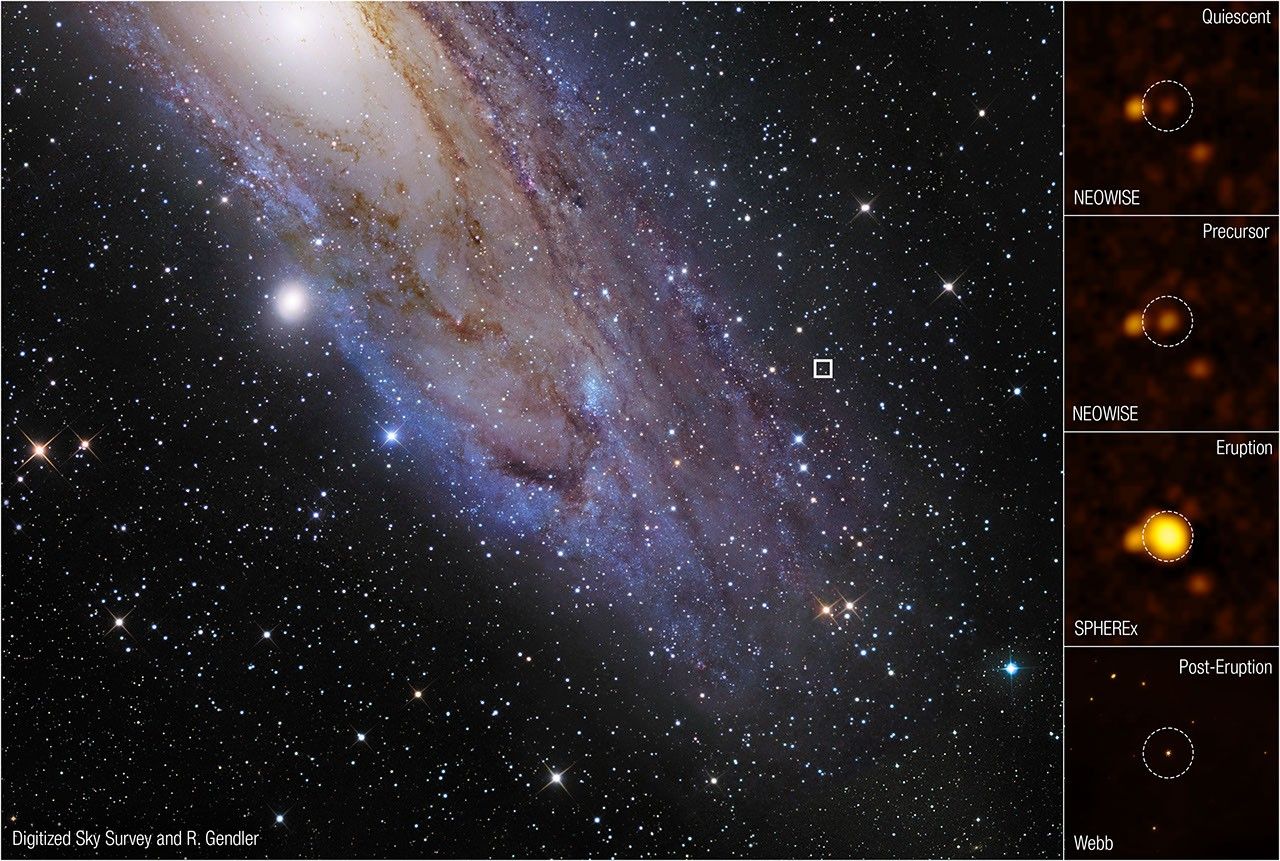
“Stellar mergers are very, very difficult to observe in real time because they are hard to predict,” said Viraj Karambelkar, the first author of a new paper in Nature published Wednesday and a NASA Hubble Fellow at Columbia University in New York. “However, we noticed something unusual was going on in 2023 and continued to monitor the system to see what it would do. Then, in 2025, it erupted! Webb observed Bao only 47 days after the stars’ eruption peaked, the earliest ever follow-up of an event like this.”
Before their transformation, the two stars spent millennia placidly orbiting one another as a binary pair. But once the smaller star came into contact with the surface of the giant star, their “unification” happened after only seven orbits (about seven years). Other known binary star mergers, featuring two smaller stars, occurred after thousands of orbits.
CRS-25 Targets Nov. 29 as Expedition 75 Packs Dragon
NASA, Northrop Grumman, and SpaceX are targeting no earlier than 10:47 a.m. EST, Sunday, Nov. 29, for the next launch delivering science investigations, supplies, and equipment to the International Space Station. Filled with approximately 11,000 pounds of cargo, the Northrop Grumman Cygnus XL spacecraft, aboard a SpaceX Falcon 9 rocket, will launch from Space Launch Complex 40 at Cape Canaveral Space Force Station in Florida. The mission is known as NASA’s Northrop Grumman Commercial Resupply Services 25, or Northrop Grumman CRS-25.
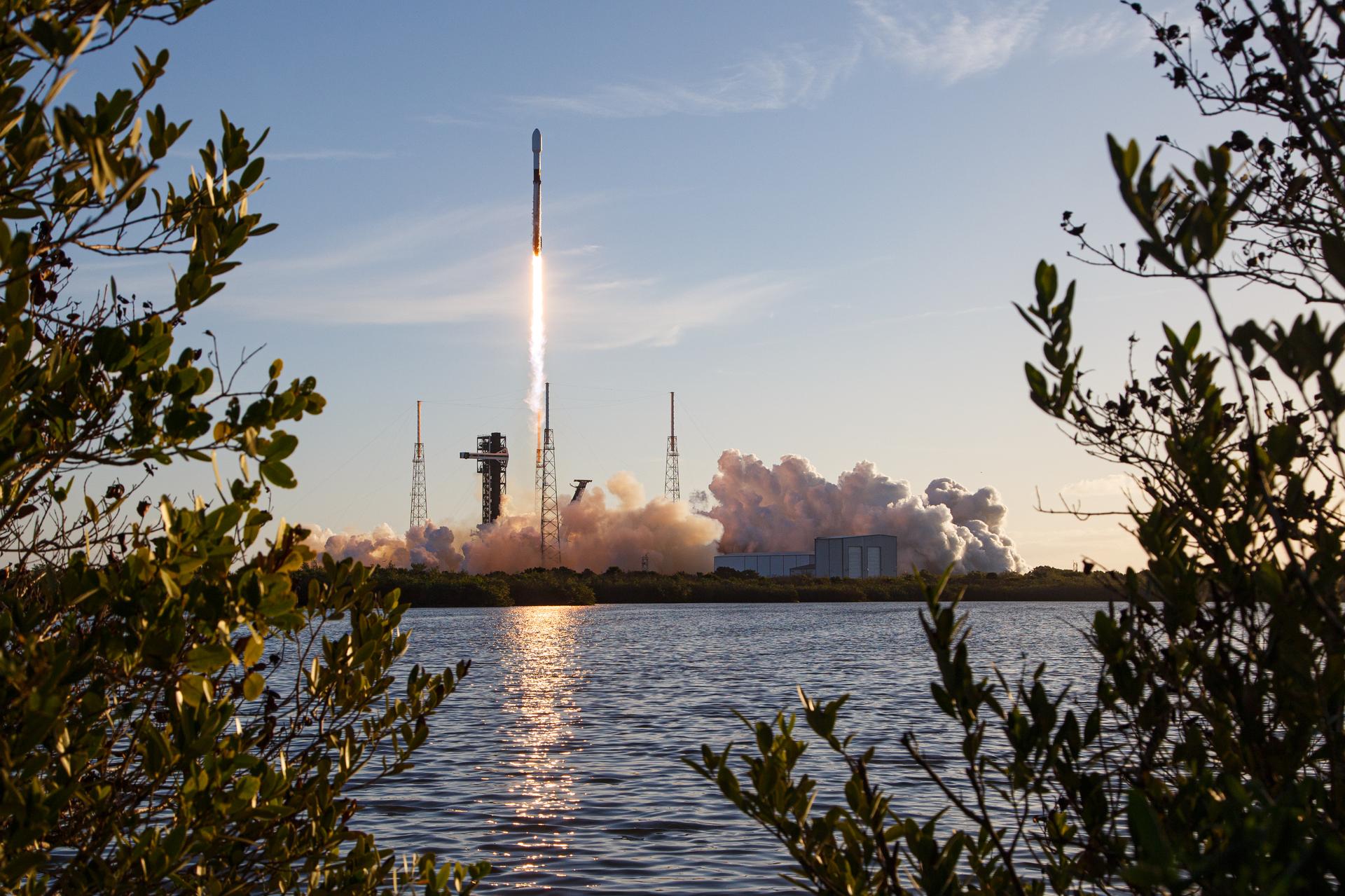
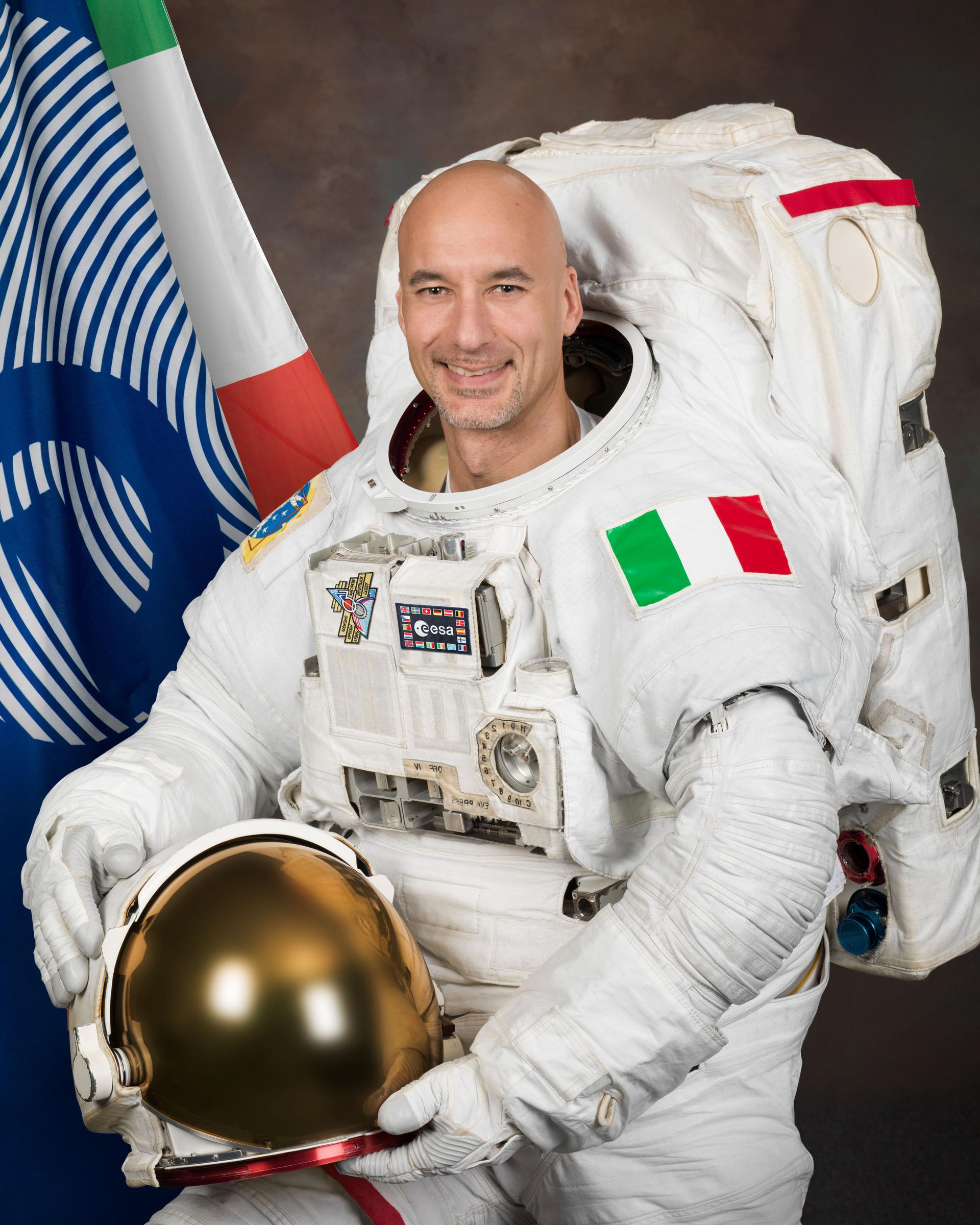
After arriving at the International Space Station, NASA astronauts Jessica Watkins and Luke Delaney, who are living and working aboard the space station, will use the Canadarm2 robotic arm to capture the Cygnus XL on Tuesday, Dec. 1. Ground controllers then will install it to the Unity module’s Earth-facing port for cargo unloading. The spacecraft is scheduled to remain at the orbiting laboratory until May 2027, then depart with several thousand pounds of disposal items and other unneeded cargo, burning up harmlessly during re-entry. Northrop Grumman named the spacecraft the S.S. James “Jim” A. Lovell in honor of the former NASA astronaut.
The Expedition 75 crew continued packing a Dragon with completed science experiments and lab hardware for return to Earth as NASA and SpaceX prepare for the cargo spacecraft’s departure. NASA and SpaceX stood down from Wednesday’s Dragon undocking opportunity due to unfavourable weather conditions at the splashdown sites off the coast of California. Exercise research, space physics, and spacesuits topped Thursday’s schedule, with the crew also prepping for cargo missions departing and launching to the station this month.
Citations
- NASA Conducts Latest RS-25 Engine Test in Support of Future Artemis Missions — nasa.gov
- To make Moon landings easier, NASA is making life harder for Orion — arstechnica.com
- NASA’s Voyager 1 Makes History Reaching One Light-Day From Earth — nasa.gov
- NASA’s Voyager 1 is one light-day from Earth — spaceflightnow.com
- NASA Data Clinches First-of-Its-Kind Stellar Merger — science.nasa.gov
- NASA Sets Coverage for Northrop Grumman CRS-25 Launch, Prelaunch — nasa.gov
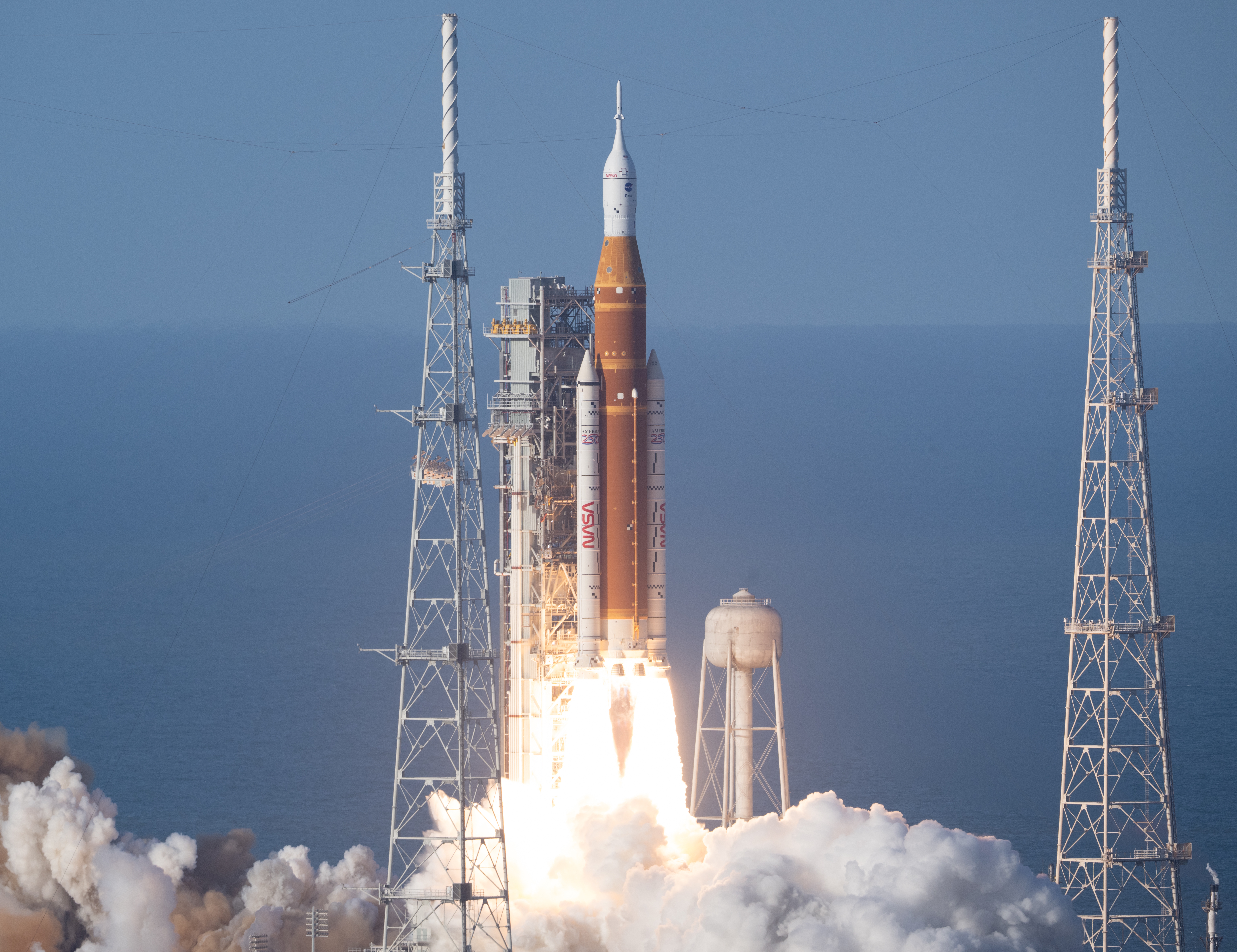
Artemis III
Provider: National Aeronautics and Space Administration
Date: June 30, 2027
Time: 12:00 AM UTC
Vehicle: Space Launch System (SLS)
Artemis III is the second crew mission as part of the Artemis program. Artemis III will send a crew of 4 on a Low Earth Orbit mission, with the Orion rendezvous and dock with one or both commercial lunar landers in development by SpaceX and Blue Origin, performing in-space tests of the docked vehicles, integrated checkout of life support, communications, and propulsion systems, as well as tests of the new Extravehicular Activity (xEVA) suits.
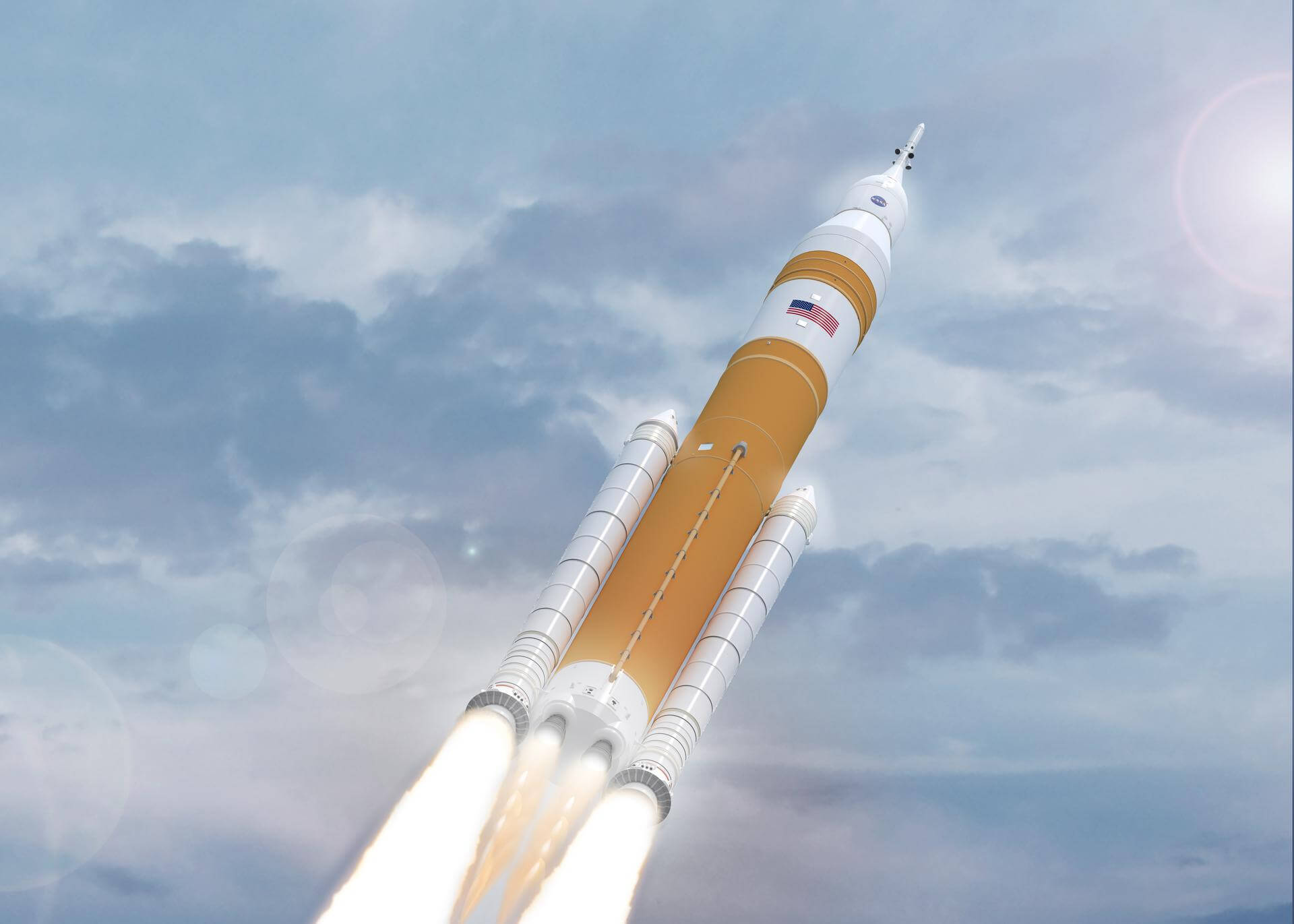
Artemis IV
Provider: National Aeronautics and Space Administration
Date: June 30, 2028
Time: 12:00 AM UTC
Vehicle: Space Launch System (SLS)
Artemis IV is planned to be the first human lunar landing mission since the Apollo Program.
Artemis V
Provider: National Aeronautics and Space Administration
Date: December 31, 2028
Time: 12:00 AM UTC
Vehicle: Space Launch System (SLS)
Artemis V is planned to be the second human lunar landing mission since the Apollo Program.
SLS Block 1B | Artemis VI
Provider: National Aeronautics and Space Administration
Date: September 30, 2030
Time: 12:00 AM UTC
Vehicle: Space Launch System (SLS)
No description available
SLS Block 1B | Artemis VII
Provider: National Aeronautics and Space Administration
Date: September 30, 2031
Time: 12:00 AM UTC
Vehicle: Space Launch System (SLS)
No description available
Enjoying the content? Stay up to date on everything happening behind the scenes by following our Patreon!


Leave a Reply