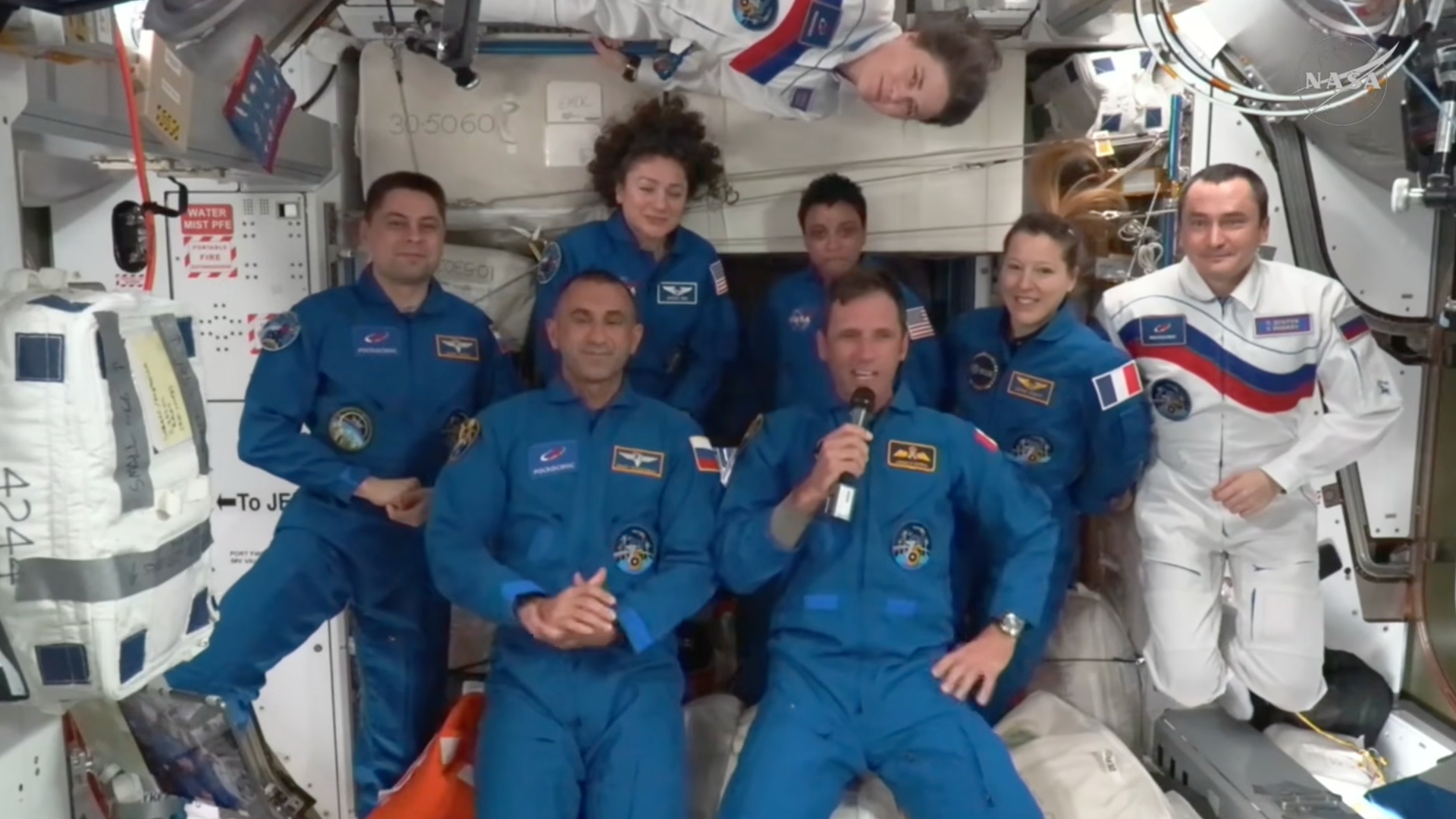
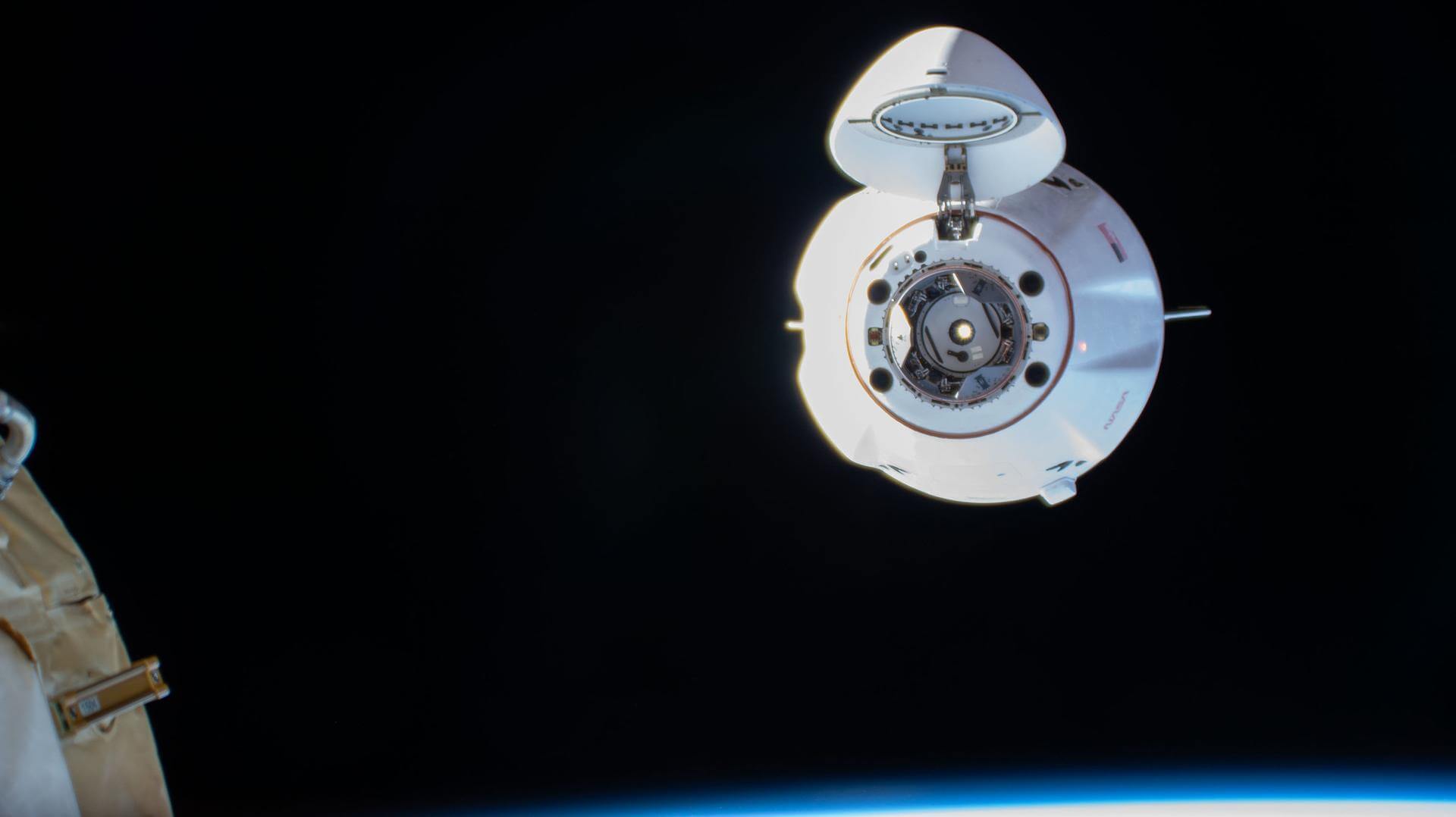
Canadian Space Agency astronaut Josh Kutryk entered the International Space Station on Thursday night aboard the SpaceX Dragon capsule Grace, which docked with the forward port of the station’s Harmony module at 7:05 p.m. Eastern time. NASA put the trip from launch at seven hours and 55 minutes — the fastest trip to the orbiting laboratory by any U.S. spacecraft.
The hatch opened at 9:19 p.m. Kutryk floated in alongside NASA astronauts Jessica Watkins and Luke Delaney and Roscosmos cosmonaut Sergey Teteryatnikov. They joined the seven members of the Expedition 75 crew already aboard, bringing the station’s population to 11.
“It’s been a while since there was a Canadian here,” Kutryk told Canadians during the welcome ceremony. “It feels really good to have CSA back. The Canada flag back.” He added he was looking forward to a good mission — after some sleep.
The overlap with the departing Crew-12 is deliberately short. NASA’s Dana Weigel, manager of the Low Earth Orbit Program, said Crew-12’s earliest undocking is Oct. 5, with weather checks starting Saturday. The station has two Dragon docking ports, and one must be free for SpaceX’s next cargo resupply mission, planned for Oct. 13. That cargo Dragon carries the last of the station’s upgraded roll-out solar arrays, which crews will install on spacewalks within a narrow window set by sunlight and heat limits.
Crew-13 will work with tissues grown from human stem cells to model diseases and test drugs for conditions including heart disease, amyotrophic lateral sclerosis and Parkinson’s. The crew will also study blood flow in weightlessness and monitor for blood clots. A new plant-growth system will allow them to grow, harvest and regrow crops rather than rely on single-use grow pads.
Canada Rocket Company Breaks Ground on Engine Test Site
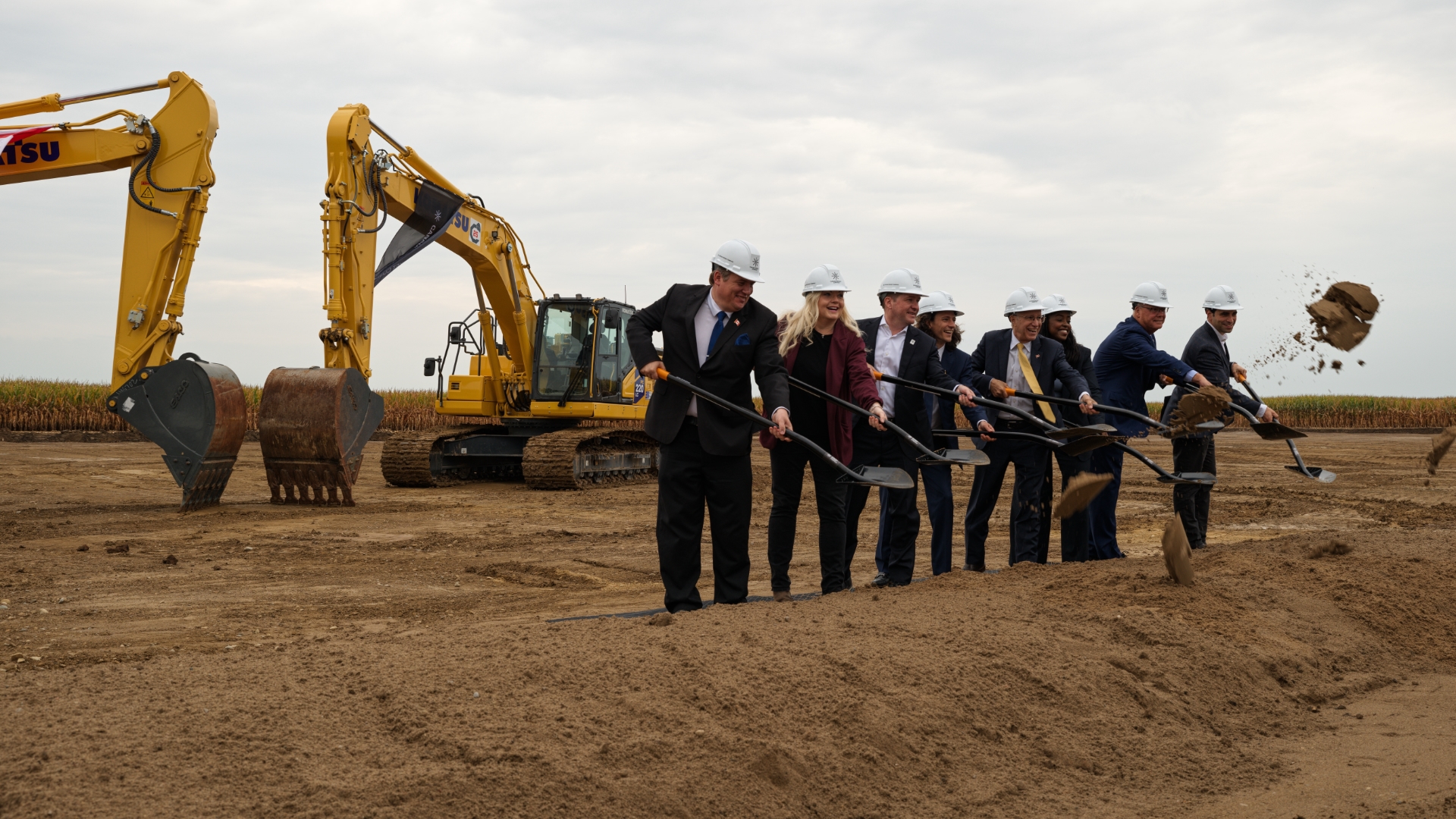
Canada Rocket Company held a groundbreaking ceremony Thursday for a $30-million rocket engine test site at London International Airport in southwestern Ontario. The company will name the facility for astronaut Jeremy Hansen.
The Toronto-headquartered company is developing a reusable rocket meant to lift up to 12,500 kilograms to sun-synchronous orbit. The London site sits on 50 acres leased from the Greater London International Airport Authority and is designed for engines producing more than a meganewton of thrust — about 225,000 pounds. Chief executive officer Hugh Kolias said in a release that this puts Canada in “a small group of less than 10 countries worldwide” with that capability.
The company calls the London site Canada’s first large-scale static test facility. Competitors NordSpace and Reaction Dynamics both have operational test sites, though both are currently testing smaller rocket engines. In a July interview, Kolias told SpaceQ the company had secured a site for engines above a meganewton and that a smaller test facility in Etobicoke was about to open.
The company says it is working with the airport, regulators and the community as planning advances, with a public consultation planned in October. The date, time and place are still to come.
Canadian Centre for Space Isotopes Launches in Toronto
The Nuclear Innovation Institute said Thursday it has launched the Canadian Centre for Space Isotopes in Toronto, a group that will study how Canada can become a leader in supplying the radioactive isotopes that power deep-space probes.
The centre will run research, policy work and industry meetings through 2030, with a report on the opportunity due in early 2027. Jessica Linthorne, the institute’s president and chief executive officer, and James Scongack, its board chair, co-chair the steering committee.
Radioisotope power systems turn the heat from decaying isotopes into electricity for probes and rovers. The institute’s release says the global supply of the isotopes future missions need is “critically low” and that Canada “has the leadership, technology and expertise to meet the demand.” The best-known isotope is plutonium-238, which NASA has used for deep-space missions. Russia stopped selling it to the United States in 2009, and the U.S. Department of Energy has since restarted production at Oak Ridge National Laboratory in Tennessee. NASA is currently reviewing a proposal for a plutonium-powered rover for the Moon’s south pole.
The centre’s expert panel includes representatives from Bruce Power, Kinectrics, BWXT, Northern Ontario School of Medicine University, the Pearson Centre and Nuclear Promise X, among others.
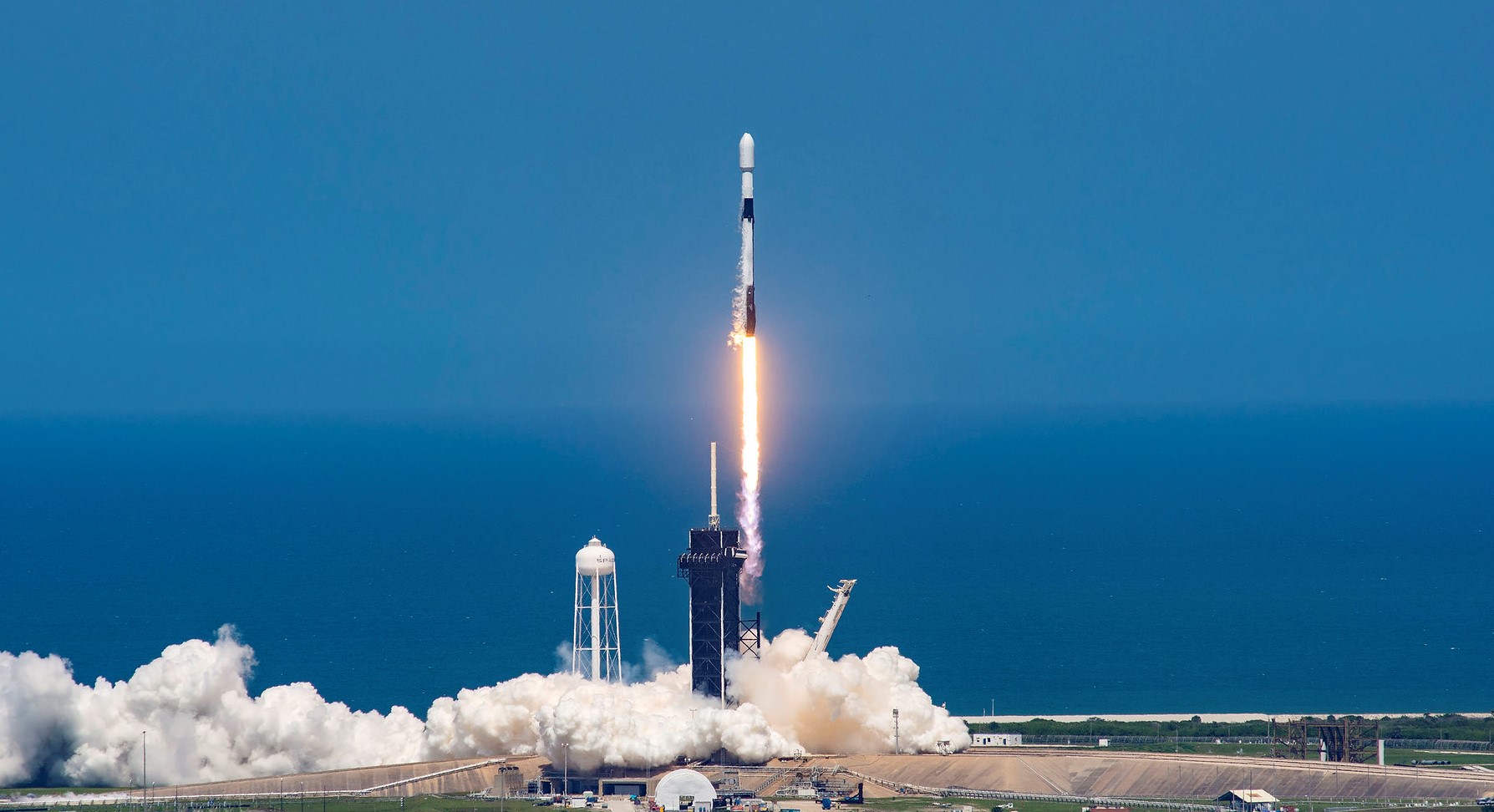
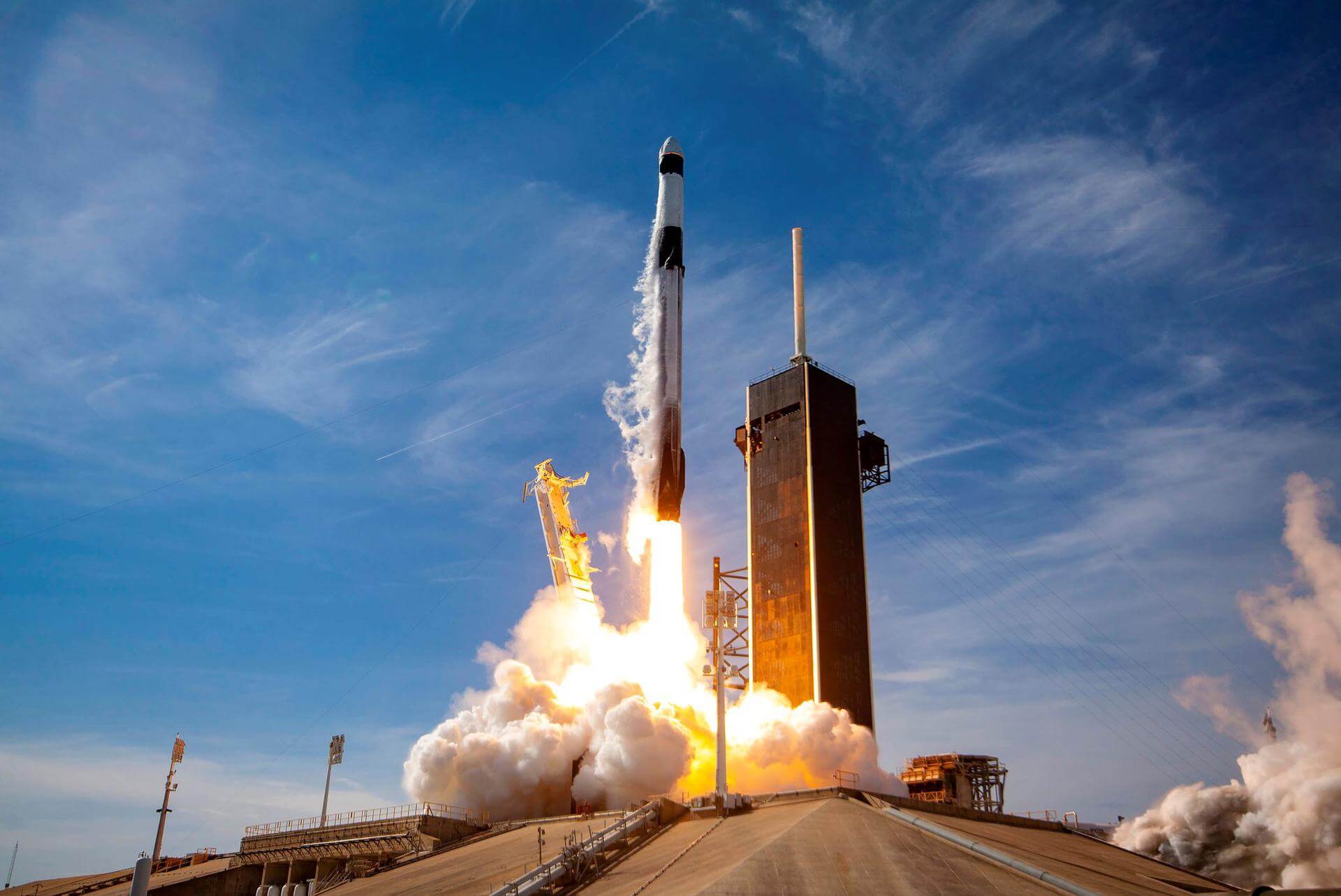
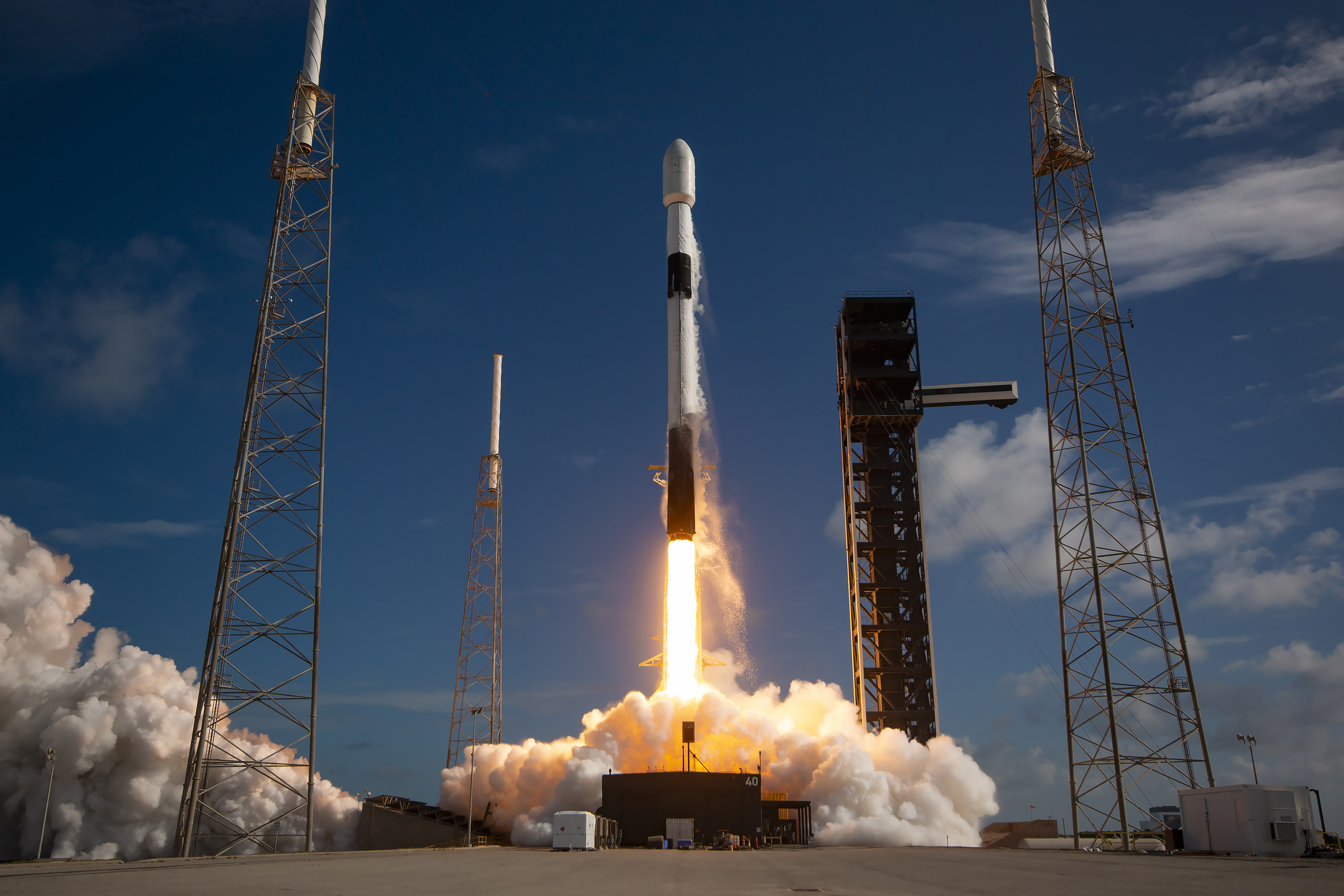
Provider: SpaceX Date: October 5, 2026 Time: 8:17 AM UTC Vehicle: Falcon 9
Tranche 1 Transport Layer A is one of six missions by the United States Space Force Space Development Agency (SDA) for the Proliferated Warfighter Space Architecture (PWSA) Tranche 1 Transport Layer constellation, which will provide assured, resilient, low-latency military data and connectivity worldwide to the full range of warfighter platforms from Low Earth Orbit satellites.
The constellation will be interconnected with Optical Inter-Satellite Links (OISLs) which have significantly increased performance over existing radio frequency crosslinks. It is expected to operate over Ka band, have stereo coverage and be dynamically networked for simpler hand-offs, greater bandwidth and fault tolerance.
This launch carries 21 satellites manufactured by Northrop Grumman.
NeonSat-2 to 6
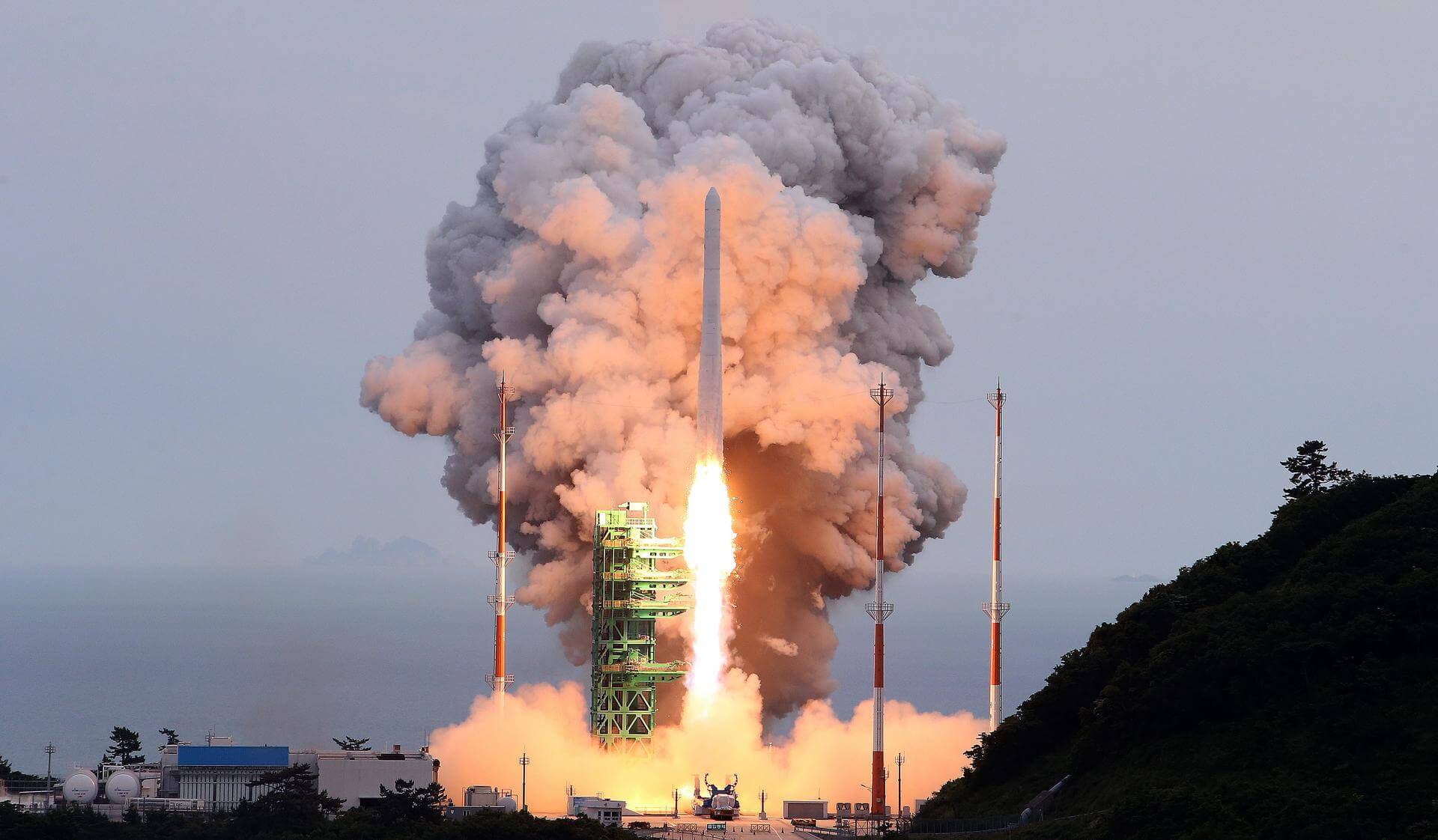
Provider: Korea Aerospace Research Institute Date: October 7, 2026 Time: 3:23 AM UTC Vehicle: Nuri
NeonSat-2 to 6 are part of the South Korean government’s Earth observation micro-satellite constellation NeonSat (New-space Earth Observation Satellite). The NeonSat constellation is the first satellite system developed by the government using a mass-production approach for precise monitoring of the Korean Peninsula.
Unknown Payload
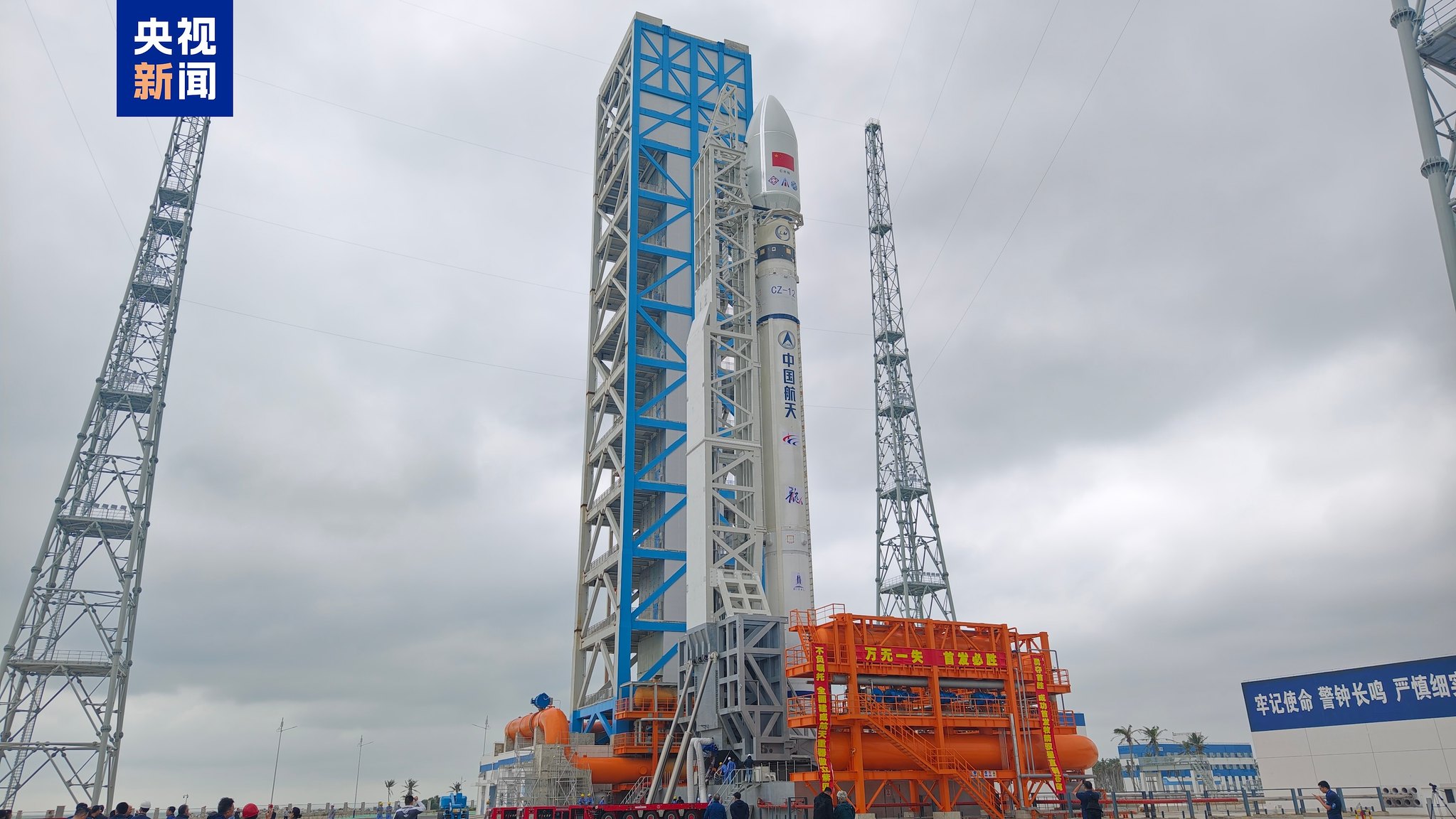
Provider: China Aerospace Science and Technology Corporation Date: October 9, 2026 Time: 7:25 PM UTC Vehicle: Long March 12
Details TBD.
Starlink Group 15-25
Provider: SpaceX Date: October 10, 2026 Time: 11:00 PM UTC Vehicle: Falcon 9
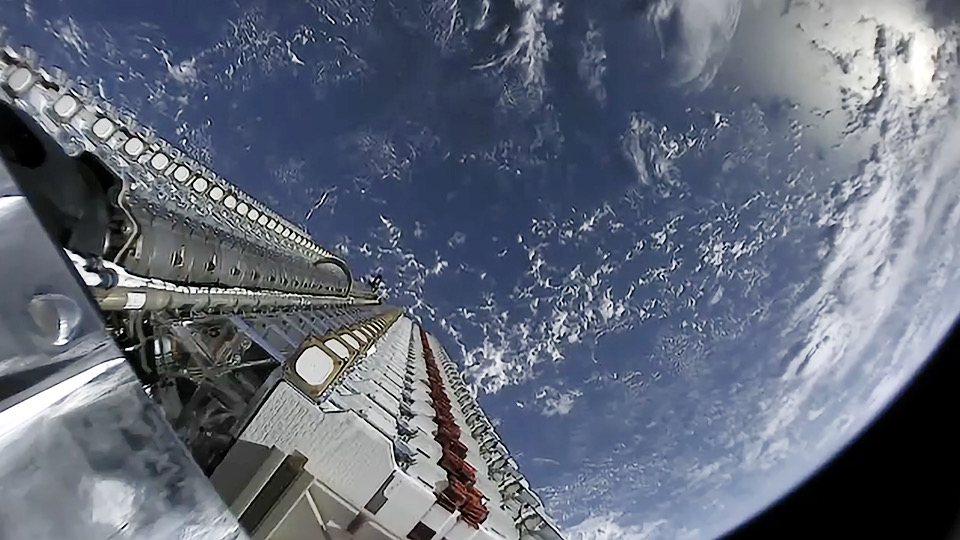
A batch of 27 satellites for the Starlink mega-constellation – SpaceX’s project for space-based Internet communication system.
Dragon CRS-2 SpX-35
Provider: SpaceX Date: October 13, 2026 Time: 10:33 AM UTC Vehicle: Falcon 9
35th commercial resupply services mission to the International Space Station operated by SpaceX. The flight will be conducted under the second Commercial Resupply Services contract with NASA.
Cargo Dragon 2 brings supplies and payloads, including critical materials to directly support science and research investigations that occur onboard the orbiting laboratory.
SDA Tranche 1 Transport Layer A ×
Mission Details
TypeGovernment/Top Secret
OrbitPolar Orbit
TargetEarth
Tranche 1 Transport Layer A is one of six missions by the United States Space Force Space Development Agency (SDA) for the Proliferated Warfighter Space Architecture (PWSA) Tranche 1 Transport Layer constellation, which will provide assured, resilient, low-latency military data and connectivity worldwide to the full range of warfighter platforms from Low Earth Orbit satellites.
The constellation will be interconnected with Optical Inter-Satellite Links (OISLs) which have significantly increased performance over existing radio frequency crosslinks. It is expected to operate over Ka band, have stereo coverage and be dynamically networked for simpler hand-offs, greater bandwidth and fault tolerance.
This launch carries 21 satellites manufactured by Northrop Grumman.
Falcon 9 is a two-stage rocket designed and manufactured by SpaceX for the reliable and safe transport of satellites and the Dragon spacecraft into orbit. The Block 5 variant is the fifth major interval aimed at improving upon the ability for rapid reusability.
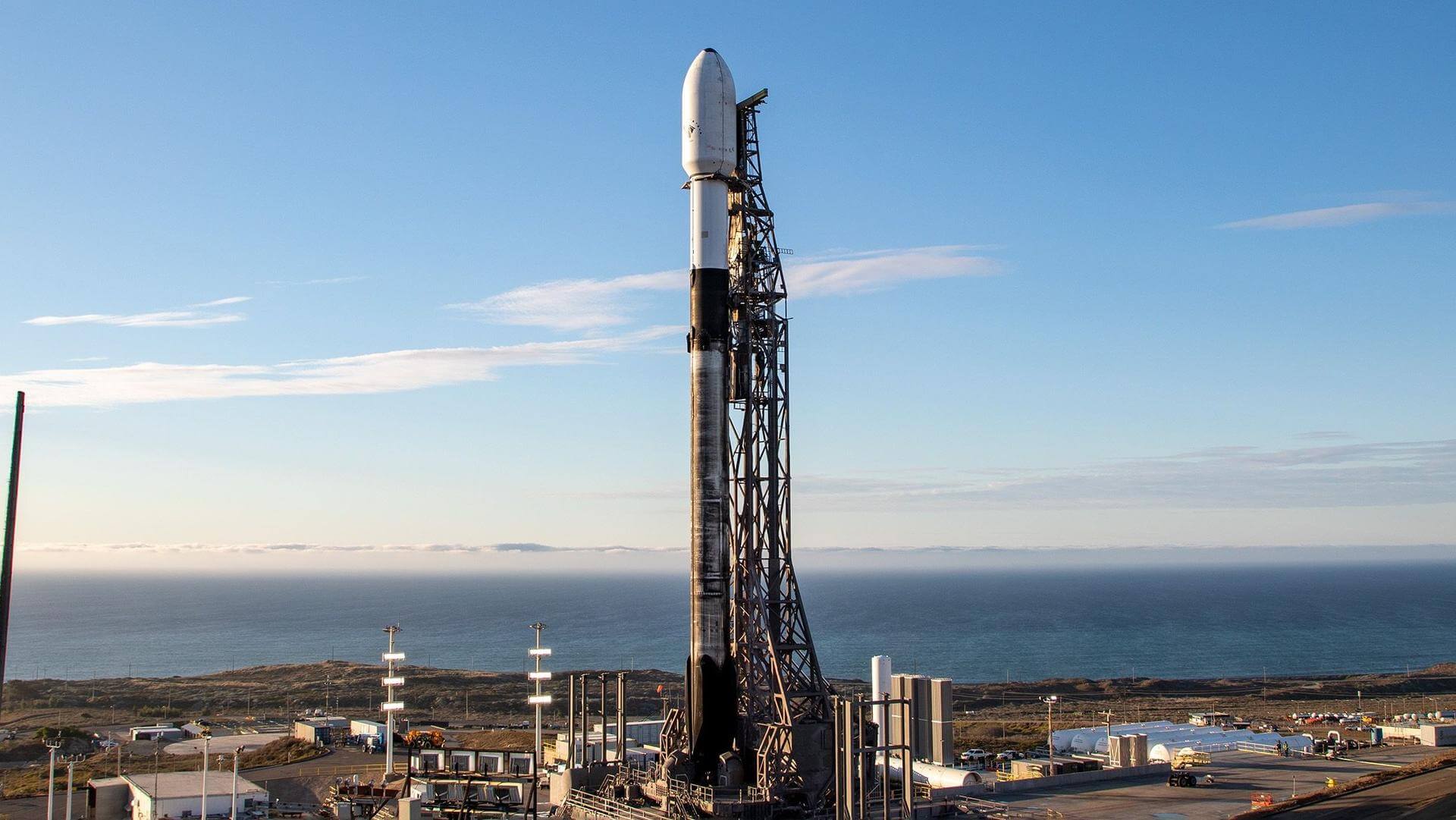
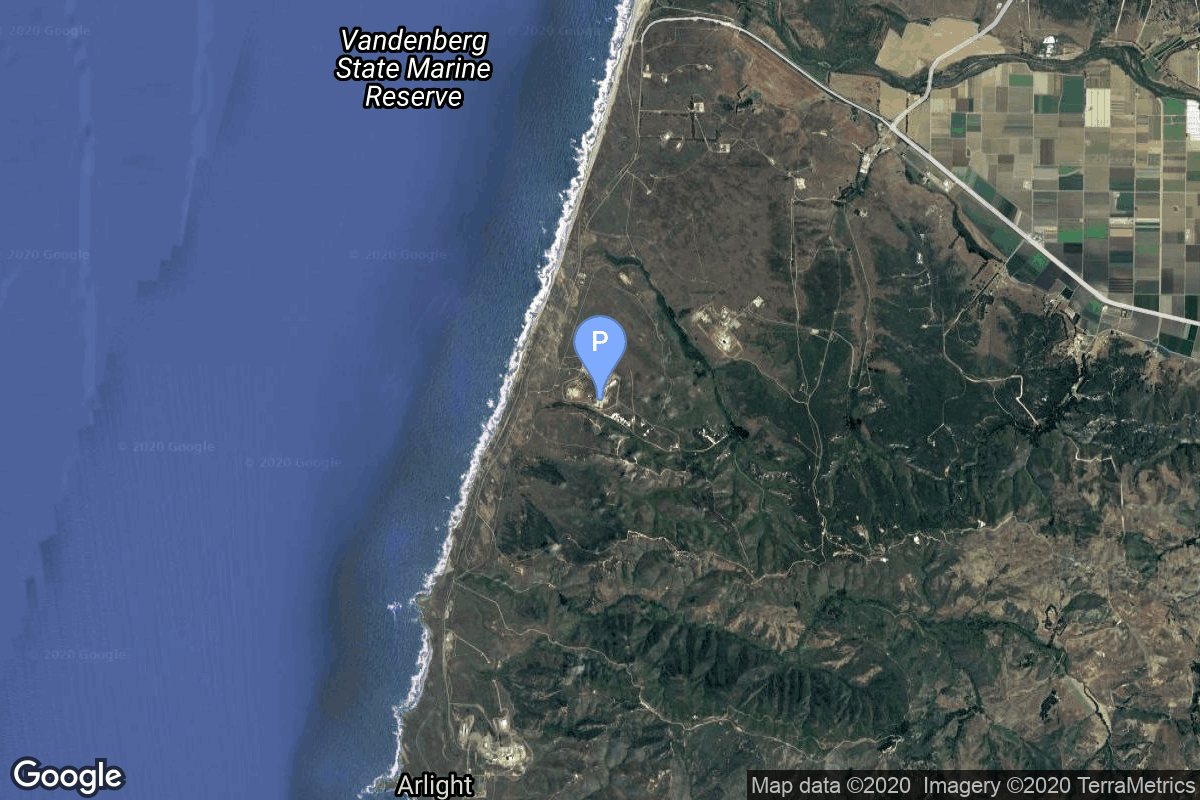
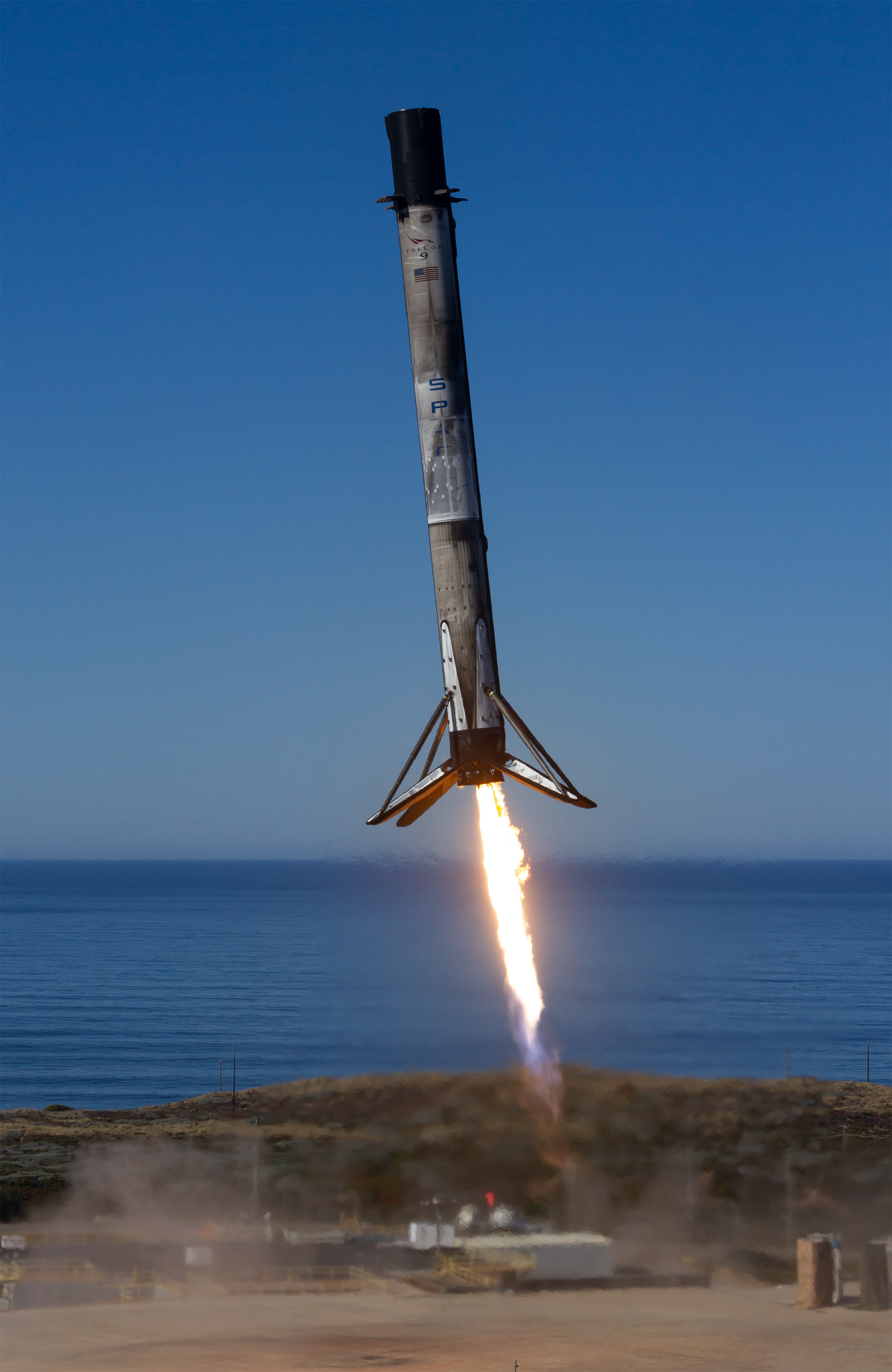
The Falcon 9 first stage B1103 will land on Landing Zone 4 after its 6th flight.
NeonSat-2 to 6 ×
Mission Details
TypeEarth Science
OrbitSun-Synchronous Orbit
TargetEarth
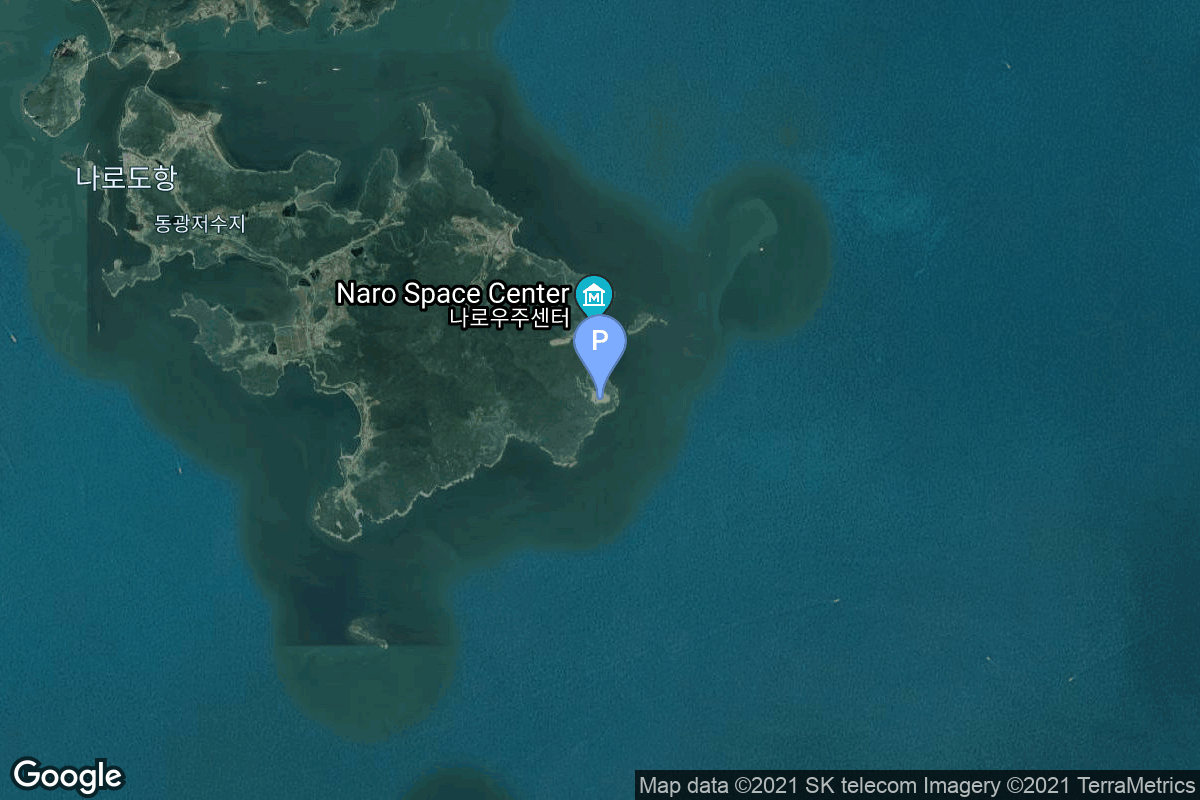
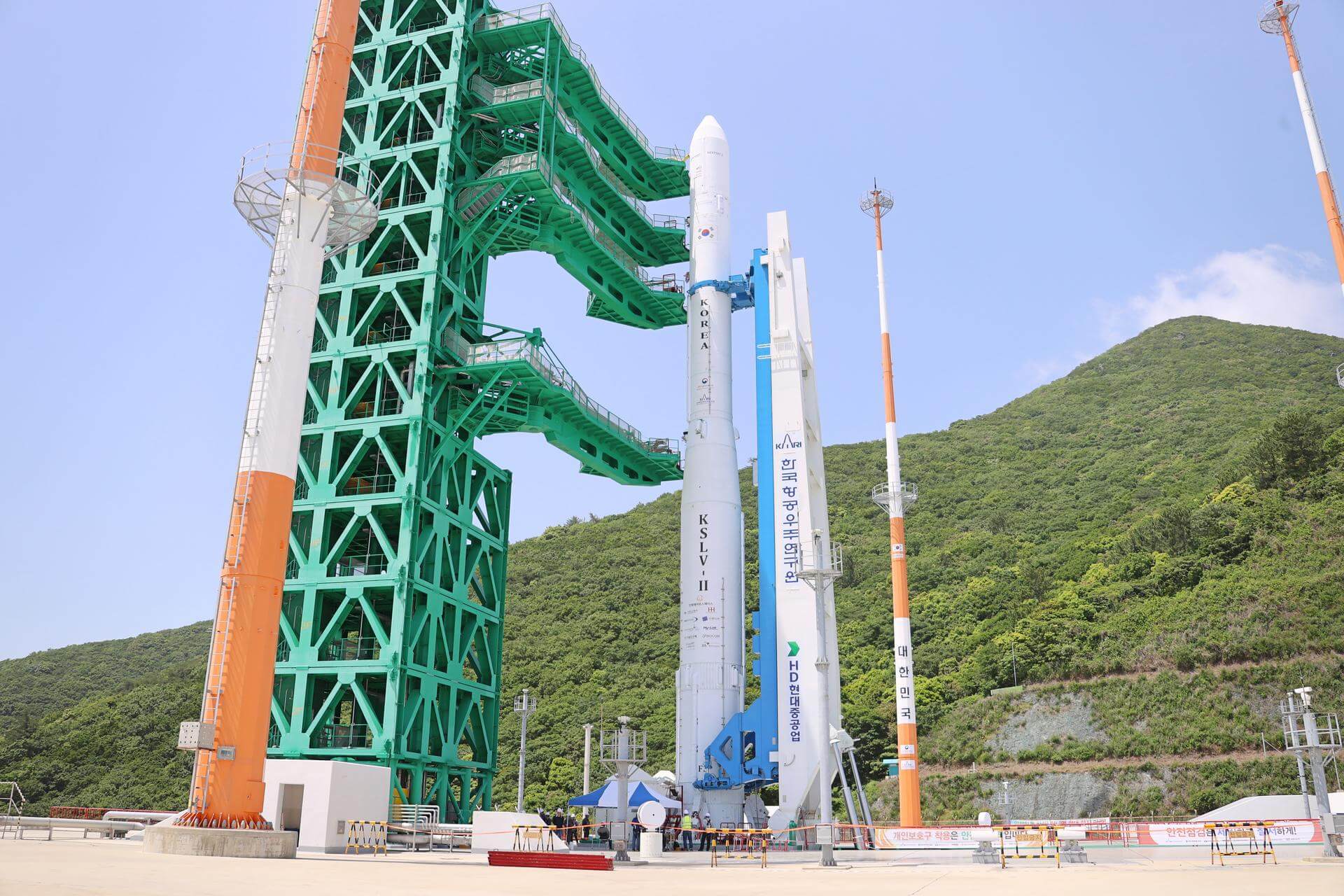
NeonSat-2 to 6 are part of the South Korean government’s Earth observation micro-satellite constellation NeonSat (New-space Earth Observation Satellite). The NeonSat constellation is the first satellite system developed by the government using a mass-production approach for precise monitoring of the Korean Peninsula.
Launch Provider: Korea Aerospace Research Institute
The Long March 12 carrier rocket is a Chinese medium-lift launch vehicle currently under development by the Shanghai Academy of Spaceflight Technology, using kerosene and liquid oxygen as propellant. It will be capable of placing at least 10 tonnes of payload in low Earth orbit and at least 6…
Falcon 9 is a two-stage rocket designed and manufactured by SpaceX for the reliable and safe transport of satellites and the Dragon spacecraft into orbit. The Block 5 variant is the fifth major interval aimed at improving upon the ability for rapid reusability.
The Falcon 9 first stage B1088 will land on ASDS OCISLY after its 20th flight.
Dragon CRS-2 SpX-35 ×
Mission Details
TypeResupply
OrbitLow Earth Orbit
TargetEarth
35th commercial resupply services mission to the International Space Station operated by SpaceX. The flight will be conducted under the second Commercial Resupply Services contract with NASA.
Cargo Dragon 2 brings supplies and payloads, including critical materials to directly support science and research investigations that occur onboard the orbiting laboratory.
Agencies Involved
• National Aeronautics and Space Administration (Government)
Program: Commercial Resupply Services
Commercial Resupply Services (CRS) are a series of flights awarded by NASA for the delivery of cargo and supplies to the International Space Station.The first CRS contracts were signed in 2008 and awarded $1.6 billion to SpaceX for twelve cargo Dragon and $1.9 billion to Orbital Sciences for eight Cygnus flights, covering deliveries to 2016. The Falcon 9 and Antares rockets were also developed under the CRS program to deliver cargo spacecraft to the ISS.
The International Space Station programme is tied together by a complex set of legal, political and financial agreements between the sixteen nations involved in the project, governing ownership of the various components, rights to crewing and utilization, and responsibilities for crew rotation and resupply of the International Space Station. It was conceived in 1984 by President Ronald Reagan, during the Space Station Freedom project as it was originally called.
Falcon 9 is a two-stage rocket designed and manufactured by SpaceX for the reliable and safe transport of satellites and the Dragon spacecraft into orbit. The Block 5 variant is the fifth major interval aimed at improving upon the ability for rapid reusability.
The Falcon 9 first stage will land back at the launch site after its flight.
Spacecraft: Cargo Dragon C211
Third Cargo Dragon 2
Specifications
SerialC211
TypeCapsule
StatusActive
DestinationISS
Height7.2 m
Diameter3.7 m
Maiden Flight2020-12-06
Payload Capacity6,000 kg
Return Capacity3,000 kg
Time in Space275 Days, 8 Hours, 1 Minute
Missions Flown3
Turnaround228 Days, 2 Hours, 49 Minutes
Fastest Turnaround228 Days, 2 Hours, 49 Minutes
History
Cargo Dragon 2 is an updated version of the original Dragon spaceship designed to service the International Space Station with first flights conducted in 2020.
In contrast to Dragon 1 it docks to the International Space Station instead of being berthed by the Canada Arm.
Capability
Cargo Earth Orbit Logistics
Details
Cargo Dragon 2 is a autonomous spaceship capable of bringing science to and from the International Space Station with large pressurized and un-pressurized sections to support a variety of missions.
Flight Life
Able to fly for up to one week of free flight or two years docked.
Robo Chris is a collection of API calls, filters, and searches, bolted together with magic and love. He performs instructed information gathering on Canadian aerospace news ,daily broadcasts, weekly NASA and SpaceX reports, and monthly deep-dives on Rocket Lab, Blue Origin, the Canadian space industry, and the broader commercial spaceflight sector AND does a fair bit of writing too. Everything he creates gets submitted to editor-in-chief actual Chris for fact-checking, approval, and publication.








Leave a Reply