
The SpaceX Report: Starlink Blankets the Globe While Starship Prepares for Next Leap
Starship’s Next Chapter Begins
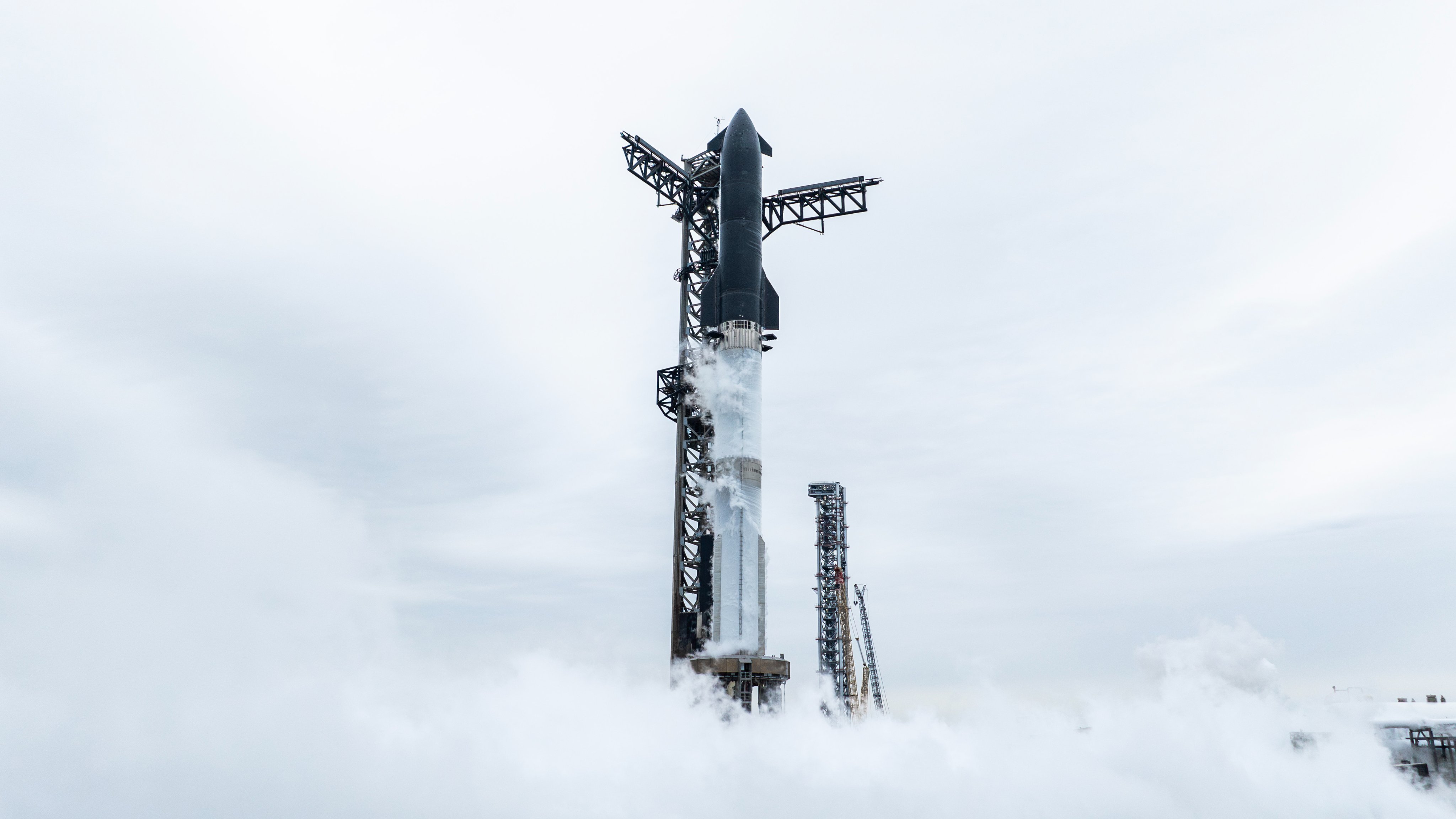
Starship’s evolution is accelerating. On February 26, 2026, SpaceX confirmed that the first Starship V3 vehicle has left the build site at Starbase, Texas, and is now undergoing prelaunch testing. This marks a critical step toward the next orbital test flight, which Elon Musk has indicated could happen “next month.” Musk also outlined plans for the first-ever mid-air tower catch attempt—a bold maneuver that would see the Super Heavy booster snagged by the mechanical arms of the launch tower, a feat never before attempted at this scale.
Earlier this month, the FAA granted SpaceX approval for up to 44 annual Starship launches from Florida, though the immediate focus remains on the Texas site. The new V3 design incorporates significant upgrades aimed at improving reliability and performance. While no launch date has been formally announced, the pace of hardware rollout suggests SpaceX is targeting a March or early April window for the next flight—still firmly in the future as of March 2.

Starbase Gains Coastal Support
Infrastructure development at Starbase continues to advance, now with an assist from the state of Texas. On February 26, 2026, it was announced that Starbase is included in an $84.6 million coastal funding round aimed at beach restoration and resilience along the Gulf Coast. While the funds are part of broader environmental efforts, they underscore the growing integration of SpaceX’s launch site into regional infrastructure planning. This support could help mitigate erosion and storm impacts that have occasionally disrupted operations at the Boca Chica facility.
Meanwhile, Pad 2—intended for higher-cadence Starship launches—is progressing, though details on its current status remain sparse. With the FAA’s Florida approval now in hand, future Starship operations may eventually split between coasts, but for now, all eyes remain on Texas as the proving ground for the next generation of spaceflight.
Falcon 9 Maintains Relentless Cadence
SpaceX’s Falcon 9 workhorse kept its foot on the gas this week, completing five Starlink launches between February 24 and March 1, 2026. The most recent missions included Starlink Group 17-23 from Vandenberg on March 1 at 12:00 a.m. PST and Starlink Group 10-41 from Cape Canaveral later that same evening at 7:07 p.m. EST. Both were successful, with boosters B1082 and B1078 landing on their respective droneships in the Pacific and Atlantic.
Notably, booster B1069 flew its 30th mission on February 27, cementing its status as one of the most-flown Falcon 9 cores in history. With these launches, SpaceX has now lofted 512 Starlink satellites in 2026 alone. The pace shows no sign of slowing: the company has already completed 27 Falcon 9 missions this year, and more Starlink batches are scheduled in the coming weeks.

Starlink Goes Direct-to-Phone in Europe—and Canada’s In the Loop
Starlink’s direct-to-cellular service is going global. On February 26, Virgin Media O2 launched the first commercial Starlink Direct-to-Cell service in Europe, offering satellite messaging and limited data to select UK smartphone users. The service currently covers up to the 58th parallel north, which excludes the most northern parts of the UK—but also means that much of Canada lies outside the current coverage zone.
However, Canadian readers have reason to stay tuned: Rogers Communications is one of Starlink’s 11 announced global partners, and the service is expected to expand northward as next-generation Starlink V2 satellites enter orbit. These newer satellites, according to Starlink’s March 2 tweet, will deliver “5G speeds from space with 100x the data density” of the current generation—potentially bringing full mobile data, voice, and video to remote Canadian regions where terrestrial coverage remains sparse.
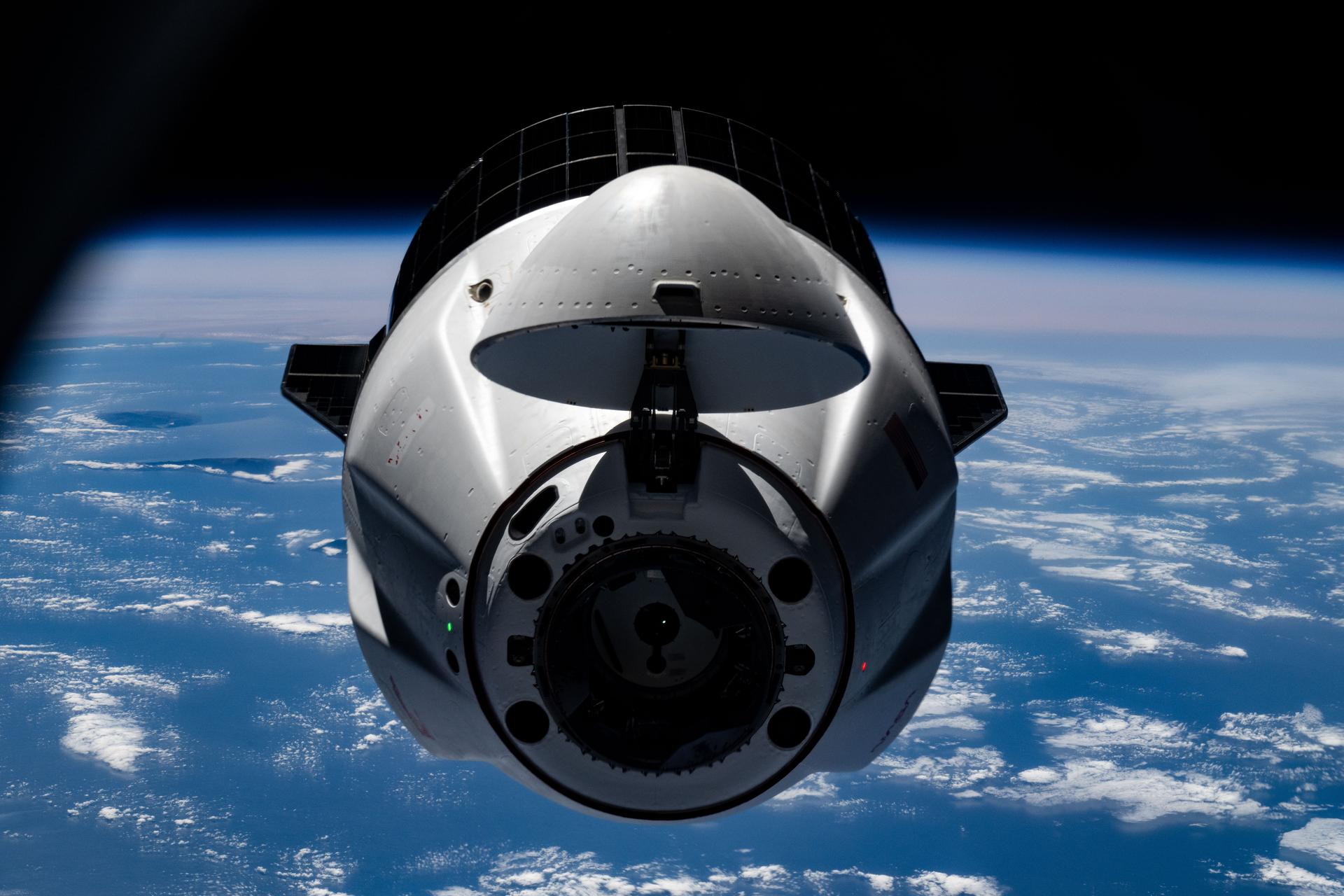
Back on Earth, SpaceX’s CRS-33 Dragon spacecraft successfully concluded its mission on February 27, splashing down off the California coast with critical scientific cargo, including experiments on stem cells, material ageing, and portable diagnostics. The mission also marked the first time a Dragon was used to reboost the International Space Station—a new capability that could extend the station’s operational life.
Citations
- “Launch Preview: Falcon 9 to launch five Starlink missions, Firefly to launch Alpha” – https://www.nasaspaceflight.com/2026/02/launch-preview-022326/
- “Virgin Media O2 launches Europe’s first Starlink direct-to-smartphone service” – https://spacenews.com/virgin-media-o2-launches-europes-first-starlink-direct-to-smartphone-service/
- “SpaceX launches 500th Starlink satellite in 2026 during Wednesday Falcon 9 flight” – https://spaceflightnow.com/2026/02/25/live-coverage-spacex-to-launch-500th-starlink-satellite-in-2026-during-wednesday-falcon-9-flight/
- “NASA to Cover 33rd SpaceX Resupply Mission Station Departure” – https://www.nasa.gov/news-release/nasa-to-cover-33rd-spacex-resupply-mission-station-departure/
- “SpaceX secures FAA approval for 44 annual Starship launches in Florida” – https://www.teslarati.com/spacex-faa-starship-44-launches-florida/
- “Elon Musk reiterates rapid Starship V3 timeline with next launch in sight” – https://www.teslarati.com/elon-musk-starship-next-launch-timeline-v3/
- “Elon Musk’s Starbase, TX included in $84.6 million coastal funding round” – https://www.teslarati.com/elon-musk-starbase-tx-included-84-6-million-coastal-funding-round/
- “Elon Musk outlines plan for first Starship tower catch attempt” – https://www.teslarati.com/spacex-starship-tower-catch-plan-elon-musk/
- Starlink Twitter – https://x.com/Starlink/status/2028459012363309232
- SpaceX Twitter – https://x.com/SpaceX/status/2027143801949618205
Upcoming Starship Launches
Flight 12

Launch Provider: SpaceX – Commercial
Launch Date: March 31, 2026
Launch Time: 12:00 AM UTC
Vehicle: Starship
Brief: 12th test flight of the two-stage Starship launch vehicle. Maiden Flight of Starship V3
📽️ No Livestream scheduled yet
Flight 13
Launch Provider: SpaceX – Commercial
Launch Date: June 30, 2026
Launch Time: 12:00 AM UTC
Vehicle: Starship
Brief: 13th test flight of the two-stage Starship launch vehicle. Second flight of Starship V3
📽️ No Livestream scheduled yet
Superbird-9
Launch Provider: SpaceX – Commercial
Launch Date: June 30, 2027
Launch Time: 12:00 AM UTC
Vehicle: Starship
Brief: Superbird-9 is a high throughput communication satellite. It is designed to deliver broadcast and broadband missions in Ku band primarily over Japan and Eastern Asia, in response to mobility and broadband demands.
📽️ No Livestream scheduled yet
Starlab
Launch Provider: SpaceX – Commercial
Launch Date: December 31, 2029
Launch Time: 12:00 AM UTC
Vehicle: Starship
Brief: Private space station developed by a joint venture between Voyager Space and Airbus.
📽️ No Livestream scheduled yet
Upcoming Falcon Heavy Launches
ViaSat-3 F3 (ViaSat-3 Asia-Pacific)
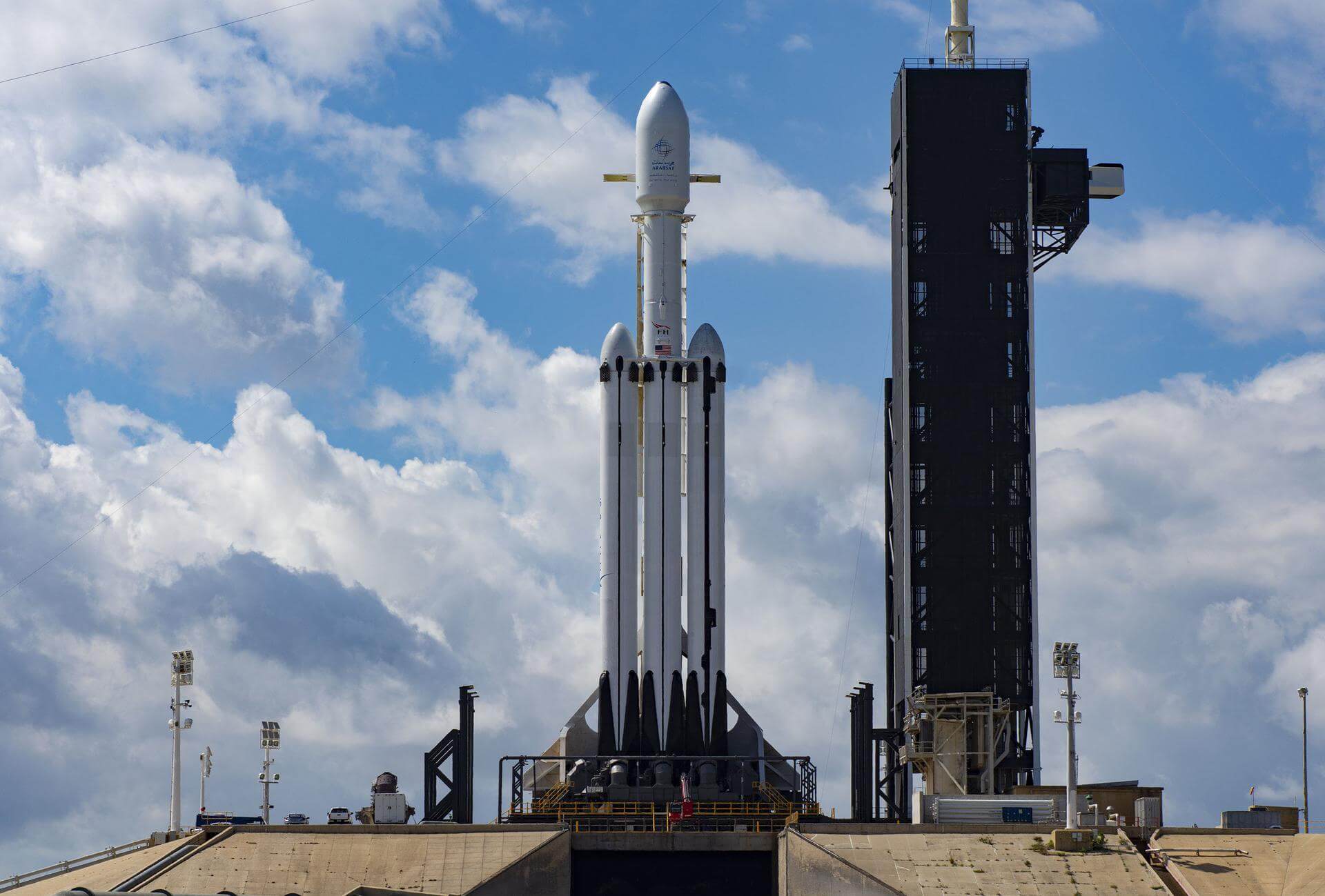
Launch Provider: SpaceX – Commercial
Launch Date: June 30, 2026
Launch Time: 12:00 AM UTC
Vehicle: Falcon Heavy
Brief: The ViaSat-3 is a series of three Ka-band satellites is expected to provide vastly superior capabilities in terms of service speed and flexibility for a satellite platform. Each ViaSat-3 class satellite is expected to deliver more than 1-Terabit per second of network capacity, and to leverage high levels of flexibility to dynamically direct capacity to where customers are located.
📽️ No Livestream scheduled yet
Griffin Mission One
Launch Provider: SpaceX – Commercial
Launch Date: July 31, 2026
Launch Time: 12:00 AM UTC
Vehicle: Falcon Heavy
Brief: Demonstration flight of the Astrobotic Griffin lander and its engines, initially contracted for the cancelled NASA VIPER (Volatiles Investigating Polar Exploration Rover) mission. The vacated payload spot will now host the FLIP (FLEX Lunar Innovation Platform) lunar rover from Astrolab.
📽️ No Livestream scheduled yet
Nancy Grace Roman Space Telescope
Launch Provider: SpaceX – Commercial
Launch Date: September 28, 2026
Launch Time: 12:00 AM UTC
Vehicle: Falcon Heavy
Brief: The Nancy Grace Roman Space Telescope is a NASA infrared space telescope with a 2.4 m (7.9 ft) wide field of view primary mirror and two scientific instruments. The Wide-Field Instrument (WFI) is a 300.8-megapixel multi-band visible and near-infrared camera, providing a sharpness of images comparable to that achieved by the Hubble Space Telescope over a 0.28 square degree field of view, 100 times larger than imaging cameras on the Hubble. The Coronagraphic Instrument (CGI) is a high-contrast, small field of view camera and spectrometer covering visible and near-infrared wavelengths using novel starlight-suppression technology. Roman objectives include a search for extra-solar planets using gravitational microlensing, and probing the expansion history of the Universe and the growth of cosmic structure, with the goal of measuring the effects of dark energy, the consistency of general relativity, and the curvature of spacetime.
📽️ No Livestream scheduled yet
USSF-70
Launch Provider: SpaceX – Commercial
Launch Date: December 31, 2026
Launch Time: 12:00 AM UTC
Vehicle: Falcon Heavy
Brief: Classified payload for the United States Space Force
📽️ No Livestream scheduled yet
USSF-75
Launch Provider: SpaceX – Commercial
Launch Date: December 31, 2026
Launch Time: 12:00 AM UTC
Vehicle: Falcon Heavy
Brief: Classified payload for the United States Space Force
📽️ No Livestream scheduled yet

Leave a Reply