
The NASA Overview: Wings, Crews, and Commercial Partners: NASA’s February Momentum
The Artemis Report
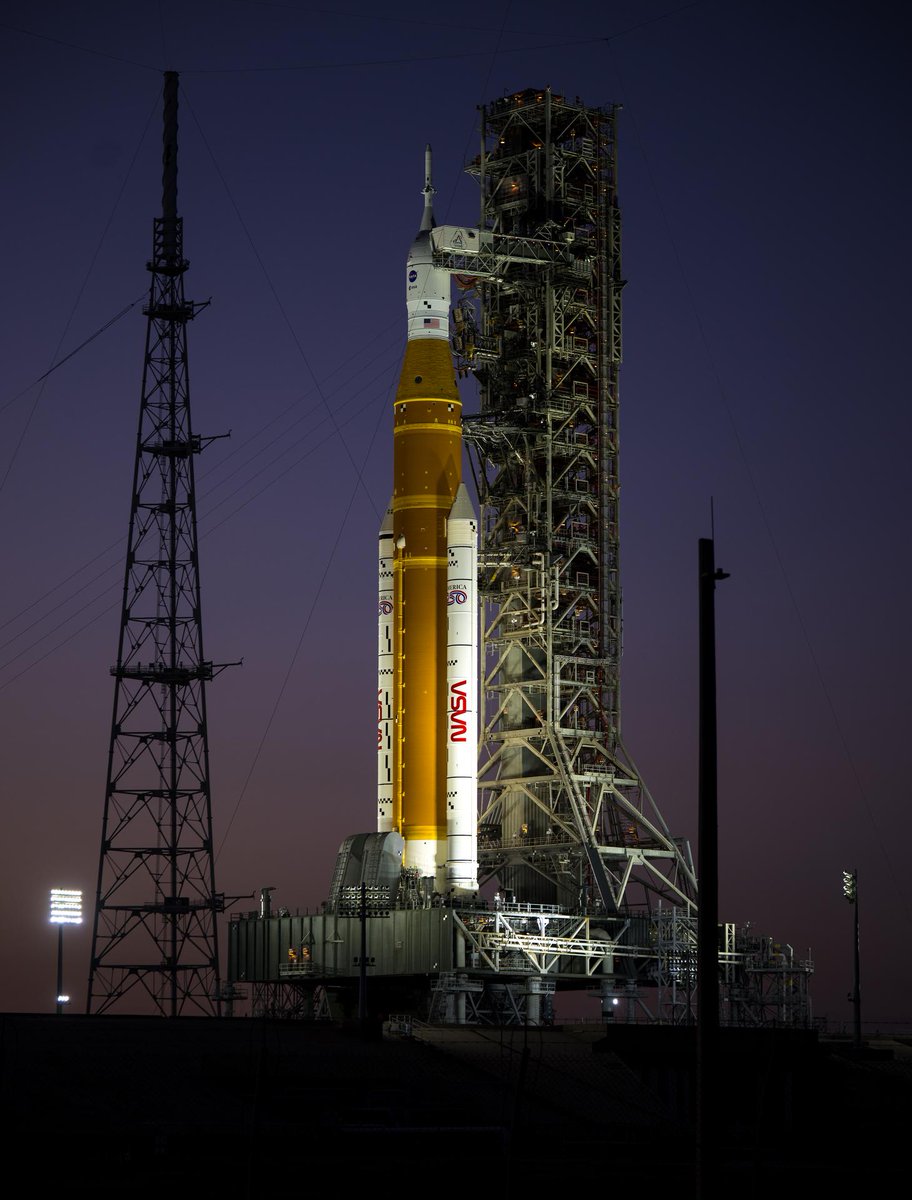
Artemis II, NASA’s highly anticipated crewed mission around the Moon, remains on track for a March 2026 launch window—but not without some fine-tuning along the way. Following a wet dress rehearsal test in early February, engineers identified and replaced seals in a section where a hydrogen leak appeared. Teams have since completed additional cryogenic and pressure tests to verify system integrity ahead of launch, according to NASA Artemis social media updates on February 12.
While a precise launch date has yet to be confirmed, NASA has indicated that March offers the next viable opportunity, pending successful data reviews from upcoming rehearsals. The mission will carry four astronauts on a 10-day journey that loops around the Moon without landing—a crucial dress rehearsal for eventual Artemis III lunar surface operations.
Interestingly, Canadian eyes should stay peeled during Artemis II, even if our country isn’t flying a crew member this time. Technology tested aboard the International Space Station—including imaging systems and environmental monitoring tools—has been adapted for use during the lunar flyby, as noted in a February 9 tweet from the International Space Station account. These systems help map the lunar surface and monitor crew health in deep space, laying groundwork for international contributions to future Artemis missions.
The SLS rocket, standing 322 feet tall (just shy of a football field’s length), continues to undergo final checks at Kennedy Space Center’s Pad 39B. NASA Administrator Jared Isaacman, who recently flew over both Pad 39B (Artemis II) and Pad 40 (Crew-12) in an F-5 fighter jet, called the dual-rocket sight “an honor”—a visual reminder of NASA’s bustling launch manifest.
Flight Innovation Takes Shape Over California
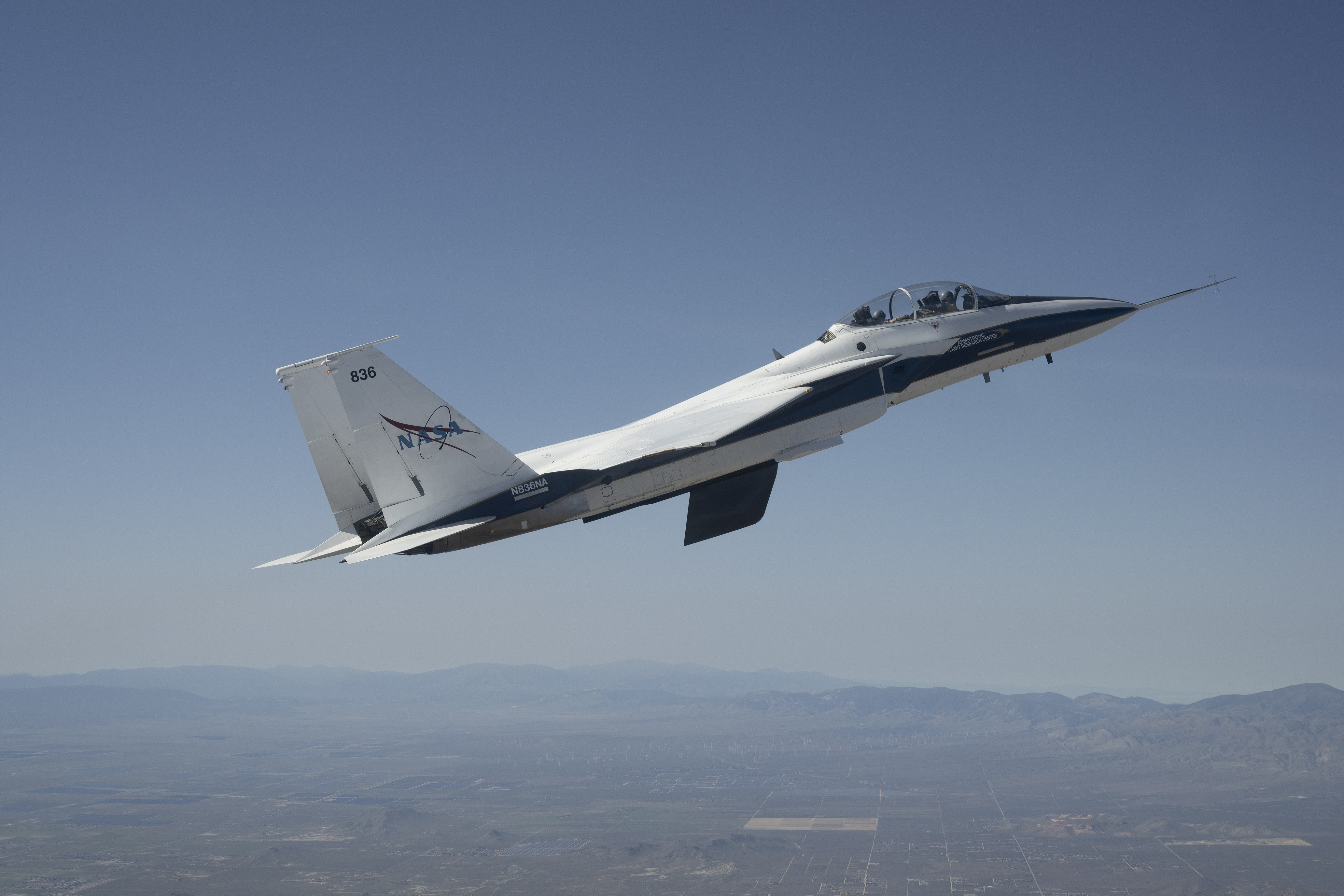
While much of the public’s attention fixates on rockets, NASA’s aeronautics division quietly achieved a milestone that could reshape commercial aviation. On January 29, 2026, NASA’s Armstrong Flight Research Center in Edwards, California, successfully completed the first flight of a scaled wing designed to enhance laminar flow—smooth airflow over aircraft surfaces that reduces drag and fuel consumption.
The 40-inch Crossflow Attenuated Natural Laminar Flow (CATNLF) wing was mounted vertically beneath an F-15B research jet and flown for 75 minutes. During the test, pilots executed gentle turns, steady holds, and pitch changes between 20,000 and 34,000 feet. Early data, including thermal imaging from an onboard infrared camera, confirmed that airflow closely matched pre-flight computer models—a promising sign for future efficiency gains.
Michelle Banchy, the research principal investigator, called the flight “incredible” after years of wind tunnel tests, ground evaluations, and high-speed taxi trials. The mission is part of NASA’s broader Subsonic Vehicle Technologies and Tools project, with up to 14 additional test flights planned to gather comprehensive data across varying conditions.
For Canadian travellers and airlines, this research could eventually mean cheaper, quieter, and more fuel-efficient transcontinental flights. While no Canadian institutions are directly named in the CATNLF collaboration, the findings will feed into global aerospace standards that affect manufacturers like Bombardier and aircraft operators such as Air Canada.
The ISS Report
After weeks of scheduling adjustments due to weather and traffic at the orbital outpost, NASA’s SpaceX Crew-12 mission successfully launched on February 13, 2026, at 5:15 a.m. EST from Kennedy Space Center. Aboard the Crew Dragon spacecraft are NASA astronauts Jessica Meir and Jack Hathaway, European Space Agency astronaut Sophie Adenot, and Roscosmos cosmonaut Andrey Fedyaev.
The quartet is scheduled to dock with the International Space Station on Saturday, February 14, at 3:15 p.m. EST. Once aboard, they’ll join Expedition 74, conducting hundreds of experiments in microgravity—from cardiovascular health and blood flow dynamics to pharmaceutical stability and crew psychology.
Notably, ESA’s Sophie Adenot is a French astronaut, but Canadian scientists continue to benefit from ISS research. Canadian experiments in bone loss mitigation and robotics (building on Canadarm2’s legacy) often share lab space with Crew-12’s planned investigations, particularly in the life sciences. The mission underscores the station’s role as a truly international laboratory—even as NASA eyes its eventual transition to commercial platforms.

Call Of The Red Planet
While no new Mars missions launched this week, ongoing science from the Red Planet continues to intrigue. On February 12, NASA’s Mars Exploration Program highlighted a new study based on data from the Curiosity rover suggesting that non-biological processes alone cannot explain the abundance of organic compounds found in a recent rock sample.
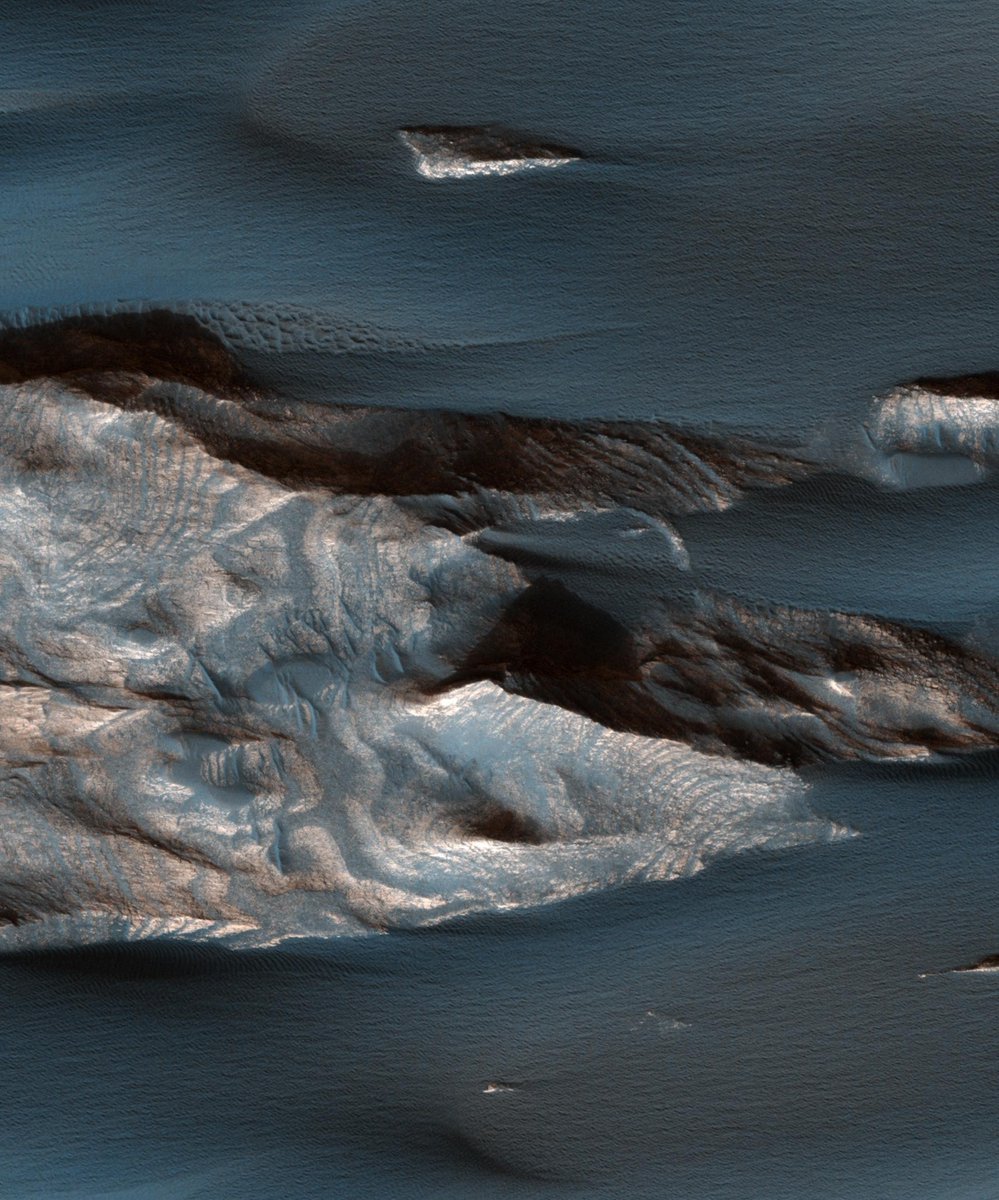
This finding doesn’t confirm past life—but it does reinforce that Mars once hosted complex chemistry potentially conducive to life. Meanwhile, the Mars Reconnaissance Orbiter captured striking images of windblown sand dunes, offering fresh insights into Martian geology and seasonal changes.
Canadian researchers, though not directly operating Mars hardware, contribute to international teams analyzing rover data, particularly in mineralogy and atmospheric science. No Canadian-led Mars missions are scheduled, but Canada’s expertise in spectrometry and remote sensing remains valued by NASA and ESA collaborators.
In The News
In a significant step toward commercializing low Earth orbit, NASA announced on February 12 that it has selected Vast, a U.S.-based space startup, for the sixth private astronaut mission to the International Space Station. The mission is targeted for no earlier than summer 2027 and marks Vast’s first selection for an ISS flight.
Vast plans to send four crew members (pending NASA and international partner approval) and will contract with SpaceX for launch services. The company will purchase mission support from NASA—including consumables, cargo delivery, and in-orbit resources—while NASA will buy return capacity for scientific samples requiring cold-chain transport.
“Leveraging the remaining life of the space station with science and research-led commercial crewed missions is a critical part of the transition to commercial space stations,” said Vast CEO Max Haot. This move aligns with NASA’s broader strategy to foster a robust orbital economy as the ISS nears its planned retirement later this decade.
Though no Canadian firms are involved in this particular mission, the growth of private astronaut flights opens potential avenues for Canadian researchers, entrepreneurs, or even future astronauts to access space through non-governmental channels—a shift that Canadian space stakeholders are closely watching.
Citations
- “NASA Completes First Flight of Laminar Flow Scaled Wing Design” – https://www.nasa.gov/image-article/nasa-completes-first-flight-of-laminar-flow-scaled-wing-design/
- “NASA Selects Vast for Sixth Private Mission to Space Station” – https://www.nasa.gov/news-release/nasa-selects-vast-for-sixth-private-mission-to-space-station/
- NASA and International Space Station social media updates (February 6–13, 2026) – https://x.com/NASA/status/2022288774483382704
Upcoming Launches
Artemis II
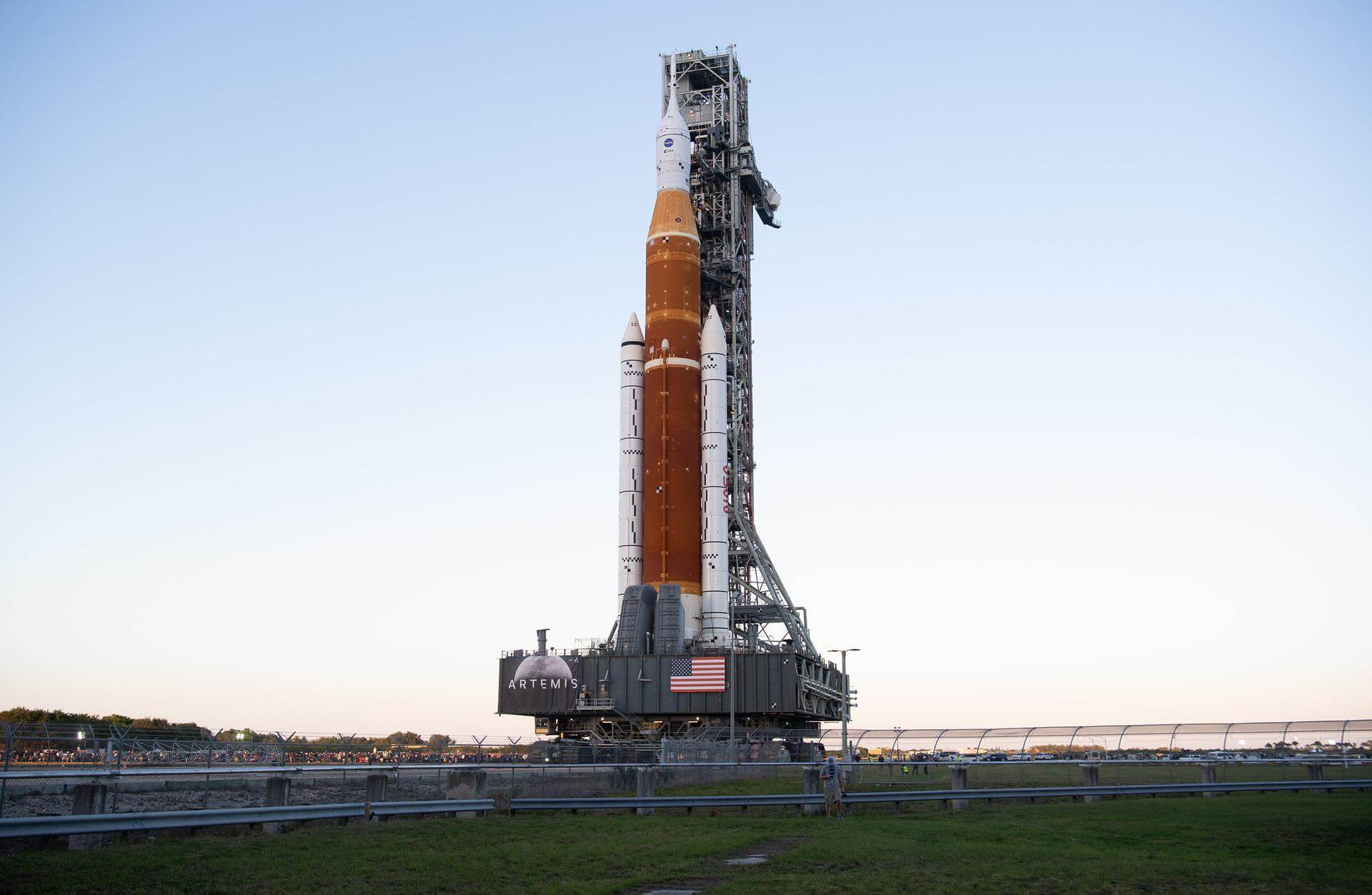
Launch Provider: National Aeronautics and Space Administration – Government
Launch Date: March 3, 2026
Launch Time: 10:30 PM UTC
Vehicle: Space Launch System (SLS)
Brief: Artemis II is the first crewed mission as part of the Artemis program. Artemis II will send a crew of 4 – 3 Americans and 1 Canadian around the moon and return them back to Earth.
The mission will test the core systems of NASA’s Orion spacecraft including the critical life support system, among other systems which could not be tested during Artemis I due to the lack of crew onboard.
📽️ No Livestream scheduled yet
SLS Block 1 | Artemis III
Launch Provider: National Aeronautics and Space Administration – Government
Launch Date: June 30, 2027
Launch Time: 12:00 AM UTC
Vehicle: Space Launch System (SLS)
Brief: No description available
📽️ No Livestream scheduled yet
SLS Block 1B | Artemis IV
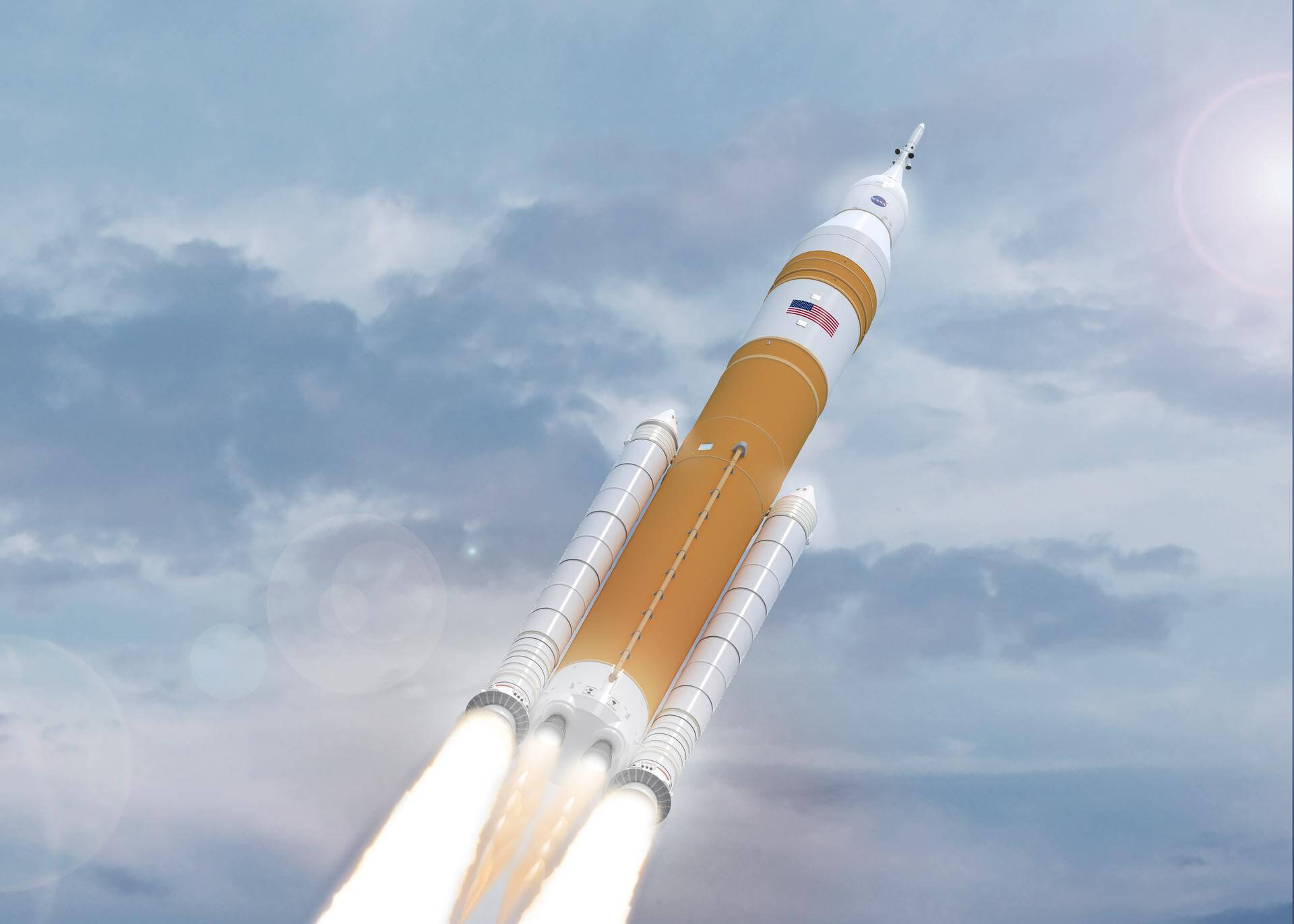
Launch Provider: National Aeronautics and Space Administration – Government
Launch Date: September 30, 2028
Launch Time: 12:00 AM UTC
Vehicle: Space Launch System (SLS)
Brief: No description available
📽️ No Livestream scheduled yet
SLS Block 1B | Artemis V
Launch Provider: National Aeronautics and Space Administration – Government
Launch Date: September 30, 2029
Launch Time: 12:00 AM UTC
Vehicle: Space Launch System (SLS)
Brief: No description available
📽️ No Livestream scheduled yet
SLS Block 1B | Artemis VI
Launch Provider: National Aeronautics and Space Administration – Government
Launch Date: September 30, 2030
Launch Time: 12:00 AM UTC
Vehicle: Space Launch System (SLS)
Brief: No description available
📽️ No Livestream scheduled yet

Leave a Reply