
The NASA Overview: Orbiting Ahead: NASA’s March Momentum Toward Moon, Markets, and Mars
The Artemis Report: On Track for April, Eyes on 2028
As of March 6, 2026, NASA’s Artemis 2 crewed lunar flyby mission is scheduled for launch in April—a slight delay from its original timeline, but still a historic step toward returning humans to deep space. Administrator Jared Isaacman, confirmed in December 2025, has prioritized this mission as “the most important human spaceflight mission in a half century” and has overseen rigorous pre-flight readiness reviews to ensure safety, especially given the new environmental control and life support systems (ECLSS) not present on the uncrewed Artemis 1 test flight.
Isaacman has toured all NASA field centres, flown aboard his own fighter jet to site visits, and initiated internal efforts to rebuild core agency competencies that had been outsourced or degraded over time. “We’ve got to look at that,” he said in a January interview, noting that roughly 75% of the workforce consists of contractors. His goal: bring essential expertise—like launch complex operations, mission control, and X-plane flight testing—back in-house to strengthen NASA’s ability to execute complex missions.
Beyond Artemis 2, the agency is accelerating preparations for Artemis 3, which aims to land astronauts on the Moon by 2028 per a recent executive order. NASA is actively supporting its two Human Landing System (HLS) providers—SpaceX and Blue Origin—and has signalled willingness to relax certain requirements to meet that aggressive deadline. Similarly, lunar spacesuit development is undergoing a “pull-forward” strategy, with decisions already made to streamline delivery.
Nuclear thermal propulsion and early lunar infrastructure are also on the table. Isaacman emphasized the need to begin deploying foundational elements—possibly via expanded Commercial Lunar Payload Services (CLPS)—well before crew arrival. “You can’t wait a year or two to start that,” he noted.

Deep Space Updates: Roman Telescope on Deck, Mars Sample Return in Limbo
While lunar ambitions dominate headlines, NASA’s science portfolio continues to advance—with one notable exception. The Nancy Grace Roman Space Telescope remains on track for launch before the end of 2026, promising to revolutionize our understanding of dark energy, exoplanets, and infrared cosmology. This mission exemplifies NASA’s ongoing commitment to discovery even amid a human exploration pivot.
Conversely, the Mars Sample Return (MSR) program faces an uncertain future. Though not funded in the final FY2026 budget, Administrator Isaacman hasn’t ruled out a reboot—just not yet. “Step one is closing out the old program,” he said, noting that hundreds of millions have been spent on a program officially cancelled under the previous administration. With the agency now focused on a sustained lunar campaign via Artemis, MSR could eventually be reconsidered, but only after “stopping the bleeding” on sunk costs. Alternative, more economical proposals are under review, though no timeline has been set.
Meanwhile, Dragonfly—the nuclear-powered rotorcraft destined for Saturn’s moon Titan—remains in development as a “signature mission,” though updates this week were scarce. Overall, NASA’s science directorate appears to be maintaining its edge, even as human spaceflight commands strategic attention.

On the commercial front, satellite servicing is gaining traction globally. Though not a NASA-led initiative, the French-American firm Infinite Orbits recently acquired UK-based startup Lunasa to bolster its in-orbit rendezvous capabilities. Their Endurance life-extension service—scheduled for 2027—aims to dock with aging geostationary satellites, like one operated by Luxembourg’s SES, to prolong operational life by five years. While this isn’t a NASA mission, it reflects a broader shift toward sustainable space operations, a principle NASA increasingly endorses through programs like CLPS and commercial low-Earth orbit (LEO) partnerships.
The ISS Report: Extended to 2032, But Only Until Commercial Stations Are Ready
The International Space Station’s retirement date may be pushed back—but not indefinitely. On March 5, 2026, the U.S. Senate Commerce Committee passed a NASA Authorization bill that extends ISS operations from 2030 to 2032, pending approval from international partners, including Russia. Crucially, the bill stipulates that NASA “shall not initiate the de-orbit of the ISS until the date on which a commercial low-Earth orbit destination has reached an initial operational capability.”
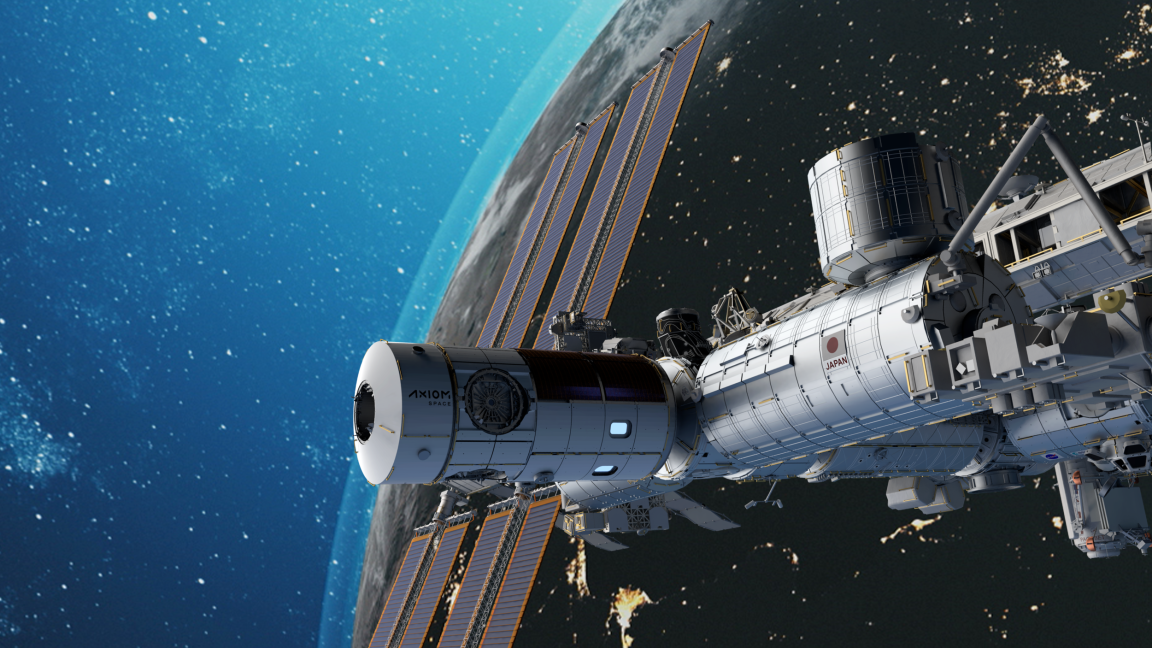
This move responds to industry concerns about ambiguity in NASA’s transition plan. Private firms like Axiom Space, Blue Origin, Vast, and Voyager are designing commercial successors but need clear requirements to secure investment. The bill mandates NASA to release those requirements within 60 days of enactment, issue a final request for proposals within 90 days, and award contracts to at least two providers within 180 days.
Axiom Space, which recently raised $350 million, welcomed the legislation, calling it a “clear indicator” of congressional support. Vast CEO Max Haot echoed that sentiment, adding that readiness—not a hard deadline—should dictate the ISS’s end-of-life. For Canadian readers, this transition matters: Canada’s robotic contributions (Canadarm2 and Dextre) remain critical to ISS operations, and future commercial stations may seek similar partnerships. However, no Canadian firm is currently among the leading commercial station contenders.
Call Of The Red Planet
Mars news is quiet this week. NASA’s Perseverance rover continues its silent work in Jezero Crater, caching samples for a future return mission that remains unfunded and undefined. The Mars Sample Return program, once a flagship collaboration with ESA, is effectively on hold as NASA reassesses its priorities under the new lunar-focused mandate. No new rover updates, scientific findings, or mission milestones were reported in the past week, and the @NASA_Mars Twitter account has been silent. For now, the red planet watches and waits.
In The News
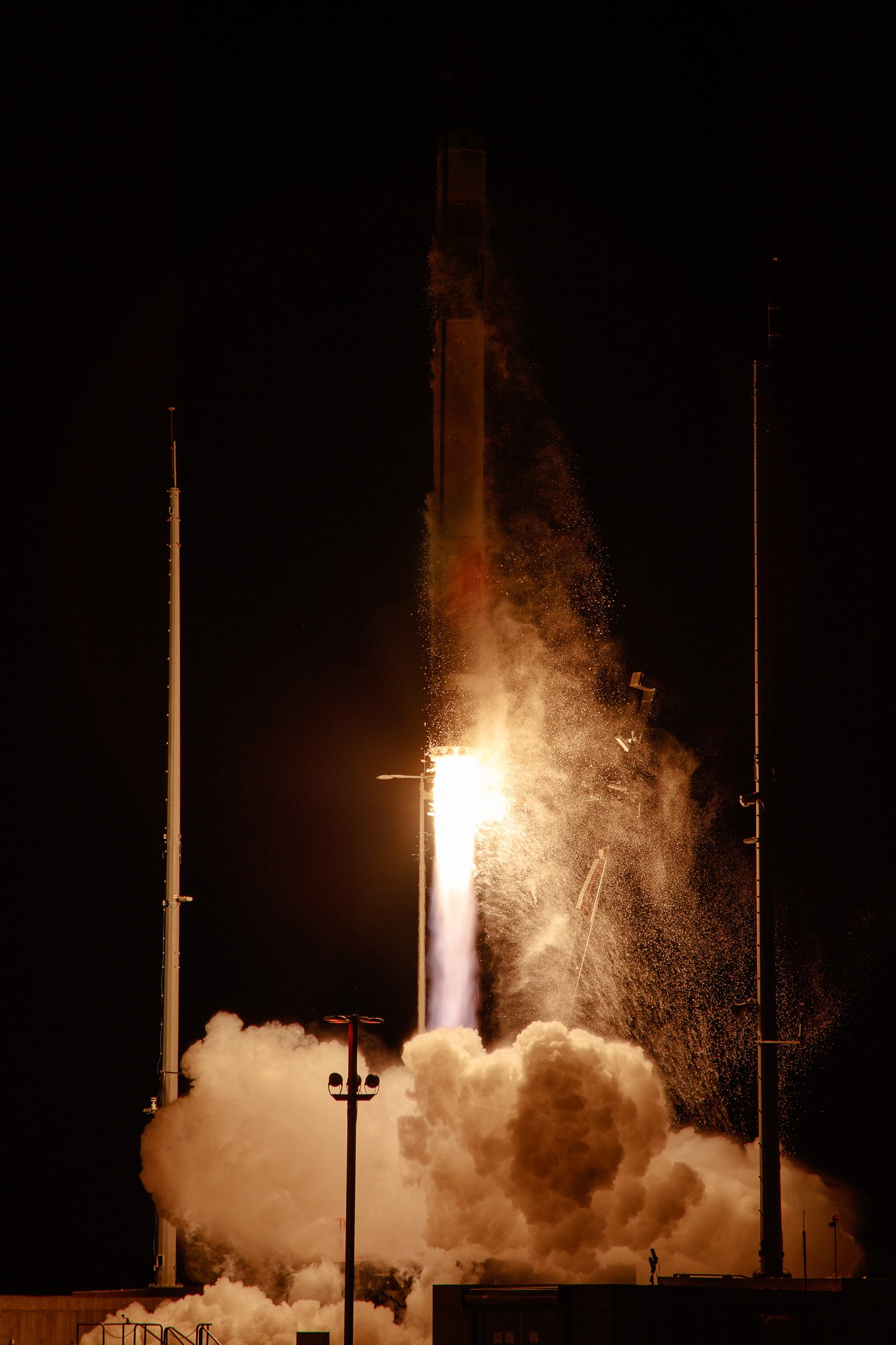
Though not directly a NASA mission, Rocket Lab’s February 27, 2026 HASTE suborbital launch from NASA’s Wallops Flight Facility in Virginia underscores the agency’s expanding role as an enabler of national security and commercial innovation. The Cassowary Vex mission, supporting the Department of Defense’s hypersonic testing, relied on Wallops for tracking, telemetry, and range safety. This highlights how NASA infrastructure—especially on the U.S. East Coast—is increasingly vital to non-NASA government and commercial launches.
Meanwhile, Administrator Isaacman’s leadership style continues to draw attention. Known for his record-setting private spaceflights and philanthropy, he’s now applying that same hands-on urgency to the agency. His push to integrate workforce feedback—over 700 submissions from an “ideas box”—and his emphasis on parallel, not sequential, mission execution (“NASA should be able to undertake multiple world-changing missions”) signal a cultural shift. Whether this will translate into sustained success remains to be seen, but as Isaacman puts it: “In every area of pursuit… there is area for improvement. That’s great. To me, that is incredibly energizing.”
Citations
- “Congress extends ISS and tells NASA to get moving on private space stations” – https://arstechnica.com/space/2026/03/congress-steps-up-pressure-on-nasa-to-support-private-space-stations/
- “Jared Isaacman on rebuilding, Artemis and what he’s learned during his first months as NASA administrator” – https://spacenews.com/jared-isaacman-on-rebuilding-artemis-and-what-hes-learned-during-his-first-months-as-nasa-administrator/
- “NASA Wallops Supports First Rocket Lab HASTE Launch of 2026” – https://www.nasa.gov/image-article/nasa-wallops-supports-first-rocket-lab-haste-launch-of-2026/

Leave a Reply