
The NASA Overview: Artemis II Soars, But the Future of Low-Earth Orbit Looks Murky
The Artemis Report
At 6:35 p.m. EDT on April 1, 2026, history was made: NASA’s Artemis II mission launched from Kennedy Space Center, carrying four astronauts on humanity’s first crewed journey beyond low-Earth orbit in over 50 years. The powerful Space Launch System (SLS) rocket propelled the Orion spacecraft—named Integrity by its crew—into space, marking a pivotal moment in the agency’s return to the Moon.
Onboard are NASA astronauts Reid Wiseman (commander), Victor Glover (pilot), Christina Koch (mission specialist), and Canadian Space Agency (CSA) astronaut Jeremy Hansen (mission specialist). As the first Canadian to fly on a deep-space mission, Hansen’s role embodies Canada’s long-standing partnership in human spaceflight, from the Canadarm on the Space Shuttle to robotics on the ISS—and now, on the path to the Moon.
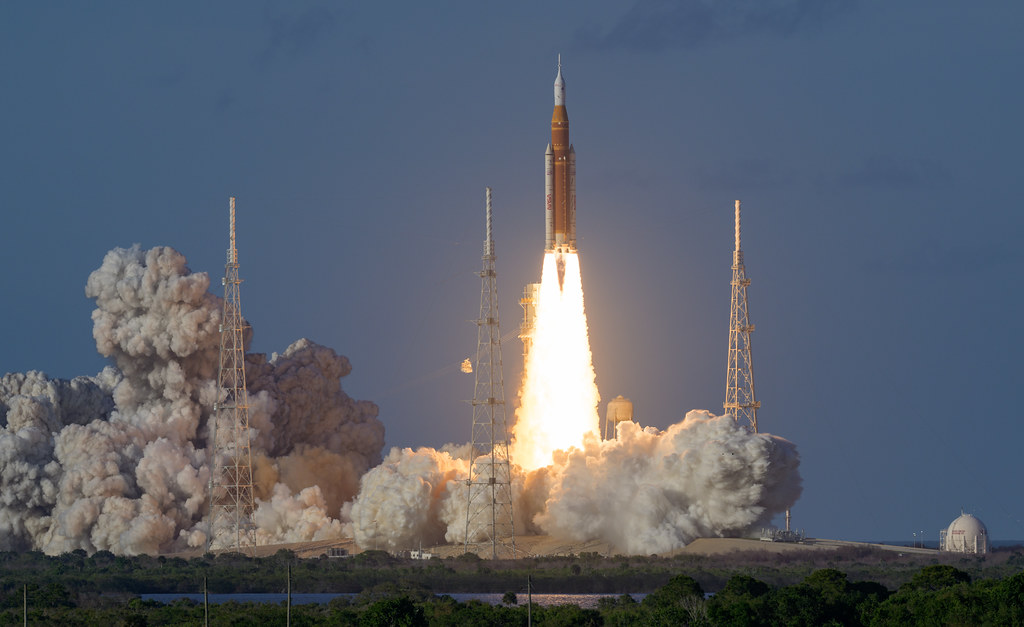
The approximately 10-day mission is designed as a rigorous test flight. After two orbits of Earth, Orion executed a translunar injection burn on April 2, setting the crew on a free-return trajectory around the Moon. They’re expected to perform a lunar flyby on Monday, April 6, coming as close as 4,000 to 6,000 miles from the lunar surface—farther than any human-rated spacecraft since Apollo.
Though they won’t land, the crew will test critical systems, including life support, navigation, and communications in deep space. They’ll also conduct manual piloting demonstrations and capture imagery of the lunar far side during partial illumination—a lighting condition that enhances surface relief, offering valuable geological insights for future Artemis landings.
NASA Administrator Jared Isaacman, who assumed leadership just four months ago, called the launch “a defining moment for our nation.” He emphasized that Artemis II “lays the foundation” for sustained lunar presence and eventual Mars missions. The crew is scheduled to splash down in the Pacific Ocean on Friday, April 10.

Artemis III, currently targeted for mid-2027, will aim to land astronauts near the lunar South Pole—the first human Moon landing since 1972. Canada’s contribution to that mission includes the Canadarm3 robotic system for the lunar Gateway (though the Gateway’s status is in flux—more on that shortly).
Deep Space Updates
While Artemis II captures headlines, NASA’s Commercial Lunar Payload Services (CLPS) initiative continues to advance robotic exploration. On March 27, NASA awarded Houston-based Intuitive Machines a $180.4 million contract to deliver seven science and technology payloads to the Moon’s South Pole region in 2030.
This will be Intuitive Machines’ fifth CLPS mission and builds on lessons from earlier flights, including the successful IM-1 and IM-2 landings. The 2030 delivery includes five NASA-led instruments designed to study lunar regolith, volatiles, radiation, and plume-surface interactions—critical data for future human outposts.
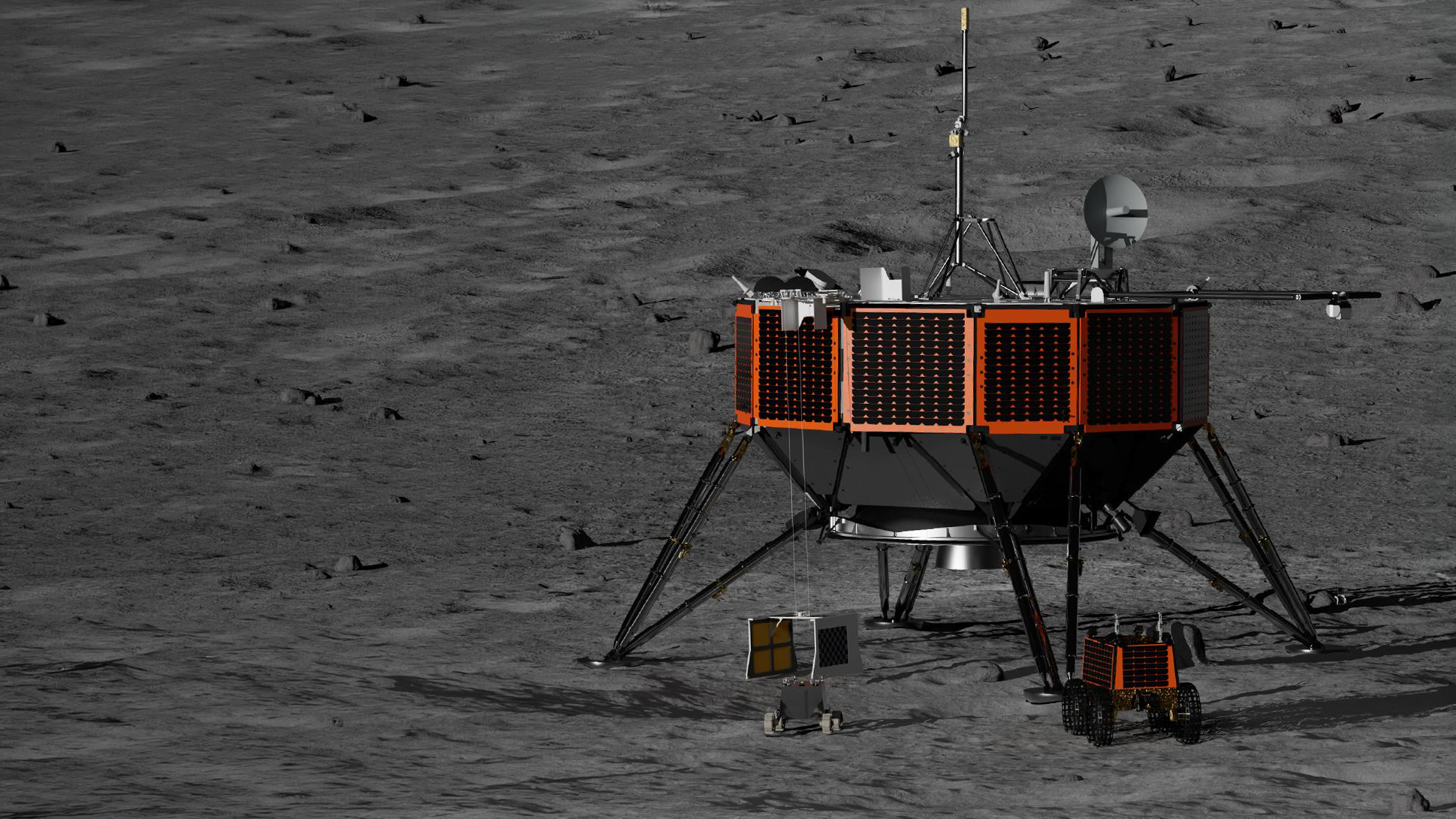
Notably, one payload—the Multifunctional Nanosensor Platform (MNP)—will be integrated into the Australian Space Agency’s “Roo-ver,” a small autonomous rover designed to traverse complex lunar terrain. This marks Australia’s first hardware contribution to a NASA Moon mission, continuing a partnership that dates back to Apollo when Australian tracking stations received the first Moonwalk broadcast.
Another intriguing payload is “Sanctuary on the Moon,” a French-led time capsule containing 24 synthetic sapphire discs etched with a curated archive of human civilization—from the human genome to music, art, and scientific achievements. It joins NASA’s Laser Retroreflector Array, which will help future spacecraft navigate the lunar surface with centimetre-level precision.
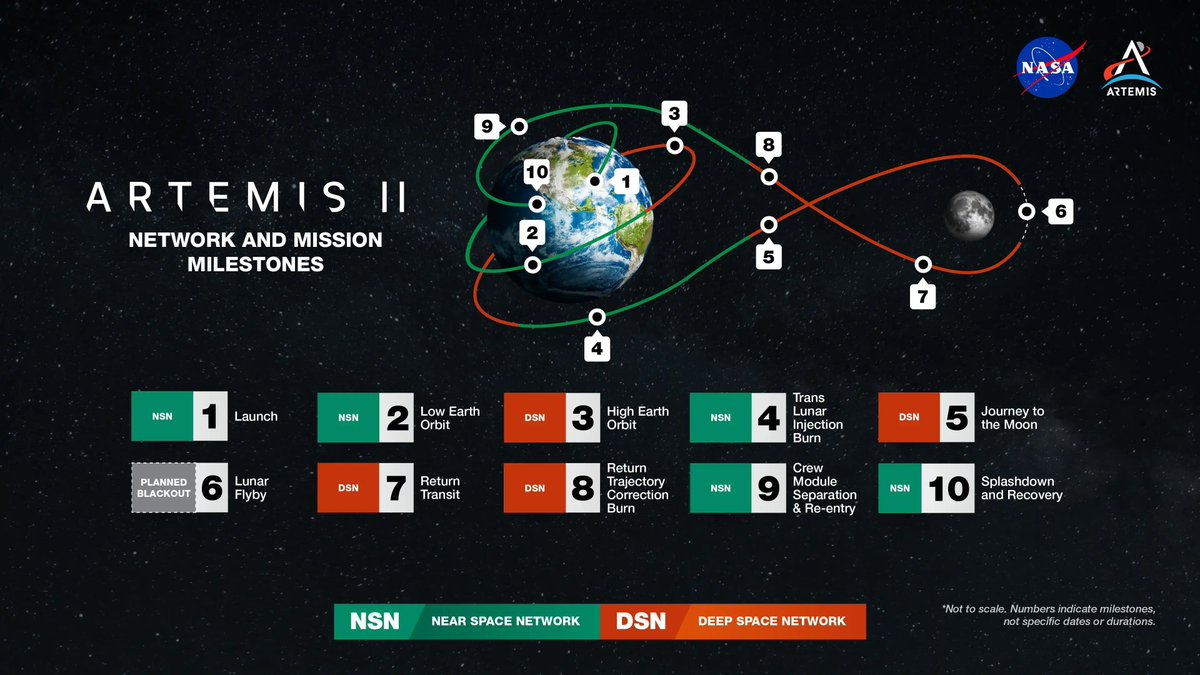
Meanwhile, NASA’s Deep Space Network, managed by the Jet Propulsion Laboratory, is maintaining communication with Orion as it travels over 1.4 million miles during its mission. The network recently confirmed signal acquisition as Orion transitioned from near-Earth to deep-space communications—a vital link for crew safety and mission success.
The ISS Report
Back in low-Earth orbit, the International Space Station (ISS) continues operations under Expedition 74. Crew members spent the week conducting medical experiments—including brain adaptation studies and artery scans—servicing life support hardware, and unpacking cargo from a recent resupply mission.
But the ISS’s long-term future has grown increasingly uncertain. During NASA’s “Ignition” event on March 25, 2026, agency leaders expressed serious doubts about the viability of commercial space stations as a successor to the ISS. Originally, NASA planned to retire the station by 2030 and transition to private platforms developed by companies like Axiom Space, Blue Origin, and Voyager.
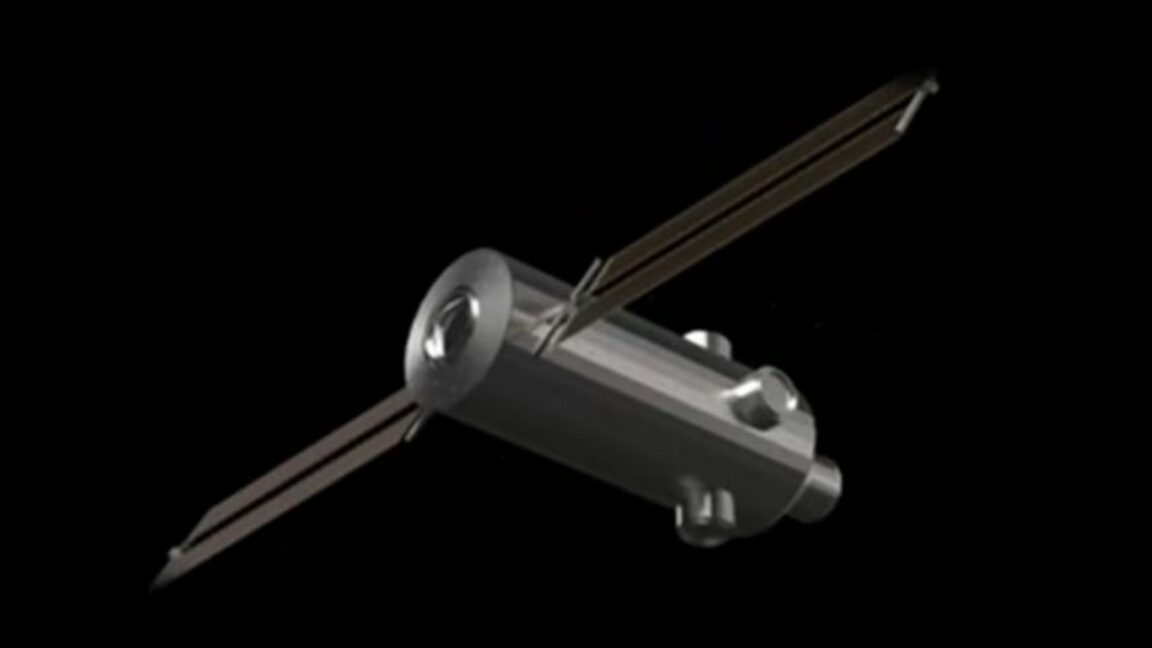
However, NASA now admits the path “is not leading us where we thought it would.” Faced with ballooning costs (estimated at $5–10 billion per station), technical hurdles, and an unproven market, the agency proposed a controversial pivot: instead of free-flying commercial stations, new modules would dock directly with the existing ISS, effectively extending its life to at least 2032.
This proposal has drawn sharp criticism from industry leaders, who argue it undermines years of design work and favours Axiom Space, already contracted to attach its Payload Power Thermal Module to the ISS. As one insider told Ars Technica: “This could get ugly.” Congress is expected to intervene as budget negotiations unfold.
Call Of The Red Planet
Mars remains a long-term goal, but activity on the Red Planet is currently quiet. NASA’s Perseverance rover continues its science campaign in Jezero Crater, caching samples for future return, while the Ingenuity helicopter—though grounded after its 72nd flight—stands as a monument to aerial exploration.
Meanwhile, NASA Mars’ social media team offered a light-hearted reminder on March 31 that future missions will “keep an eye on the Sun from Mars,” underscoring the agency’s broader heliophysics ambitions. No new Mars missions launched or were scheduled this week, but Artemis II’s success is viewed as a necessary step toward developing the deep-space capabilities required for eventual human missions to Mars—now officially targeted for the late 2030s.
In The News
In international partnerships, Italy signed a Statement of Intent with NASA on March 31 to contribute habitation modules, communications systems, and science instruments to the U.S.-led lunar surface base. In return, Italy secured a seat for one of its astronauts on a future Artemis mission—a significant win for the Italian Space Agency (ASI).
This agreement comes amid uncertainty for the European Space Agency (ESA), which contributed key modules (I-HAB and ESPRIT) to the now-paused Lunar Gateway. With NASA shifting focus from the Gateway to a surface base, it’s unclear whether ESA’s promised three astronaut seats on Artemis missions—including one for a lunar landing—will still be honoured.
Back on Earth, Canadian readers may take quiet pride in Jeremy Hansen’s historic role. Though he’s not the first Canadian in space (that was Marc Garneau in 1984), Hansen is the first to venture beyond Earth orbit—a milestone made possible by Canada’s strategic investments in space robotics and its steadfast alliance with NASA. As Artemis II streaks toward the Moon, Canada’s footprint in deep space grows just a little larger.
Citations
- “No one is happy with NASA’s new idea for private space stations” – https://arstechnica.com/space/2026/03/what-happens-next-with-nasas-plan-to-replace-the-iss-source-it-could-get-ugly/
- “Italy Signs Agreement with NASA to Cooperate on Moon Base” – https://europeanspaceflight.com/italy-signs-agreement-with-nasa-to-cooperate-on-moon-base/
- “NASA Selects Intuitive Machines to Deliver Artemis Science, Tech to Moon” – https://www.nasa.gov/missions/artemis/clps/nasa-selects-intuitive-machines-to-deliver-artemis-science-tech-to-moon/
- “Liftoff! NASA Launches Astronauts on Historic Artemis Moon Mission” – https://www.nasa.gov/news-release/liftoff-nasa-launches-astronauts-on-historic-artemis-moon-mission/
Upcoming Launches
Artemis III
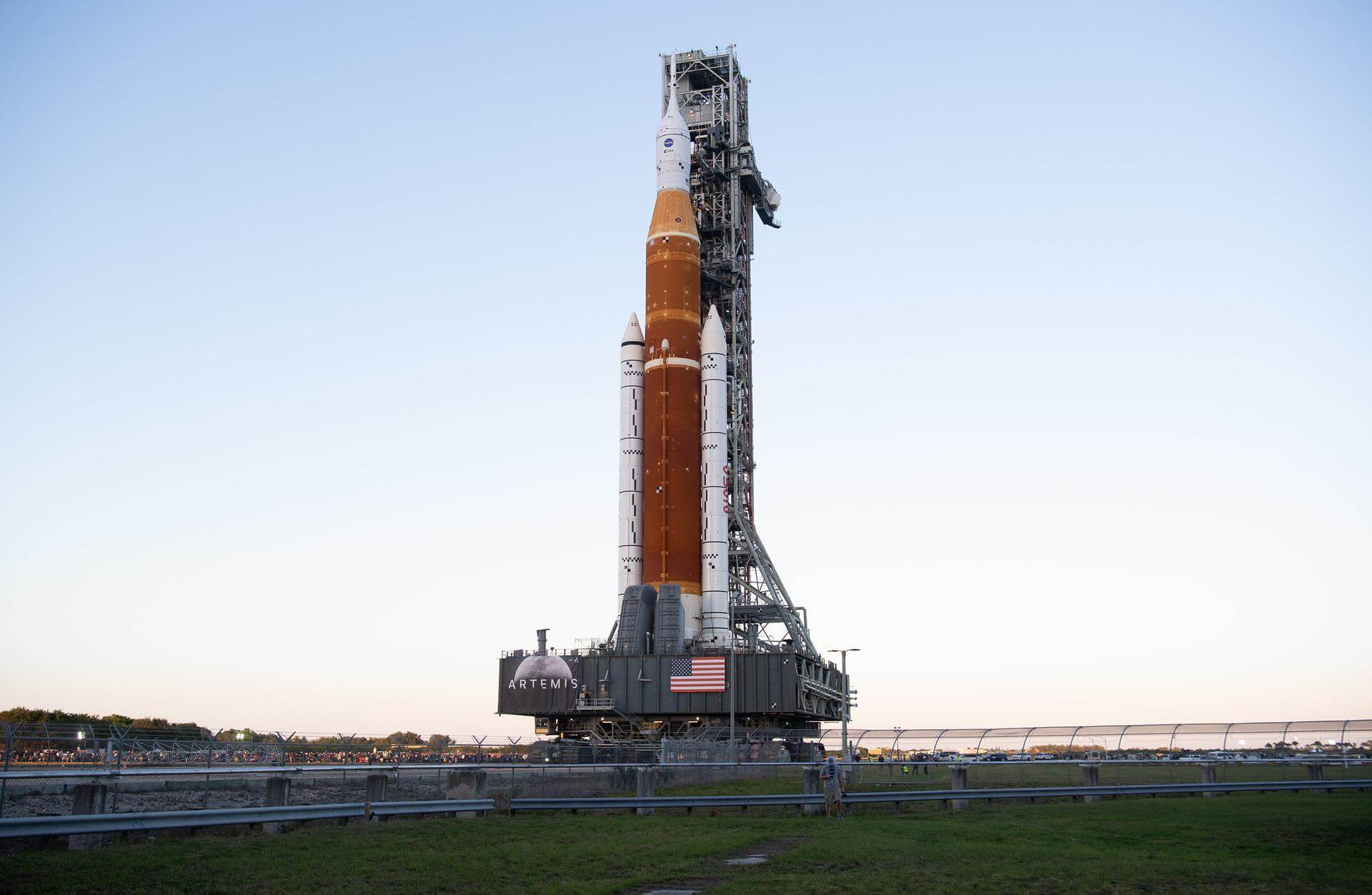
Launch Provider: National Aeronautics and Space Administration – Government
Launch Date: June 30, 2027
Launch Time: 12:00 AM UTC
Vehicle: Space Launch System (SLS)
Brief: Artemis III is the second crew mission as part of the Artemis program. Artemis III will send a crew of 4 on a Low Earth Orbit mission, with the Orion rendezvous and dock with one or both commercial lunar landers in development by SpaceX and Blue Origin, performing in-space tests of the docked vehicles, integrated checkout of life support, communications, and propulsion systems, as well as tests of the new Extravehicular Activity (xEVA) suits.
📽️ No Livestream scheduled yet
Artemis IV
Launch Provider: National Aeronautics and Space Administration – Government
Launch Date: June 30, 2028
Launch Time: 12:00 AM UTC
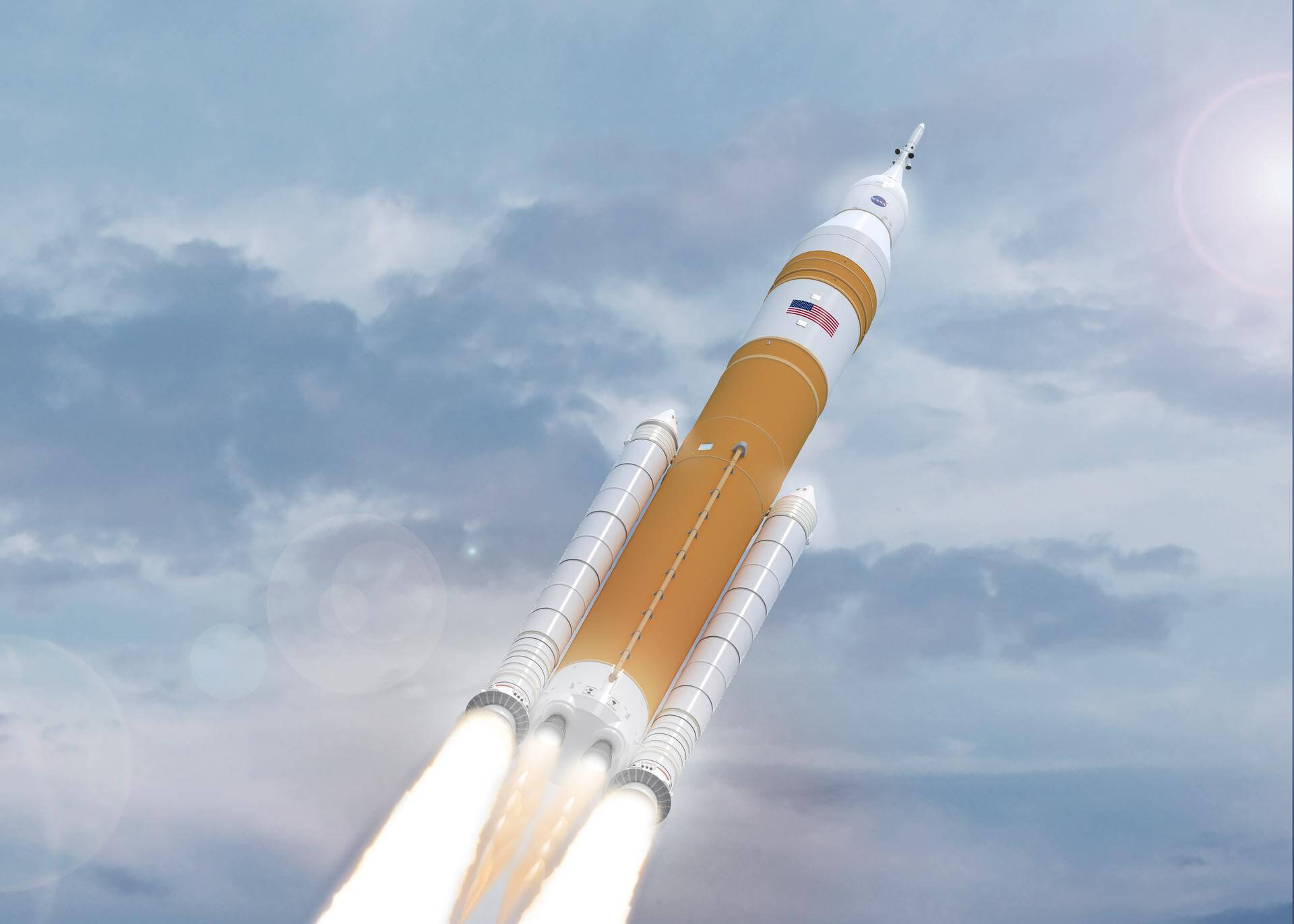
Vehicle: Space Launch System (SLS)
Brief: Artemis IV is planned to be the first human lunar landing mission since the Apollo Program.
📽️ No Livestream scheduled yet
Artemis V
Launch Provider: National Aeronautics and Space Administration – Government
Launch Date: December 31, 2028
Launch Time: 12:00 AM UTC
Vehicle: Space Launch System (SLS)
Brief: Artemis V is planned to be the second human lunar landing mission since the Apollo Program.
📽️ No Livestream scheduled yet
SLS Block 1B | Artemis VI
Launch Provider: National Aeronautics and Space Administration – Government
Launch Date: September 30, 2030
Launch Time: 12:00 AM UTC
Vehicle: Space Launch System (SLS)
Brief: No description available
📽️ No Livestream scheduled yet
SLS Block 1B | Artemis VII
Launch Provider: National Aeronautics and Space Administration – Government
Launch Date: September 30, 2031
Launch Time: 12:00 AM UTC
Vehicle: Space Launch System (SLS)
Brief: No description available
📽️ No Livestream scheduled yet

Leave a Reply