
The Daily Broadcast: Valentine’s Arrival, SLS Troubles, and a Milestone Falcon

Crew-12 Docks at the ISS, Kicking Off ESA’s Longest Mission
On February 14 at 3:15 p.m. EST, SpaceX’s Crew Dragon Freedom successfully docked with the International Space Station, delivering four new crew members and marking the official start of ESA’s εpsilon mission. The arrival of NASA astronauts Jessica Meir and Jack Hathaway, Roscosmos cosmonaut Andrei Fedyaev, and ESA astronaut Sophie Adenot restored the station’s complement to seven—up from three after the early departure of Crew-11 in January due to a medical issue.

Adenot, a French air force test pilot and member of ESA’s 2022 astronaut class, is now embarked on what’s set to become the agency’s longest mission yet—up to nine months aboard the orbiting laboratory. During her stay, she’ll serve as a crew specialist in both Europe’s Columbus module and Japan’s Kibo lab, conducting up to 36 experiments, including seven developed by France’s CNES. Her research will span human physiology, climate science, and technology demonstrations, all aimed at benefiting life on Earth and supporting future deep-space exploration.
Though not Canadian, Adenot’s mission resonates with Canadian space watchers: much like Canada’s own contributions through Canadarm2 and ongoing astronaut participation, her work underscores the value of international collaboration in maintaining a continuous human presence in low-Earth orbit.
NASA’s SLS Faces Hydrogen Leak Hurdles Ahead of Artemis II
While Crew-12 settled into life aboard the ISS, teams at NASA’s Kennedy Space Center were troubleshooting persistent issues with the Space Launch System (SLS) rocket destined to carry astronauts around the Moon on the Artemis II mission. On February 13, NASA conducted a “confidence test”—a partial wet dress rehearsal—to verify repairs made to seals in the liquid hydrogen fueling system after leaks derailed a full test on February 2.
The latest test yielded mixed results. Although data confirmed improvements at the repaired interface, ground support equipment issues reduced hydrogen flow into the core stage, limiting the scope of validation. NASA Administrator Jared Isaacman, speaking during the Crew-12 launch broadcast on February 13, described the test as a “mini wet dress rehearsal” and emphasized the agency’s commitment to resolving the issue before the next launch window in early March.
“We’re going to make absolute most use of the time that we have leading up to the start of the window,” Isaacman said. Engineers plan to inspect and replace a clogged filter in the ground equipment before deciding whether another full wet dress rehearsal is needed. The Artemis II mission remains officially scheduled for launch in early March 2026, but no specific date has been set pending further testing.
SpaceX Hits 600 Falcon 9 Launches with Starlink Deployment
In a milestone that underscores its dominance in the launch market, SpaceX notched its 600th Falcon 9 launch on February 14 at 8:59:59 p.m. EST from Vandenberg Space Force Base in California. The Starlink 17-13 mission delivered 24 Starlink V2 Mini satellites into low Earth orbit, continuing the company’s rapid expansion of its global broadband constellation.
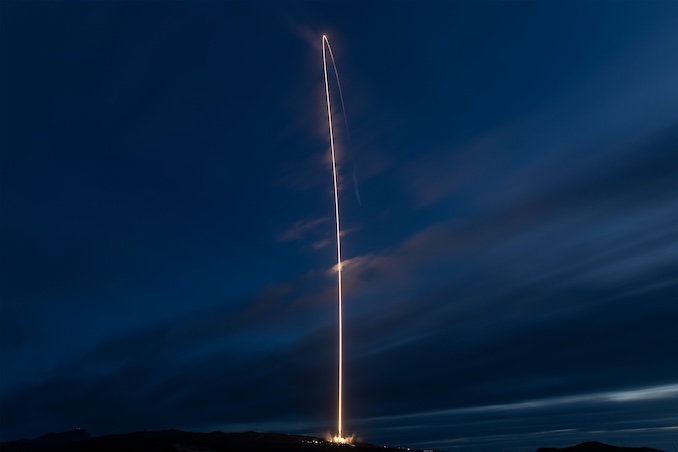
The first stage used for this historic flight—booster B1081—was completing its 22nd mission, having previously supported NASA endeavours like Crew-7, CRS-29, PACE, and TRACERS. Just over eight minutes after liftoff, it touched down on the drone ship Of Course I Still Love You in the Pacific Ocean, marking SpaceX’s 571st successful booster landing.
The launch capped a busy 24 hours for the company: earlier that same day, its Crew Dragon Freedom had docked with the ISS, completing the second half of a remarkable one-two punch—human spaceflight and satellite deployment—within hours. For observers across North America, including many in southern Canada with clear skies, the twilight launch from Vandenberg offered a spectacular light show as the rocket arced southward over the Pacific.
Citations
- “Official start of ESA astronaut Sophie Adenot’s εpsilon mission” – https://www.esa.int/Science_Exploration/Human_and_Robotic_Exploration/Official_start_of_ESA_astronaut_Sophie_Adenots_psilon_mission
- “NASA continues SLS hydrogen leak tests” – https://spacenews.com/nasa-continues-sls-hydrogen-leak-tests/
- “SpaceX launches 600th Falcon 9 rocket to date with Starlink flight from Vandenberg” – https://spaceflightnow.com/2026/02/14/live-coverage-spacex-to-launch-600th-falcon-9-rocket-to-date-with-starlink-flight-from-vandenberg/
Upcoming Launches
Starlink Group 17-13

Launch Provider: SpaceX – Commercial
Launch Date: February 15, 2026
Launch Time: 1:59 AM UTC
Vehicle: Falcon 9
Brief: A batch of 24 satellites for the Starlink mega-constellation – SpaceX’s project for space-based Internet communication system.
Starlink Group 6-103
Launch Provider: SpaceX – Commercial
Launch Date: February 16, 2026
Launch Time: 5:00 AM UTC
Vehicle: Falcon 9
Brief: A batch of 29 satellites for the Starlink mega-constellation – SpaceX’s project for space-based Internet communication system.
Starlink Group 17-25
Launch Provider: SpaceX – Commercial
Launch Date: February 18, 2026
Launch Time: 8:00 AM UTC
Vehicle: Falcon 9
Brief: A batch of 25 satellites for the Starlink mega-constellation – SpaceX’s project for space-based Internet communication system.
Starlink Group 10-36
Launch Provider: SpaceX – Commercial
Launch Date: February 18, 2026
Launch Time: 10:00 PM UTC
Vehicle: Falcon 9
Brief: A batch of 29 satellites for the Starlink mega-constellation – SpaceX’s project for space-based Internet communication system.
First Starlink launch to feature a Falcon 9 booster landing within The Bahamas waters operationally, after the trajectory was tested during launch of Starlink Group 10-12 in February 2025.
Stairway to Seven
Launch Provider: Firefly Aerospace – Commercial
Launch Date: February 21, 2026
Launch Time: 12:20 AM UTC
Vehicle: Firefly Alpha
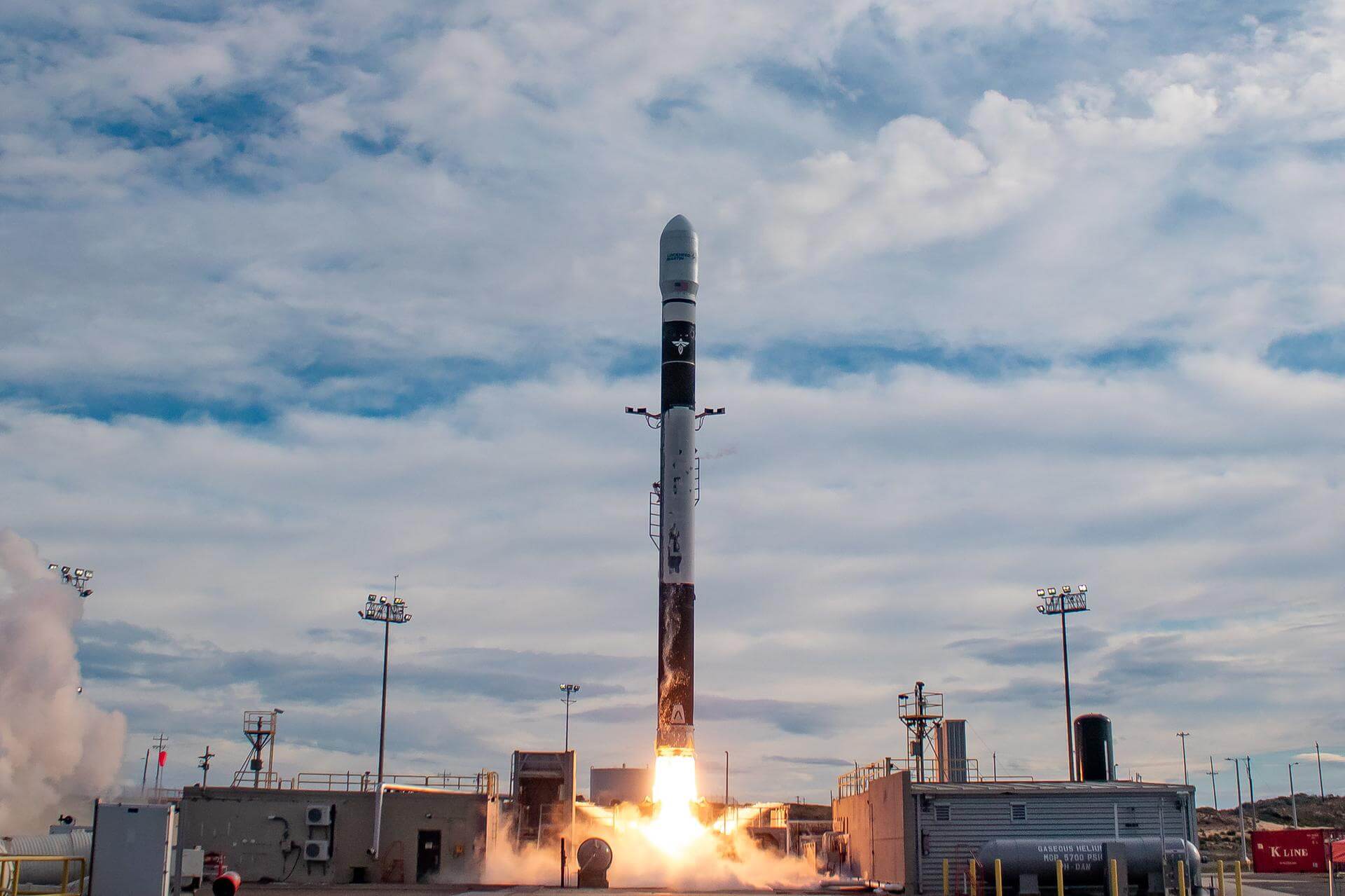
Brief: Firefly Alpha’s Flight 7 will be a test flight and return-To-Flight for the launch vehicle after its April 2025 launch failure. It will test and validate key systems ahead of Firefly’s Block II configuration upgrade on Flight 8 that’s designed to enhance reliability and manufacturability across the vehicle.
Flight 7 will be the last flown in Alpha’s current configuration and will test multiple Block II subsystems, including the in-house avionics and thermal improvements, to gain flight heritage and validate lessons learned ahead of the full configuration upgrade on Flight 8.
📽️ No Livestream scheduled yet

Leave a Reply