
The Daily Broadcast: Setbacks, Signals, and Strategic Shifts in Space Infrastructure

Orbex Collapse Shakes UK Launch Ambitions, But European Efforts Endure
On February 11, 2026, UK-based rocket developer Orbex filed a notice of intention to appoint administrators—the British equivalent of Chapter 11 bankruptcy—after failing to secure Series D funding or complete a planned acquisition by French startup The Exploration Company. The collapse of the Scotland-headquartered firm casts doubt on the United Kingdom’s push for sovereign orbital launch capability, jeopardizing around 150 skilled jobs and leaving its partially built Sutherland Spaceport in limbo. Orbex had been developing the Prime microlauncher, a 19-metre-tall rocket using renewable bio-propane and liquid oxygen, with initial test flights from SaxaVord Spaceport in Scotland’s Shetland Islands planned for later this year.
Despite the setback, Europe’s broader ambitions for independent launch access remain intact. The European Space Agency’s (ESA) European Launcher Challenge, which aims to foster competitive commercial launch services, still includes four active contenders following Orbex’s exit. German firm Rocket Factory Augsburg (RFA) is now poised to conduct the UK’s first vertical orbital launch in the second half of 2026 from SaxaVord, with its launch infrastructure—including a 52-metre umbilical tower and operational control centre—nearly complete. Meanwhile, Scottish rival Skyrora has expressed interest in acquiring Orbex’s assets, including the Sutherland site lease, potentially preserving taxpayer investments and keeping critical UK space infrastructure under domestic control.

Rocket Lab Proposes Mars Telecommunications Orbiter as Essential Backbone
As robotic missions continue to explore the Red Planet, Rocket Lab is advocating for a dedicated Mars Telecommunications Orbiter (MTO) to serve as the critical communications backbone for future exploration. The company argues that the current Mars Relay Network—comprising aging orbiters like MAVEN—is increasingly fragile and insufficient for the demands of upcoming missions, including sample return and eventual human presence. Without a modern relay, the scientific return from existing assets like the Perseverance rover and future landers could be severely limited.
Rocket Lab positions the MTO as more than just a support mission; it’s a force multiplier that could enable dozens of spacecraft to transmit higher volumes of data more frequently. The company highlights its deep space credentials, citing its successful CAPSTONE lunar mission and the ongoing ESCAPADE twin orbiter mission to Mars, both of which demonstrate its ability to design, launch, and operate interplanetary spacecraft. As NASA’s Space Communications and Navigation (SCaN) Program shifts toward commercially provided services, Rocket Lab’s vertically integrated model—combining spacecraft, communications payloads, and launch services—positions it as a strong candidate to deliver this essential infrastructure. The MTO, if approved, would be independently launched and serve as a long-lived, reliable node to sustain America’s—and by extension, international partners’—Mars exploration ambitions.

Artemis II Prepares for Second Wet Dress Rehearsal This Week
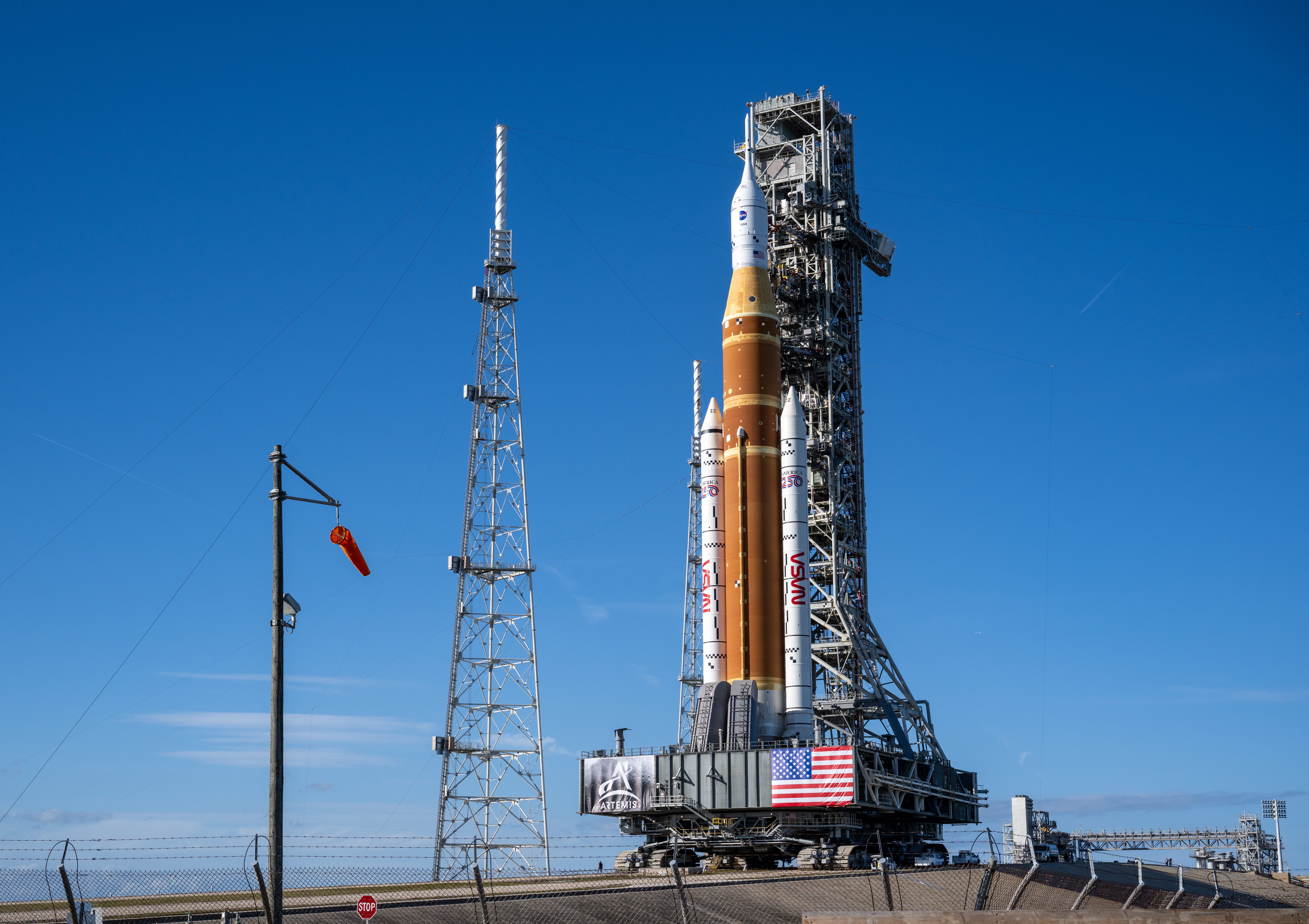
NASA is gearing up for the second Wet Dress Rehearsal (WDR) of the Artemis II mission, scheduled for February 20, 2026, at 1:30 UTC (8:30 PM EST on February 19) from Launch Complex 39B at Kennedy Space Center. This critical test will simulate the full launch countdown, including the loading of more than 700,000 gallons of cryogenic propellants into the Space Launch System (SLS) rocket, without astronauts aboard the Orion spacecraft. The rehearsal aims to validate ground systems, procedures, and timing ahead of the crewed lunar flyby mission, currently targeted for no earlier than late 2026.
Artemis II will carry four astronauts—three Americans and Canadian Space Agency astronaut Jeremy Hansen—on a 10-day journey that will loop around the Moon, marking the first crewed lunar mission since Apollo 17 in 1972. Hansen’s participation underscores Canada’s integral role in the Artemis programme, provided through the country’s contribution of the Canadarm3 robotic system for the future Lunar Gateway station. The upcoming WDR is a vital step in ensuring the integrated performance of the SLS and Orion systems, helping to retire technical risks and refine operational timelines. While the test has not yet occurred, successful completion would clear a major milestone on the path to launch, bringing humanity—and Canada—closer to returning to deep space.
Citations
- “Orbex collapse fails to halt progress for UK domestic launch capability” – https://www.nasaspaceflight.com/2026/02/orbex-collapse-progress-uk-domestic-capability/
- “Mars relay orbiter seen as backbone for future exploration” – https://www.spacedaily.com/reports/Mars_relay_orbiter_seen_as_backbone_for_future_exploration_999.html
- “Artemis II Wet Dress Rehearsal #2” – https://www.nasa.gov/blogs/missions/2026/02/16/nasa-eyes-next-wet-dress-rehearsal-for-artemis-ii/
Upcoming Launches
Starlink Group 10-36

Launch Provider: SpaceX – Commercial
Launch Date: February 18, 2026
Launch Time: 10:00 PM UTC
Vehicle: Falcon 9
Brief: A batch of 29 satellites for the Starlink mega-constellation – SpaceX’s project for space-based Internet communication system.
First Starlink launch to feature a Falcon 9 booster landing within The Bahamas waters operationally, after the trajectory was tested during launch of Starlink Group 10-12 in February 2025.
Starlink Group 17-25
Launch Provider: SpaceX – Commercial
Launch Date: February 19, 2026
Launch Time: 8:00 AM UTC
Vehicle: Falcon 9
Brief: A batch of 25 satellites for the Starlink mega-constellation – SpaceX’s project for space-based Internet communication system.
Stairway to Seven
Launch Provider: Firefly Aerospace – Commercial
Launch Date: February 21, 2026
Launch Time: 12:20 AM UTC
Vehicle: Firefly Alpha
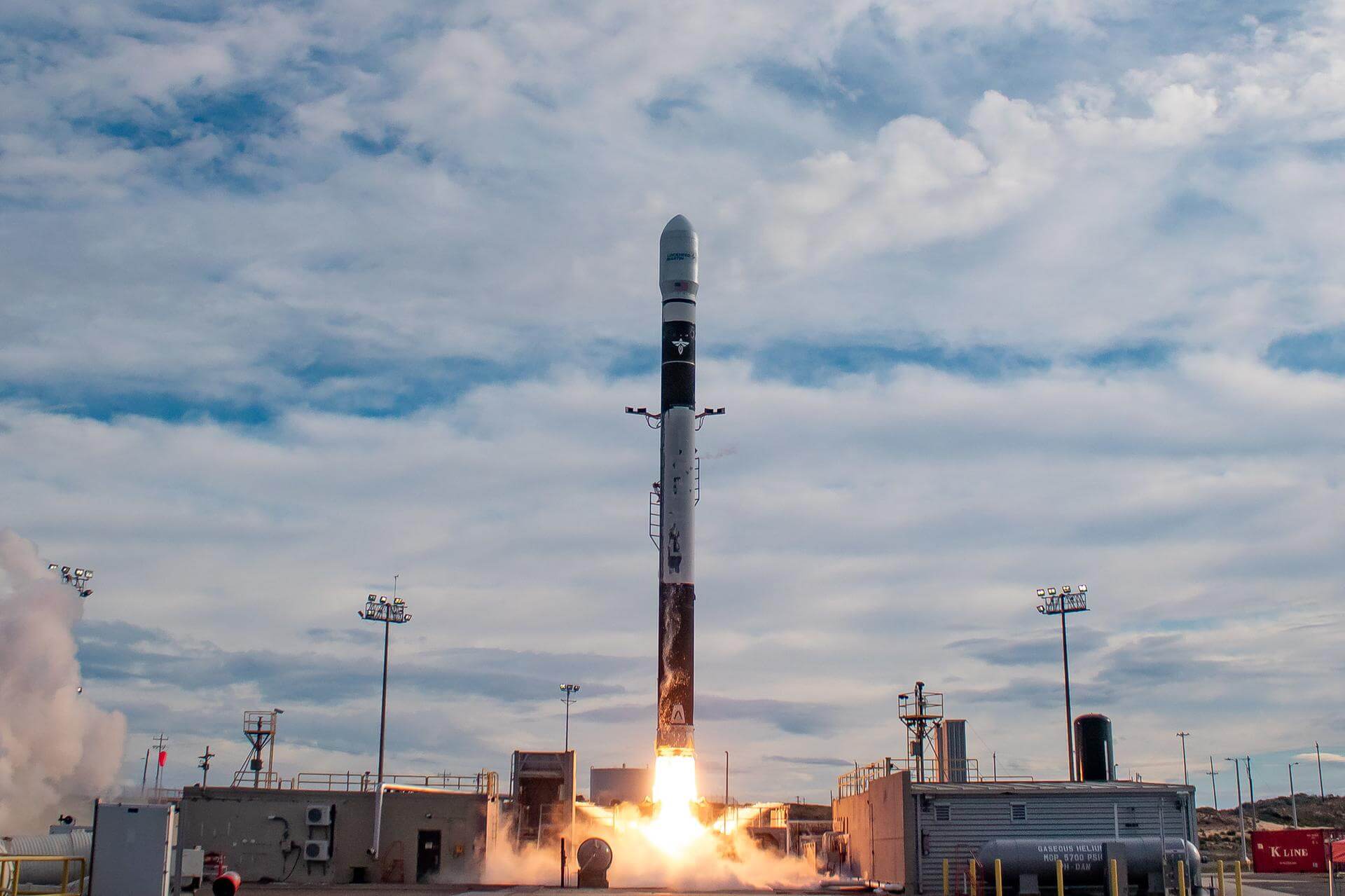
Brief: Firefly Alpha’s Flight 7 will be a test flight and return-To-Flight for the launch vehicle after its April 2025 launch failure. It will test and validate key systems ahead of Firefly’s Block II configuration upgrade on Flight 8 that’s designed to enhance reliability and manufacturability across the vehicle.
Flight 7 will be the last flown in Alpha’s current configuration and will test multiple Block II subsystems, including the in-house avionics and thermal improvements, to gain flight heritage and validate lessons learned ahead of the full configuration upgrade on Flight 8.
📽️ No Livestream scheduled yet
Starlink Group 6-104
Launch Provider: SpaceX – Commercial
Launch Date: February 22, 2026
Launch Time: 2:04 AM UTC
Vehicle: Falcon 9
Brief: A batch of 28 satellites for the Starlink mega-constellation – SpaceX’s project for space-based Internet communication system.
Starlink Group 17-26
Launch Provider: SpaceX – Commercial
Launch Date: February 22, 2026
Launch Time: 8:00 PM UTC
Vehicle: Falcon 9
Brief: A batch of 25 satellites for the Starlink mega-constellation – SpaceX’s project for space-based Internet communication system.

Leave a Reply