
The Daily Broadcast: Rollouts, Rocket Failures, and the Quantum Foundations of Space Tech

Artemis II Takes Its First Steps Toward the Moon
On 17 January 2026, NASA’s Artemis II Space Launch System (SLS) rocket and Orion spacecraft completed a 6.5-kilometre journey from the Vehicle Assembly Building to Launch Pad 39B at Kennedy Space Center in Florida. The rollout, carried out by NASA’s historic crawler-transporter—a workhorse of the space programme for over half a century—took approximately 12 hours. This marks a major milestone in the lead-up to the first crewed mission of the Artemis programme, which will carry four astronauts on a lunar flyby, the first such human journey beyond low Earth orbit since Apollo 17 in 1972. While Canadian astronaut Jeremy Hansen is assigned to the mission, serving as the mission specialist, this rollout is a tangible reminder that the next chapter of human space exploration is well underway. For many Canadians watching from home, it’s a point of pride to see a Canadian aboard a mission that could shape the future of lunar exploration and eventual Mars ambitions.
H3 Failure Traced to Payload Fairing Anomaly
Japan’s H3 launch vehicle, which suffered a failure in December 2025, may have been brought down by an unusual payload fairing separation event. According to a recent report by SpaceNews, investigators now believe the satellite aboard the rocket separated prematurely due to an anomaly during fairing jettison—a critical phase where the protective nose cone is shed once the rocket reaches sufficient altitude. This premature separation likely destabilized the upper stage, leading to mission loss. The H3, developed by the Japan Aerospace Exploration Agency (JAXA) and Mitsubishi Heavy Industries, is intended to replace the ageing H-IIA fleet and serve as Japan’s primary launch vehicle for the coming decade. While the programme has faced setbacks, including a failed debut in 2023, this latest investigation demonstrates the unforgiving precision required in launch operations. For those of us who follow launch campaigns closely, it’s a sobering reminder that even the most meticulously planned missions can be derailed by a single unexpected mechanical hiccup.

Quantum Mechanics: From Thought Experiments to Real-World Tech
A century after Erwin Schrödinger introduced his famous (and famously misunderstood) cat paradox, quantum mechanics has evolved from abstract theory to essential engineering. A new perspective published in Science by Dr. Marlan Scully of Texas A&M University traces how foundational quantum principles now underpin technologies we rely on daily—from lasers and microchips to GPS and secure communications. Without quantum theory, modern satellite navigation, fibre-optic networks, and even the sensors on Earth-observation satellites would not function as they do. In fact, many of the instruments aboard Canadian missions like the RADARSAT Constellation rely on quantum-derived technologies for data precision and signal processing. While we may not be launching Schrödinger’s cat into orbit just yet, the quantum revolution is quietly enabling much of today’s aerospace infrastructure. It’s a good reminder that sometimes, the most profound space advancements begin not with a rocket, but with a chalkboard and a very confused feline.

Citations
- “Artemis II rollout” – https://www.esa.int/ESA_Multimedia/Videos/2026/01/Artemis_II_rollout
- “H3 failure linked to payload fairing separation anomaly” – https://spacenews.com/h3-failure-linked-to-payload-fairing-separation-anomaly/
- “It started with a cat: How 100 years of quantum weirdness powers today’s tech” – https://www.spacedaily.com/reports/It_started_with_a_cat_How_100_years_of_quantum_weirdness_powers_todays_tech_999.html
Upcoming Launches
GPS III SV09
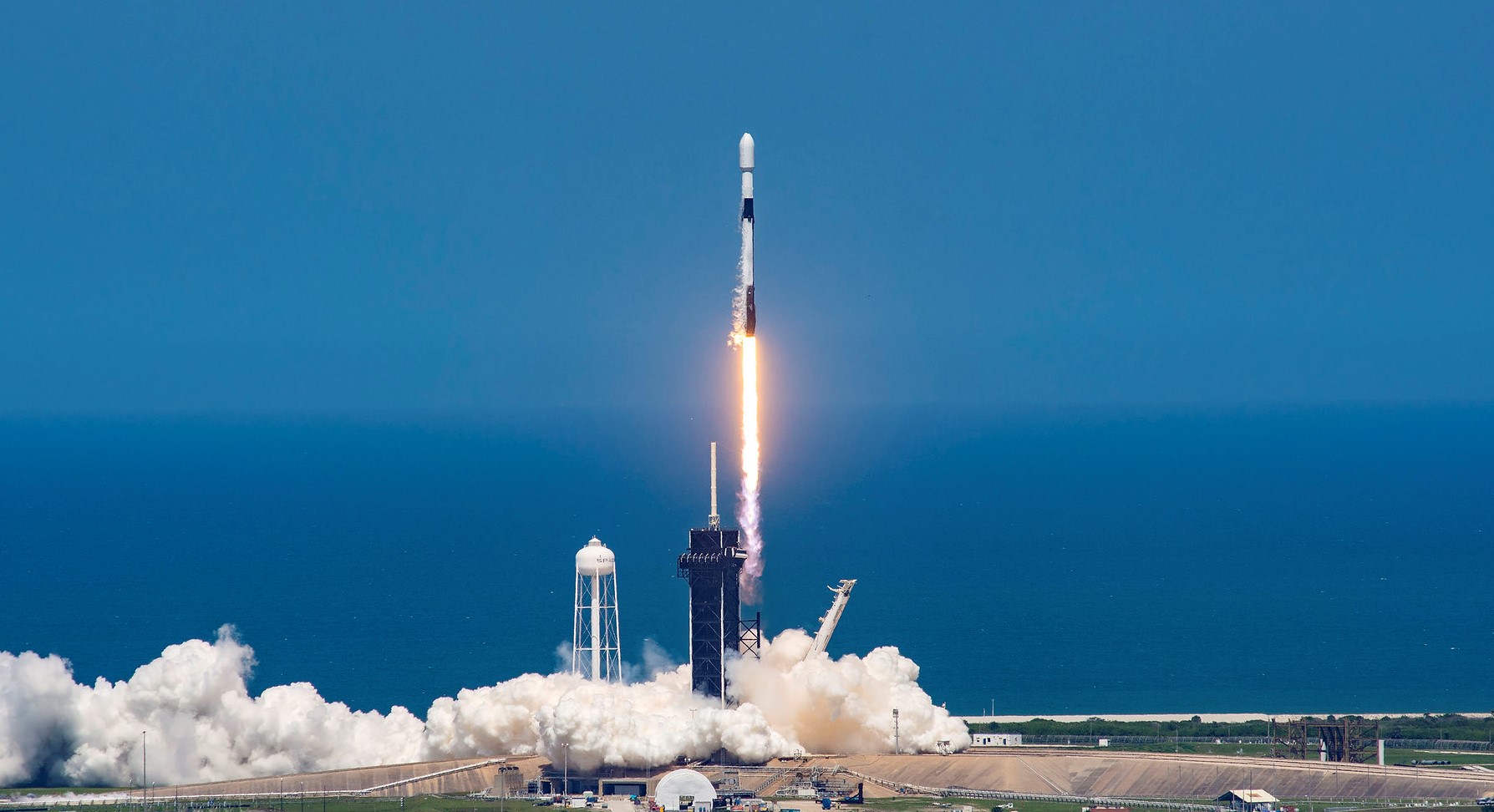
Launch Provider: SpaceX – Commercial
Launch Date: January 27, 2026
Launch Time: 4:42 AM UTC
Vehicle: Falcon 9
Brief: Ninth of ten GPS III missions.
Bridging The Swarm (NeonSat-1A)
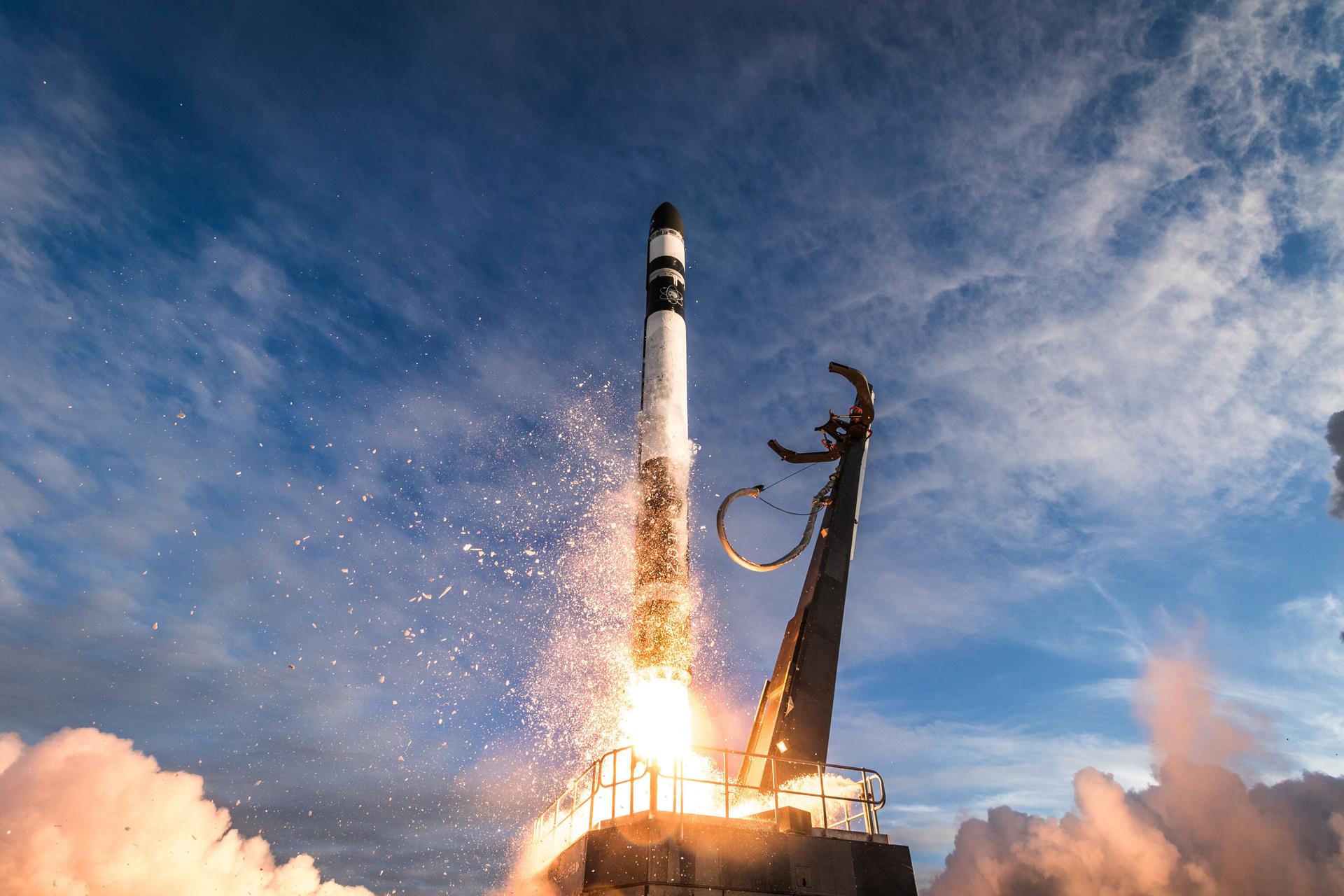
Launch Provider: Rocket Lab – Commercial
Launch Date: January 28, 2026
Launch Time: 12:55 AM UTC
Vehicle: Electron
Brief: The NeonSat-1A, carrying a high-resolution optical camera, is designed to test the constellation capabilities of the South Korean government’s Earth observation micro-satellite constellation NeonSat (New-space Earth Observation Satellite), in particular technology improvements identified from operations of NeonSat-1 after its launch in April 2024. These technologies will in turn be incorporated into the next 10 NeonSat under construction, as well as providing more site re-visiting capabilities along with NeonSat-1.
The NeonSat constellation is the first satellite system developed by the government using a mass-production approach for precise monitoring of the Korean Peninsula, lead by the Satellite Technology Research Center (SaTReC) at the Korea Advanced Institute of Science and Technology (KAIST), Korea’s leading university dedicated to science and technology. Designed to capture near-real time natural disaster monitoring for the Korean peninsula, KAIST’s NEONSAT constellation is a collaboration across multiple Korean academic, industry, and research institutions, including SaTReC, which is leading the program’s system design and engineering.
The NEONSAT program is funded by the Korean government’s Ministry of Science and ICT (MSIT).
Starlink Group 17-19
Launch Provider: SpaceX – Commercial
Launch Date: January 29, 2026
Launch Time: 3:17 PM UTC
Vehicle: Falcon 9
Brief: A batch of 25 satellites for the Starlink mega-constellation – SpaceX’s project for space-based Internet communication system.
Starlink Group 6-101
Launch Provider: SpaceX – Commercial
Launch Date: January 30, 2026
Launch Time: 4:00 AM UTC
Vehicle: Falcon 9
Brief: A batch of 29 satellites for the Starlink mega-constellation – SpaceX’s project for space-based Internet communication system.
Unknown Payload
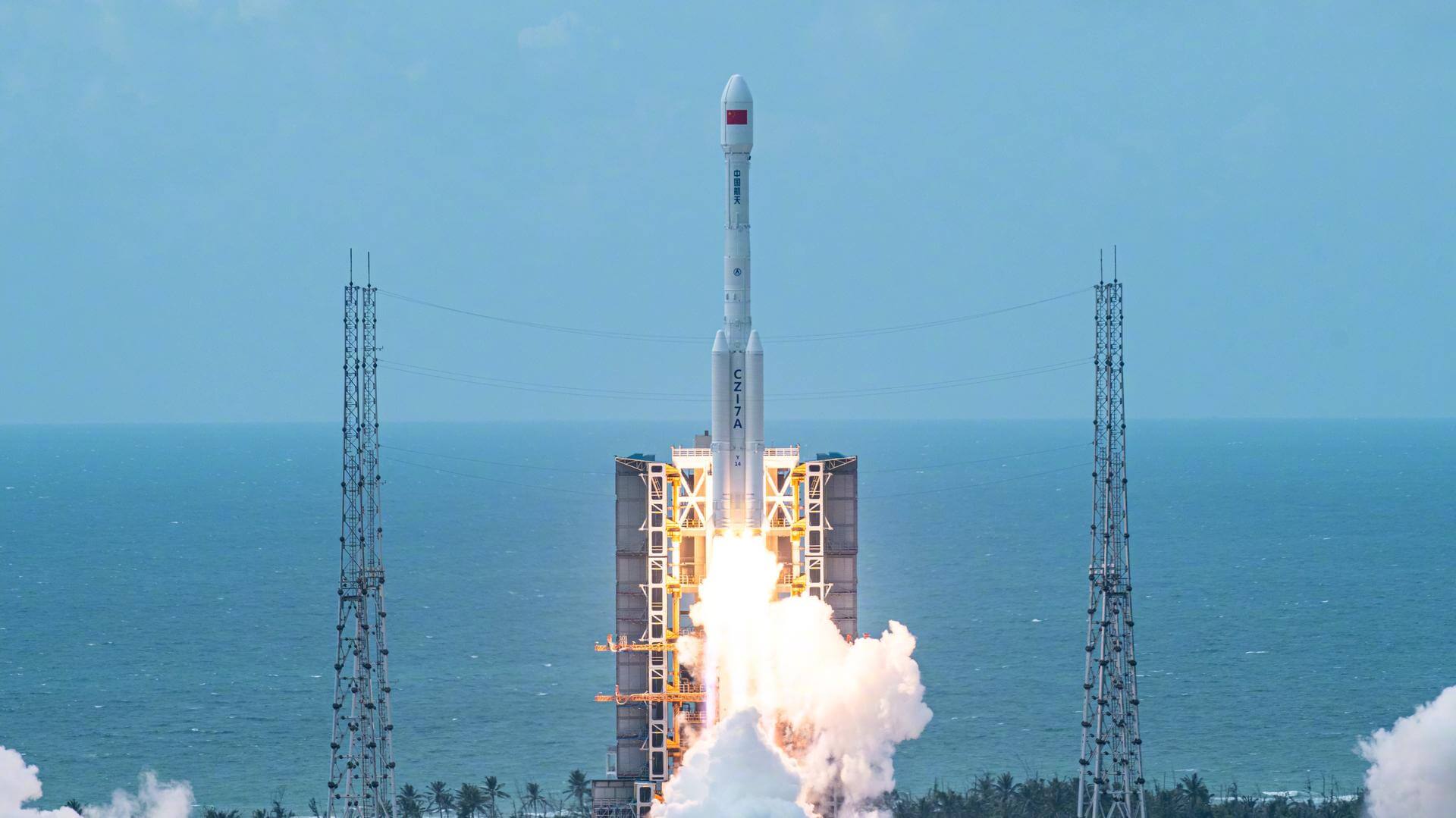
Launch Provider: China Aerospace Science and Technology Corporation – Government
Launch Date: January 31, 2026
Launch Time: 12:00 AM UTC
Vehicle: Long March 7A
Brief: Details TBD.
