
The Daily Broadcast: Preparing for Orbit, Probing the Poles, and Peering into Cosmic Chaos
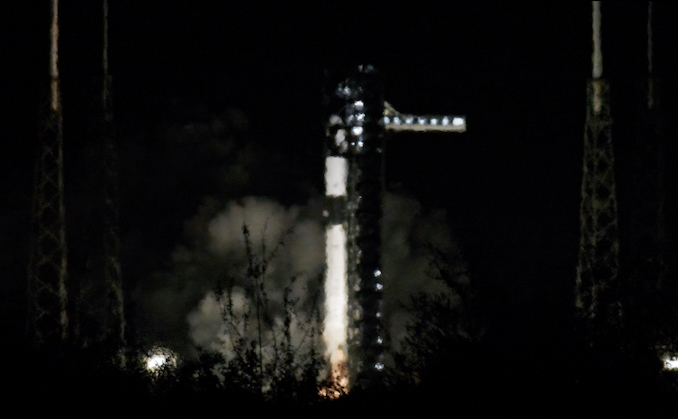
Crew-12 Clears Final Hurdle Before ISS Launch
SpaceX successfully completed a static fire test of its Falcon 9 rocket early Sunday morning, setting the stage for the highly anticipated Crew-12 mission to the International Space Station (ISS). The test, conducted at 3:16 a.m. EST (0816 UTC) from Launch Complex 40 at Cape Canaveral Space Force Station, is a standard but critical milestone that validates the health of the first-stage engines before flight. The mission—scheduled for no earlier than 6:01 a.m. EST (1101 GMT) on Wednesday, February 11—will deliver four astronauts to the ISS, restoring full crew complement after an emergency medical evacuation of the previous team.
This marks the first crewed launch to the station since that evacuation, and NASA has emphasized the importance of returning to normal operations. While Canada’s Jeremy Hansen remains assigned to the upcoming Artemis II lunar mission and is not part of Crew-12, Canadian-built components, including the Canadarm2 and Canadarm3 robotics systems, continue to support daily operations aboard the station. For space watchers across the country, a pre-dawn launch on Wednesday could offer a visible arc over eastern skies—if weather and trajectory align favourably.

Alfvén Waves Finally Explain the Engine Behind the Aurora
For Canadians who’ve braved the cold to witness the northern lights, a longstanding mystery may now have a satisfying answer. A new study confirms that Alfvén waves—ripples in Earth’s magnetic field—are responsible for generating the stable electric fields that accelerate electrons into our upper atmosphere, creating the luminous displays of the aurora borealis. This mechanism, theorized for decades, has now been supported by observational and simulation data that show how these waves transfer energy efficiently along magnetic field lines toward the poles.
The findings, published this weekend by an international research team, refine our understanding of space weather and its interaction with Earth’s magnetosphere—a subject of keen interest in Canada, home to world-class auroral research at institutions like the University of Calgary and the Canadian Space Agency’s (CSA) Geospace Observatory. These insights not only deepen scientific knowledge but may also improve models that predict disruptions to communications and power grids during intense geomagnetic storms—events that disproportionately affect high-latitude regions like much of Canada.

Black Hole Jet Outshines Galactic Legends
Astronomers are tracking one of the most energetic phenomena ever recorded: a runaway jet from a supermassive black hole that continues to brighten four years after it first tore apart a nearby star. The event, known as AT2018hyz, is classified as a tidal disruption event—a violent process in which a star strays too close to a black hole and is shredded by extreme gravitational forces. What makes this case exceptional is the sustained and intensifying luminosity of the resulting jet, which now outshines even the most powerful known steady sources in the universe.
Such events help scientists understand how black holes consume matter and influence galaxy evolution. While this particular black hole resides far beyond our own Milky Way, its study contributes to broader efforts—including those involving Canadian astrophysicists working with international observatories—to map the life cycles of galaxies and the role dark matter and black holes play within them. Though not visible to backyard telescopes, these cosmic fireworks remind us that the universe remains full of dramatic, high-energy spectacles—even if the best seat in the house is a data plot from a radio telescope in the Canadian Arctic.

Citations
- “SpaceX test fires its Falcon 9 rocket ahead of midweek launch of Crew-12 to the space station” – https://spaceflightnow.com/2026/02/08/spacex-test-fires-its-falcon-9-rocket-ahead-of-midweek-launch-of-crew-12-to-the-space-station/
- “NASA confirms first flight to ISS since medical evacuation” – https://www.spacedaily.com/reports/NASA_confirms_first_flight_to_ISS_since_medical_evacuation_999.html
- “Alfven waves drive stable electric fields that power auroras” – https://www.spacedaily.com/reports/Alfven_waves_drive_stable_electric_fields_that_power_auroras_999.html
- “Runaway black hole jet outshines legendary death star” – https://www.spacedaily.com/reports/Runaway_black_hole_jet_outshines_legendary_death_star_999.html
Upcoming Launches
Unknown Payload
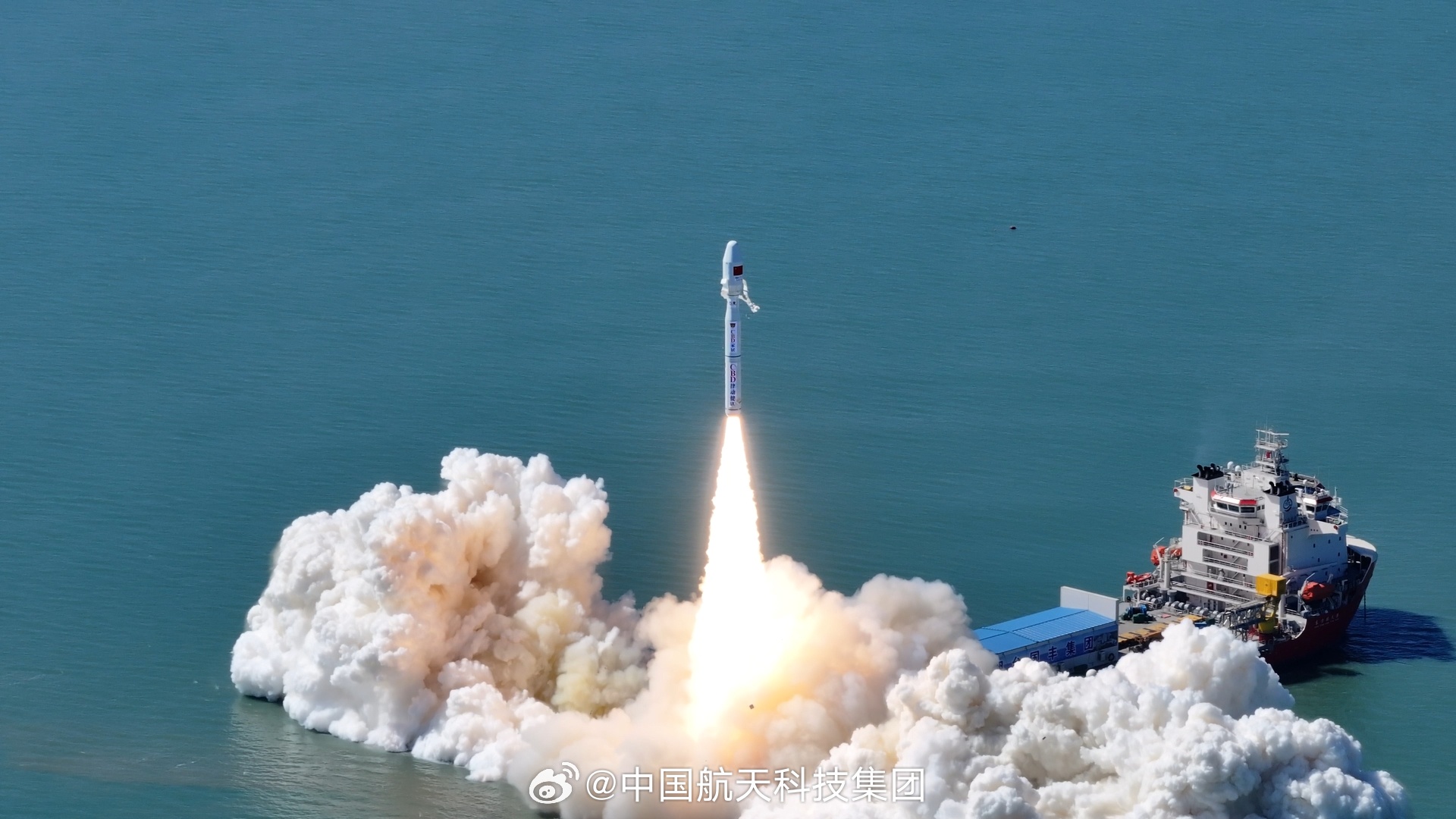
Launch Provider: China Rocket Co. Ltd. – Commercial
Launch Date: February 11, 2026
Launch Time: 6:30 AM UTC
Vehicle: Smart Dragon 3
Brief: Possibly an Earth observation satellite for the Pakistan government’s SUPARCO, details TBD.
Crew-12
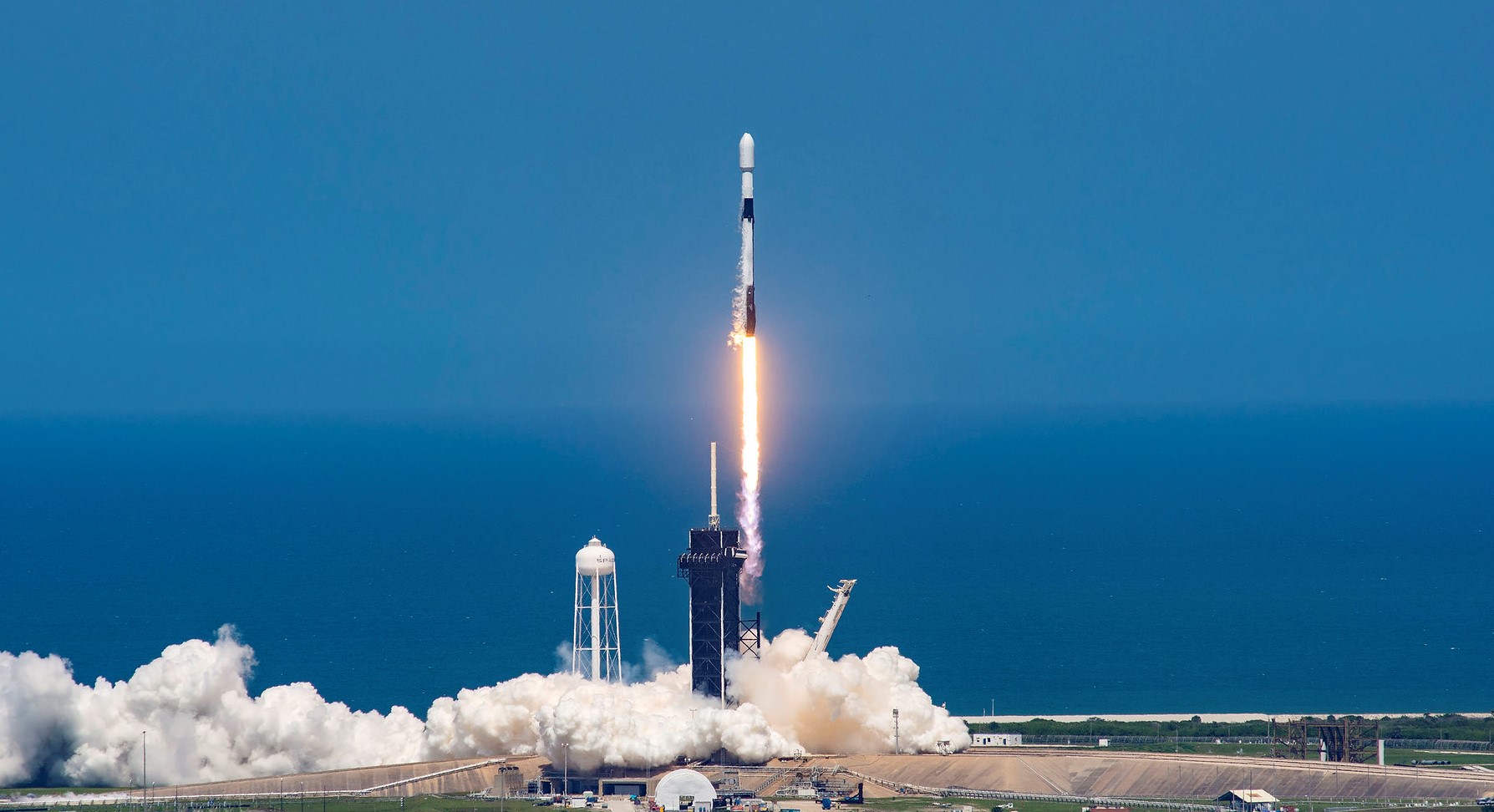
Launch Provider: SpaceX – Commercial
Launch Date: February 11, 2026
Launch Time: 11:01 AM UTC
Vehicle: Falcon 9
Brief: SpaceX Crew-12 is the twelfth crewed operational flight of a Crew Dragon spacecraft to the International Space Station as part of NASA’s Commercial Crew Program.
Starlink Group 17-34
Launch Provider: SpaceX – Commercial
Launch Date: February 11, 2026
Launch Time: 2:07 PM UTC
Vehicle: Falcon 9
Brief: A batch of 24 satellites for the Starlink mega-constellation – SpaceX’s project for space-based Internet communication system.
USSF-87
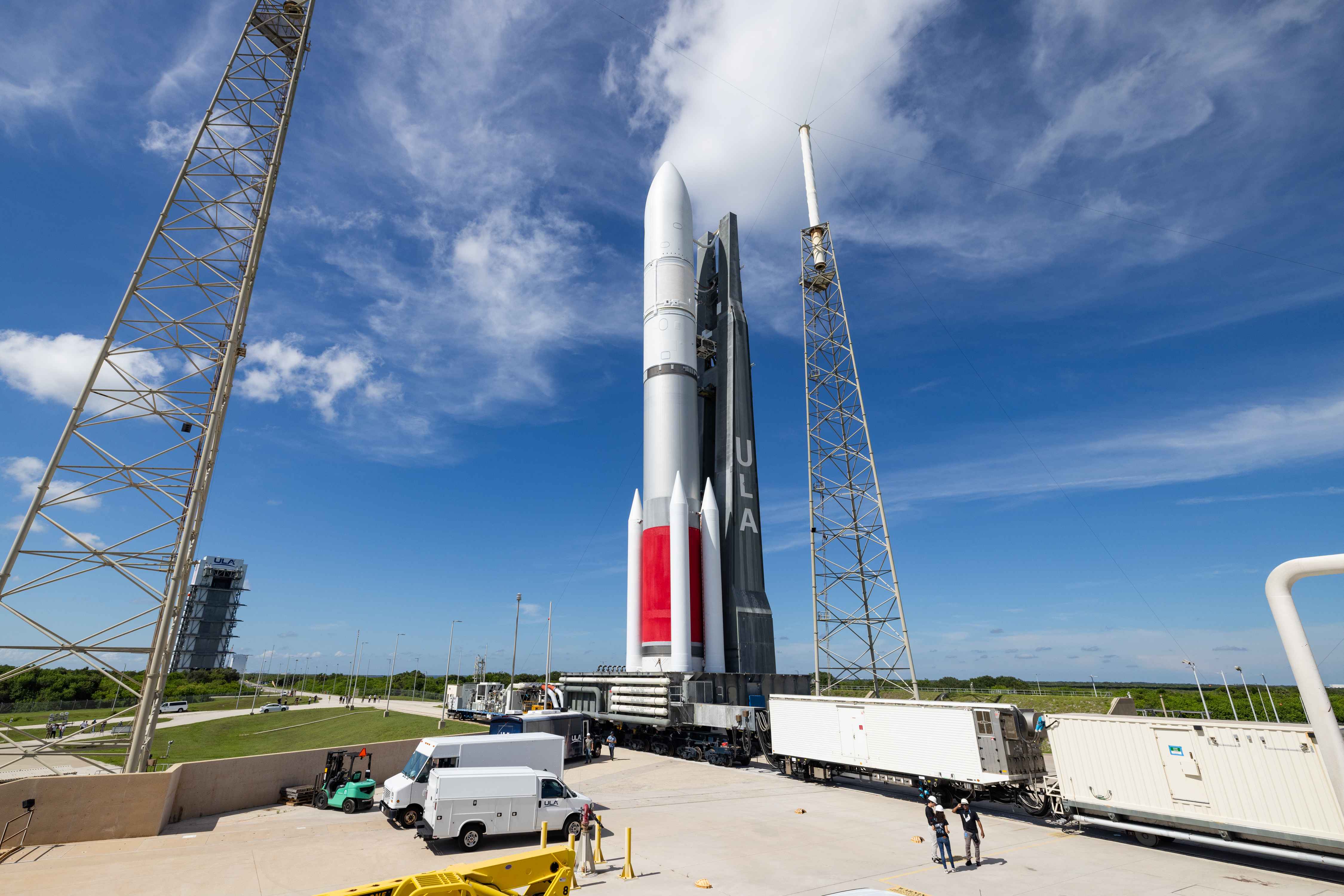
Launch Provider: United Launch Alliance – Commercial
Launch Date: February 12, 2026
Launch Time: 8:00 AM UTC
Vehicle: Vulcan VC4S
Brief: USSF-87 will launch two identical Geosynchronous Space Situational Awareness Program (GSSAP) satellites GSSAP-7 and GSSAP-8 directly to a near-geosynchronous orbit approximately 36,000 km above the equator.
Data from the GSSAP will uniquely contribute to timely and accurate orbital predictions, further enabling space flight safety including satellite collision avoidance.
Elektro-L No.5
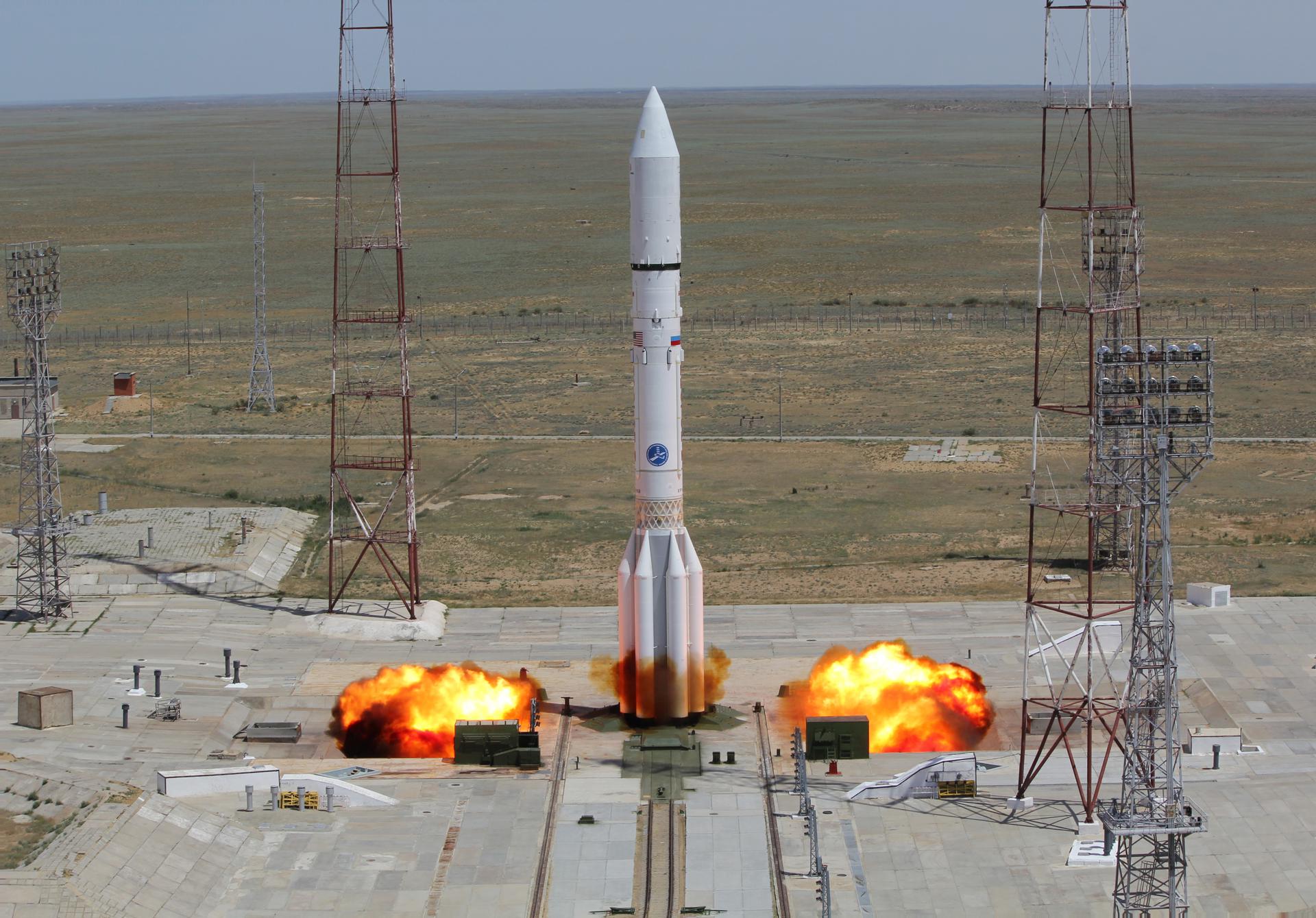
Launch Provider: Khrunichev State Research and Production Space Center – Government
Launch Date: February 12, 2026
Launch Time: 8:52 AM UTC
Vehicle: Proton-M
Brief: Elektro-L is a series of meteorological satellites developed for the Russian Federal Space Agency by NPO Lavochkin. They are designed to capture real-time images of clouds and the Earth’s underlying surface, heliogeophysical measurements, collection and translating hydrometeorological and service data.

Leave a Reply