
The Daily Broadcast: Powering the Future: From Polar Orbits to Lunar Reactors
SpaceX Launches 25 Starlink Satellites into Polar Orbit
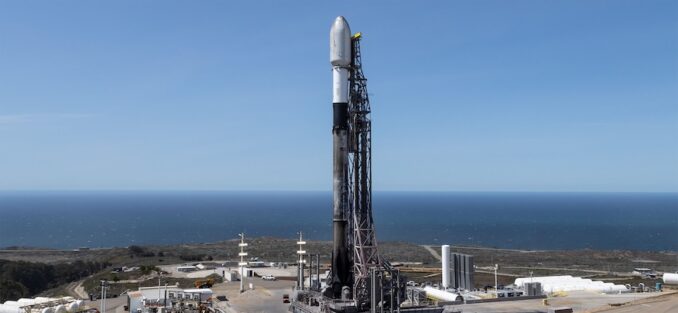
Early this morning, SpaceX successfully launched another batch of Starlink satellites from the West Coast, continuing its rapid deployment of the global broadband constellation. The Falcon 9 lifted off from Space Launch Complex 4E at Vandenberg Space Force Base in California at 7:38:20 a.m. PST (10:38:20 a.m. EST / 15:38:20 UTC), carrying 25 Starlink satellites destined for polar low Earth orbit. This mission, designated Starlink 17-20, marks the seventh Starlink launch of 2026—a pace that underscores SpaceX’s ambition to expand coverage, especially in high-latitude regions like Canada’s Arctic.
For Canadians, this is more than just another satellite launch. Polar-orbiting Starlink satellites significantly improve connectivity in northern communities, where traditional infrastructure is limited or non-existent. While SpaceX doesn’t tailor its mission manifest specifically for Canadian needs, the knock-on benefits are real: better internet access, enhanced emergency communications, and more reliable data transmission for researchers stationed in remote areas. The Falcon 9’s first stage, on its ninth flight, returned safely to the drone ship Just Read the Instructions in the Pacific Ocean—another testament to the company’s reusability prowess.
NASA and U.S. Department of Energy Team Up on Lunar Nuclear Power
On the heels of growing interest in sustainable lunar exploration, NASA and the U.S. Department of Energy (DOE) have formalized a collaboration to develop nuclear fission reactors for the Moon. The partnership aims to deliver a reliable, high-output power source capable of supporting long-duration missions—especially during the frigid, two-week lunar nights when solar power isn’t viable. Though still in the development phase, this initiative is a key enabler for the Artemis programme’s goal of establishing a permanent human presence on the Moon.
The agencies are currently awaiting the release of a final call for proposals from industry partners, which will outline technical requirements and timelines. While Canadian firms aren’t explicitly mentioned in the current framework, the Canadian Space Agency has long expressed interest in contributing to Artemis through lunar infrastructure, robotics, and power systems. Historically, Canadian expertise in remote power generation—think diesel generators in Nunavut or hydro innovations in Quebec—could offer relevant insights, should opportunities arise for international collaboration. For now, this move signals a serious step toward making the Moon not just a destination, but a place where humans can live and work.

Why These Developments Matter for Earth and Beyond
At first glance, launching internet satellites and designing lunar reactors might seem unrelated. But both reflect a broader shift in space activity: from short-term missions to building lasting infrastructure. Whether it’s a Starlink satellite beaming signals to a research station in Iqaluit or a compact reactor keeping astronauts warm near the lunar south pole, the focus is increasingly on reliability, sustainability, and accessibility.
For Canada, this era presents both opportunities and responsibilities. While we may not be launching our own rockets weekly, Canadian technologies—particularly in communications, robotics, and remote operations—have a proven track record in space. As the global space economy grows, ensuring that northern and Indigenous communities benefit from these advances will be as important as contributing to the engineering itself. After all, space isn’t just about who gets there first—it’s about who gets to stay, and who gets to connect.
Citations
- “Live coverage: SpaceX to launch 25 Starlink satellites to polar, low Earth orbit” – https://spaceflightnow.com/2026/01/25/live-coverage-spacex-to-launch-25-starlink-satellites-to-polar-low-earth-orbit/
- “NASA and DOE to collaborate on lunar nuclear reactor development” – https://spacenews.com/nasa-and-doe-to-collaborate-on-lunar-nuclear-reactor-development/
Upcoming Launches
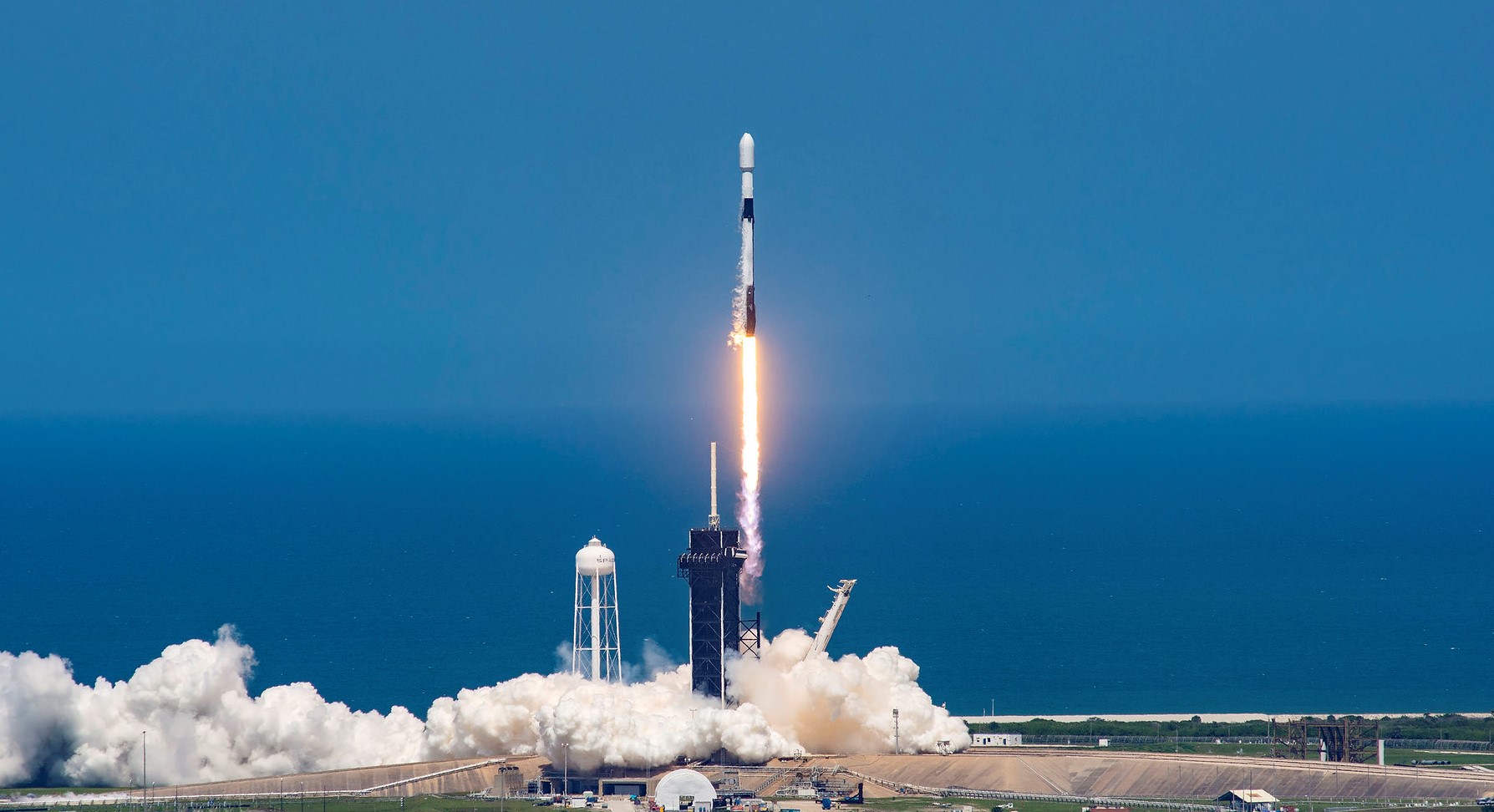
Starlink Group 17-20
Launch Provider: SpaceX – Commercial
Launch Date: January 25, 2026
Launch Time: 4:44 PM UTC
Vehicle: Falcon 9
Brief: A batch of 25 satellites for the Starlink mega-constellation – SpaceX’s project for space-based Internet communication system.
GPS III SV09
Launch Provider: SpaceX – Commercial
Launch Date: January 27, 2026
Launch Time: 4:42 AM UTC
Vehicle: Falcon 9
Brief: Ninth of ten GPS III missions.
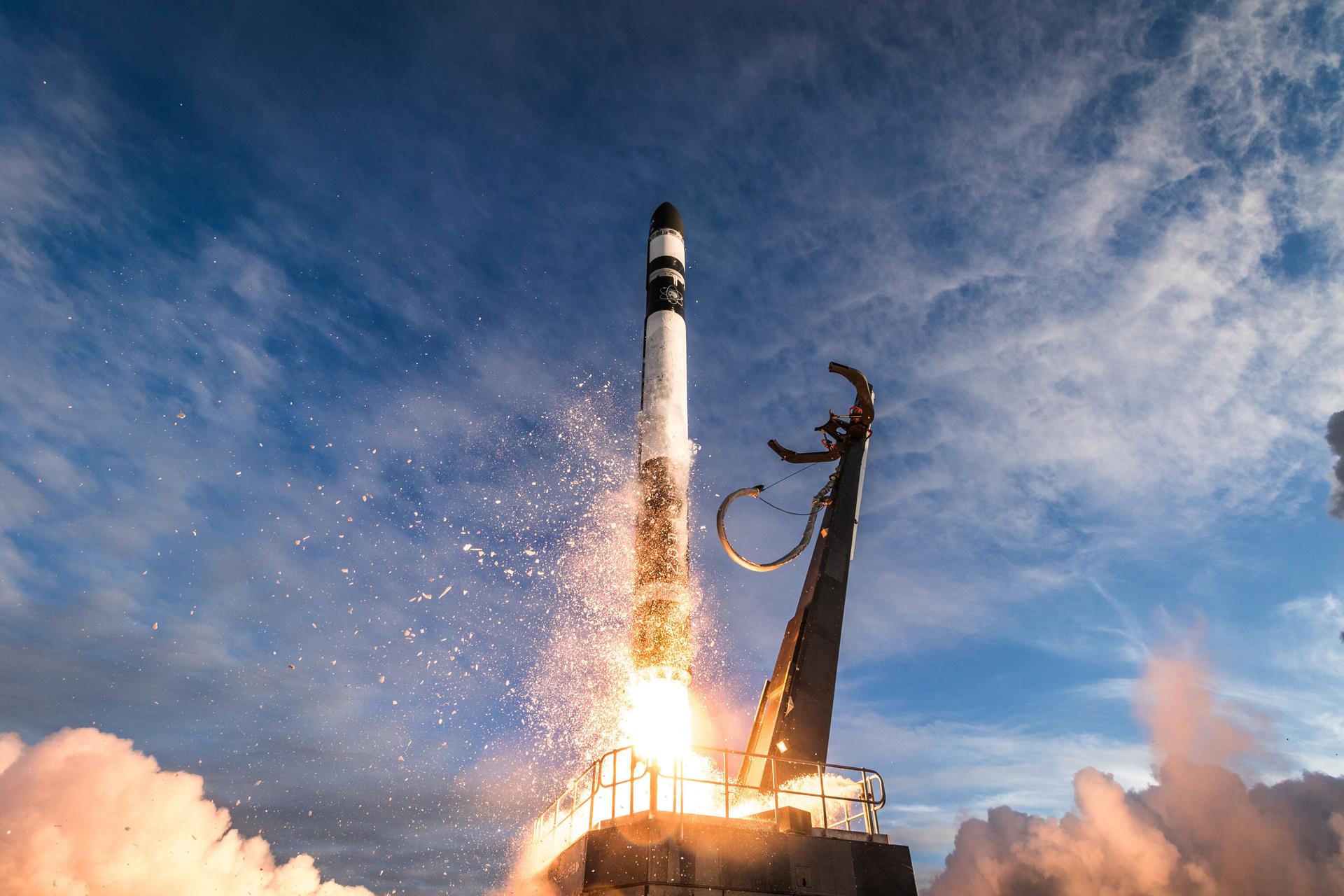
Bridging The Swarm (NeonSat-1A)
Launch Provider: Rocket Lab – Commercial
Launch Date: January 28, 2026
Launch Time: 12:55 AM UTC
Vehicle: Electron
Brief: The NeonSat-1A, carrying a high-resolution optical camera, is designed to test the constellation capabilities of the South Korean government’s Earth observation micro-satellite constellation NeonSat (New-space Earth Observation Satellite), in particular technology improvements identified from operations of NeonSat-1 after its launch in April 2024. These technologies will in turn be incorporated into the next 10 NeonSat under construction, as well as providing more site re-visiting capabilities along with NeonSat-1.
The NeonSat constellation is the first satellite system developed by the government using a mass-production approach for precise monitoring of the Korean Peninsula, lead by the Satellite Technology Research Center (SaTReC) at the Korea Advanced Institute of Science and Technology (KAIST), Korea’s leading university dedicated to science and technology. Designed to capture near-real time natural disaster monitoring for the Korean peninsula, KAIST’s NEONSAT constellation is a collaboration across multiple Korean academic, industry, and research institutions, including SaTReC, which is leading the program’s system design and engineering.
The NEONSAT program is funded by the Korean government’s Ministry of Science and ICT (MSIT).
Starlink Group 17-19
Launch Provider: SpaceX – Commercial
Launch Date: January 29, 2026
Launch Time: 3:17 PM UTC
Vehicle: Falcon 9
Brief: A batch of 25 satellites for the Starlink mega-constellation – SpaceX’s project for space-based Internet communication system.
Starlink Group 6-101
Launch Provider: SpaceX – Commercial
Launch Date: January 30, 2026
Launch Time: 4:00 AM UTC
Vehicle: Falcon 9
Brief: A batch of 29 satellites for the Starlink mega-constellation – SpaceX’s project for space-based Internet communication system.
