
The Daily Broadcast: Orion Nears Lunar Rendezvous as Canada Watches from Cislunar Space

Artemis II Crew Set for Historic Moon Flyby Tomorrow
As of April 5, 2026, NASA’s Artemis II mission is barrelling toward its most dramatic milestone: a lunar flyby scheduled for Monday, April 6. Launched on April 1 aboard the Space Launch System (SLS), the Orion spacecraft is carrying four astronauts—including Canadian Jeremy Hansen—on humanity’s first crewed journey beyond low-Earth orbit since 1972. Today marks Flight Day 5, and mission controllers report Orion has entered the Moon’s gravitational sphere of influence, meaning lunar gravity now dominates over Earth’s.
On April 6, the crew will make their closest approach, passing between 4,000 and 6,500 miles (6,400–10,500 km) above the lunar far side. During this roughly seven-hour observation window, astronauts will photograph the surface, describe subtle colour variations visible only to the human eye, and witness a 53-minute solar eclipse as the Moon blocks the Sun’s corona. Communication with Earth will be temporarily lost as Orion swings behind the Moon, before gravity slingshots the crew back toward home.
NASA has canceled two of three planned trajectory corrections thanks to Orion’s exceptional navigation accuracy. A final maneuver using reaction control thrusters is expected today. Splashdown off San Diego remains targeted for April 10 at approximately 8:07 p.m. EDT. Though primarily a test flight, Artemis II is gathering critical data on life support, navigation, and re-entry systems essential for future lunar landings.
Canadian Astronaut Hansen Shares Inspirations—and Toilet Troubles—from Deep Space
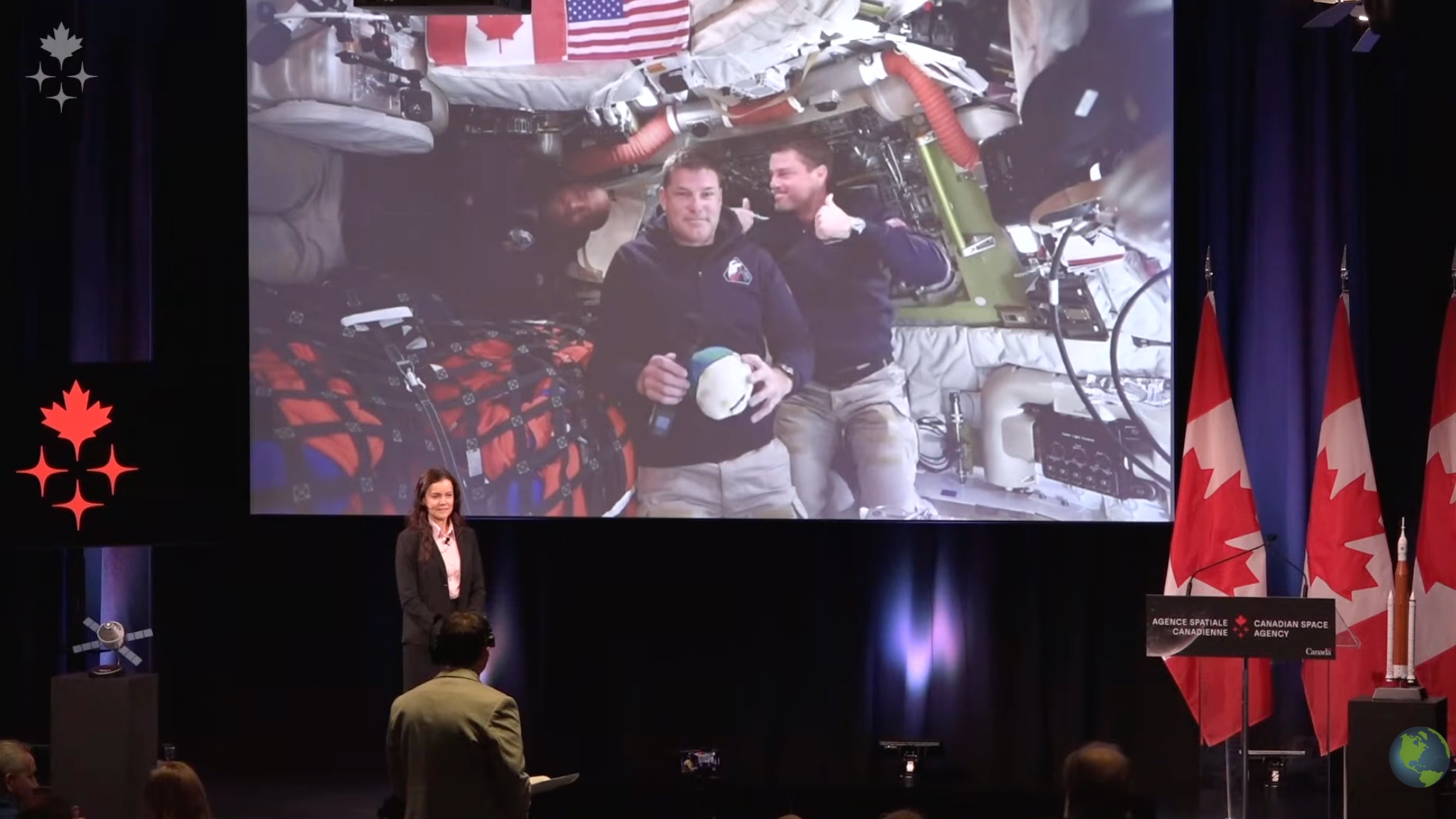
Canada’s presence in deep space is stronger than ever, thanks to Colonel Jeremy Hansen of the Royal Canadian Air Force, who is currently orbiting en route to the Moon aboard Orion. In a live downlink from cislunar space on April 4, Hansen shared that the crew recently watched Project Hail Mary, the sci-fi film starring fellow Canadian Ryan Gosling. “It’s art imitates science and vice versa,” Hansen said, calling the movie “inspiring and uplifting” as the crew prepared for their own high-stakes mission.
Hansen also described the surreal views of Earth and Moon from Orion, noting how the planet appeared to shift dramatically in size and phase—“like seeing the phases of the Moon, but with the Earth instead.” The crew has already glimpsed parts of the lunar far side, including the Orientale Basin, and are eager to observe possible “regolith lofting” caused by micrometeorite impacts during tomorrow’s flyby.
Not all has gone smoothly: the spacecraft’s toilet vent line is partially blocked by ice, a known issue from shuttle days. Flight controllers reoriented Orion on April 4 to warm the line using solar exposure, allowing partial tank venting. Until it’s fully cleared, the astronauts are using backup collection devices. As mission manager John Honeycutt dryly noted, “I think the fixation on the toilet is human nature… Everybody knows how important that is to us here on Earth, and it’s harder to manage in space.” Despite this hiccup, morale remains high as Canada’s long investment in space robotics—through Canadarm and Canadarm2—finally bears fruit with Hansen’s historic flight.
Amazon Accelerates Broadband Constellation Amid Atlas 5’s Final Flights
Back on Earth, the commercial space race continues at full throttle. On April 4 at 1:46 a.m. EDT, a United Launch Alliance Atlas 5 rocket lifted off from Cape Canaveral carrying 29 Amazon Leo satellites—the largest and heaviest payload ever launched on an Atlas mission. This marks the fifth operational launch for Amazon’s Project Kuiper broadband constellation, bringing its total in orbit to 241 satellites.
The increase from 27 to 29 satellites per flight was made possible by upgrades to the Centaur upper stage’s RL10C engine and meticulous engineering work with ULA. Amazon is racing to meet an FCC deadline requiring half of its planned 3,232-satellite fleet—1,616 spacecraft—to be in orbit by July 2026. To stay on track, the company has requested a two-year extension, citing delays with its primary future launch vehicles: Blue Origin’s New Glenn and ULA’s Vulcan Centaur, neither of which has yet launched Amazon payloads.
For now, Atlas 5 remains the workhorse, with three more Amazon missions scheduled—the next no earlier than April 27. Once New Glenn and Vulcan enter service, each will carry 48 and 40 satellites respectively, dramatically increasing launch cadence. Amazon also plans more than 32 satellites per Ariane 6 flight once that rocket adopts more powerful solid boosters. With this accelerated tempo, the company aims to provide global broadband coverage by late 2027, turning its ambitious vision into reality—one satellite at a time.
Citations
- “Orion Spacecraft Races Toward Historic Lunar Flyby in Artemis II Mission” – https://www.nasaspaceflight.com/2026/04/orion-toward-lunar-flyby-artemis-ii/
- “Canadian astronaut Jeremy Hansen says Ryan Gosling’s Project Hail Mary movie inspired him” – https://spaceq.ca/canadian-astronaut-jeremy-hansen-says-ryan-goslings-project-hail-mary-movie-inspired-him/
- “Atlas 5 launches Amazon Leo satellites” – https://spacenews.com/atlas-5-launches-amazon-leo-satellites/
Upcoming Launches
Starlink Group 17-35
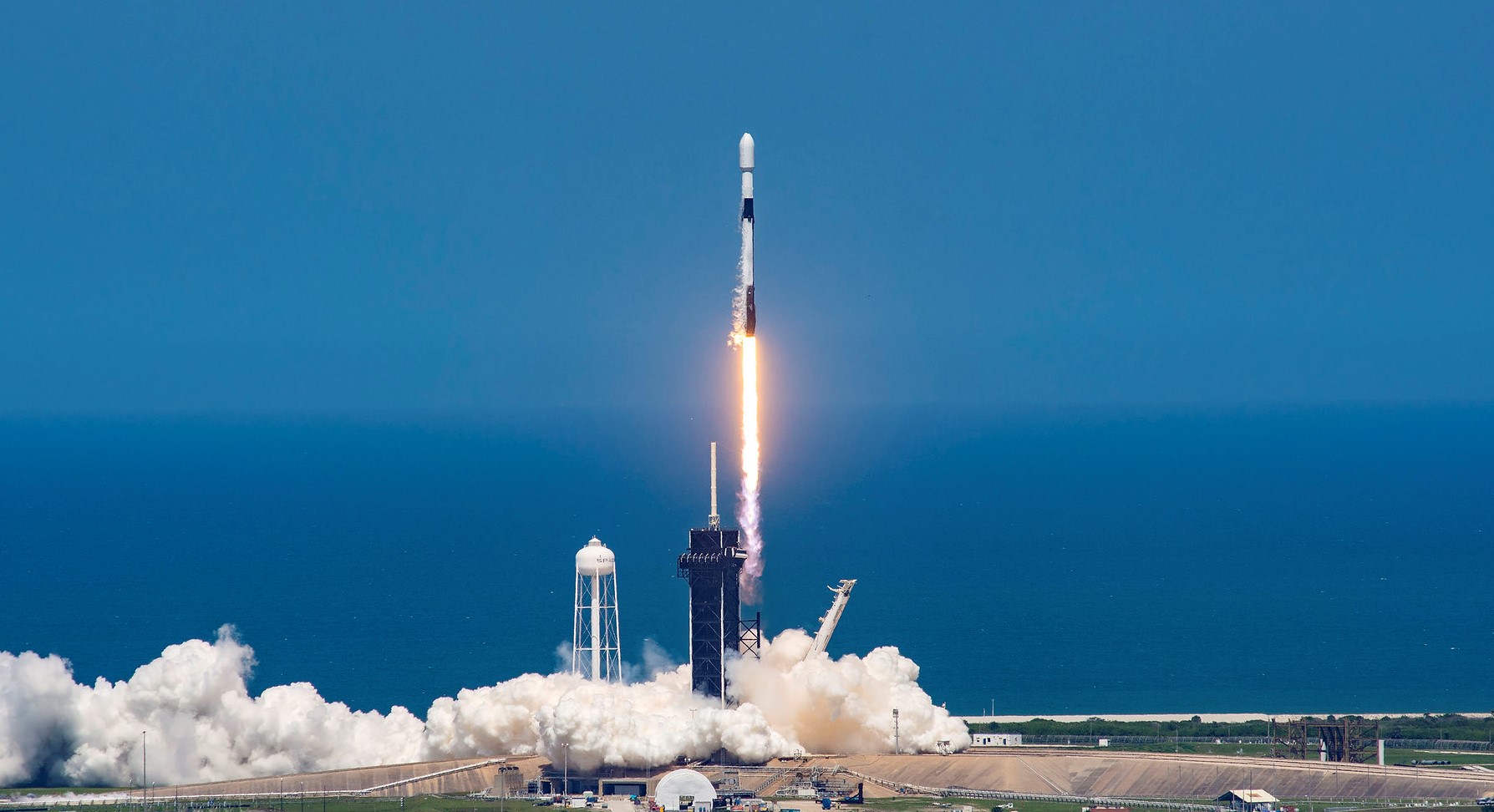
Launch Provider: SpaceX – Commercial
Launch Date: April 6, 2026
Launch Time: 2:42 AM UTC
Vehicle: Falcon 9
Brief: A batch of 25 satellites for the Starlink mega-constellation – SpaceX’s project for space-based Internet communication system.
STP-S29A

Launch Provider: Northrop Grumman Space Systems – Commercial
Launch Date: April 7, 2026
Launch Time: 11:30 AM UTC
Vehicle: Minotaur IV
Brief: STP-S29A is a mission under the U.S. Department of Defense’s Space Test Program (STP) that will deliver technology demonstrations to orbit and contribute to future space system development, with this launch delivering up to 200 kg of STP cubesats to Low Earth Orbit.
The main payload will be STPSat-7, an ESPA class satellite based on the Aegis Aerospace M-1 satellite bus used on the STPSat-4 mission for hosting research and technology demonstration payloads for the Department of Defense (DoD). One of the payload is U.S. Naval Research Laboratory’s (NRL) Lightsheet Anomaly Resolution and Debris Observation (LARADO) instrument, used to detect and characterize lethal non-trackable orbital debris with lasers in orbit.
📽️ No Livestream scheduled yet
Unknown Payload
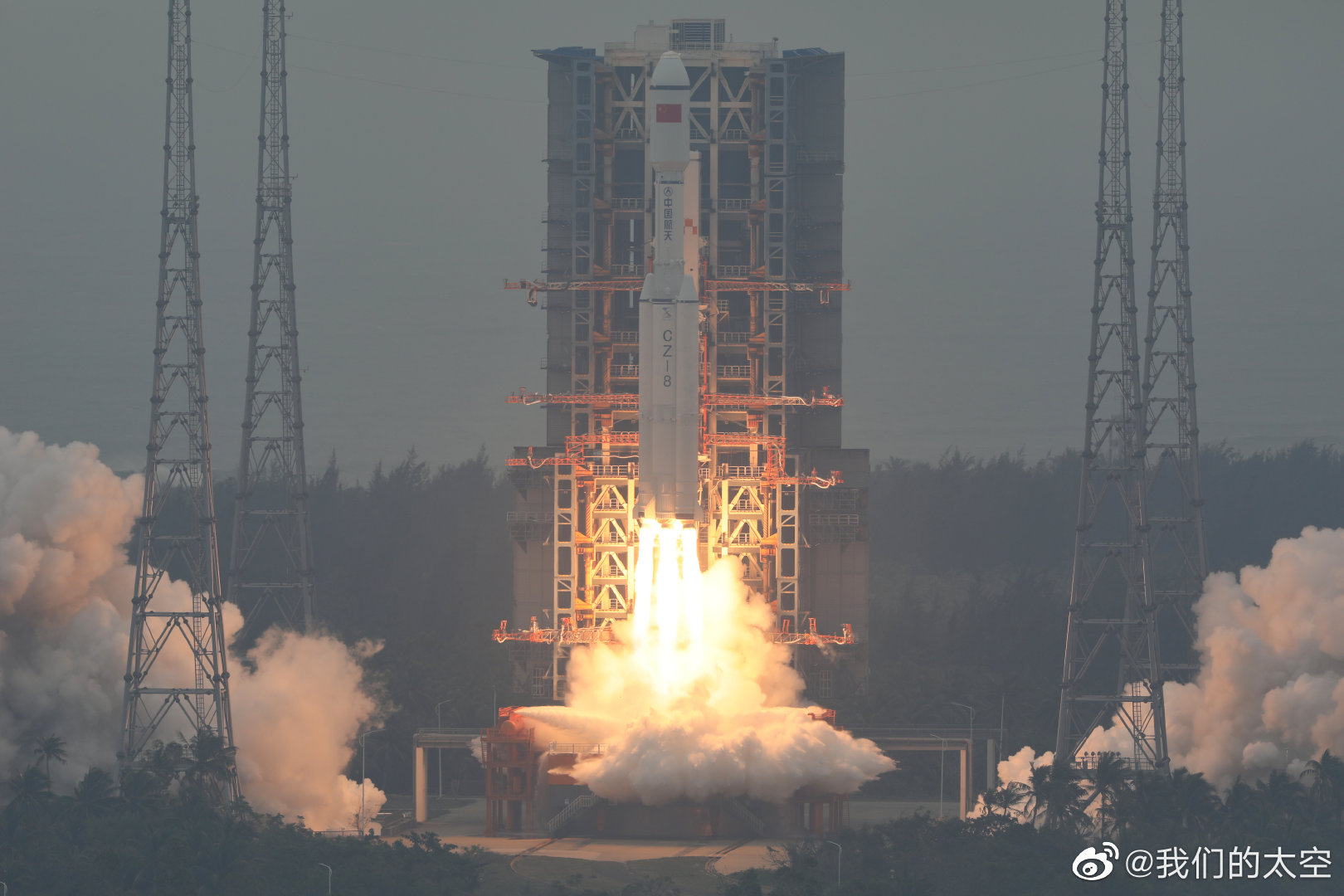
Launch Provider: China Aerospace Science and Technology Corporation – Government
Launch Date: April 7, 2026
Launch Time: 1:30 PM UTC
Vehicle: Long March 8
Brief: Details TBD.
📽️ No Livestream scheduled yet
Cygnus CRS-2 NG-24
Launch Provider: SpaceX – Commercial
Launch Date: April 8, 2026
Launch Time: 12:51 PM UTC
Vehicle: Falcon 9
Brief: This is the 24th flight of the Orbital ATK’s uncrewed resupply spacecraft Cygnus and its 23rd flight to the International Space Station under the Commercial Resupply Services contract with NASA.
Unknown Payload
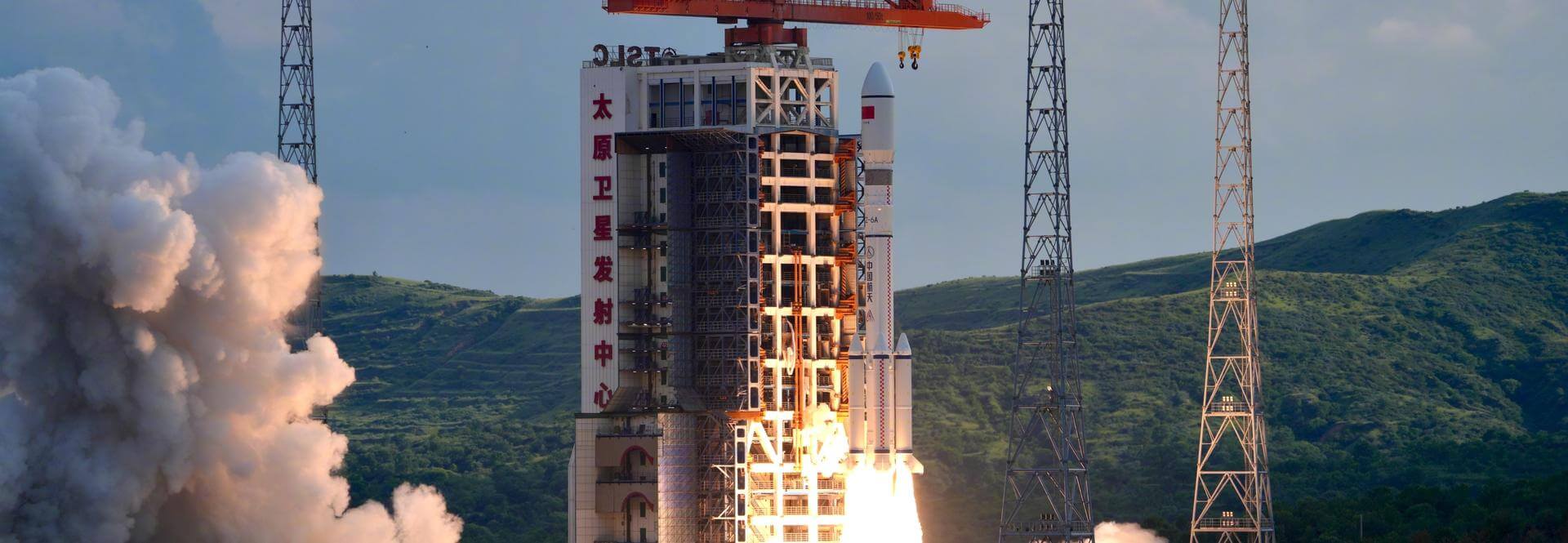
Launch Provider: China Aerospace Science and Technology Corporation – Government
Launch Date: April 8, 2026
Launch Time: 7:35 PM UTC
Vehicle: Long March 6A
Brief: Details TBD.
📽️ No Livestream scheduled yet

Leave a Reply