
The Daily Broadcast: Orbit, Atmosphere, and Innovation: A Day in Aerospace
Galaxia and Apolink Forge Canadian-U.S. Link for Real-Time Space Connectivity
Halifax-based Galaxia Mission Systems has announced a strategic partnership with California’s Apolink Communications to integrate hybrid optical-radio frequency (RF) inter-satellite link (ISL) technology into a 2027 sun-synchronous orbit mission. The collaboration, unveiled during Canada Space Day at the Canadian Consulate General in San Francisco, aims to enhance data relay capabilities for Galaxia’s MissionOne service—a turnkey platform offering end-to-end space mission support. Lucas Rowlands, VP of Mission Operations at Galaxia, emphasized that embedding Apolink’s ISL technology directly into their mission architecture will improve data uptime and responsiveness for customers. The partnership includes joint development in mission definition, system design, and link integration, with Galaxia’s transceivers expected to achieve interoperability with Apolink’s future data relay constellation. This marks a significant step toward strengthening cross-border space infrastructure, reflecting shared ambitions to build a more collaborative and resilient orbital communications ecosystem.

Satellite Data Revises Understanding of Methane Breakdown in Upper Atmosphere
New research using satellite observations is forcing a re-evaluation of how methane—a potent greenhouse gas—degrades in the upper layers of Earth’s atmosphere. Methane is responsible for about 30% of current global warming, yet the reasons behind year-to-year shifts in its accumulation rate remain unclear. A recent study, drawing on data from missions like the Copernicus Sentinel-5P, reveals that previous models underestimated the rate at which methane is destroyed by hydroxyl radicals high in the atmosphere. This revision could have important implications for climate forecasting and policy, particularly as countries work to meet methane reduction targets under international agreements. Accurate accounting of methane’s atmospheric lifetime is essential for predicting future warming scenarios. The findings underscore the critical role of Earth observation satellites in refining our understanding of climate dynamics—something particularly relevant to Canada, where permafrost thaw and northern emissions are active areas of scientific concern.

Flexible Electronics Pave the Way for Smarter, More Adaptive Robots
Rigid circuit boards and inflexible sensors have long limited how robots interact with complex, curved environments—whether in industrial settings or during delicate tasks like space station maintenance. A breakthrough in flexible electronics is now changing that. Researchers are developing conformable sensor skins and bendable computing elements that can wrap around robotic limbs, enabling continuous perception, actuation, and feedback without compromising mobility. This innovation allows robots to better mimic biological systems, enhancing dexterity and situational awareness. The implications extend beyond Earth: future robotic explorers on the Moon or Mars could benefit from electronics that survive extreme thermal cycling and rugged terrain. While the initial work is emerging from labs in Japan, the foundational materials and design philosophies are gaining traction globally. For Canadian robotics firms—already active in fields like autonomous mining and Arctic logistics—this shift toward malleable intelligence could open new avenues for designing resilient, field-deployable systems that operate where hard electronics simply can’t.

Citations
- “Galaxia and Apolink team up to demonstrate real time orbit connectivity” – https://spaceq.ca/galaxia-and-apolink-team-up-to-demonstrate-real-time-orbit-connectivity/
- “Satellite study revises methane loss high in Earth atmosphere” – https://www.spacedaily.com/reports/Satellite_study_revises_methane_loss_high_in_Earth_atmosphere_999.html
- “Flexible electronics reshape intelligent robot design” – https://www.spacedaily.com/reports/Flexible_electronics_reshape_intelligent_robot_design_999.html
Upcoming Launches
Starlink Group 17-34
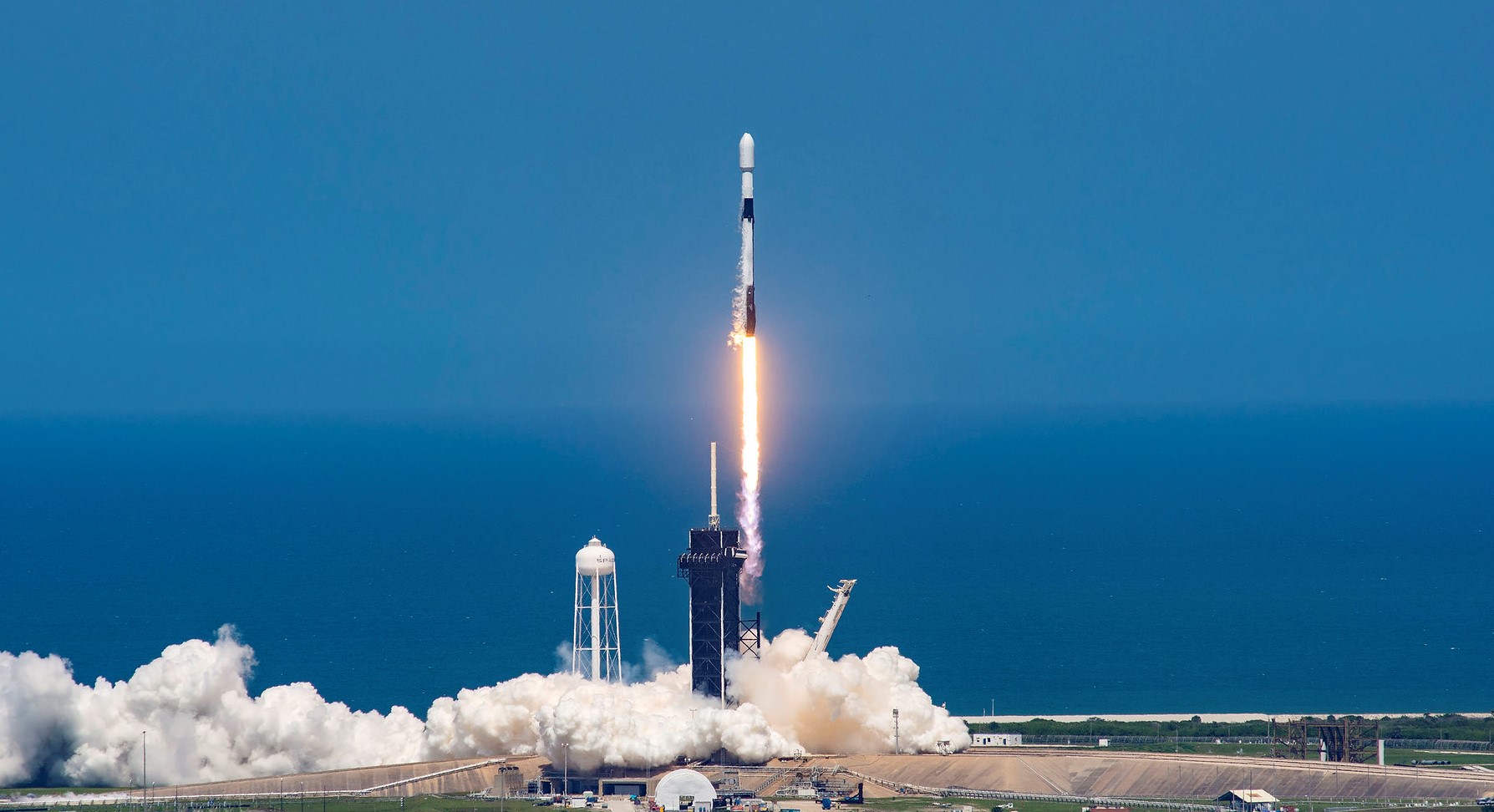
Launch Provider: SpaceX – Commercial
Launch Date: February 11, 2026
Launch Time: 2:17 PM UTC
Vehicle: Falcon 9
Brief: A batch of 24 satellites for the Starlink mega-constellation – SpaceX’s project for space-based Internet communication system.
Unknown Payload
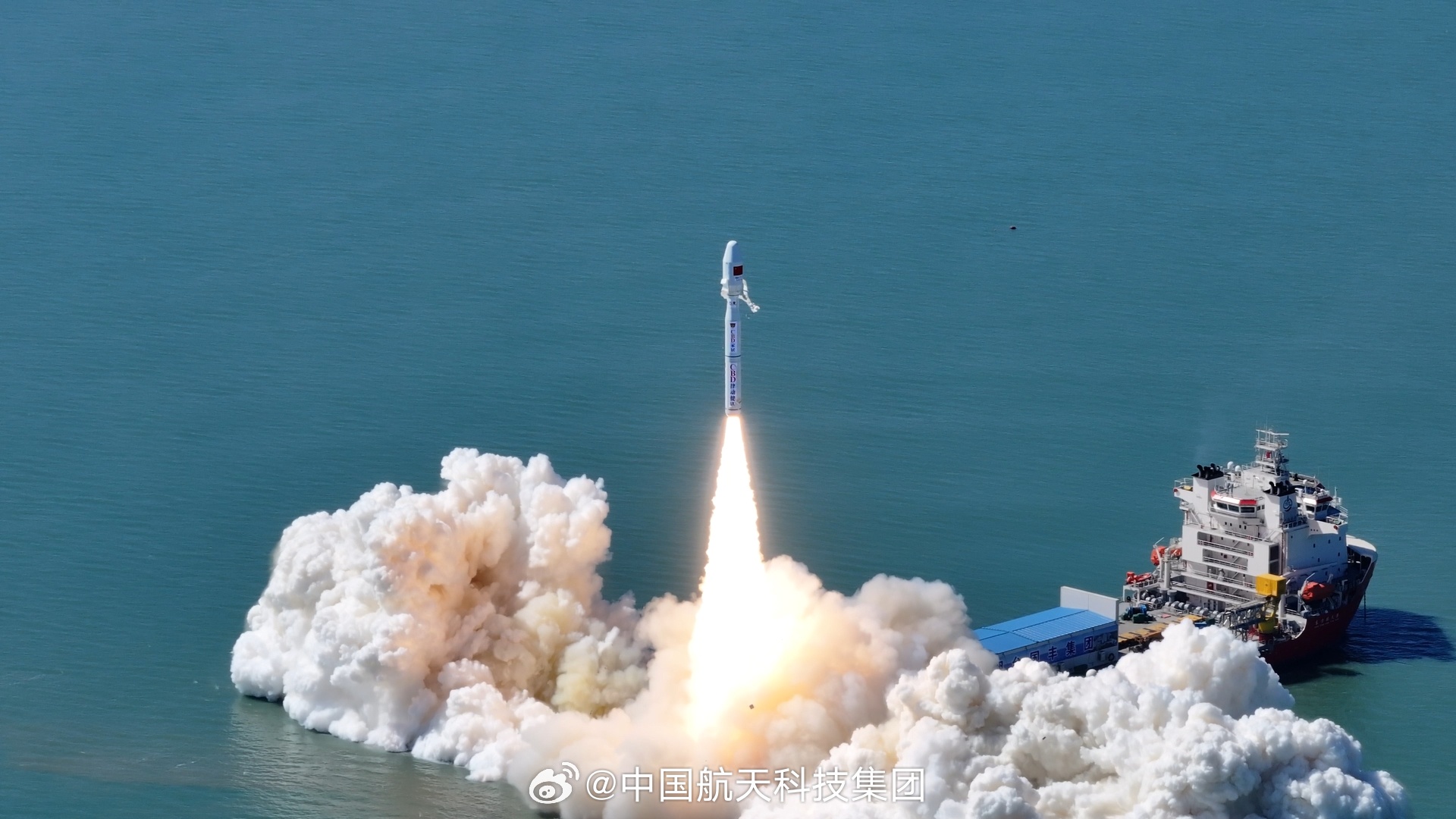
Launch Provider: China Rocket Co. Ltd. – Commercial
Launch Date: February 12, 2026
Launch Time: 6:30 AM UTC
Vehicle: Smart Dragon 3
Brief: Possibly an Earth observation satellite for the Pakistan government’s SUPARCO, details TBD.
USSF-87
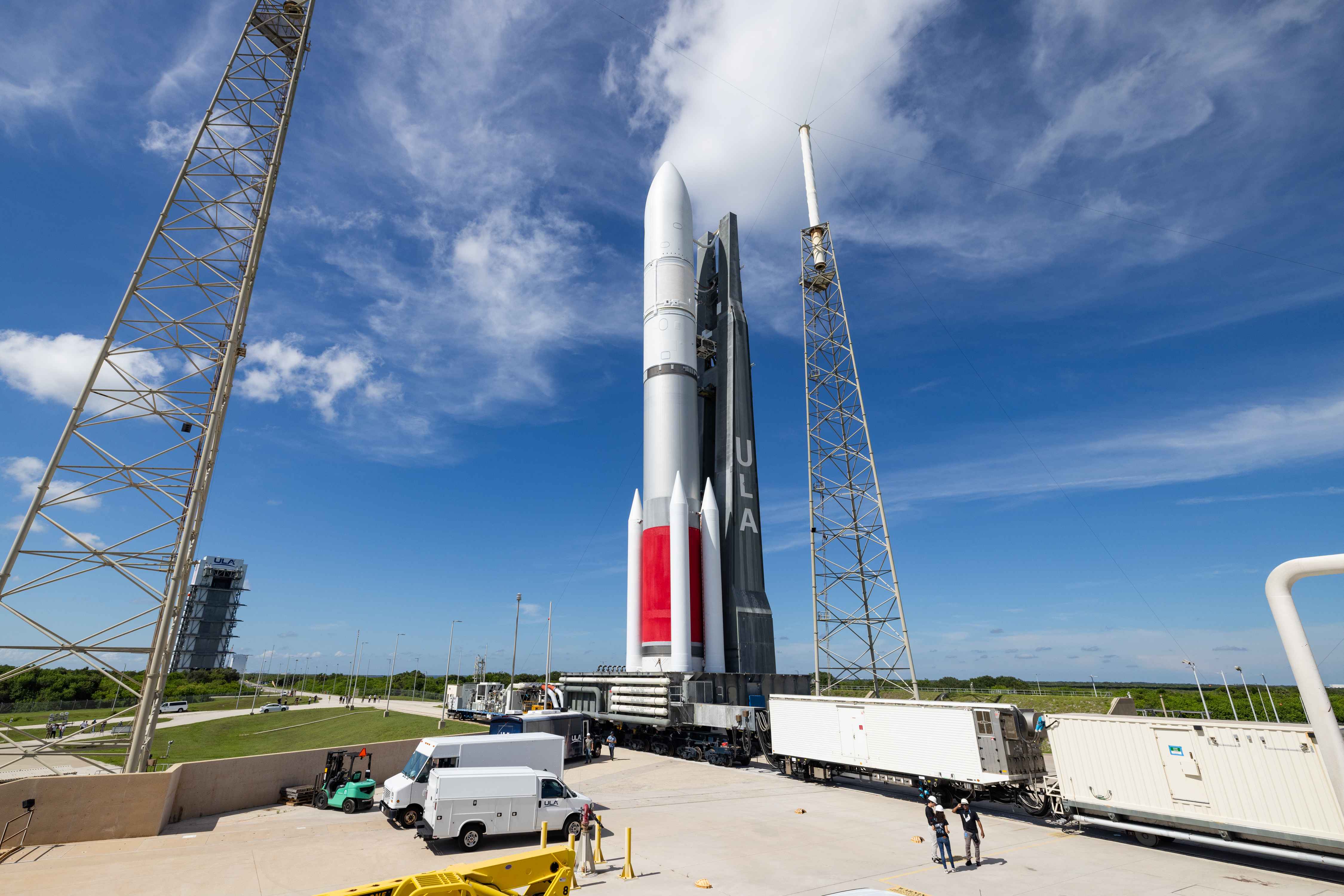
Launch Provider: United Launch Alliance – Commercial
Launch Date: February 12, 2026
Launch Time: 8:30 AM UTC
Vehicle: Vulcan VC4S
Brief: USSF-87 will launch two identical Geosynchronous Space Situational Awareness Program (GSSAP) satellites GSSAP-7 and GSSAP-8 directly to a near-geosynchronous orbit approximately 36,000 km above the equator.
Data from the GSSAP will uniquely contribute to timely and accurate orbital predictions, further enabling space flight safety including satellite collision avoidance.
Elektro-L No.5
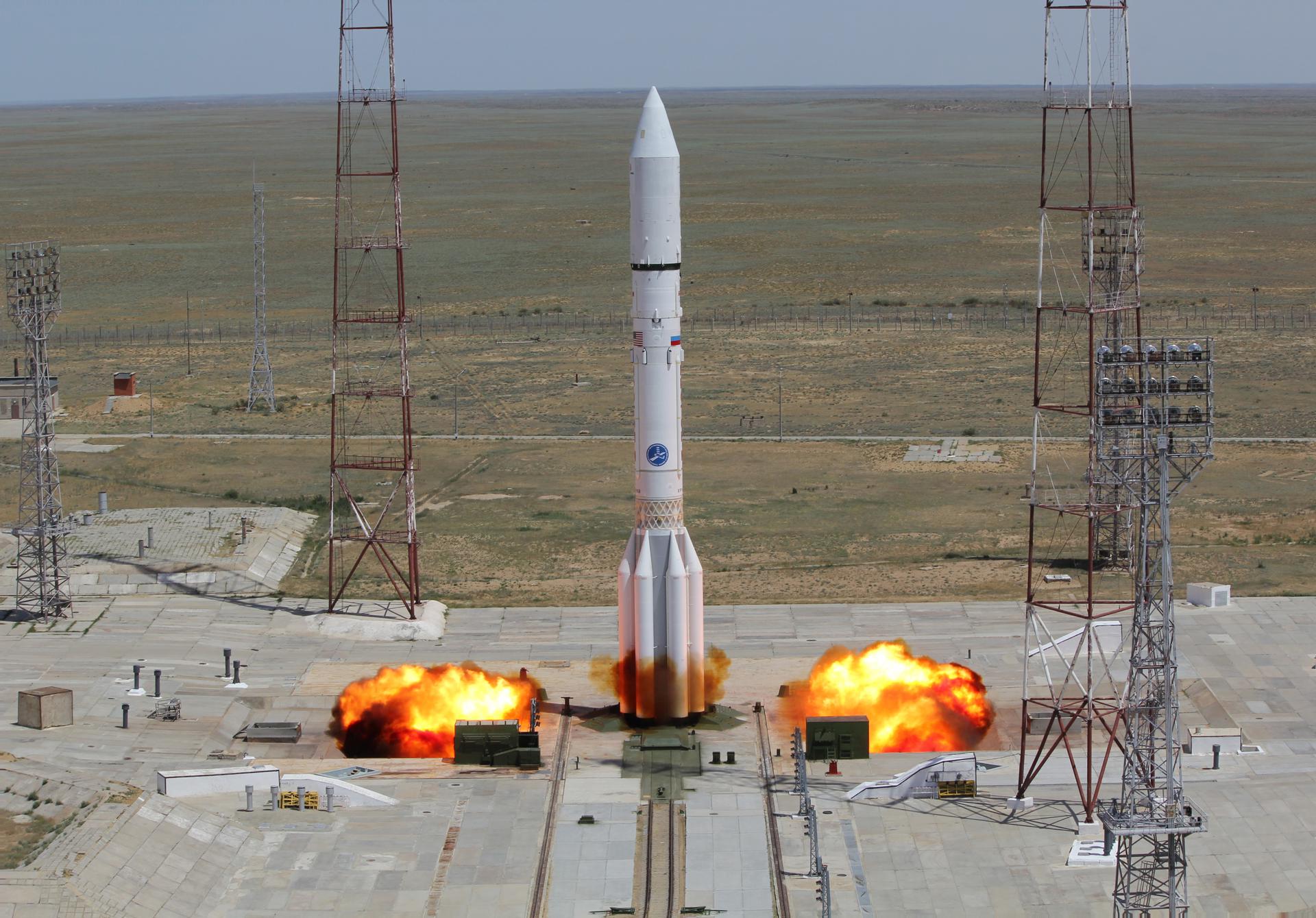
Launch Provider: Khrunichev State Research and Production Space Center – Government
Launch Date: February 12, 2026
Launch Time: 8:52 AM UTC
Vehicle: Proton-M
Brief: Elektro-L is a series of meteorological satellites developed for the Russian Federal Space Agency by NPO Lavochkin. They are designed to capture real-time images of clouds and the Earth’s underlying surface, heliogeophysical measurements, collection and translating hydrometeorological and service data.
Amazon Leo (LE-01)
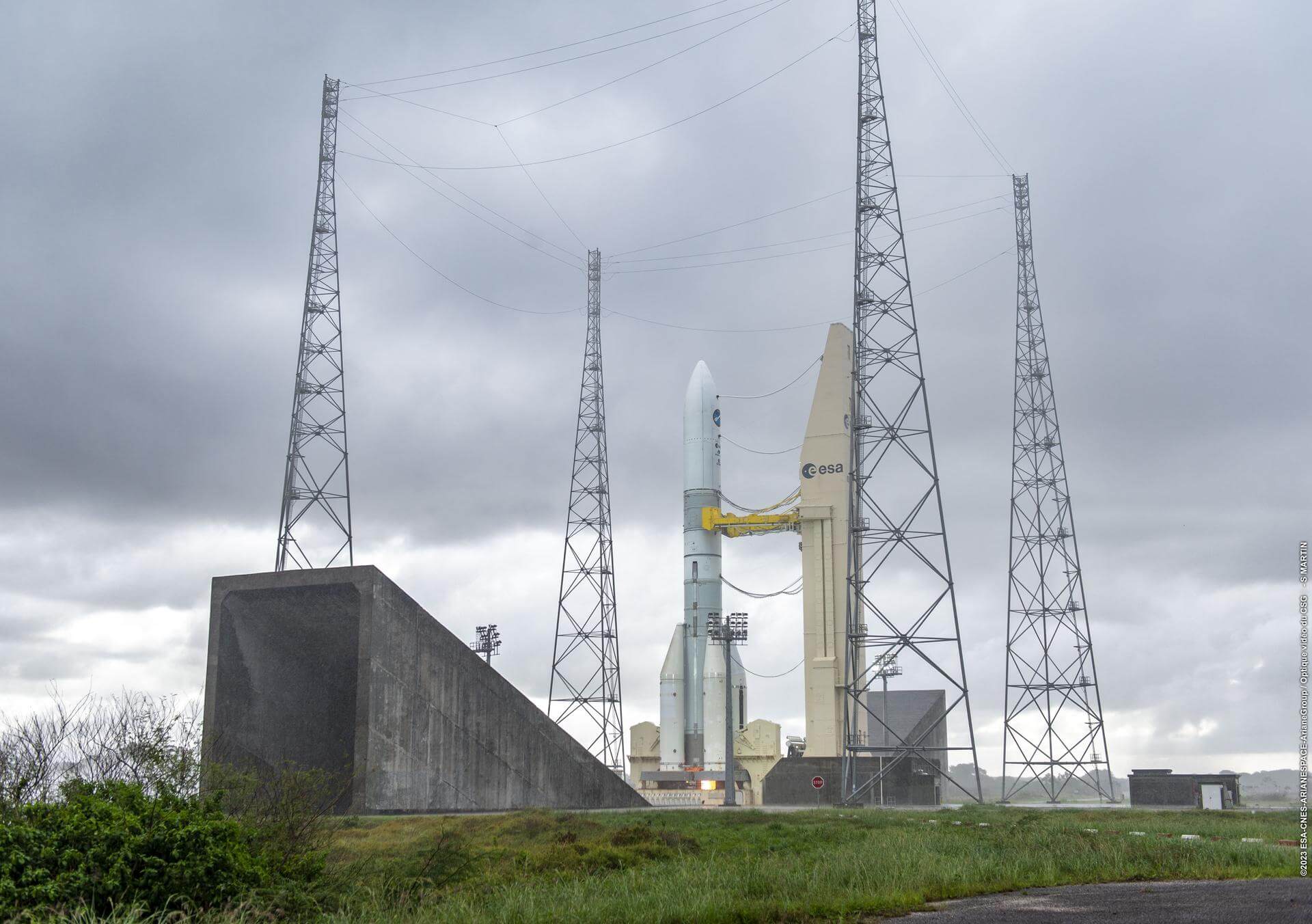
Launch Provider: Arianespace – Commercial
Launch Date: February 12, 2026
Launch Time: 4:45 PM UTC
Vehicle: Ariane 64
Brief: Amazon Leo, formerly known as Project Kuiper, is a mega constellation of satellites in Low Earth Orbit that will offer broadband internet access, this constellation will be managed by Kuiper Systems LLC, a subsidiary of Amazon. This constellation is planned to be composed of 3,276 satellites. The satellites are projected to be placed in 98 orbital planes in three orbital layers, one at 590 km, 610 km and 630 km altitude.
32 satellites will be carried on this launch.

Leave a Reply