
The Daily Broadcast: Launches, Lasers, and Labour: A Busy Day in Aerospace

Ariane 64 Makes Debut with Amazon Leo Satellites
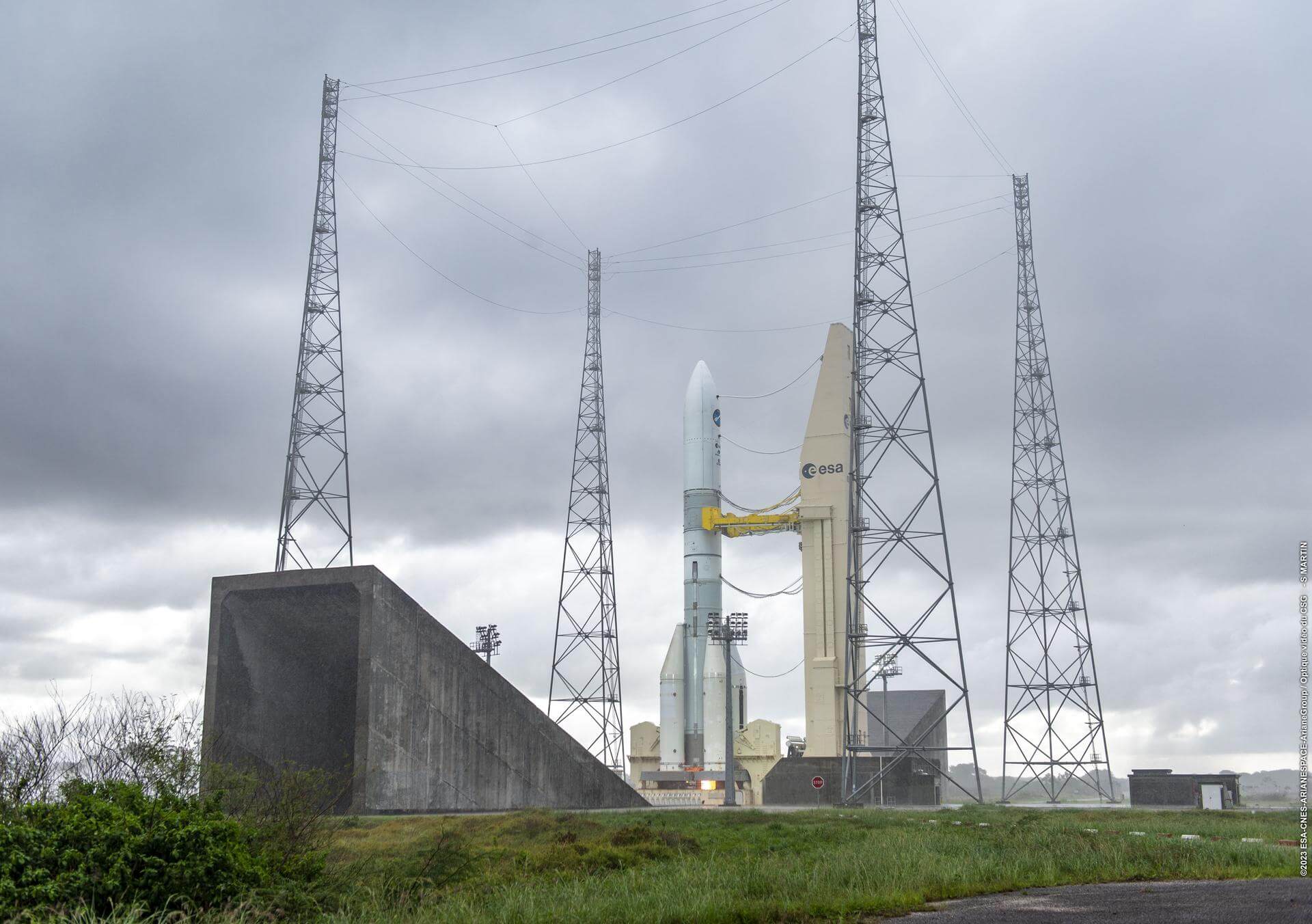
Europe’s heavy-lift ambitions took flight on February 12, 2026, as the inaugural Ariane 64 rocket successfully launched from the Guiana Space Centre in Kourou, French Guiana. The mission, designated VA267 and named Leo Europe 01 (LE-01) by Amazon, carried 32 satellites for Amazon’s Leo constellation—formerly known as Project Kuiper—marking the first time the company’s internet satellites rode aboard a European launcher.
The Ariane 64, the most powerful variant of the Ariane 6 family, features four P120C solid rocket boosters—double the count of the earlier Ariane 62. This configuration, paired with a new 20-metre-long fairing, enabled the rocket to deliver its payload to a 465-kilometre low-Earth orbit inclined at 51.9 degrees. After separation, the satellites will raise their orbits to 630 km to join the growing Leo constellation, which now includes 212 operational satellites.
This launch is the first of 18 contracted with Arianespace and introduces upgraded capabilities that will soon include the P160C booster, offering a 10% performance boost. With Amazon approved to expand its constellation to over 7,000 satellites, reliable access to space is critical. “These powerful launch vehicles allow us to deploy more satellites per mission, which will help us get service to customers as quickly as possible,” said Rajeev Badyal, vice president of Amazon Leo.

El Paso Airport Closure Sparks Confusion Over Anti-Drone Laser Test
In a mix-up that reads like a script from a satirical newsroom, El Paso International Airport was abruptly closed on the evening of February 11, 2026, only to reopen less than 10 hours later. The Federal Aviation Administration (FAA) initially cited a “cartel drone incursion” as justification for grounding all flights up to 18,000 feet—a restriction that would have lasted 10 days. But reports soon suggested the real cause was a miscommunication surrounding a U.S. military anti-drone laser test from nearby Fort Bliss.
According to Ars Technica, the military has been developing high-energy lasers to counter increasingly sophisticated drone surveillance by drug cartels along the U.S.-Mexico border. However, the FAA had not yet finalized safety protocols for such tests near civilian airspace. Despite that, the test reportedly went ahead, possibly targeting what turned out to be a harmless party balloon—an ironic twist that underscores the challenges of distinguishing threats in crowded skies.
El Paso Mayor Renard Johnson called the closure “unacceptable,” emphasizing that local officials weren’t consulted. The incident highlights the growing tension between national security imperatives and civilian aviation safety, especially as drone technology proliferates globally—thanks in part to lessons from conflicts like the war in Ukraine. As one official might say over a well-deserved cup of coffee: “Next time, maybe check if it’s a balloon before shutting down an airport.”
Canadian Space Institute Expands Training Across North America
Canada’s emerging space sector is taking a continental leap with the North American Space Institute (NASI) announcing a strategic expansion into the United States. Founded in 2025 by former Canadian Space Agency technologist Michael Graham, NASI is Canada’s first dedicated space technician school, offering the certified Space Systems Technician (SST) program—recognized by the Canadian Council for Aviation and Aerospace (CCAA).
On February 11, NASI revealed partnerships with U.S. firms Learning Exchange Inc (LEXX) and Alliance Cyber to align its curriculum with U.S. Department of Defense (DOD) 8140 workforce frameworks, which govern cybersecurity roles that increasingly intersect with space operations. The goal is to create a unified, interoperable standard for space technicians across North America, addressing what Graham calls a shortage of 58,000 qualified technicians.
While the move signals ambition, it also raises practical questions about labour mobility, particularly given U.S. International Traffic in Arms Regulations (ITAR) that restrict foreign nationals—including Canadians—from accessing certain defence-related space work. NASI’s COO Aaron Topple acknowledged the complexities but remained optimistic, stating, “Space uniquely stands as a sector that bridges nations.” Even if regulatory hurdles remain, the effort reflects a growing recognition that Canada’s space workforce must be globally competitive—and ready on day one.
Citations
- “Inaugural Ariane 64 to launch Amazon Leo satellites from Kourou” – https://www.nasaspaceflight.com/2026/02/le-01-launch/
- “El Paso airport closed after military used new anti-drone laser to zap party balloon” – https://arstechnica.com/space/2026/02/el-paso-airport-closed-after-military-used-new-anti-drone-laser-to-zap-party-balloon/
- “Canadian space institute targets continental workforce with US expansion” – https://spaceq.ca/canadian-space-institute-targets-continental-workforce-with-us-expansion/
Upcoming Launches
Starlink Group 17-34
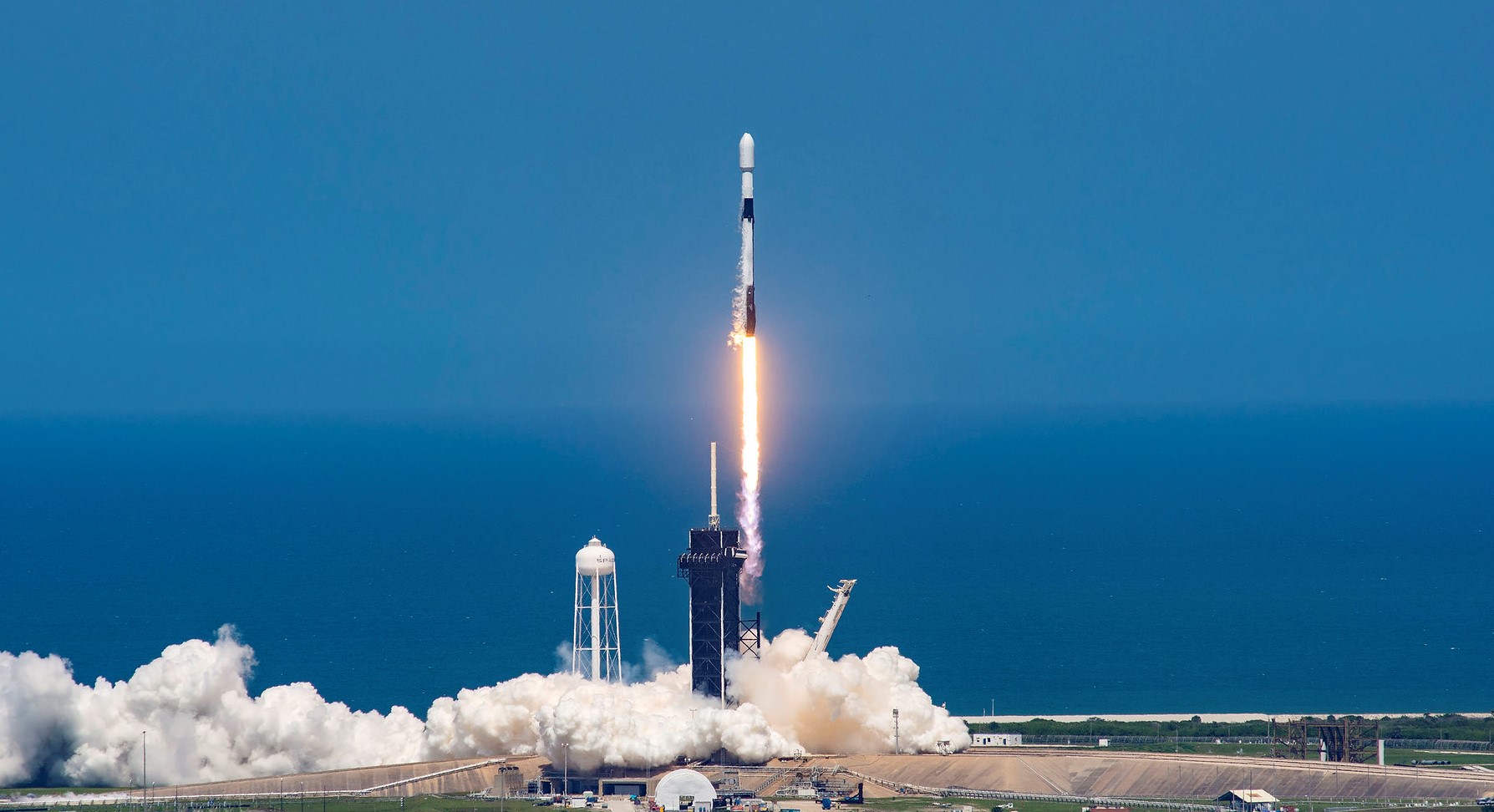
Launch Provider: SpaceX – Commercial
Launch Date: February 11, 2026
Launch Time: 5:11 PM UTC
Vehicle: Falcon 9
Brief: A batch of 24 satellites for the Starlink mega-constellation – SpaceX’s project for space-based Internet communication system.
PRSC-EO2 & 6 satellites

Launch Provider: China Rocket Co. Ltd. – Commercial
Launch Date: February 12, 2026
Launch Time: 6:37 AM UTC
Vehicle: Smart Dragon 3
Brief: Carried 7 satellites to sun-synchronous orbit, including PRSC-EO2 (Earth observation satellite for the Pakistan government’s SUPARCO) & CUHK-1. Details on other payloads to be confirmed.
📽️ No Livestream scheduled yet
Elektro-L No.5
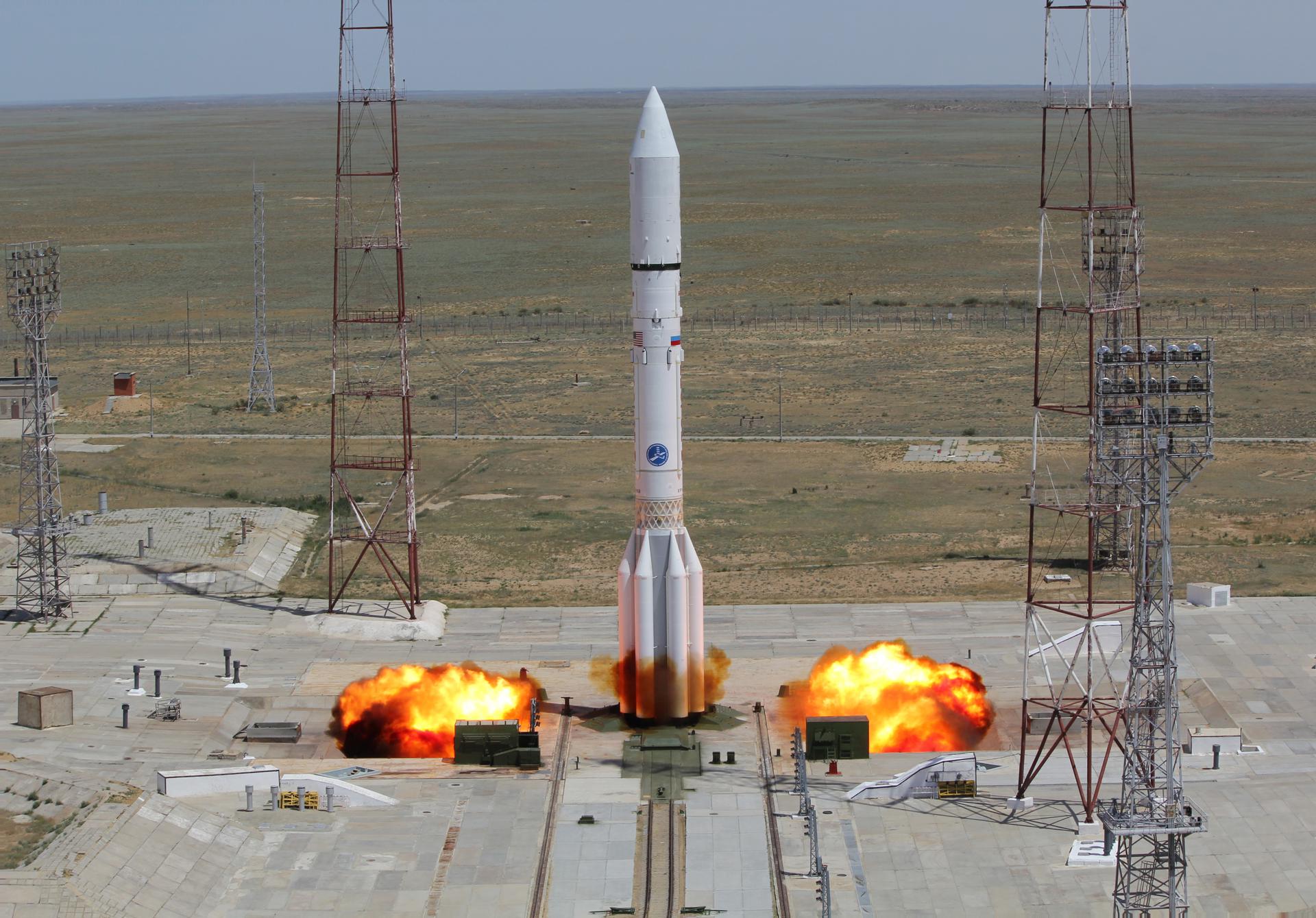
Launch Provider: Khrunichev State Research and Production Space Center – Government
Launch Date: February 12, 2026
Launch Time: 8:52 AM UTC
Vehicle: Proton-M
Brief: Elektro-L is a series of meteorological satellites developed for the Russian Federal Space Agency by NPO Lavochkin. They are designed to capture real-time images of clouds and the Earth’s underlying surface, heliogeophysical measurements, collection and translating hydrometeorological and service data.
USSF-87
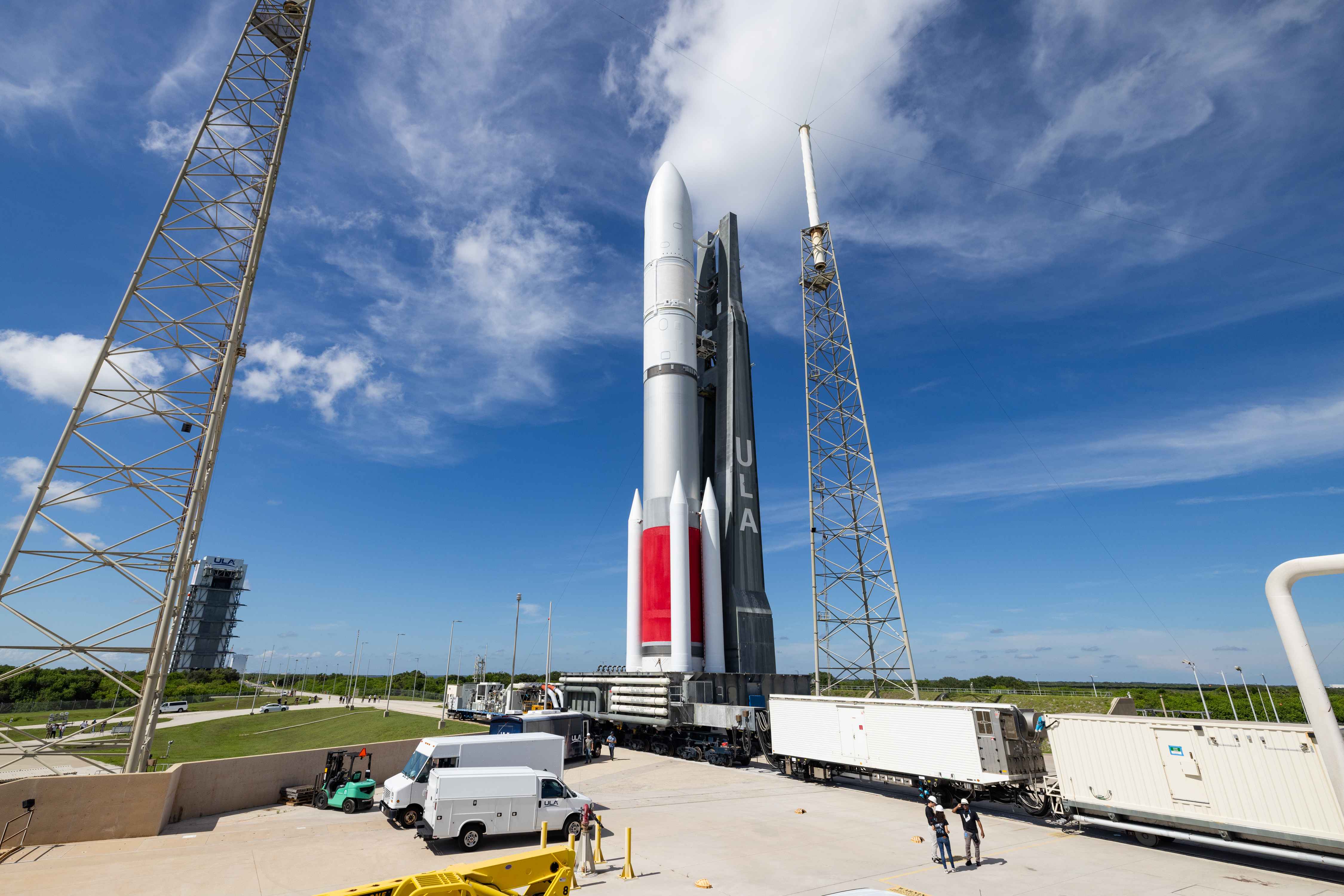
Launch Provider: United Launch Alliance – Commercial
Launch Date: February 12, 2026
Launch Time: 9:22 AM UTC
Vehicle: Vulcan VC4S
Brief: USSF-87 will launch two identical Geosynchronous Space Situational Awareness Program (GSSAP) satellites GSSAP-7 and GSSAP-8 directly to a near-geosynchronous orbit approximately 36,000 km above the equator.
Data from the GSSAP will uniquely contribute to timely and accurate orbital predictions, further enabling space flight safety including satellite collision avoidance.
Amazon Leo (LE-01)
Launch Provider: Arianespace – Commercial
Launch Date: February 12, 2026
Launch Time: 4:45 PM UTC
Vehicle: Ariane 64
Brief: Amazon Leo, formerly known as Project Kuiper, is a mega constellation of satellites in Low Earth Orbit that will offer broadband internet access, this constellation will be managed by Kuiper Systems LLC, a subsidiary of Amazon. This constellation is planned to be composed of 3,276 satellites. The satellites are projected to be placed in 98 orbital planes in three orbital layers, one at 590 km, 610 km and 630 km altitude.
32 satellites will be carried on this launch.


1 comment so far