
The Daily Broadcast: Funding, Infrastructure, and the Future of Space Commerce
Funding, Infrastructure, and the Future of Space Commerce

Canadian Space Startups Navigate the Funding Gap
At this week’s SpaceBound conference in Ottawa, a panel of investors and industry leaders tackled a familiar challenge for Canadian space entrepreneurs: the shortage of early-stage capital. With a population under 40 million and a venture ecosystem dwarfed by that of the U.S., Canada struggles to provide robust Series A or B funding rounds—something American firms like Stoke Space and EnduroSat have secured in the nine-figure range this year alone. Panelists from RBC, IQT, ONE9, and Gallant MacDonald emphasized that while Canada’s R&D tax credits and CSA programs like STDP offer support, they’re insufficient without deeper government backing. One strategic move came just hours after the panel: Canada announced a tenfold increase in its European Space Agency (ESA) contribution—now $528 million—aimed at creating more opportunities for homegrown firms. The message was clear: Canadian companies must either partner internationally, expand operations abroad, or risk relocating entirely. As one panelist bluntly put it, “Waiting for consensus won’t cut it in venture capital—you have to back winners decisively.”
Orbital Clouds and AI: The Next Layer of Space Infrastructure
While rockets grab headlines, a quieter revolution is unfolding in low Earth orbit (LEO): the integration of AI compute, satellite networks, and blockchain verification into a unified “orbital cloud.” PowerBank Corporation and Smartlink AI have teamed up under the Orbit AI banner to launch two complementary systems—DeStarlink, a decentralized satellite communications network, and DeStarAI, a solar-powered AI processing platform. Unlike traditional ground-based data centers, this architecture promises ultra-low latency and global coverage by performing AI inference directly in orbit. The implications are significant for applications requiring real-time decision-making, from disaster response to autonomous navigation. Though still in early development, the project reflects a broader trend: as launch costs fall and satellite lifespans increase, space is becoming less about access and more about utility. For Canadian firms specializing in communications or AI, such initiatives could offer niche opportunities—especially if they align with the growing demand for sovereign, resilient infrastructure.
ESA’s Argonaut Lunar Lander Gains Momentum—and Partners
Europe is stepping up its lunar ambitions with the expansion of the Argonaut lunar lander program. At a press conference held at ESA’s European Astronaut Centre in Cologne, new industrial agreements were signed among Thales Alenia Space (Italy, France, and the UK), Germany’s OHB system AG, and UK-based Nammo. These partnerships solidify the multinational effort behind Europe’s first autonomous lunar lander, designed to deliver up to 1,000 kilograms of cargo to the Moon’s surface. While Canada isn’t a direct contractor on Argonaut, its recent commitment to increase ESA contributions tenfold suggests Canadian companies may soon find pathways into lunar supply chains—particularly in robotics, communications, or power systems where Canadian expertise is well-established. The timing is strategic: with NASA’s Artemis program accelerating and global interest in cislunar space growing, ESA’s move signals that the Moon is no longer just a destination for superpowers. As one ESA official noted, “Argonaut isn’t just about landing—it’s about building a sustainable European presence beyond Earth.”
Citations
- “SpaceBound: Where to find money for a space business” – https://spaceq.ca/spacebound-where-to-find-money-for-a-space-business/
- “Orbital cloud project to combine solar powered AI compute and satellite network in low Earth orbit” – https://www.spacedaily.com/reports/Orbital_cloud_project_to_combine_solar_powered_AI_compute_and_satellite_network_in_low_Earth_orbit_999.html
- “Argonaut lunar lander family grows” – https://www.esa.int/Science_Exploration/Human_and_Robotic_Exploration/Argonaut_lunar_lander_family_grows
Upcoming Launches
Starlink Group 6-78

Launch Provider: SpaceX – Commercial
Launch Date: November 21, 2025
Launch Time: 3:21 AM UTC
Vehicle: Falcon 9
Brief: A batch of 29 satellites for the Starlink mega-constellation – SpaceX’s project for space-based Internet communication system.
Unknown Payload
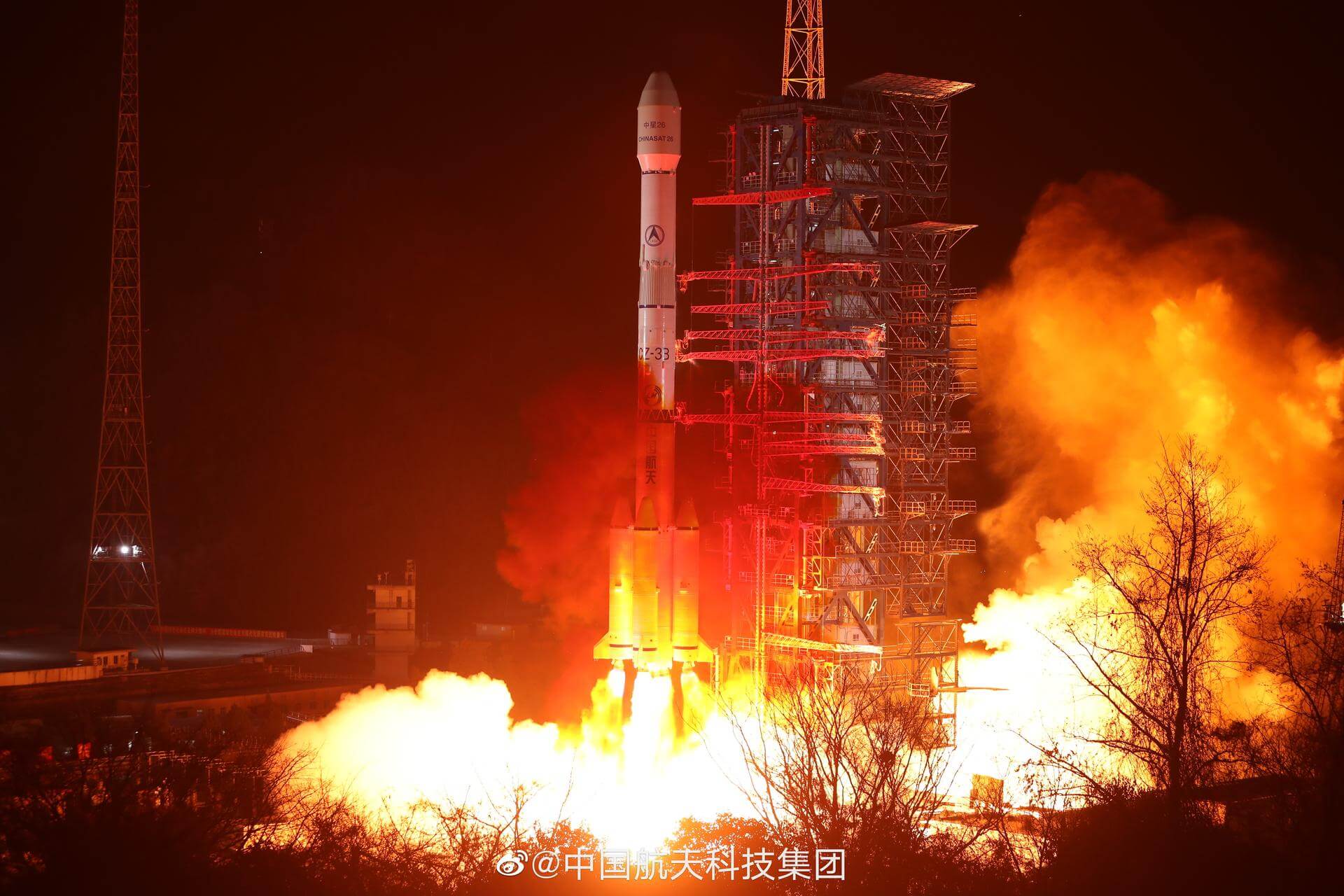
Launch Provider: China Aerospace Science and Technology Corporation – Government
Launch Date: November 21, 2025
Launch Time: 10:55 AM UTC
Vehicle: Long March 3
Brief: Details TBD.
Starlink Group 6-79
Launch Provider: SpaceX – Commercial
Launch Date: November 22, 2025
Launch Time: 6:59 AM UTC
Vehicle: Falcon 9
Brief: A batch of 29 satellites for the Starlink mega-constellation – SpaceX’s project for space-based Internet communication system.
Spaceward
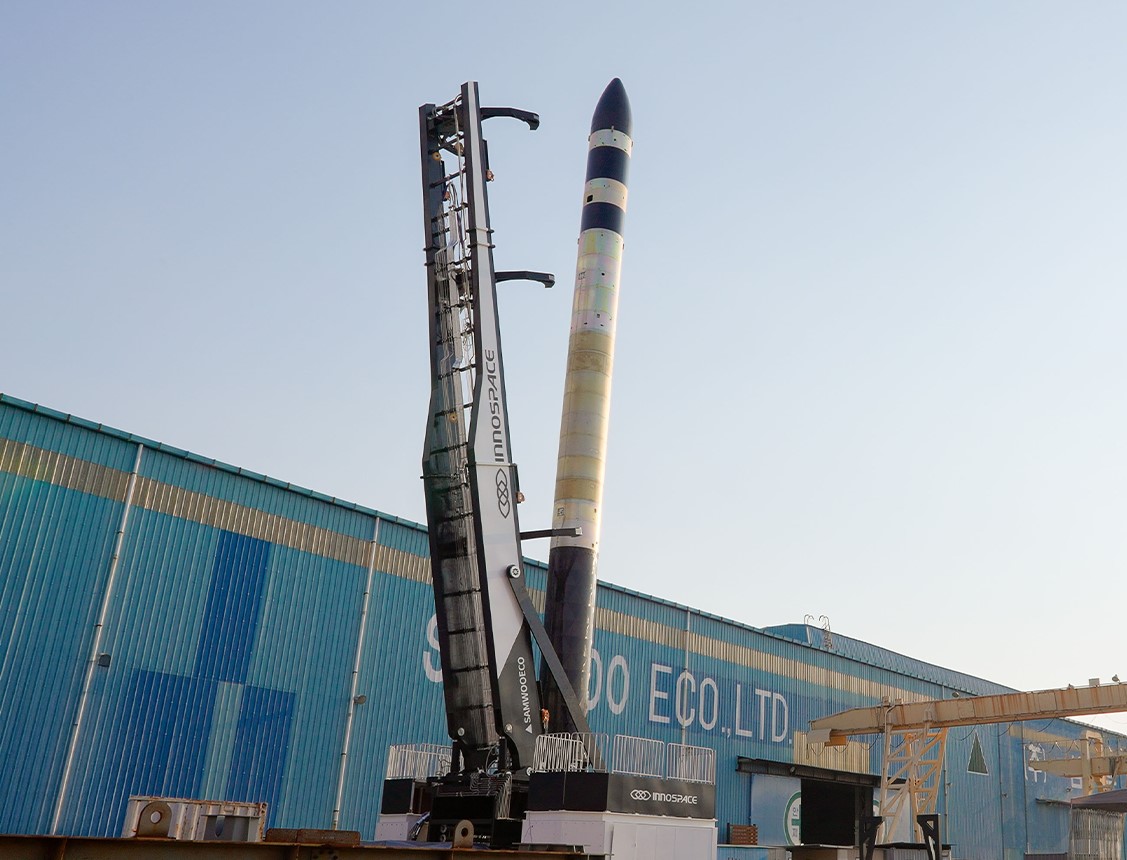
Launch Provider: Innospace – Private
Launch Date: November 22, 2025
Launch Time: 6:00 PM UTC
Vehicle: HANBIT-Nano
Brief: Maiden orbital launch attempt for the South Korean stratup Innospace and its HANBIT-Nano small launch vehicle. Onboard this flight are five small satellites from the Brazilian space agency AEB, Brazilian university Universidade Federal do Maranhão and Indian startup Grahaa Space, as well as three payloads from AEB and Brazilian company Castro Leite Consultoria that will remain attached to the rocket, and an empty aluminium can from the South Korean beverage company Brewguru.
Starlink Group 11-15
Launch Provider: SpaceX – Commercial
Launch Date: November 22, 2025
Launch Time: 9:44 PM UTC
Vehicle: Falcon 9
Brief: A batch of satellites for the Starlink mega-constellation – SpaceX’s project for space-based Internet communication system.
