
The Daily Broadcast: From the Station to the Moon—and Maybe Back with a Turtle
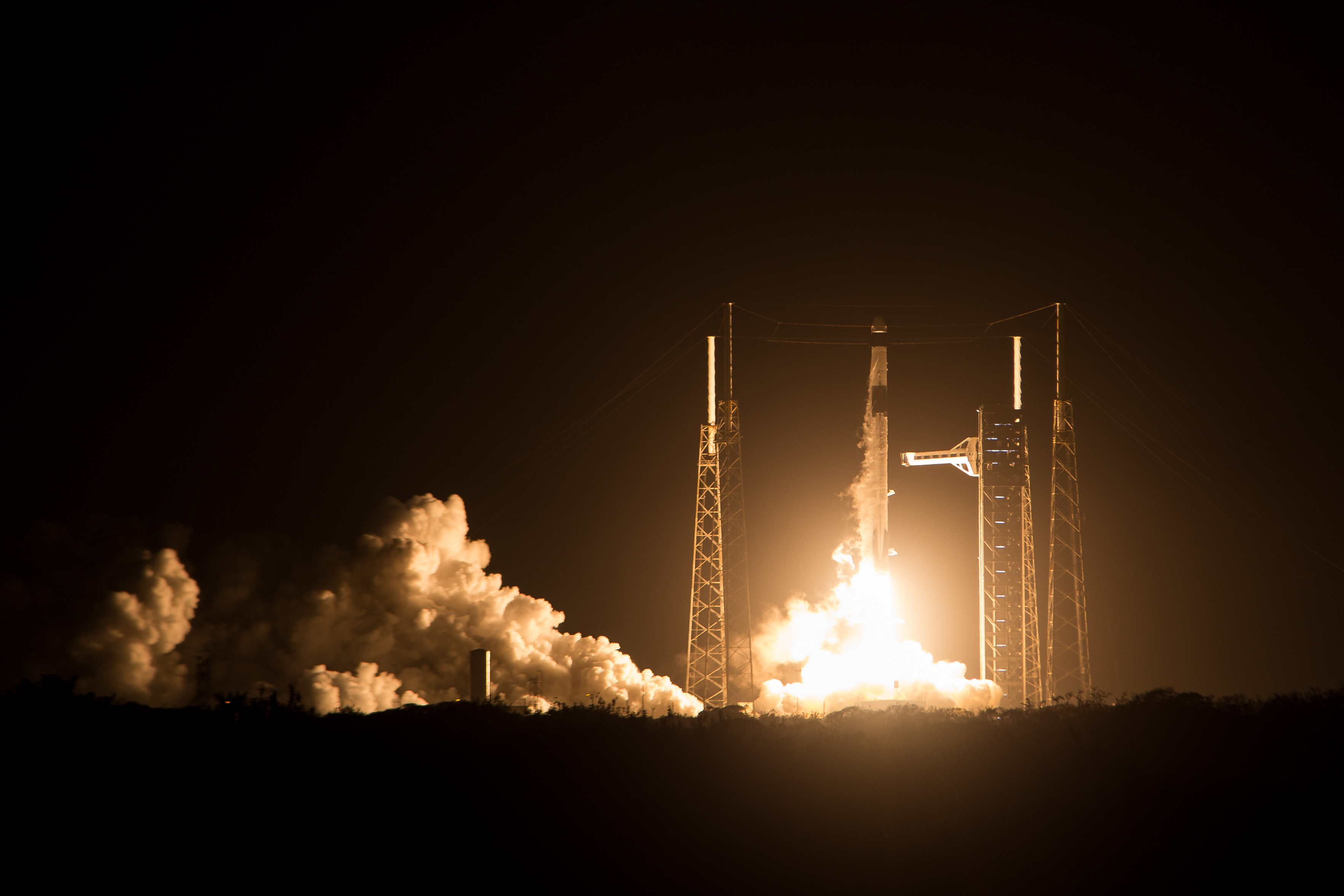
Crew-12 Safely in Orbit After Early Morning Launch
Just before sunrise on Friday, February 13, 2026, a SpaceX Falcon 9 rocket lifted off from Cape Canaveral Space Force Station at 5:15 a.m. EST, carrying four astronauts to the International Space Station aboard the Crew Dragon spacecraft. The mission—NASA’s SpaceX Crew-12—is the twelfth operational crew rotation under the Commercial Crew Program and marks another routine yet critical step in maintaining a continuous human presence in low Earth orbit.
Onboard were NASA astronauts Jessica Meir and Jack Hathaway, European Space Agency astronaut Sophie Adenot, and Roscosmos cosmonaut Andrey Fedyaev. The crew will spend approximately six months aboard the station, conducting scientific experiments, technology demonstrations, and maintenance tasks that support future deep-space exploration—including preparations for the Artemis programme’s return to the Moon. Their launch proceeded smoothly, with no anomalies reported during ascent or orbital insertion, and the Dragon spacecraft successfully docked with the ISS roughly 29 hours later.
For Canadian readers, it’s worth noting that while no Canadian astronauts are on this particular mission, the research conducted aboard the ISS often includes Canadian-led experiments—particularly in robotics, life sciences, and Earth observation—thanks to Canada’s long-standing contributions to the station, including the iconic Canadarm2.
Blue Origin Signals Lunar Ambitions—With a Turtle
In what can only be described as aerospace’s latest social media showdown, Jeff Bezos posted a cryptic black-and-white image of a turtle on X (formerly Twitter) on February 13—just hours after Elon Musk announced SpaceX’s renewed focus on the Moon. While the post included no text, insiders recognized the symbolism immediately: Blue Origin’s corporate crest features two turtles, a nod to Aesop’s “The Tortoise and the Hare,” suggesting that slow, steady progress may yet win the lunar race.
The timing wasn’t coincidental. According to documents obtained by Ars Technica, Blue Origin is advancing an “accelerated” Moon landing architecture that could potentially put humans on the lunar surface before 2030—without relying on complex orbital refuelling. The proposed mission profile involves multiple launches of Blue Origin’s New Glenn rocket: three for an uncrewed demonstration and four for a crewed landing. In the crewed scenario, three “Transfer stages” would ferry a modified Blue Moon MK2 lander—dubbed the MK2-IL (Initial Lander)—to rendezvous with NASA’s Orion spacecraft in a near-rectilinear halo orbit before descending to the surface.
While SpaceX’s Starship has experienced setbacks—including three explosive test failures in 2025—Blue Origin’s new approach sidesteps some of the technical hurdles by using multiple smaller launches rather than one massive, fully refuelled vehicle. Still, New Glenn has yet to reach orbit, and the plan hinges on flawless execution of in-space docking and staging. For now, it remains a proposal—but one that’s clearly intended to position Blue Origin as a serious contender in the new Moon race.

Canadian Firm Telesat Lands Key U.S. Missile Defence Role
Ottawa-based Telesat has secured a significant foothold in U.S. national security space with its U.S. subsidiary, Telesat Government Solutions, winning a spot on the Missile Defense Agency’s $1.51 billion SHIELD contract. Announced on February 13, 2026, the 10-year Indefinite-Delivery/Indefinite-Quantity (IDIQ) award allows the Pentagon to rapidly procure secure, resilient satellite communications as part of the broader “Golden Dome” missile defence strategy.
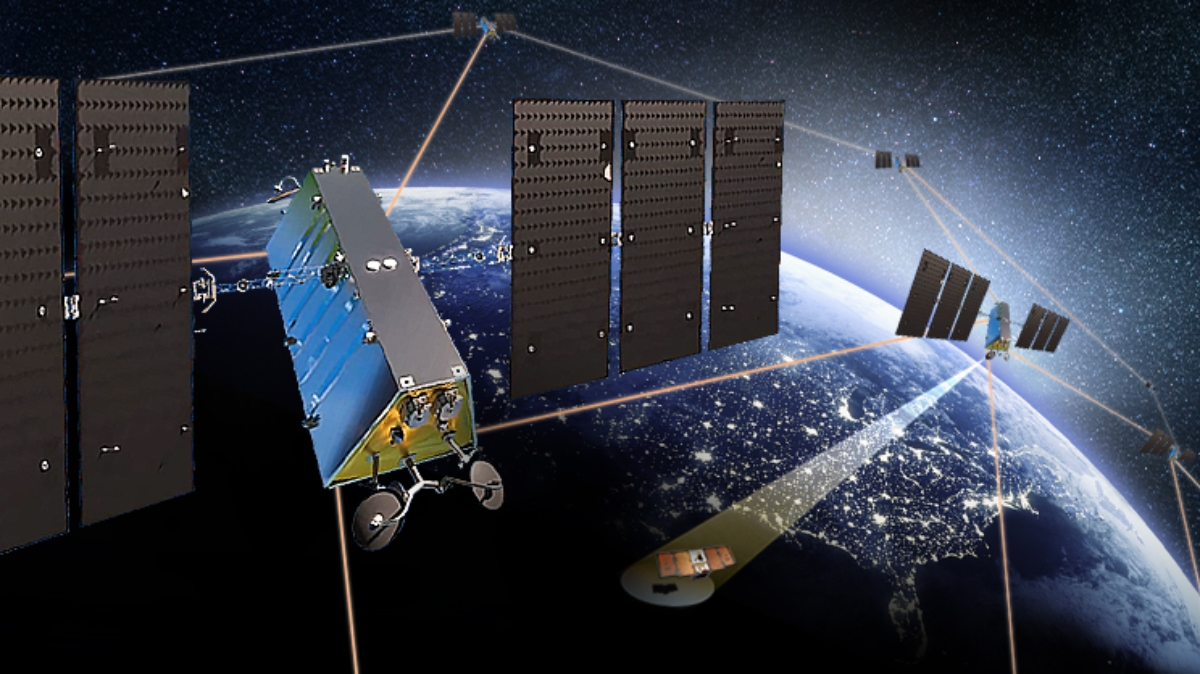
Telesat’s upcoming Lightspeed Low Earth Orbit (LEO) constellation—currently in development—is positioned to provide the low-latency, high-bandwidth connectivity needed to track and counter modern hypersonic and ballistic threats. Unlike traditional geostationary satellites, LEO systems like Lightspeed offer reduced signal delay and enhanced resistance to jamming or physical attack, making them ideal for time-sensitive defence applications. Chuck Cynamon, President of Telesat Government Solutions, emphasized that the contract validates the company’s “resilient architecture, deterministic performance and advanced security” as mission-critical assets.
This win underscores Canada’s quiet but growing influence in defence-oriented space infrastructure. While Telesat is best known for commercial broadband, its pivot toward secure government services—bolstered by this contract—highlights how Canadian space technology is increasingly woven into allied security frameworks. Notably, the SHIELD programme complements emerging startups like California’s Wardstone, which is testing kinetic interceptors that deploy particle clouds to neutralize hypersonic missiles—a reminder that tomorrow’s missile defence may rely as much on data links as on interceptors.
Citations
- “Crew-12 Launches” – https://www.nasa.gov/image-article/crew-12-launches/
- “Why is Bezos trolling Musk on X with turtle pics? Because he has a new Moon plan.” – https://arstechnica.com/space/2026/02/why-is-bezos-trolling-musk-on-x-with-turtle-pics-because-he-has-a-new-moon-plan/
- “Telesat Government Solutions wins spot on U.S. Missile Defense Agency SHIELD Contract” – https://spaceq.ca/telesat-government-solutions-wins-spot-on-u-s-missile-defense-agency-shield-contract/
Upcoming Launches
Starlink Group 17-13

Launch Provider: SpaceX – Commercial
Launch Date: February 14, 2026
Launch Time: 11:01 PM UTC
Vehicle: Falcon 9
Brief: A batch of 24 satellites for the Starlink mega-constellation – SpaceX’s project for space-based Internet communication system.
Starlink Group 6-103
Launch Provider: SpaceX – Commercial
Launch Date: February 16, 2026
Launch Time: 5:00 AM UTC
Vehicle: Falcon 9
Brief: A batch of 29 satellites for the Starlink mega-constellation – SpaceX’s project for space-based Internet communication system.
Starlink Group 17-25
Launch Provider: SpaceX – Commercial
Launch Date: February 18, 2026
Launch Time: 8:00 AM UTC
Vehicle: Falcon 9
Brief: A batch of 25 satellites for the Starlink mega-constellation – SpaceX’s project for space-based Internet communication system.
Starlink Group 10-36
Launch Provider: SpaceX – Commercial
Launch Date: February 18, 2026
Launch Time: 10:00 PM UTC
Vehicle: Falcon 9
Brief: A batch of 29 satellites for the Starlink mega-constellation – SpaceX’s project for space-based Internet communication system.
First Starlink launch to feature a Falcon 9 booster landing within The Bahamas waters operationally, after the trajectory was tested during launch of Starlink Group 10-12 in February 2025.
Stairway to Seven
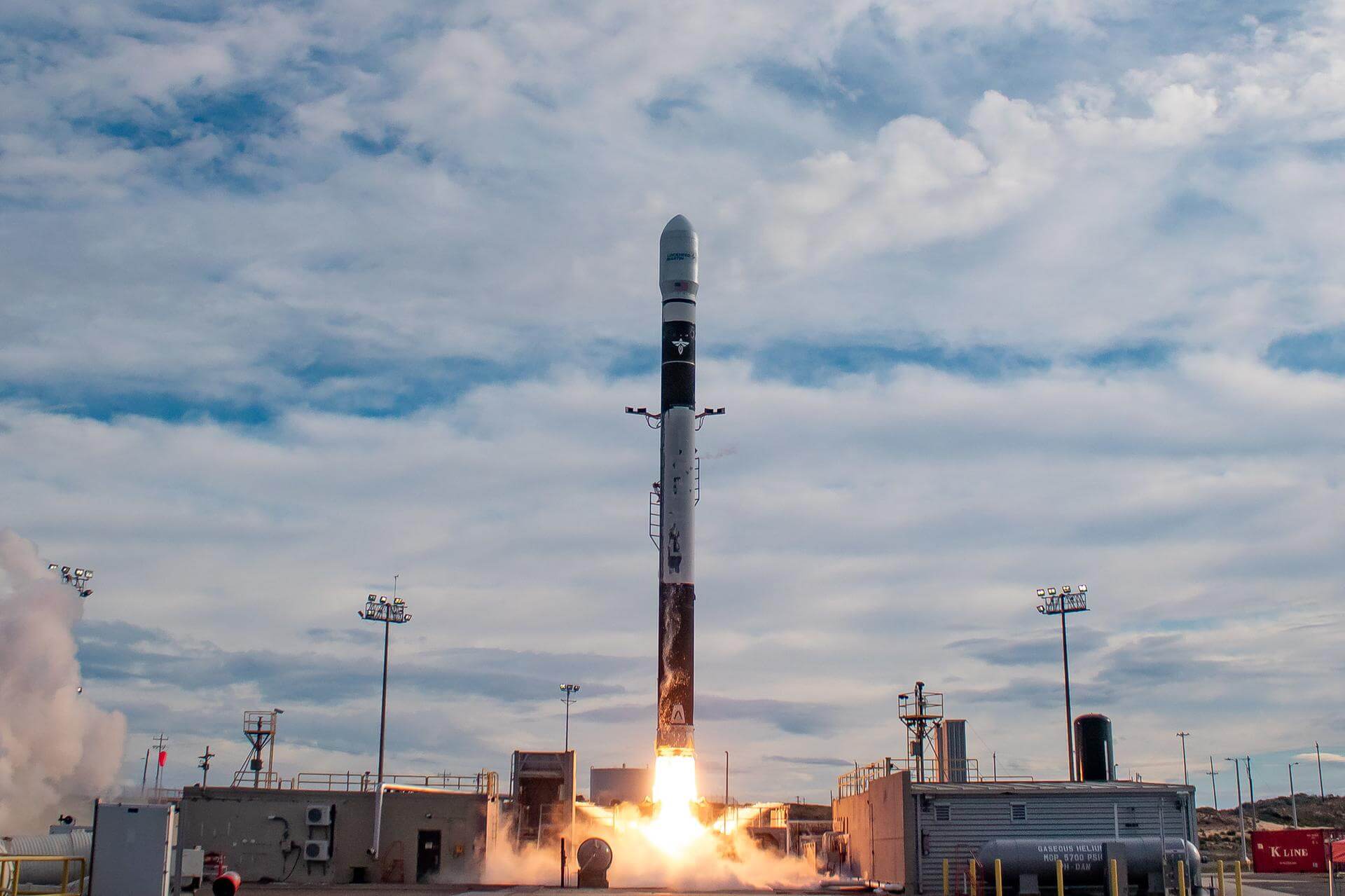
Launch Provider: Firefly Aerospace – Commercial
Launch Date: February 21, 2026
Launch Time: 12:20 AM UTC
Vehicle: Firefly Alpha
Brief: Firefly Alpha’s Flight 7 will be a test flight and return-To-Flight for the launch vehicle after its April 2025 launch failure. It will test and validate key systems ahead of Firefly’s Block II configuration upgrade on Flight 8 that’s designed to enhance reliability and manufacturability across the vehicle.
Flight 7 will be the last flown in Alpha’s current configuration and will test multiple Block II subsystems, including the in-house avionics and thermal improvements, to gain flight heritage and validate lessons learned ahead of the full configuration upgrade on Flight 8.
📽️ No Livestream scheduled yet

Leave a Reply