
The Daily Broadcast: From Quantum Leaps to Martian Sandblasts: A Busy Week in Space

Canada’s Quantum Ambitions Take Flight with $180M Photonic Raise
Vancouver-based quantum tech startup Photonic Inc. has secured $180 million in new funding—a significant milestone in Canada’s push to become a leader in quantum innovation. The round was led by U.K.-based Planet First Partners and includes notable new investors like Royal Bank of Canada and TELUS, alongside returning backers such as Microsoft and the British Columbia Investment Management Corporation. This latest influx brings Photonic’s total funding to $375 million since its founding in 2016.
The investment comes on the heels of the Canadian government’s November 2025 unveiling of its National Quantum Strategy, backed by $334.4 million over five years. Photonic is among the first recipients of the Canadian Quantum Champions Program, with up to $23 million in federal support. The company’s “Entanglement First™ Architecture” uses silicon-based qubits combined with photonic connectivity, designed to scale across existing telecom infrastructure—a practical approach that could accelerate real-world quantum applications in clean energy, drug discovery, and secure communications.
Notably, the Canadian Space Agency (CSA) has also signaled interest in quantum space applications, recently issuing a call for proposals for a Quantum Communications and Networking Demonstrator. The agency’s first quantum satellite, QEYSSat, is expected to launch later this year, potentially opening new frontiers in secure space-based communications.
Martian Winds Carve Grooves Like a Cosmic Sandblaster
Forget earthly sandstorms—on Mars, the wind has been quietly sculpting the landscape for eons. ESA’s Mars Express orbiter has captured striking images of wind-carved grooves near Eumenides Dorsum, a ridge just south of the planet’s equator. These features, shaped by relentless Martian winds whipping fine sand grains across the surface, resemble the handiwork of a high-powered sandblaster.
The grooves are oriented perpendicular to the prevailing wind direction, a telltale sign of aeolian (wind-driven) erosion. Scientists believe these patterns reveal not just the strength and direction of ancient winds but also clues about the composition and cohesion of Martian surface materials. Unlike Earth, Mars lacks liquid water and vegetation to stabilize its soil, making its surface especially vulnerable to wind erosion over geologic time.
These observations add nuance to our understanding of Mars as a dynamic world, not just a frozen relic. As missions like NASA’s Perseverance rover continue exploring the surface, orbital data from Mars Express helps contextualize local findings within broader planetary processes. It’s a reminder that even in the thin Martian atmosphere—less than 1% as dense as Earth’s—wind remains a formidable geological force.

SkyFi Simplifies Satellite Imagery with Pay-As-You-Go Access
Accessing satellite imagery just got easier—thanks to SkyFi, a company that’s reimagining how users procure Earth observation data. SkyFi has expanded its “virtual constellation” by integrating imagery from Vantor, a move that broadens its on-demand capabilities without the traditional headaches of coordinating with multiple satellite operators.
The company’s pay-as-you-go model removes the need for lengthy contracts or minimum purchase commitments, which have long been barriers for smaller organizations, researchers, or even municipalities seeking timely geospatial insights. Instead, users can request imagery of specific locations and receive it within hours, billed only for what they use. This shift mirrors broader trends in the space industry toward cloud-like, on-demand services—think “AWS for satellite data,” minus the upfront infrastructure.
While SkyFi itself doesn’t own satellites, it acts as an intelligent broker, pulling from a growing network of commercial providers. The addition of Vantor’s data enhances resolution and revisit options, particularly valuable for monitoring dynamic events like wildfires, floods, or agricultural changes. For Canadian users—from wildfire agencies in British Columbia to precision farmers in Saskatchewan—this could mean faster, more affordable access to actionable space-based intelligence without needing a dedicated procurement officer or six-figure budget.
Citations
- “Quantum tech startup Photonic raises $180 million” – https://spaceq.ca/quantum-tech-startup-photonic-raises-180-million/
- “Sandblasting on Mars” – https://www.esa.int/Science_Exploration/Space_Science/Mars_Express/Sandblasting_on_Mars
- “SkyFi expands virtual constellation with Vantor satellite imagery” – https://spacenews.com/skyfi-expands-virtual-constellation-with-vantor-satellite-imagery/
Upcoming Launches
Starlink Group 6-96

Launch Provider: SpaceX – Commercial
Launch Date: January 8, 2026
Launch Time: 6:29 PM UTC
Vehicle: Falcon 9
Brief: A batch of 29 satellites for the Starlink mega-constellation – SpaceX’s project for space-based Internet communication system.
Starlink Group 6-97
Launch Provider: SpaceX – Commercial
Launch Date: January 10, 2026
Launch Time: 6:34 PM UTC
Vehicle: Falcon 9
Brief: A batch of 29 satellites for the Starlink mega-constellation – SpaceX’s project for space-based Internet communication system.
Pandora / Twilight rideshare mission
Launch Provider: SpaceX – Commercial
Launch Date: January 11, 2026
Launch Time: 1:09 PM UTC
Vehicle: Falcon 9
Brief: The Pandora small satellite was selected in 2021 as an inaugural mission in NASA’s Astrophysics Pioneers Program. It includes a 0.45-meter telescope that will improve our understanding of exoplanet atmospheres by disentangling exoplanet signals from their host stars, as well as studying host star variability with long-duration observations of 20 unique planets through visible-light photometry and near-infrared spectroscopy.
Also launching on this launch are ride-share payloads under the “Falcon 9 Twilight mission” manifested by Exolaunch, including satellites from Spire Global and Kepler Communications.
EOS-N1 and others
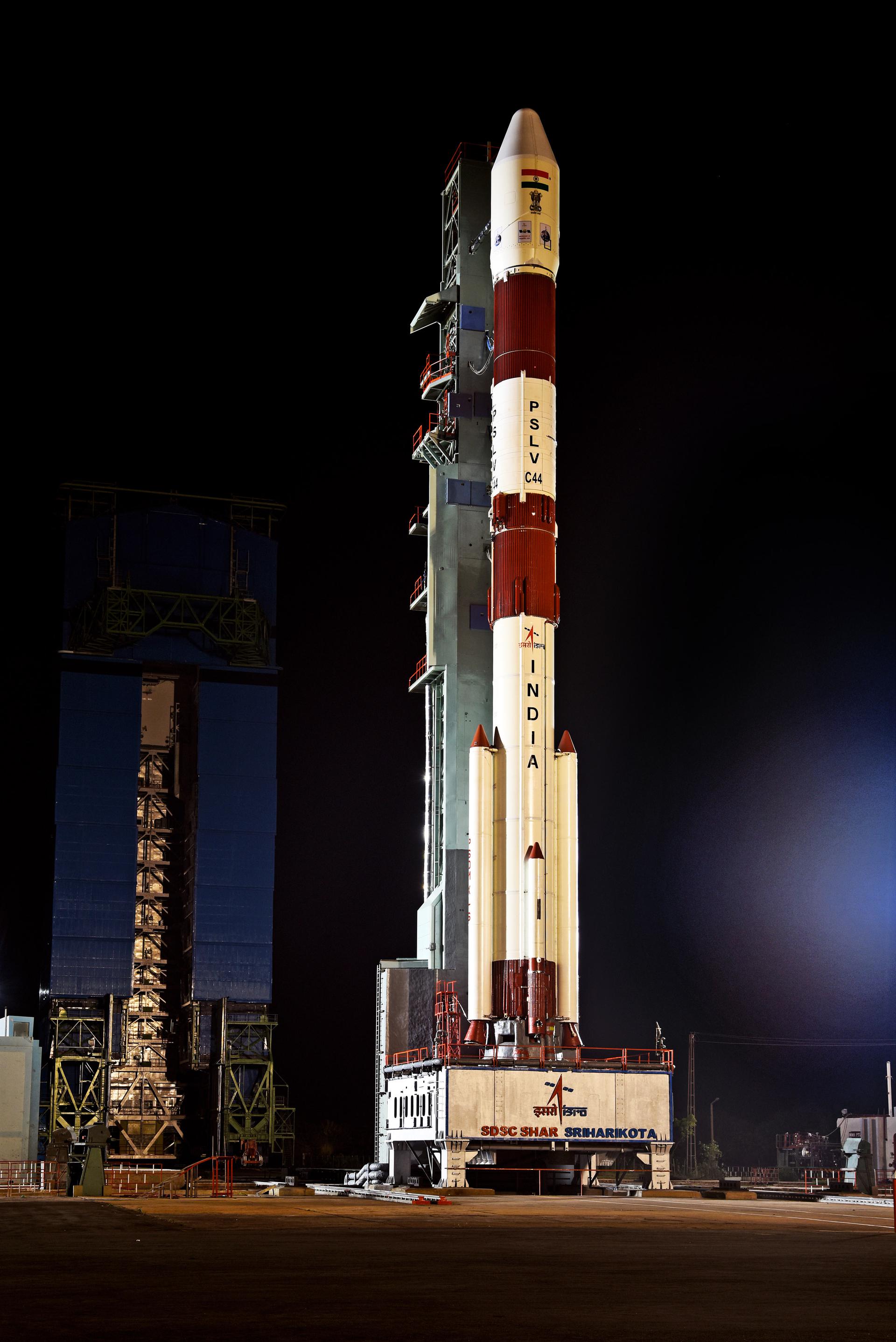
Launch Provider: Indian Space Research Organization – Government
Launch Date: January 12, 2026
Launch Time: 4:47 AM UTC
Vehicle: PSLV-DL
Brief: Small Earth observation satellite from NewSpace India Limited (NSIL) for an “Indian strategic user”, details TBD.
This launch will also carry 18 other ride-share payloads.
Unknown Payload
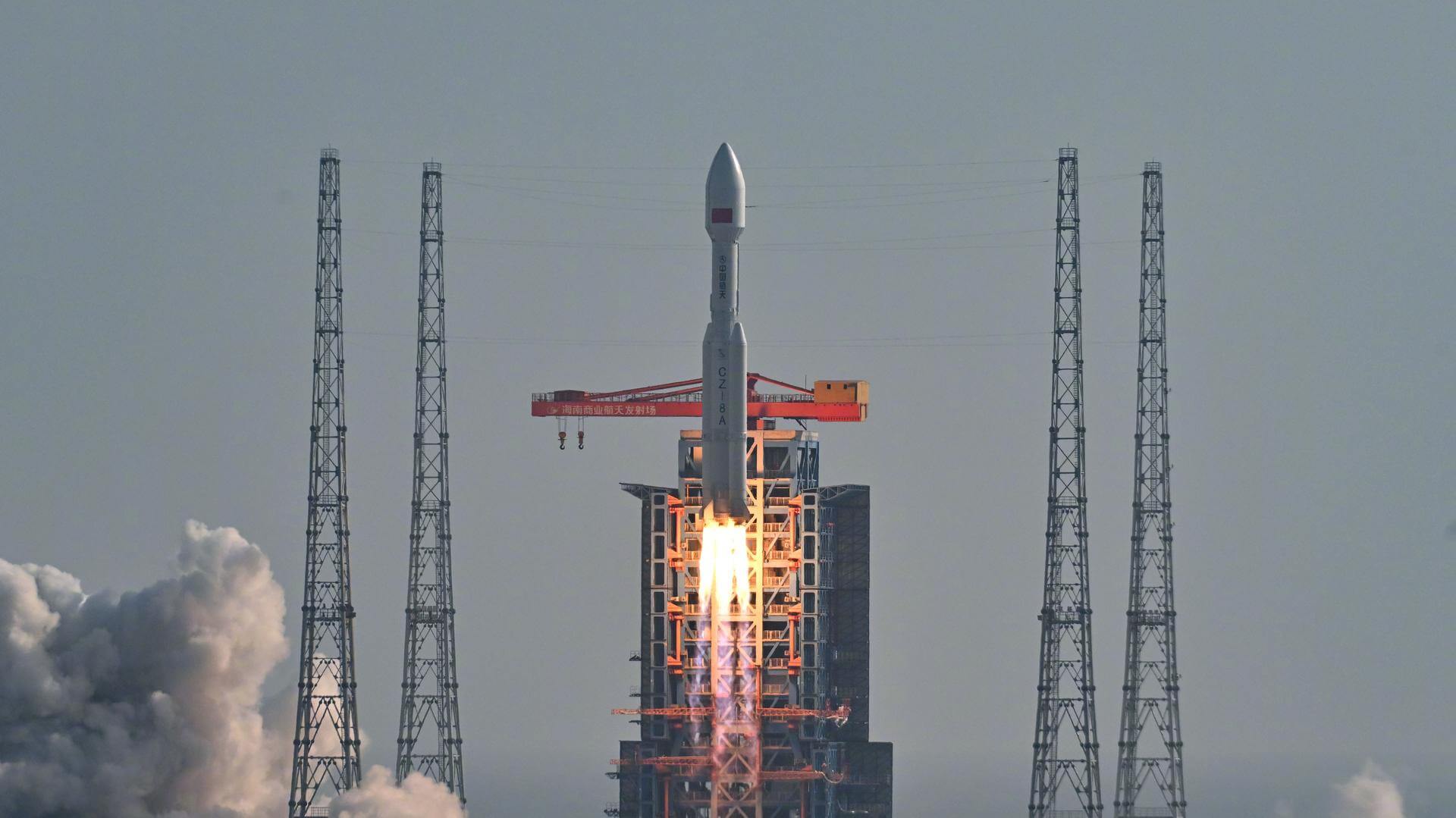
Launch Provider: China Aerospace Science and Technology Corporation – Government
Launch Date: January 13, 2026
Launch Time: 3:45 PM UTC
Vehicle: Long March 8A
Brief: Details TBD.
