
The Daily Broadcast: From Orbit to the Outskirts: Discovery, Departure, and Canadian Quantum Ambition
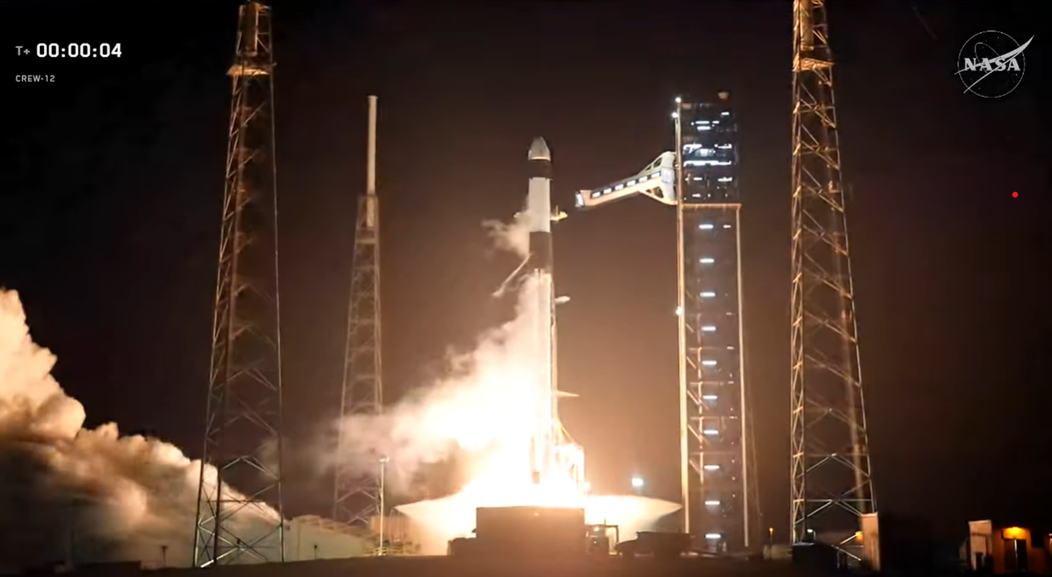
Crew-12 Safely in Orbit After Early Morning Launch
At 5:15 a.m. EST this morning, February 13, 2026, a SpaceX Falcon 9 rocket lifted off from Cape Canaveral Space Force Station in Florida, carrying four astronauts to the International Space Station (ISS) as part of NASA’s SpaceX Crew-12 mission. The crew—NASA astronauts Jessica Meir and Jack Hathaway, ESA astronaut Sophie Adenot, and Roscosmos cosmonaut Andrey Fedyaev—are now en route to the orbital laboratory, with autonomous docking to the Harmony module scheduled for approximately 3:15 p.m. EST on Saturday, February 14.
Once aboard, the newcomers will join the existing Expedition 74 crew, restoring the station to its full complement of seven members. Their mission includes a robust slate of scientific investigations, ranging from studies on pneumonia-causing bacteria to improve cardiovascular treatments on Earth, to developing on-demand intravenous fluid systems for future deep space missions. They’ll also test automated plant health monitoring and explore interactions between plants and nitrogen-fixing microbes—key research for sustainable food production beyond Earth.
The successful launch reinforces the maturity of NASA’s Commercial Crew Program, which continues to provide reliable, routine access to low Earth orbit through partnerships with private aerospace companies. Live coverage of docking and hatch opening will be available on NASA+ and the agency’s YouTube channel starting at 1:15 p.m. EST Saturday.
Star Dies in Silence—and Rewrites Black Hole Theory
While Crew-12 heads toward the stars, astronomers have just published findings on a star that appears to have vanished without the usual cosmic fanfare. In a study published February 12 in the journal Science, researchers detail how they serendipitously captured the collapse of a star into a black hole in the Andromeda Galaxy—2.5 million light-years away—without the expected supernova explosion.
Lead author Kishalay De of Columbia University and the Flatiron Institute explained that the discovery emerged from archival data from NASA’s NEOWISE mission, which surveys the sky in infrared. The team noticed a star that briefly brightened in infrared—a “dying gasp” as its outer layers shed—before fading entirely. This marks one of the clearest observations yet of a so-called “failed supernova,” where a massive star collapses directly into a black hole.
Surprisingly, the progenitor star was only about five times the mass of the Sun—roughly half the size typically expected to form a black hole. This suggests the range of stars capable of becoming black holes may be broader than previously thought. As University of Chicago astrophysicist Daniel Holz noted, the find is “unbelievably cool” and underscores how large-scale sky surveys can yield unexpected breakthroughs when we’re not even looking for them.

Canada’s Chief Science Advisor Urges Quantum Investment Amid Political Scrutiny
Back on Earth, Canada’s scientific leadership is making a bold case for strategic investment in quantum technologies. On February 12, SpaceQ reported that Dr. Mona Nemer, Canada’s Chief Science Advisor, urged the federal government to “double down on quantum” during a recent briefing to the Standing Committee on Science and Research. Speaking to MPs, she emphasized that quantum computing is not a future prospect but a present reality with transformative potential for space observation, drug discovery, and national sovereignty.
Dr. Nemer, who was reappointed to her fourth term in September 2024, highlighted Canada’s position as a top-five global leader in quantum research. She warned against treating science purely as an economic tool, stressing the need to protect it from political interference. “I fully believe that politics is never a good friend of science,” she stated, noting that her role is intentionally structured to ensure independence—she is appointed “on good behaviour,” meaning she cannot be dismissed without cause, much like the Auditor General.
Her remarks come amid questioning from Conservative MPs about the value and transparency of her office, including queries about her salary and performance metrics. In response, Dr. Nemer pointed to concrete outcomes, such as her office’s coordination of 10 federal departments on H5N1 avian flu preparedness—an effort that spanned health, agriculture, environment, and fisheries. As Canada navigates an increasingly competitive space and tech landscape, her call to bolster quantum capabilities may well shape the nation’s next strategic advantage.

Citations
- “NASA’s SpaceX Crew-12 Launches to International Space Station” – https://www.nasa.gov/news-release/nasas-spacex-crew-12-launches-to-international-space-station/
- “Chance glimpse of star collapse offers new insight into black hole formation” – https://www.spacedaily.com/reports/Chance_glimpse_of_star_collapse_offers_new_insight_into_black_hole_formation_999.html
- “Chief Science Advisor urges Canada to double down on quantum as Conservatives question advisor role” – https://spaceq.ca/chief-science-advisor-urges-canada-to-double-down-on-quantum-as-conservatives-question-advisor-role/
Upcoming Launches
Amazon Leo (LE-01)
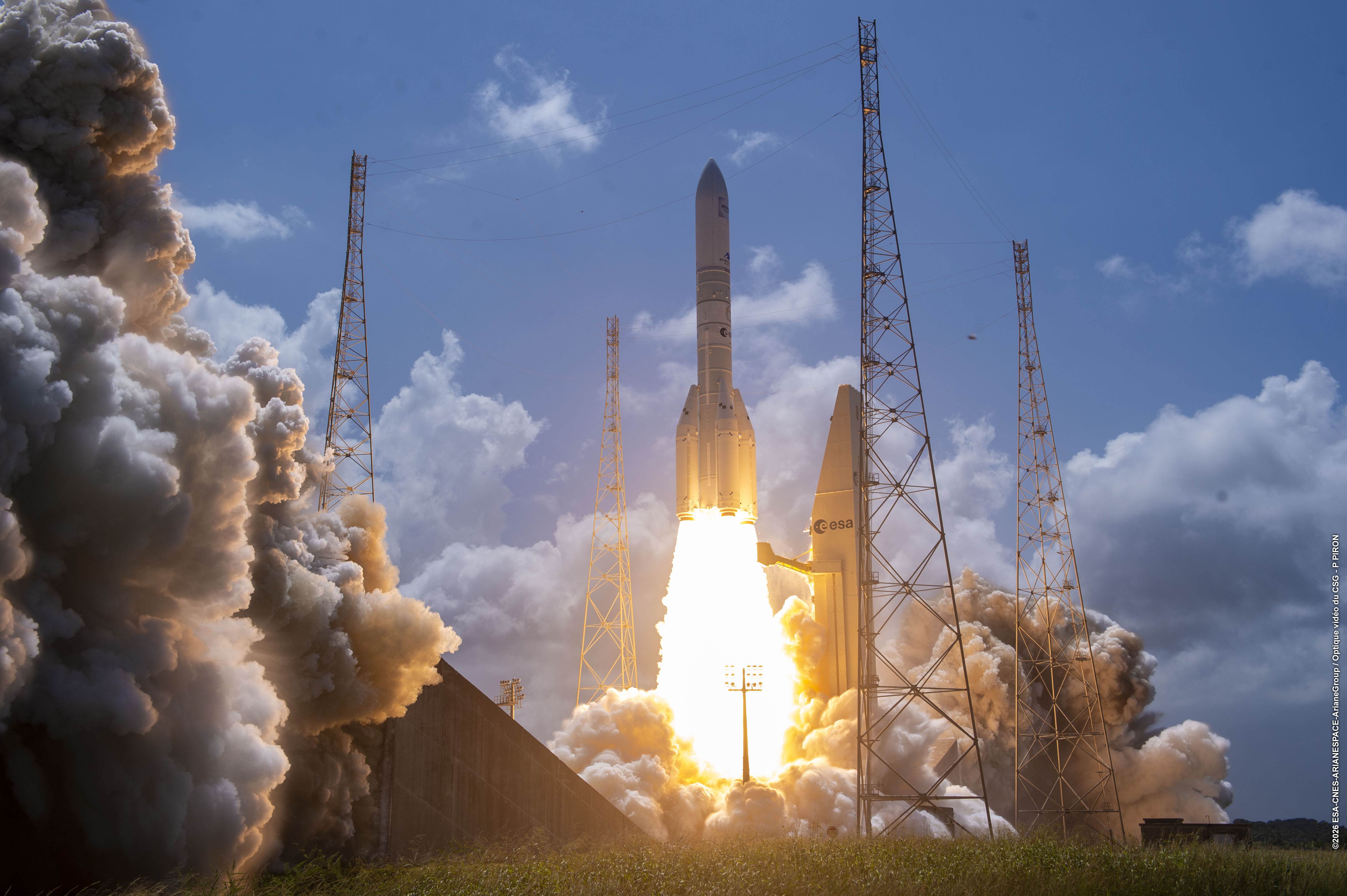
Launch Provider: Arianespace – Commercial
Launch Date: February 12, 2026
Launch Time: 4:45 PM UTC
Vehicle: Ariane 64
Brief: Amazon Leo, formerly known as Project Kuiper, is a mega constellation of satellites in Low Earth Orbit that will offer broadband internet access, this constellation will be managed by Kuiper Systems LLC, a subsidiary of Amazon. This constellation is planned to be composed of 3,276 satellites. The satellites are projected to be placed in 98 orbital planes in three orbital layers, one at 590 km, 610 km and 630 km altitude.
32 satellites will be carried on this launch.
Crew-12
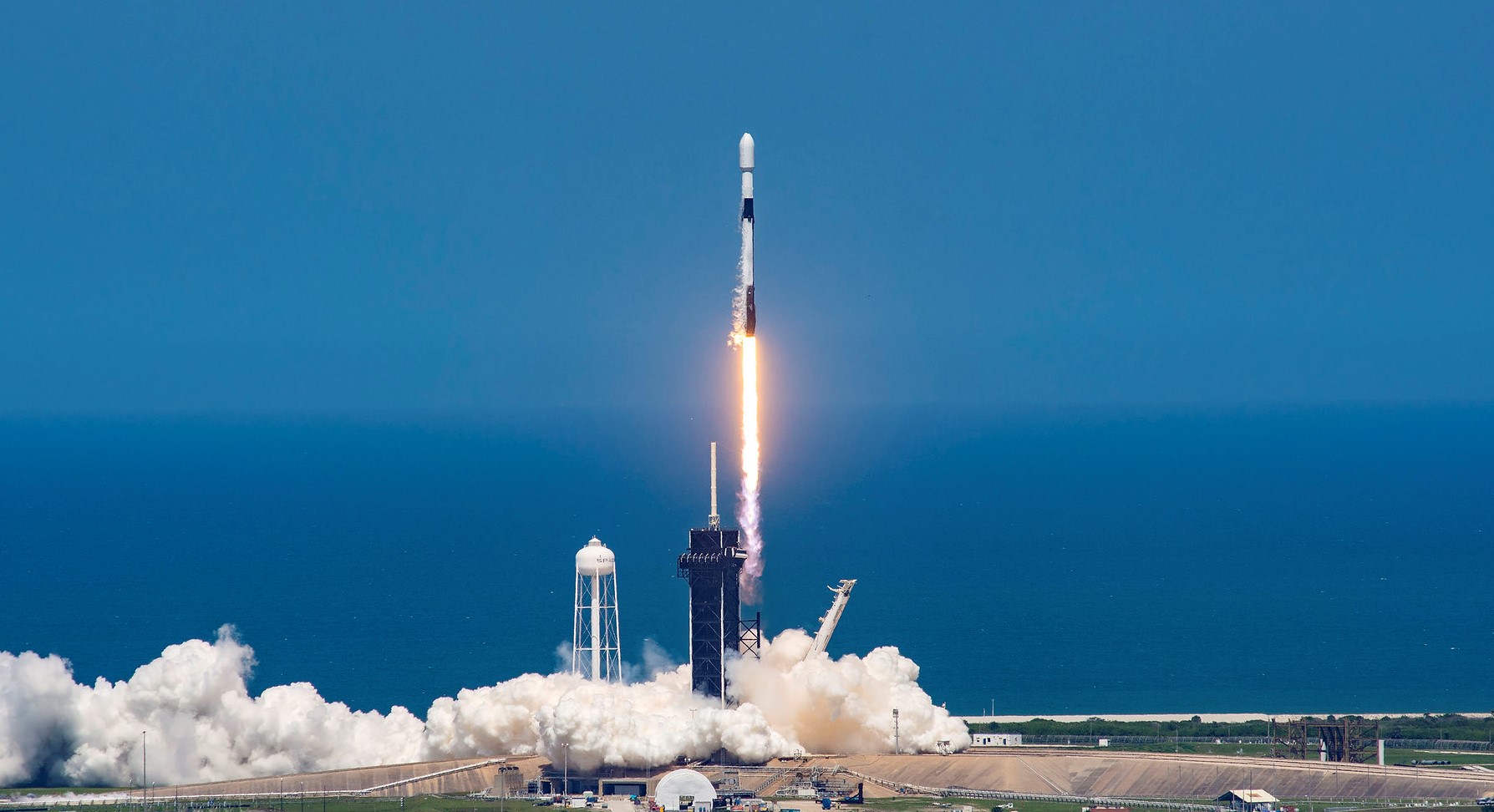
Launch Provider: SpaceX – Commercial
Launch Date: February 13, 2026
Launch Time: 10:15 AM UTC
Vehicle: Falcon 9
Brief: SpaceX Crew-12 is the twelfth crewed operational flight of a Crew Dragon spacecraft to the International Space Station as part of NASA’s Commercial Crew Program.
Starlink Group 17-13
Launch Provider: SpaceX – Commercial
Launch Date: February 14, 2026
Launch Time: 10:00 PM UTC
Vehicle: Falcon 9
Brief: A batch of 25 satellites for the Starlink mega-constellation – SpaceX’s project for space-based Internet communication system.
Starlink Group 6-103
Launch Provider: SpaceX – Commercial
Launch Date: February 16, 2026
Launch Time: 5:00 AM UTC
Vehicle: Falcon 9
Brief: A batch of 29 satellites for the Starlink mega-constellation – SpaceX’s project for space-based Internet communication system.
Starlink Group 10-36
Launch Provider: SpaceX – Commercial
Launch Date: February 17, 2026
Launch Time: 10:00 PM UTC
Vehicle: Falcon 9
Brief: A batch of 29 satellites for the Starlink mega-constellation – SpaceX’s project for space-based Internet communication system.
First Starlink launch to feature a Falcon 9 booster landing within The Bahamas waters operationally, after the trajectory was tested during launch of Starlink Group 10-12 in February 2025.

Leave a Reply