
The Daily Broadcast: From Lunar Rovers to Rocket Contracts: A Quietly Productive Week in Space
Canada Tests Autonomous Lunar Logistics for Future Moon Missions
While much of the country unwrapped gifts and sipped eggnog this week, Canadian space engineers were busy simulating moon logistics—because why not celebrate the holidays with a little off-world prep? MDA Space recently conducted an autonomous lunar logistics demonstration at the Canadian Space Agency’s (CSA) analog site, showcasing key capabilities for the proposed Lunar Utility Rover. This rover is part of a broader CSA initiative to support both crewed and uncrewed missions on the Moon, with tasks ranging from transporting equipment to assisting with habitat construction and scientific research.
The demonstration featured continuous autonomous driving, coordination between two prototype rovers, precise alignment with a simulated lunar habitat, and manipulation of external umbilicals using a robotic arm derived from the famed Canadarm technology. MDA is one of three Canadian firms—alongside Canadensys Aerospace and Mission Control—selected to develop early-phase studies for the rover. Though still in the prototype stage, these tests represent tangible progress toward Canada’s goal of contributing meaningfully to sustained lunar exploration. With Artemis missions ramping up, it’s clear Canada isn’t just watching from the sidelines.

Avio Secures €100M+ Contract to Launch Taiwanese Earth Observation Satellites
Italian launch provider Avio has inked a significant deal with the Taiwan Space Agency (TASA) to loft four Earth observation satellites: FORMOSAT-8C, 8D, 9A, and 9B. The announcement came on December 19, 2025, when Avio revealed it had signed two launch contracts with undisclosed customers totaling over €100 million. Though the company initially kept details under wraps, further reporting confirmed TASA as one of the clients.
These satellites will enhance Taiwan’s capabilities in environmental monitoring, disaster response, and urban planning. Avio’s Vega family of rockets—known for their reliability in launching small- to medium-sized payloads into precise orbits—will likely carry the missions, though the exact vehicle and launch dates haven’t been disclosed. The deal underscores the growing international demand for dedicated smallsat launch services, especially from nations seeking sovereign Earth observation capabilities. As more countries invest in space-based infrastructure, companies like Avio are well-positioned to fill a niche that larger launch providers often overlook. It’s a reminder that while headlines focus on Moon shots and Mars dreams, the business of watching our own planet remains both vital and lucrative.
Innospace Eyes 2026 Comeback After Hanbit-Nano Launch Failure
South Korea’s private space ambitions took a hit—but not a knockout—this month when Innospace’s inaugural Hanbit-Nano rocket failed shortly after liftoff on December 22, 2025. Undeterred, the company has already announced plans for a second launch attempt in the first half of 2026. The Hanbit-Nano is a small-lift launch vehicle designed to carry payloads of up to 150 kg to low Earth orbit, targeting the booming market for dedicated smallsat launches.
Though details of the failure remain under investigation, Innospace’s swift commitment to a follow-up flight reflects the resilience typical of today’s agile space startups. Unlike government programs that may face years of delays after a mishap, private firms like Innospace operate on tighter timelines and leaner budgets—making quick recovery essential. South Korea has been steadily building its domestic space industry, and private players are increasingly central to that effort. If Innospace succeeds in its 2026 attempt, it would join a growing roster of non-traditional launch providers offering competitive alternatives to established players. For now, the company’s motto seems to be: if at first you don’t succeed, relaunch next year.

Citations
- “An autonomous lunar logistics demo for Canada’s Lunar Utility Rover” – https://spaceq.ca/an-autonomous-lunar-logistics-demo-for-canadas-lunar-utility-rover/
- “Avio to Launch Four Earth Observation Satellites for Taiwan” – https://europeanspaceflight.com/avio-to-launch-four-earth-observation-satellites-for-taiwan/
- “Innospace plans second launch in 2026 after failure of first Hanbit-Nano rocket” – https://spacenews.com/innospace-plans-second-launch-in-2026-after-failure-of-first-hanbit-nano-rocket/
Upcoming Launches
Obzor-R No.1
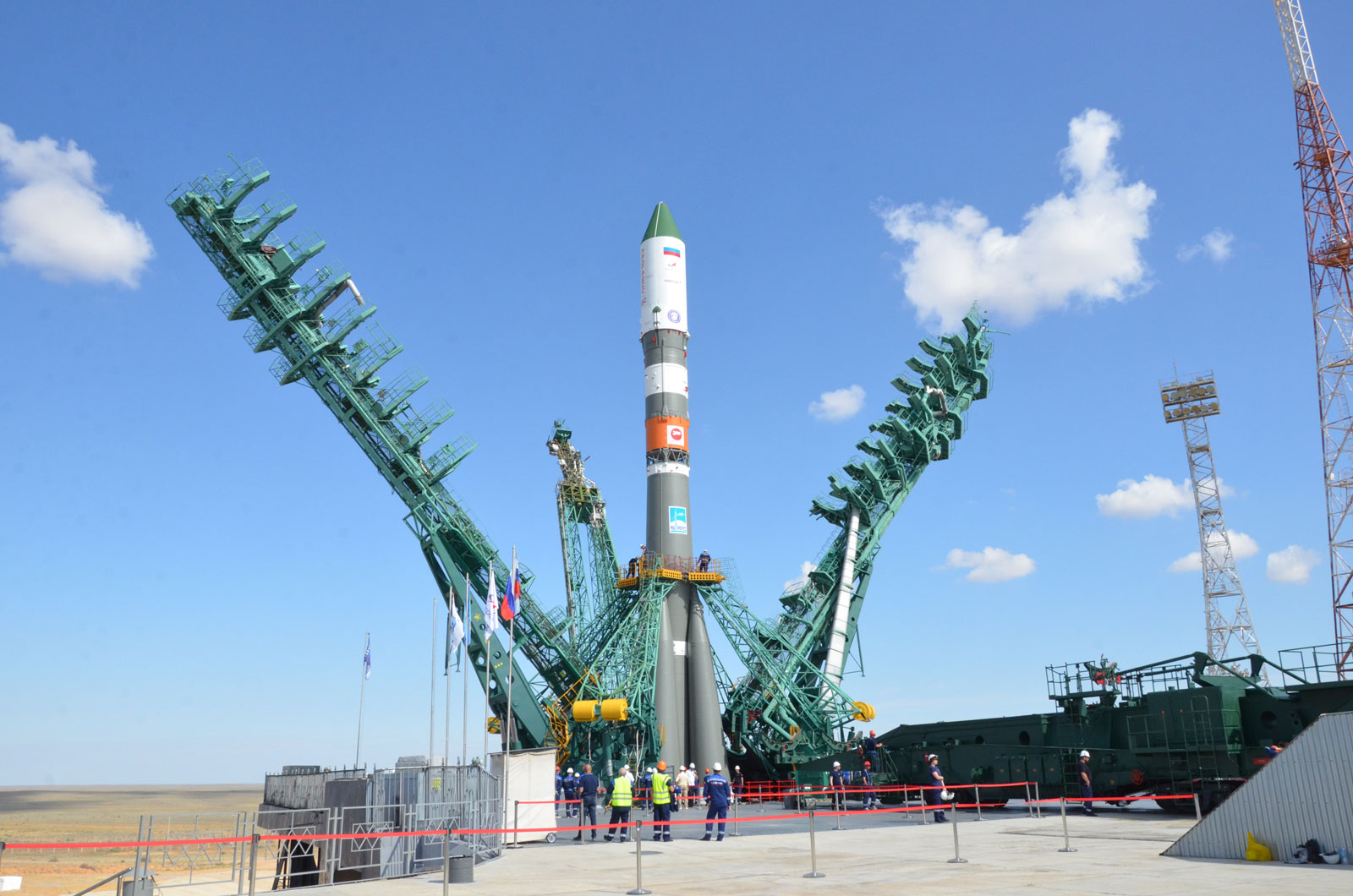
Launch Provider: Russian Federal Space Agency (ROSCOSMOS) – Government
Launch Date: December 25, 2025
Launch Time: 2:11 PM UTC
Vehicle: Soyuz 2.1a
Brief: The Russian Obzor-R satellite is a planned X-band radar earth observation satellite designed by TsSKB-Progress.
In 2012, the development of the Arkon-2M radar satellite was stopped and instead the development of the Obzor-R was initiated.
The satellite features the BRLK X-band Synthetic Aperture Radar as the imaging instrument with a ground resolution of 500 m.
Unknown Payload
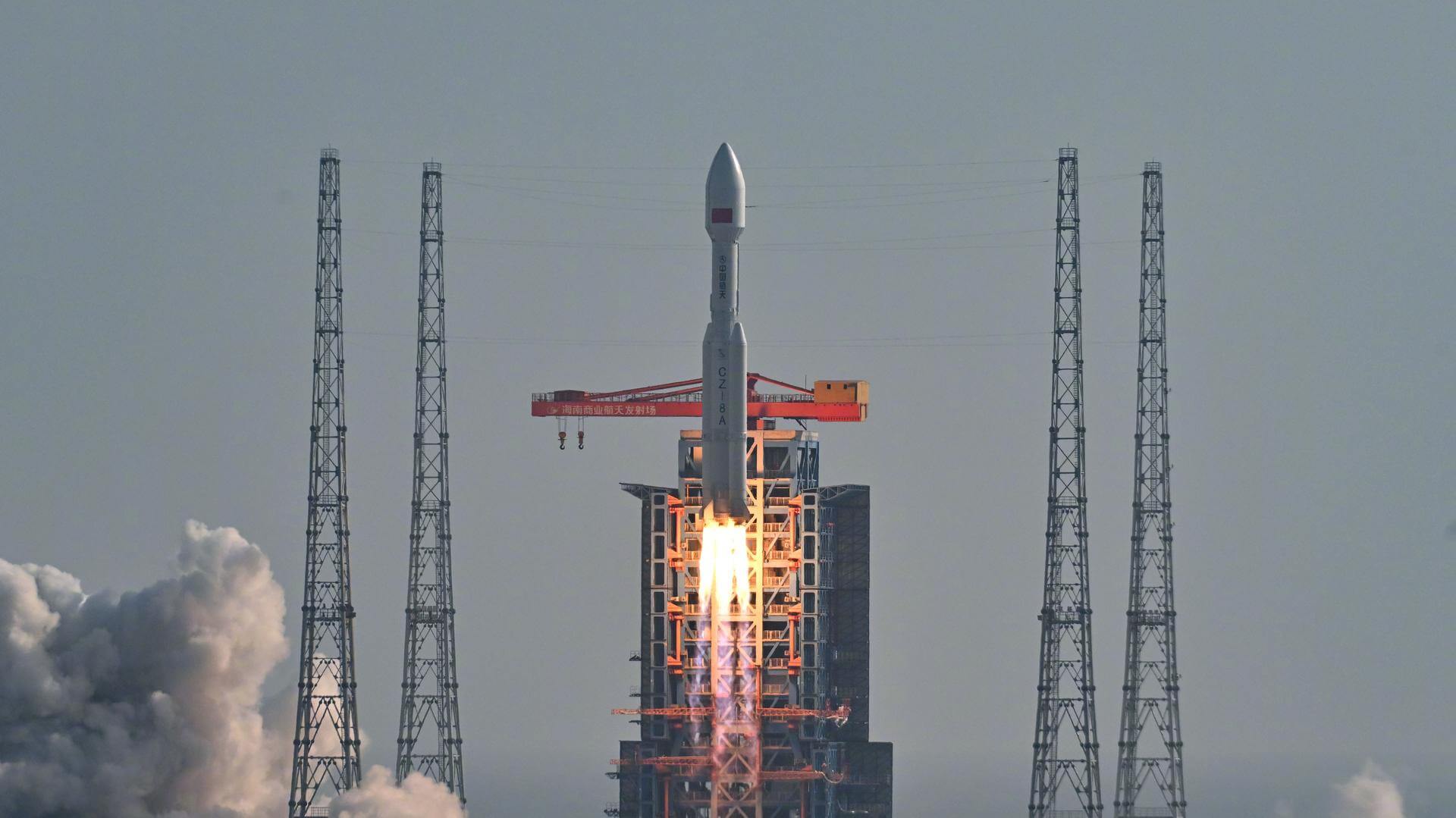
Launch Provider: China Aerospace Science and Technology Corporation – Government
Launch Date: December 25, 2025
Launch Time: 11:25 PM UTC
Vehicle: Long March 8A
Brief: Details TBD.
Unknown Payload
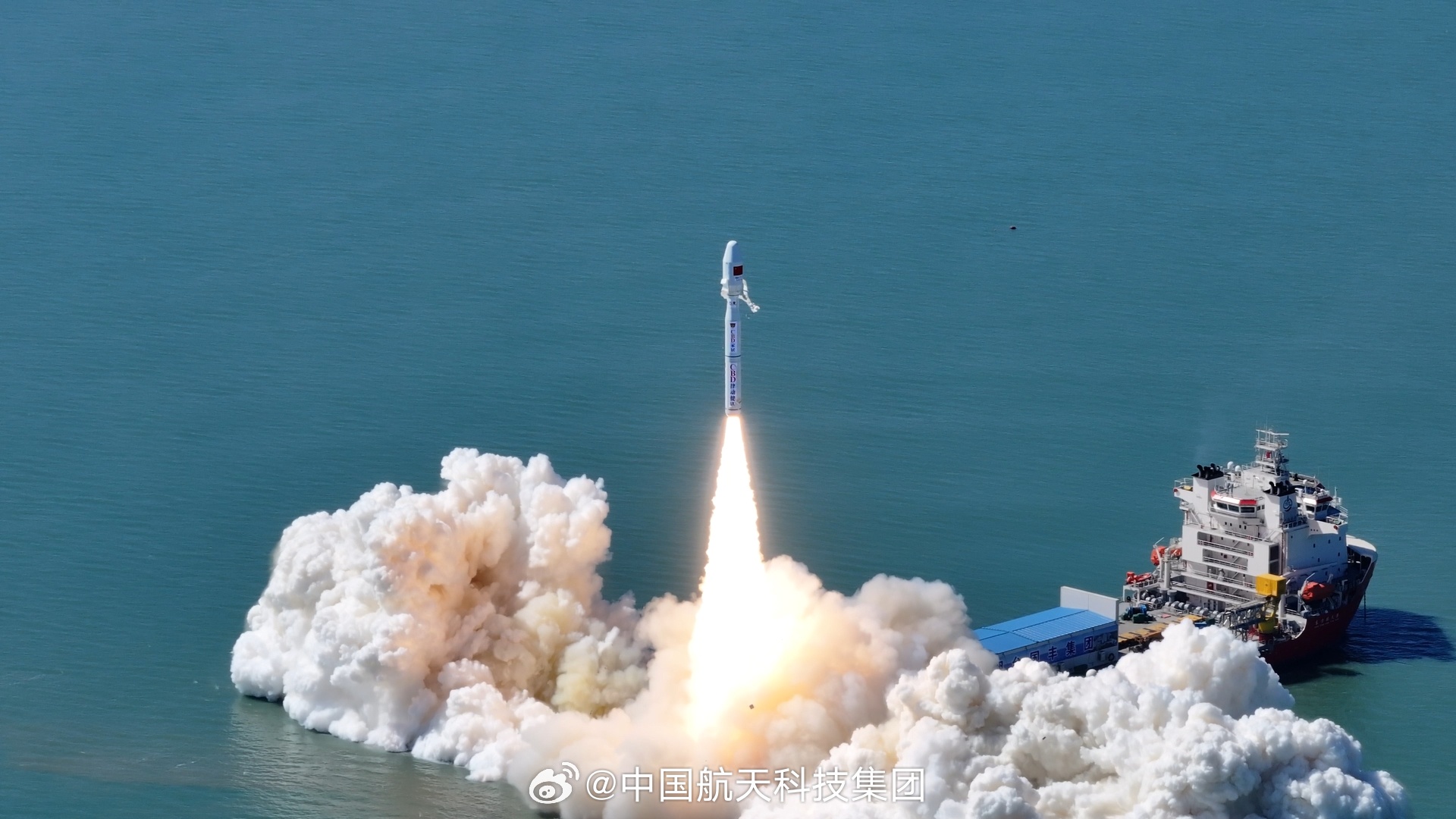
Launch Provider: China Rocket Co. Ltd. – Commercial
Launch Date: December 26, 2025
Launch Time: 6:30 AM UTC
Vehicle: Smart Dragon 3
Brief: Possibly an Earth observation satellite for the Pakistan government’s SUPARCO, details TBD.
Fengyun-4C
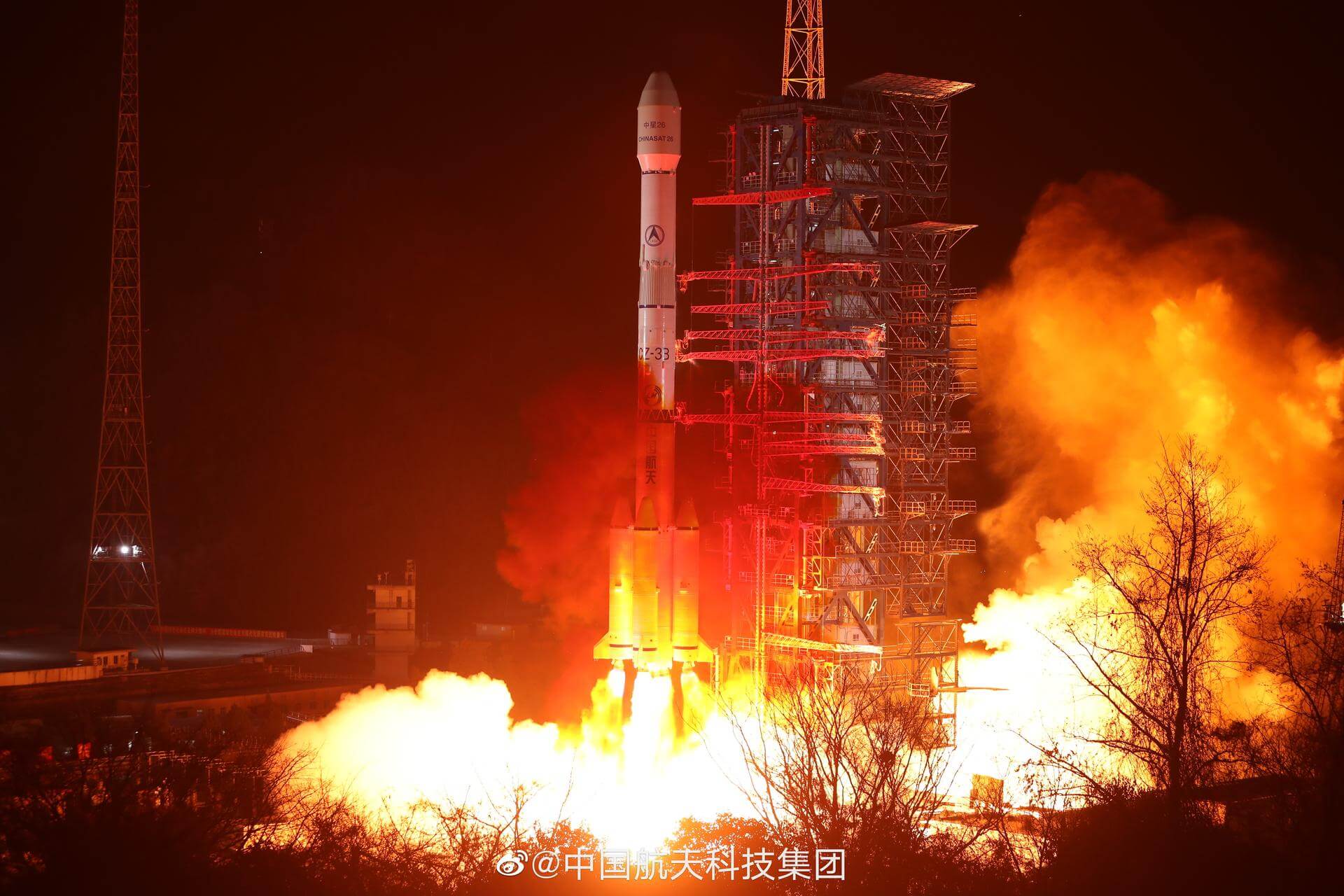
Launch Provider: China Aerospace Science and Technology Corporation – Government
Launch Date: December 26, 2025
Launch Time: 4:05 PM UTC
Vehicle: Long March 3B/E
Brief: China’s geostationary meteorological satellite program FY-4 (Feng Yun 4) is the second generation of chinese geostationary meteorological satellites.
CSG-3

Launch Provider: SpaceX – Commercial
Launch Date: December 28, 2025
Launch Time: 2:08 AM UTC
Vehicle: Falcon 9
Brief: CSG-3 is an Earth observation satellite for the Italian Space Agency, part of a reconnaissance constellation using synthetic aperture radars operating in the X-band.
