
The Daily Broadcast: From Lunar Navigation to Canadian Constellations: Aerospace Gears Up for Big Leaps

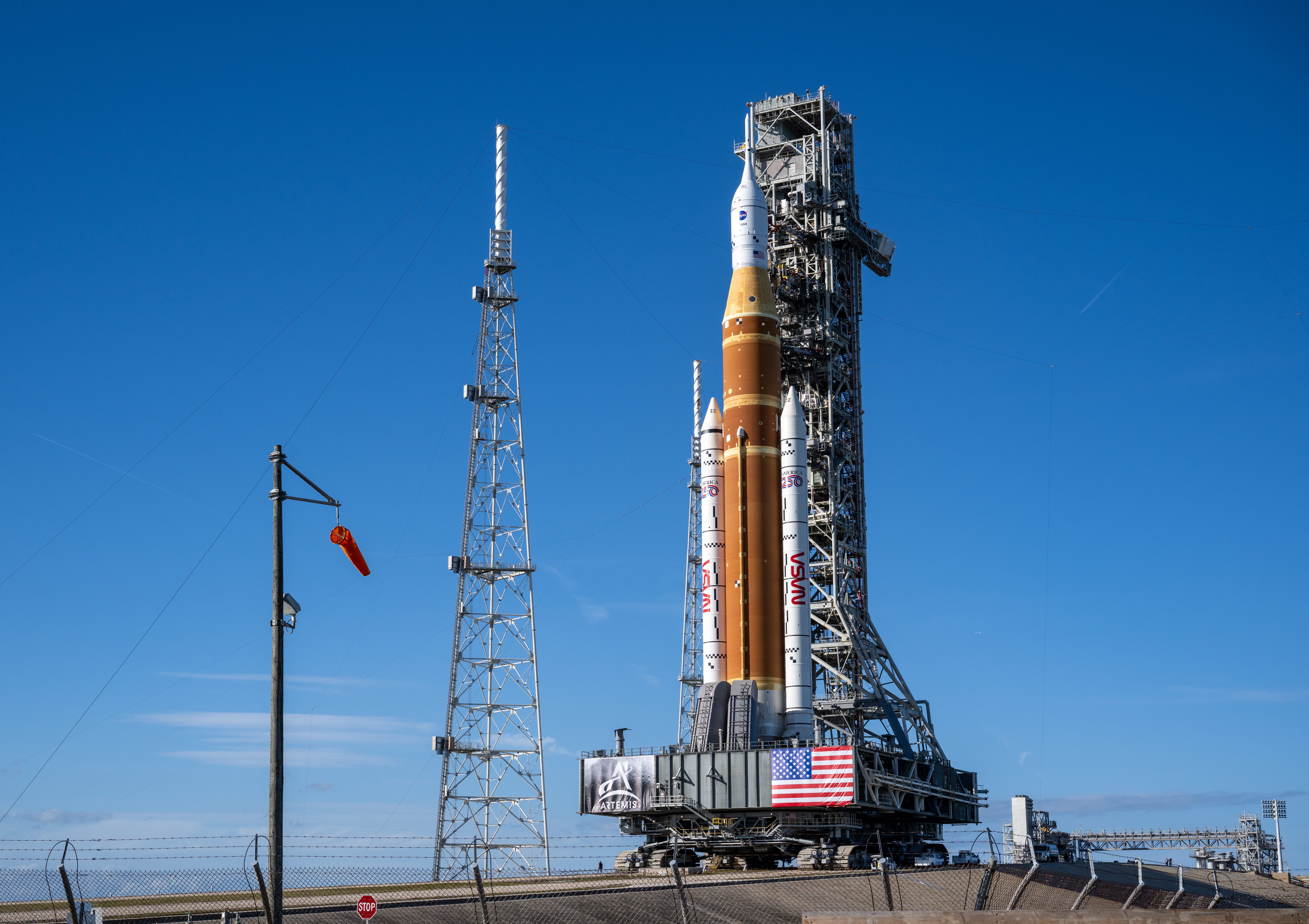
Artemis II Crew Enters Quarantine as Wet Dress Rehearsal Looms
With the Artemis II launch window set for February 6, 2026, NASA’s crew—including Canadian Space Agency astronaut Jeremy Hansen—has officially entered their 14-day health stabilization period, commonly known as quarantine. As of January 23, the four astronauts began limiting contact with the public and observing strict protocols to avoid illness before liftoff. According to the CSA, this precautionary measure helps prevent the transmission of infectious diseases that typically manifest within 10 to 14 days. The crew is currently training in Houston but will relocate to the Neil A. Armstrong Operations and Checkout Building at Kennedy Space Center around January 31 to February 2, continuing quarantine closer to the launch pad.
Meanwhile, a crucial milestone approaches: the Wet Dress Rehearsal scheduled for February 2. During this test, the Space Launch System (SLS) will be loaded with over 700,000 gallons of cryogenic propellants, simulating a full countdown without ignition. A successful rehearsal would mark significant progress toward the mission’s goal of sending humans around the Moon for the first time since Apollo 17. Hansen, who will be the first Canadian to travel beyond low Earth orbit, has already begun familiarizing himself with Orion’s manual flight controls—a vital backup capability should automation systems falter during deep space operations.
Canadian Space Firms Partner with South Korea on Sovereign LEO Constellation
In a significant development for Canada’s space industry, MDA Space and Telesat have each signed Memoranda of Understanding (MOUs) with South Korea’s Hanwha Systems. Announced on January 26, 2026, these agreements aim to support the Republic of Korea’s K-LEO (Korean Low Earth Orbit) national defence constellation, a programme backed by 320 billion won (approximately CAD $304 million) in government funding. The collaboration was facilitated by a November 2025 Letter of Intent between the Canadian Commercial Corporation and Korea’s Defense Acquisition Program Administration.
MDA Space will explore opportunities around its AURORA software-defined digital satellites, which offer secure, dual-use capabilities for national defence networks. Telesat’s role focuses on developing defence user terminals compatible with both the K-LEO and Telesat Lightspeed constellations. Notably, Hanwha also intends to integrate Telesat Lightspeed services into its bid for Canada’s Canadian Patrol Submarine Project, promising long-term industrial and economic benefits. “This partnership enhances our ability to deliver secure, sovereign LEO communications for defence and maritime operations,” said Hanwha CEO Son Jae-il. With Canadian expertise in satellite technology and secure communications, these MOUs underscore Canada’s growing role in allied space defence infrastructure.

Lunar Soil Study Challenges Long-Held Theory on Earth’s Ocean Origins
A new study analyzing lunar soil samples is casting doubt on a long-standing hypothesis about how Earth acquired its oceans. Published in the Proceedings of the National Academy of Sciences, the research suggests that water-rich meteorites arriving late in Earth’s formation could have contributed only a small fraction of the planet’s water. Scientists examined the Moon’s impact history as a proxy for Earth’s, since both bodies experienced similar bombardment during the early solar system. The Moon, lacking an atmosphere and geological activity, preserves a clearer record of ancient impacts.
If large quantities of water had been delivered by late-arriving meteorites, the Moon would show corresponding evidence of volatile-rich impacts. However, the isotopic composition of lunar soil indicates such deliveries were minimal. This implies that Earth’s water likely originated earlier—possibly during planetary accretion or from icy planetesimals—rather than via a late “bombardment” phase. While the findings don’t rule out meteoritic contributions entirely, they narrow the window for when Earth’s oceans could have formed. For space scientists, this refines models of planetary evolution and informs the search for water on exoplanets. As we prepare to return humans to the Moon with Artemis, understanding our celestial neighbour’s geologic archive may hold keys to our own planet’s watery beginnings.

Citations
- “A good sign: Artemis 2 astronauts now in quarantine” – https://spaceq.ca/a-good-sign-artemis-2-astronauts-now-in-quarantine/
- “South Korea’s Hanwha signs MOU’s with MDA Space and Telesat” – https://spaceq.ca/south-koreas-hanwha-signs-mous-with-mda-space-and-telesat/
- “Lunar soil study limits late meteorite role in supplying Earth oceans” – https://www.terradaily.com/reports/Lunar_soil_study_limits_late_meteorite_role_in_supplying_Earth_oceans_999.html
Upcoming Launches
Bridging The Swarm (NeonSat-1A)
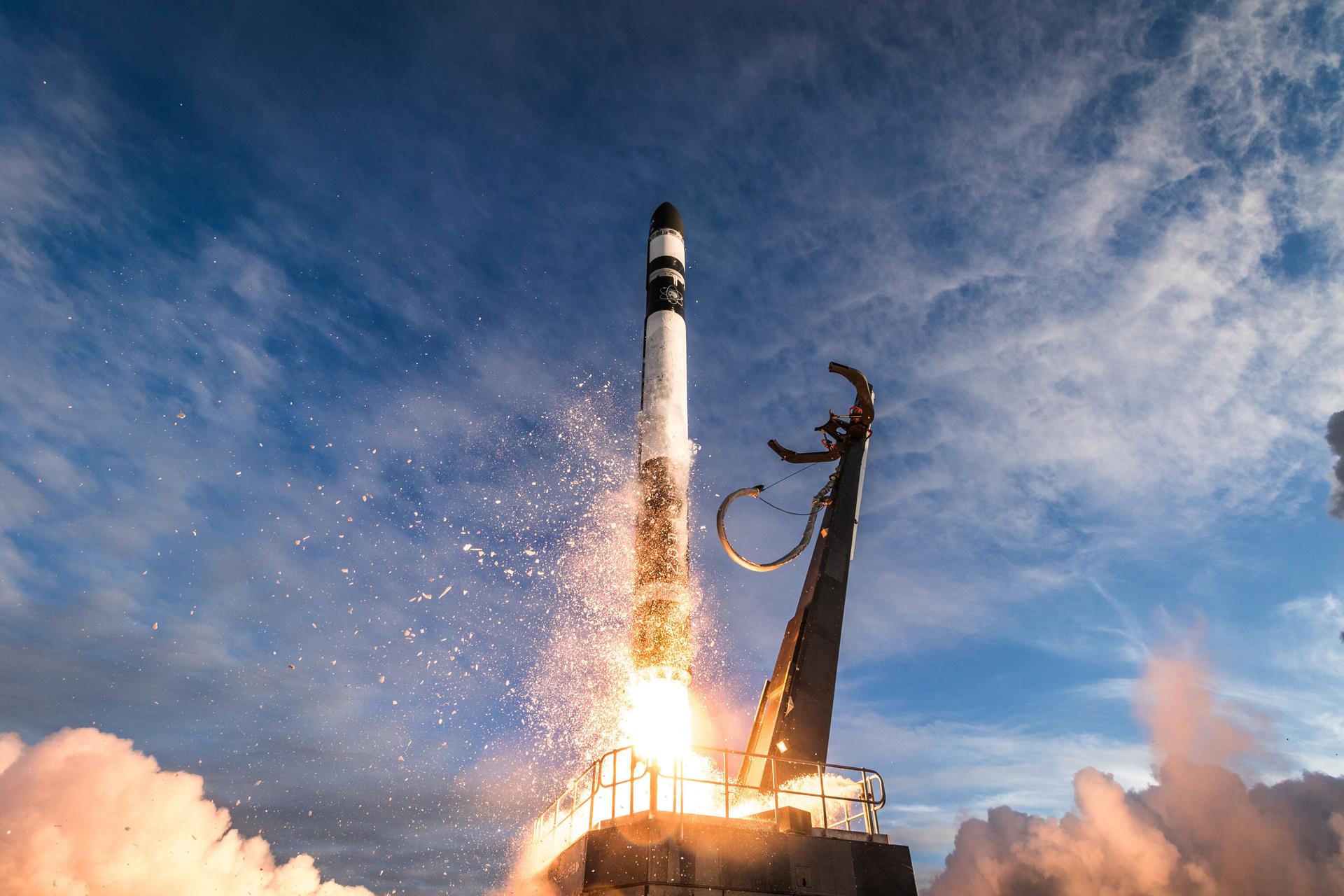
Launch Provider: Rocket Lab – Commercial
Launch Date: January 28, 2026
Launch Time: 12:55 AM UTC
Vehicle: Electron
Brief: The NeonSat-1A, carrying a high-resolution optical camera, is designed to test the constellation capabilities of the South Korean government’s Earth observation micro-satellite constellation NeonSat (New-space Earth Observation Satellite), in particular technology improvements identified from operations of NeonSat-1 after its launch in April 2024. These technologies will in turn be incorporated into the next 10 NeonSat under construction, as well as providing more site re-visiting capabilities along with NeonSat-1.
The NeonSat constellation is the first satellite system developed by the government using a mass-production approach for precise monitoring of the Korean Peninsula, lead by the Satellite Technology Research Center (SaTReC) at the Korea Advanced Institute of Science and Technology (KAIST), Korea’s leading university dedicated to science and technology. Designed to capture near-real time natural disaster monitoring for the Korean peninsula, KAIST’s NEONSAT constellation is a collaboration across multiple Korean academic, industry, and research institutions, including SaTReC, which is leading the program’s system design and engineering.
The NEONSAT program is funded by the Korean government’s Ministry of Science and ICT (MSIT).
GPS III SV09
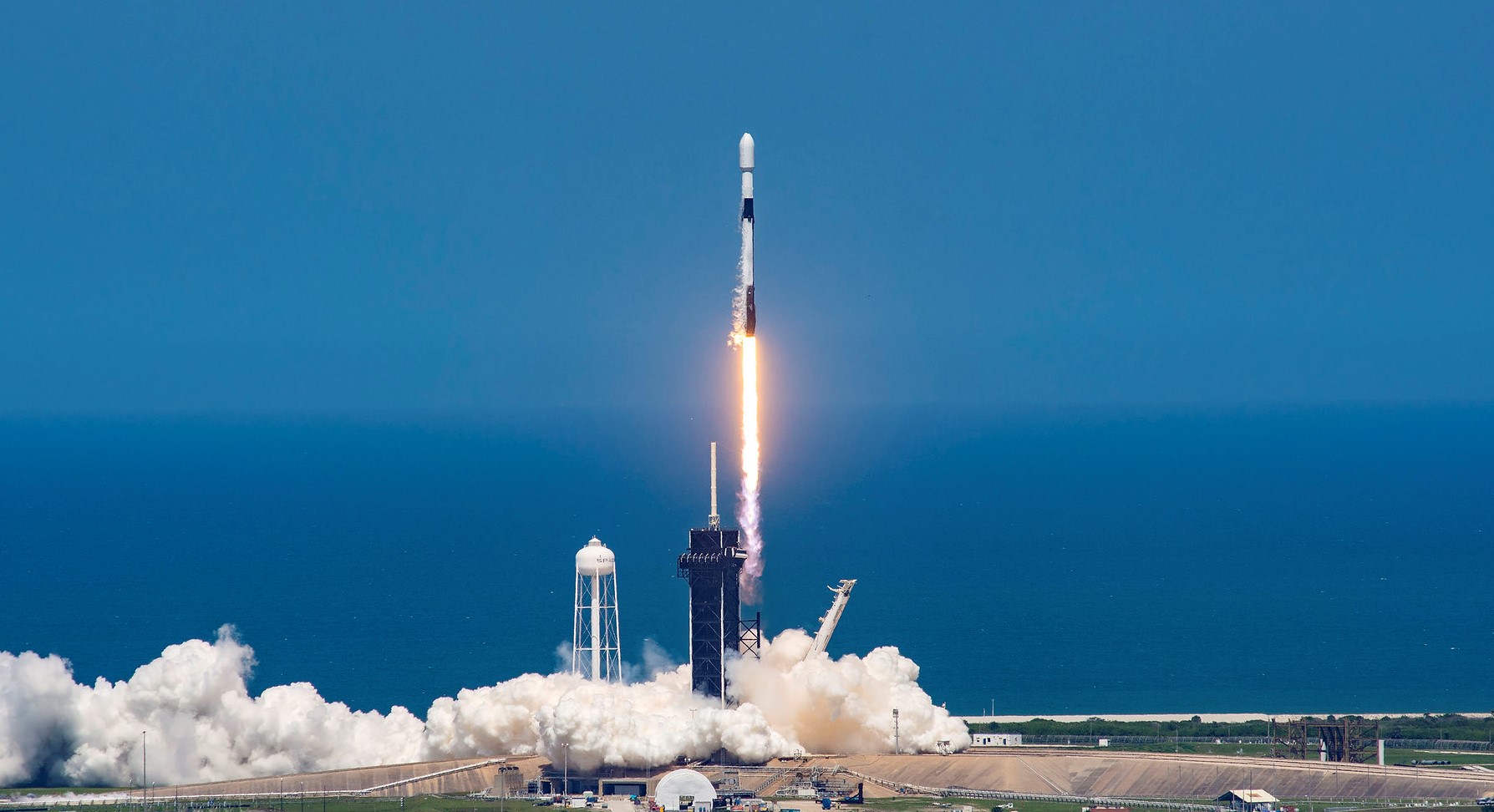
Launch Provider: SpaceX – Commercial
Launch Date: January 28, 2026
Launch Time: 4:38 AM UTC
Vehicle: Falcon 9
Brief: Ninth of ten GPS III missions.
Starlink Group 17-19
Launch Provider: SpaceX – Commercial
Launch Date: January 29, 2026
Launch Time: 3:17 PM UTC
Vehicle: Falcon 9
Brief: A batch of 25 satellites for the Starlink mega-constellation – SpaceX’s project for space-based Internet communication system.
Starlink Group 6-101
Launch Provider: SpaceX – Commercial
Launch Date: January 30, 2026
Launch Time: 4:00 AM UTC
Vehicle: Falcon 9
Brief: A batch of 29 satellites for the Starlink mega-constellation – SpaceX’s project for space-based Internet communication system.
Unknown Payload
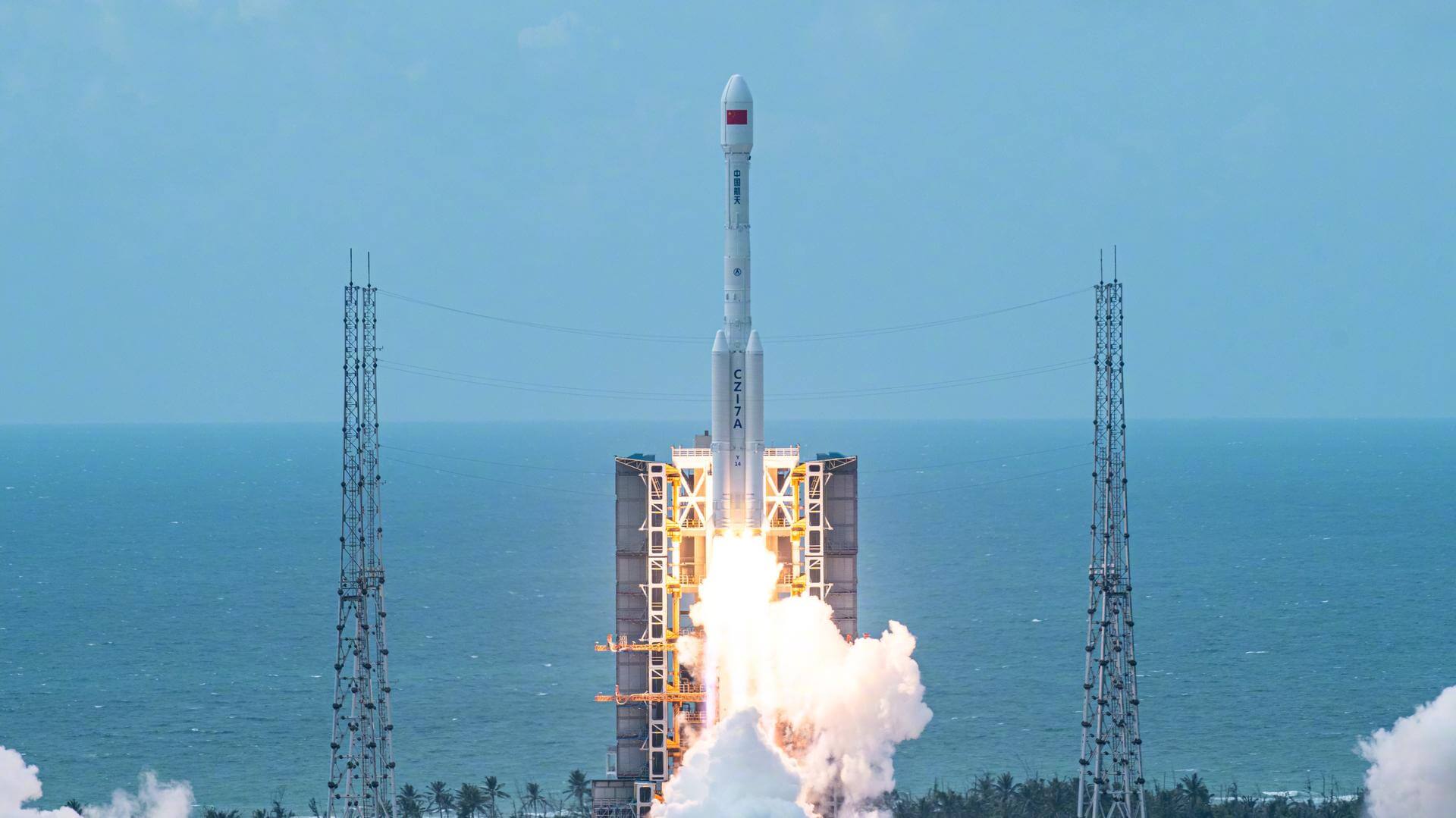
Launch Provider: China Aerospace Science and Technology Corporation – Government
Launch Date: January 31, 2026
Launch Time: 12:00 AM UTC
Vehicle: Long March 7A
Brief: Details TBD.
