
The Daily Broadcast: From Lunar Hurdles to Cosmic Mysteries: A Day in Aerospace

Artemis II Delayed Again as NASA Tackles Hydrogen Leaks and Cold Weather Challenges
NASA’s Artemis II mission—Canada’s first crewed lunar mission, featuring Canadian Space Agency astronaut Jeremy Hansen—has been pushed to at least March 2026 following a partially successful wet dress rehearsal on February 3. The 49-hour test at Kennedy Space Center aimed to fuel the Space Launch System (SLS) rocket with liquid oxygen and hydrogen, but encountered multiple setbacks. Engineers spent hours troubleshooting a liquid hydrogen leak at the tail service mast umbilical, a complex interface that has plagued previous Artemis tests. Cold temperatures in Florida delayed tanking operations and affected ground equipment, while a spike in hydrogen leakage triggered an automatic stop with just five minutes left in the countdown.
Additional issues included a pressurization valve on the Orion crew module requiring retorquing and longer-than-expected closeout operations. Despite these hurdles, NASA successfully loaded all propellant tanks and validated new contingency procedures developed after Artemis I. Officials confirmed the rocket won’t roll back to the Vehicle Assembly Building immediately, but another wet dress rehearsal will be needed before launch. The earliest possible launch date is now March 6 at 8:29 p.m. EST. The crew—including Hansen, Reid Wiseman, Victor Glover, and Christina Koch—have left quarantine temporarily but will re-enter it two weeks before the new launch date.
ESA’s Cluster Satellites Set for Rare Twin Reentry Observation Campaign
The European Space Agency (ESA) is preparing a rare scientific opportunity as it guides its last two Cluster satellites toward a coordinated atmospheric reentry. Originally launched in 2000 to study Earth’s magnetosphere, the Cluster quartet has far outlived its planned mission. With only two spacecraft remaining operational, ESA has adjusted their orbits to enable simultaneous observation of their final descent—a first for twin satellite reentries.
During reentry, most satellite components burn up, but engineers lack precise data on which parts survive and how the breakup occurs. To fill this knowledge gap, ESA will deploy aircraft equipped with specialized sensors to monitor both satellites as they plunge through the atmosphere. This data will improve safety models for future missions and help mitigate space debris risks. The campaign also supports international efforts to better predict reentry trajectories, a growing concern as low Earth orbit becomes increasingly congested. While Canada isn’t directly involved in this ESA mission, Canadian researchers often collaborate on space weather and debris-tracking initiatives through international partnerships, making such data highly relevant to our national space situational awareness programmes.

Exploding Primordial Black Holes May Explain Impossible Neutrino Detection
In a cosmic detective story, physicists are exploring whether exploding primordial black holes could solve the mystery of an ultra-high-energy neutrino detected in 2023. This particle carried 100,000 times more energy than any produced by the Large Hadron Collider—so much that known astrophysical sources shouldn’t be capable of generating it. Now, a new theoretical model suggests that the final explosive moments of tiny black holes formed in the early universe—so-called primordial black holes—might release bursts of energy capable of accelerating neutrinos to such extreme levels.
If confirmed, this could link two of cosmology’s biggest puzzles: the origin of dark matter and the source of ultra-high-energy cosmic particles. Primordial black holes themselves are a candidate for dark matter, and their evaporation via Hawking radiation might produce the observed neutrino signature. While still speculative, the model offers a testable framework for upcoming neutrino observatories like IceCube-Gen2. Though this research is led by international teams, Canadian institutions—including the University of Alberta and Perimeter Institute—have long contributed to neutrino physics and dark matter theory, underscoring Canada’s quiet but consistent role in fundamental space science.

Citations
- “This is what NASA plans next after delaying Artemis 2 to March, at the least” – https://spaceq.ca/this-is-what-nasa-plans-next-after-delaying-artemis-2-to-march-at-the-least/
- “Artemis 2 launch pushed to March launch window” – https://spaceq.ca/artemis-2-launch-pushed-to-march-launch-window/
- “ESA adjusts Cluster orbits for rare twin reentry campaign” – https://www.spacedaily.com/reports/ESA_adjusts_Cluster_orbits_for_rare_twin_reentry_campaign_999.html
- “Exploding primordial black hole model may link extreme neutrino and dark matter” – https://www.spacedaily.com/reports/Exploding_primordial_black_hole_model_may_link_extreme_neutrino_and_dark_matter_999.html
Upcoming Launches
Chinese Reusable Space Vehicle (???)
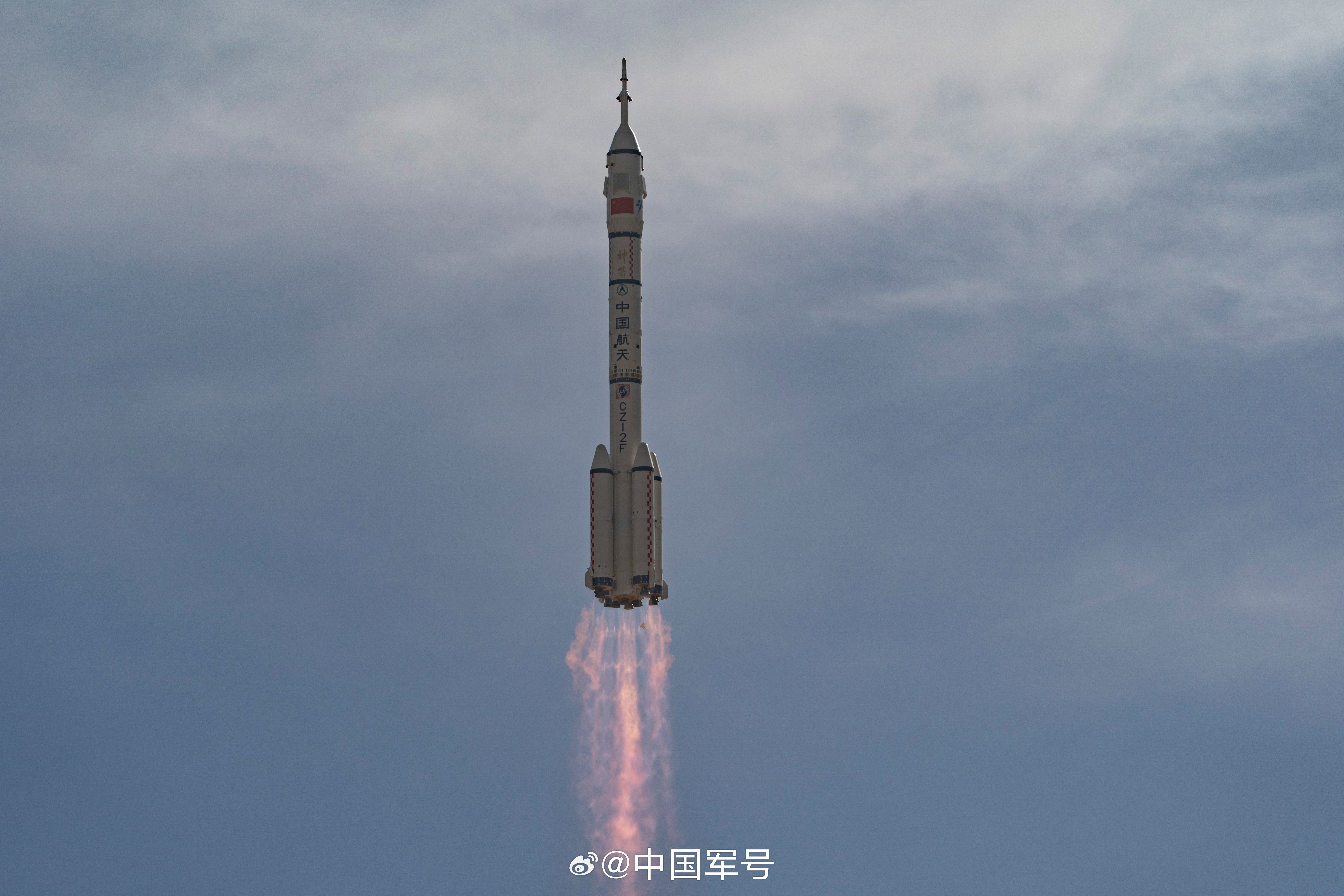
Launch Provider: China Aerospace Science and Technology Corporation – Government
Launch Date: February 7, 2026
Launch Time: 3:55 AM UTC
Vehicle: Long March 2F/G
Brief: Probable 4th flight of the Chinese spaceplane capable of returning to Earth.
Starlink Group 17-33

Launch Provider: SpaceX – Commercial
Launch Date: February 7, 2026
Launch Time: 5:05 PM UTC
Vehicle: Falcon 9
Brief: A batch of 25 satellites for the Starlink mega-constellation – SpaceX’s project for space-based Internet communication system.
Starlink Group 17-34
Launch Provider: SpaceX – Commercial
Launch Date: February 10, 2026
Launch Time: 2:07 PM UTC
Vehicle: Falcon 9
Brief: A batch of 25 satellites for the Starlink mega-constellation – SpaceX’s project for space-based Internet communication system.
Crew-12
Launch Provider: SpaceX – Commercial
Launch Date: February 11, 2026
Launch Time: 11:01 AM UTC
Vehicle: Falcon 9
Brief: SpaceX Crew-12 is the twelfth crewed operational flight of a Crew Dragon spacecraft to the International Space Station as part of NASA’s Commercial Crew Program.
USSF-87
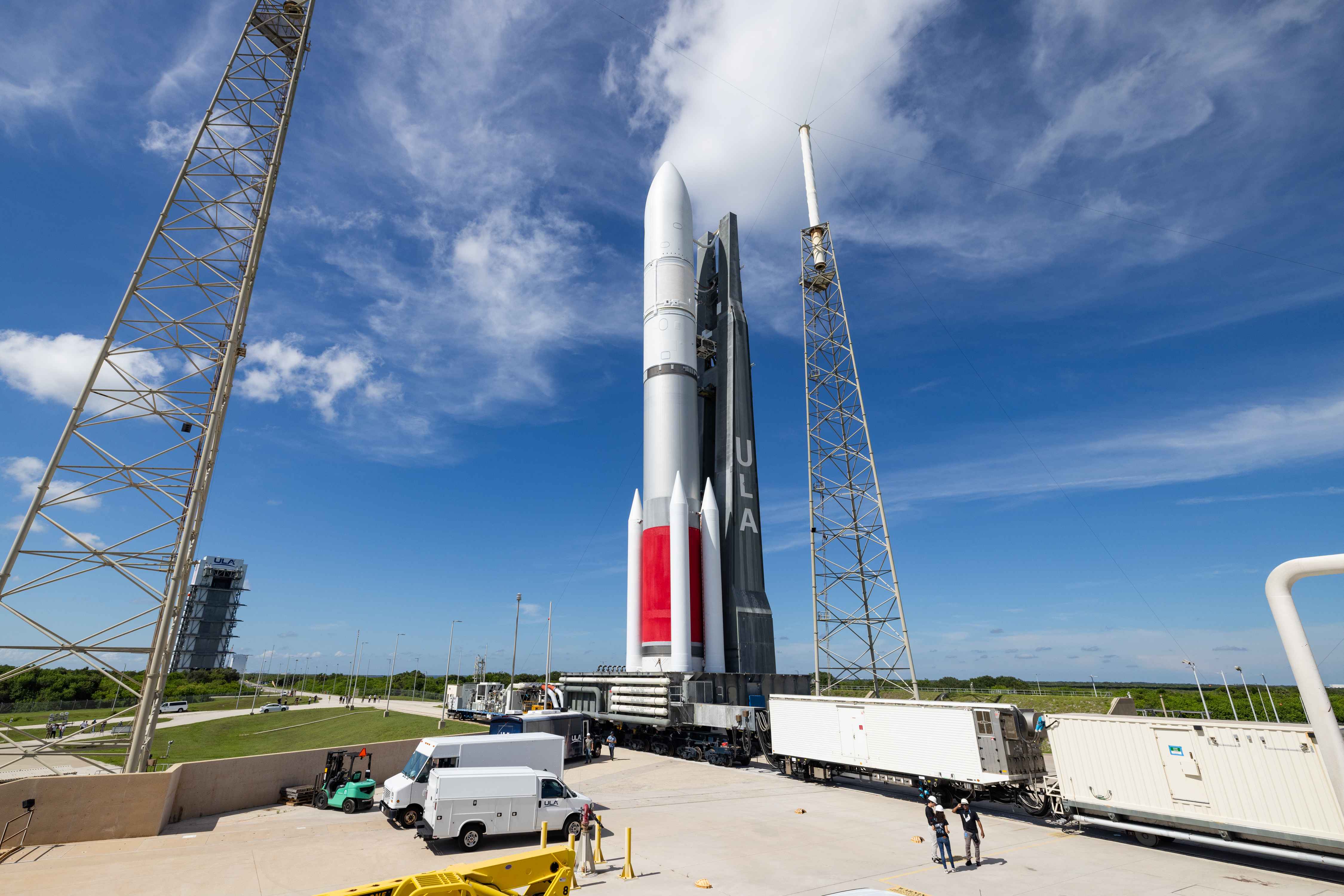
Launch Provider: United Launch Alliance – Commercial
Launch Date: February 12, 2026
Launch Time: 12:00 AM UTC
Vehicle: Vulcan VC4S
Brief: USSF-87 will launch two identical Geosynchronous Space Situational Awareness Program (GSSAP) satellites GSSAP-7 and GSSAP-8 directly to a near-geosynchronous orbit approximately 36,000 km above the equator.
Data from the GSSAP will uniquely contribute to timely and accurate orbital predictions, further enabling space flight safety including satellite collision avoidance.
