
The Daily Broadcast: From Ghost Particles to Galactic Maps: December’s Quiet Cosmic Revolution

Canada’s SNOLAB Detects Solar “Ghost Particles” in First-Ever Observation
Deep beneath the rocky terrain of Sudbury, Ontario—two kilometres underground—Canadian science just helped unveil a cosmic secret that’s been slipping through our fingers for decades. Researchers using the SNO+ detector at SNOLAB have, for the first time, observed interactions between solar neutrinos and carbon-13 nuclei, a breakthrough that opens new windows into nuclear and particle physics. Neutrinos, nicknamed “ghost particles” for their near-invisible interactions with matter, are produced in the Sun’s core by the trillions, streaming through our bodies every second without a trace. The SNO+ team identified these elusive encounters using a clever “delayed coincidence” technique: they looked for an initial flash when a neutrino struck carbon-13, followed minutes later by a second flash as the resulting nitrogen-13 decayed. Over a 231-day span from May to June 2023, they recorded 5.6 such events—statistically matching the 4.7 expected from solar neutrino activity. Lead author Gulliver Milton, a PhD student at Oxford, called the result “an extraordinary achievement,” while SNOLAB scientist Dr. Christine Kraus noted it represents the lowest-energy observation of this specific neutrino interaction to date. The work, published in Physical Review Letters on December 10, 2025, underscores Canada’s quiet but critical role in foundational space science—even when the lab is under a nickel mine.

NASA’s Roman Telescope to Chart the Milky Way in Unprecedented Detail
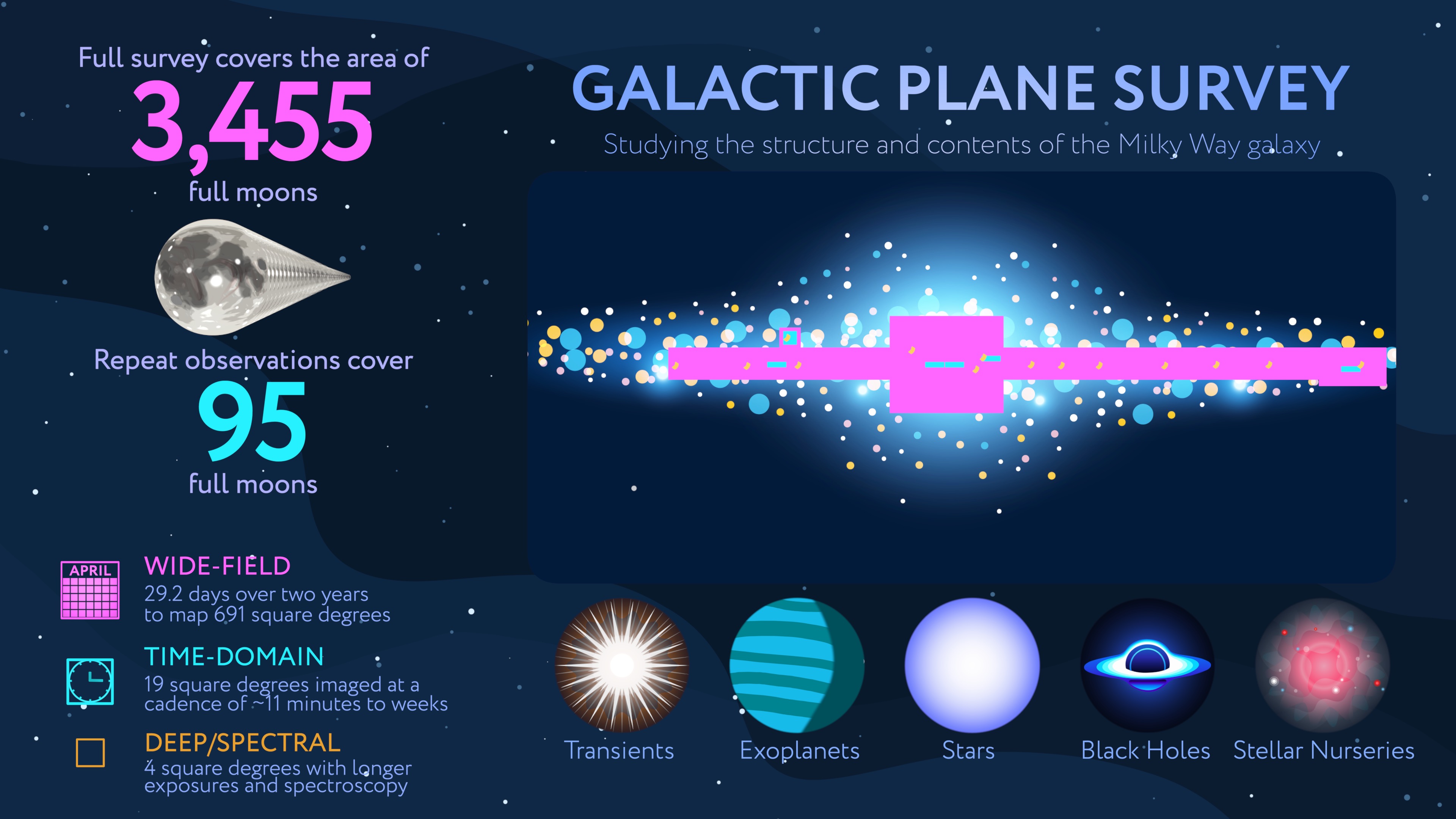
If you’ve ever wished for a Google Maps of the galaxy, NASA’s got you covered—sort of. The agency has unveiled detailed plans for the Nancy Grace Roman Space Telescope’s Galactic Plane Survey, an ambitious effort to map the dense core of our Milky Way with stunning clarity. Scheduled to run over two years with just one month of actual observation time, the survey aims to reveal tens of billions of stars, along with dust clouds, stellar nurseries, and other structures that have remained hidden due to crowding and obscuration. Unlike Hubble, which focuses on deep but narrow fields, Roman will combine a wide field of view with high resolution—think Hubble’s sharpness with a panoramic lens. “This survey will transform our understanding of the galaxy’s structure and evolution,” said a Roman team scientist. The data could help astronomers trace the Milky Way’s formation history, locate hidden black holes, and even refine models of dark matter distribution. While the telescope won’t launch until later this decade, the survey design is now finalized, and anticipation is building among astrophysicists who’ve long struggled to see through the galactic “fog” of the plane. For those of us stargazing from cottage country or city rooftops, Roman’s eventual sky maps may one day make backyard astronomy feel a little more like navigating home—with a cosmic GPS.
Starship Preparations Heat Up at Florida’s Roberts Road Facility
While Canada peers into the quantum shadows of solar ghosts, SpaceX is busy building the future of heavy-lift launch capability—on Florida’s Space Coast. The company’s Roberts Road facility has become the nerve center for East Coast Starship operations, according to a recent report from NASASpaceFlight.com. This site, nestled near Kennedy Space Center, is where SpaceX is assembling and testing hardware for upcoming Starship launches, including potential missions supporting NASA’s Artemis lunar program. Unlike the Starbase facility in Texas, which handles early prototypes and flight tests, Roberts Road is being configured for more mature vehicle processing—think final integration, payload encapsulation, and launch readiness checks. Recent infrastructure upgrades include expanded cryogenic storage, new integration towers, and upgraded roadways to move massive components. Though no specific launch date has been announced for a Florida-based Starship flight, the ramp-up signals SpaceX’s intent to establish dual launch corridors for its next-generation rocket. For observers in the Maritimes or Eastern Canada, a future Roberts Road launch could offer a distant but spectacular view—weather and trajectory permitting. Until then, the facility stands as a testament to how quickly space infrastructure can evolve when ambition meets asphalt (and a lot of steel).

Citations
- “Researchers observe Sun’s ‘ghost particles’ for the first time in breakthrough using SNOLAB detector” – https://spaceq.ca/researchers-observe-suns-ghost-particles-for-the-first-time-in-breakthrough-using-snolab-detector/
- “NASA Announces Plan to Map Milky Way With Roman Space Telescope” – https://www.nasa.gov/missions/roman-space-telescope/nasa-announces-plan-to-map-milky-way-with-roman-space-telescope/
- “SpaceX Roberts Road a focal point for East Coast Starship preparations” – https://www.nasaspaceflight.com/2025/12/spacex-roberts-road-east-coast-starship/
Upcoming Launches
Raise and Shine (RAISE-4)
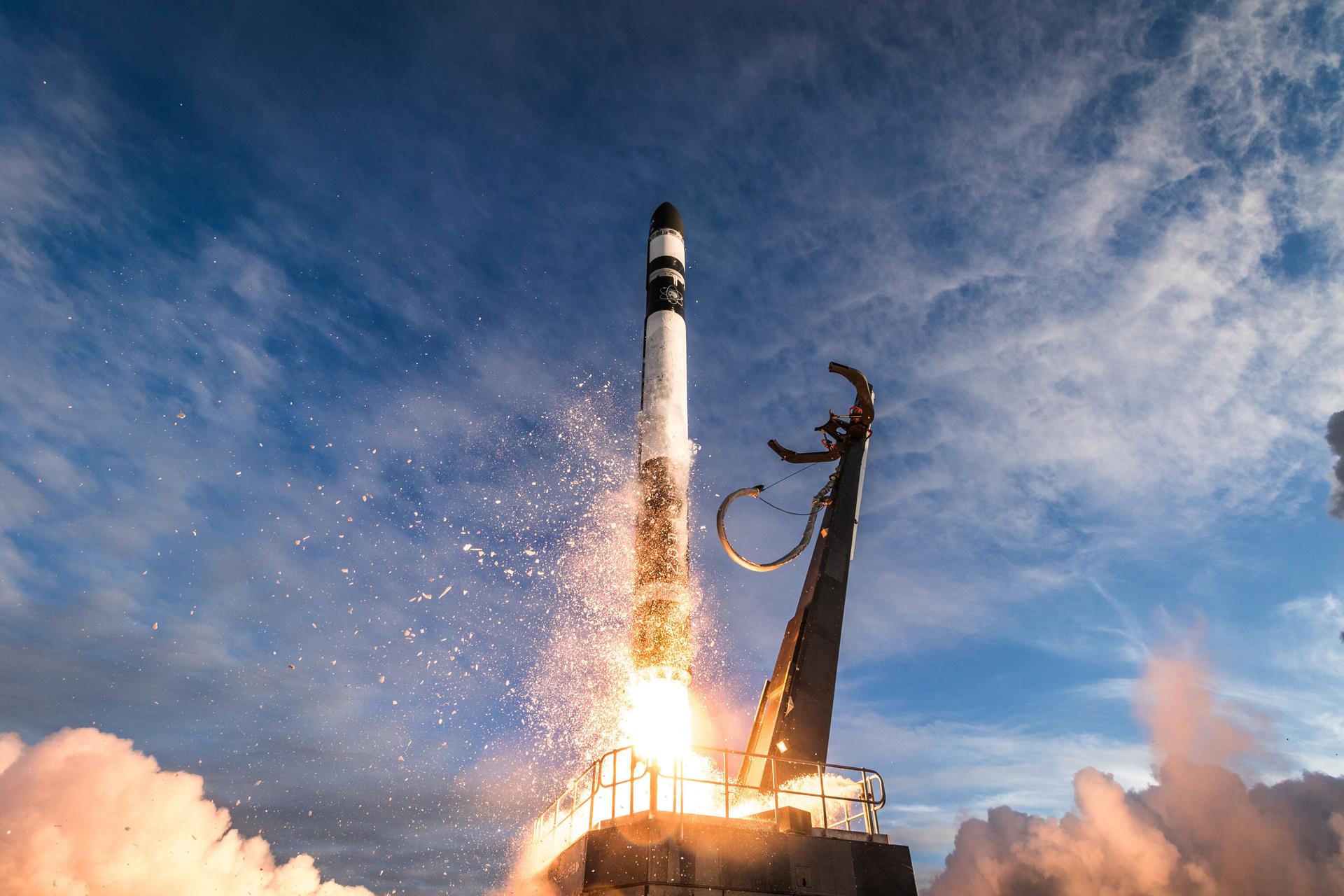
Launch Provider: Rocket Lab – Commercial
Launch Date: December 14, 2025
Launch Time: 3:00 AM UTC
Vehicle: Electron
Brief: RAISE-4 (RApid Innovative payload demonstration Satellite-4) is a Japan Aerospace Exploration Agency (JAXA) satellite for on-orbit demonstrations of 15 demonstration components and equipment selected by public solicitation. The satellite will be operated in response to requests from the demonstration theme proposers, and will provide experimental data of the demonstration devices and environmental data during the experiments.
6 of the demonstration payload, as well as as well as 4 cubesats originally planned to ride on the same launch vehicle, are re-flight of those planned for RAISE-3, which failed to reach orbit in October 2022.
The launch vehicle was switched from Epsilon-S to Rocket Lab’s Electron due to continuous testing problems with the Epsilon-S’ 2nd stage motor. The original 8 hitch-hiking cubesats will be launched on another Electron rocket later.
Starlink Group 15-12

Launch Provider: SpaceX – Commercial
Launch Date: December 14, 2025
Launch Time: 5:20 AM UTC
Vehicle: Falcon 9
Brief: A batch of 27 satellites for the Starlink mega-constellation – SpaceX’s project for space-based Internet communication system.
Starlink Group 6-82
Launch Provider: SpaceX – Commercial
Launch Date: December 15, 2025
Launch Time: 2:43 AM UTC
Vehicle: Falcon 9
Brief: A batch of 29 satellites for the Starlink mega-constellation – SpaceX’s project for space-based Internet communication system.
Demo Flight
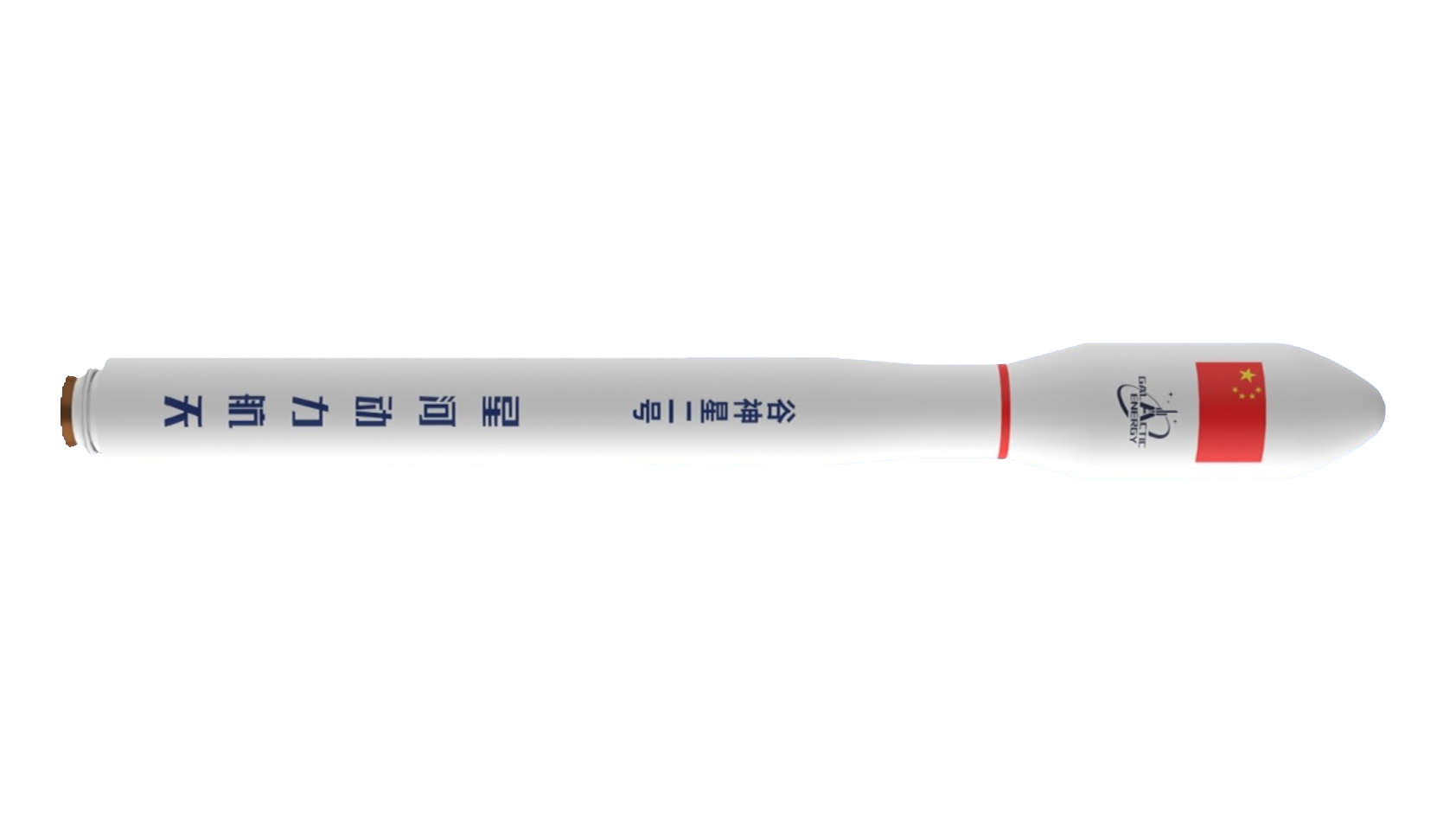
Launch Provider: Galactic Energy – Commercial
Launch Date: December 15, 2025
Launch Time: 4:05 AM UTC
Vehicle: Ceres-2
Brief: First test launch of Galactic Energy’s Ceres-2 rocket.
Amazon Leo (LA-04)
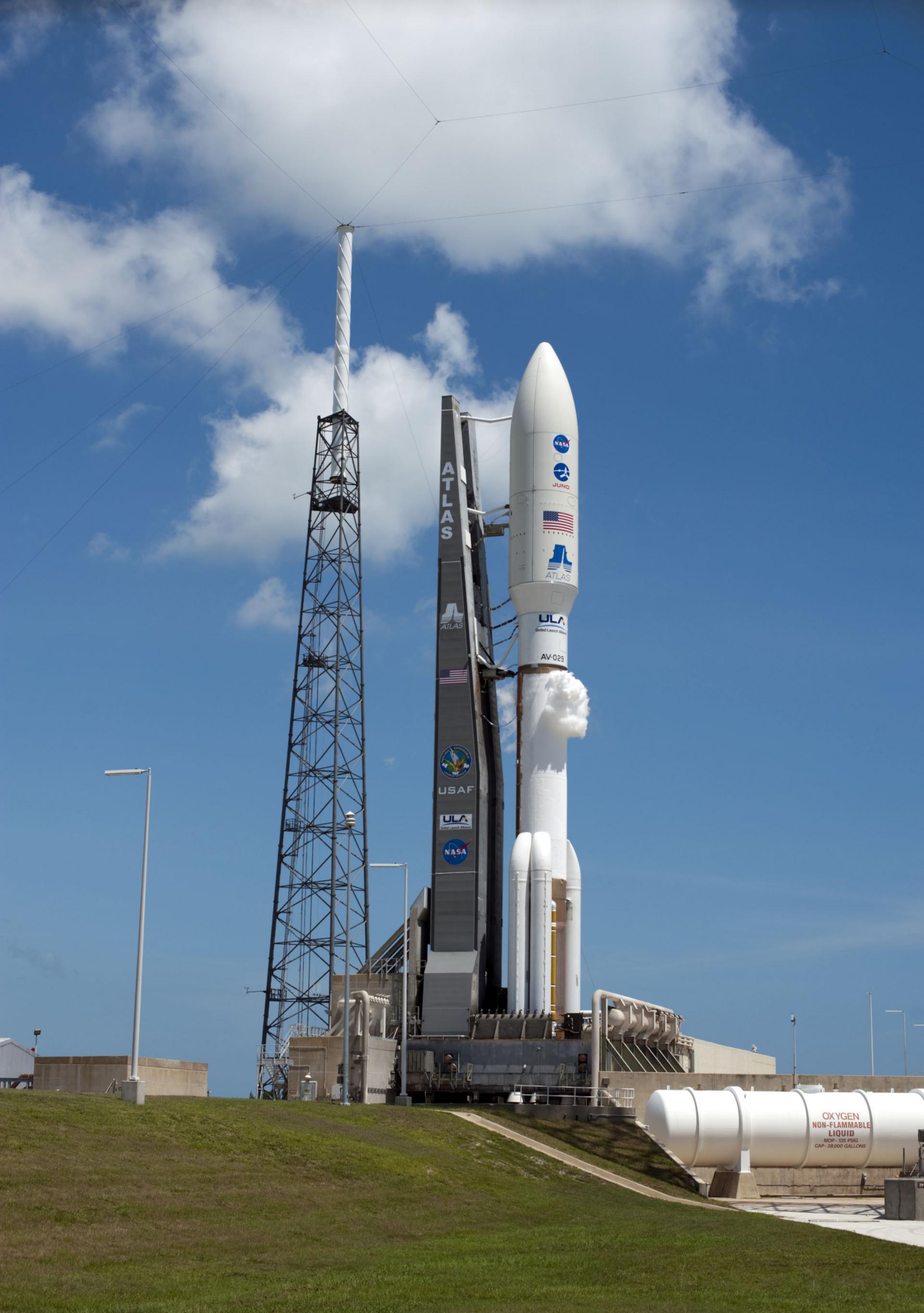
Launch Provider: United Launch Alliance – Commercial
Launch Date: December 15, 2025
Launch Time: 8:49 AM UTC
Vehicle: Atlas V 551
Brief: Amazon Leo, formerly known as Project Kuiper, is a mega constellation of satellites in Low Earth Orbit that will offer broadband internet access, this constellation will be managed by Kuiper Systems LLC, a subsidiary of Amazon. This constellation is planned to be composed of 3,276 satellites. The satellites are projected to be placed in 98 orbital planes in three orbital layers, one at 590 km, 610 km and 630 km altitude.
