
The Daily Broadcast: From Arctic Lakes to Orbital Gateways: Canada’s Quiet Leap in Space Infrastructure
Telesat Expands Canadian Footprint for Lightspeed Network
On March 10, 2026, Telesat announced the acquisition of new land in Estevan and Papineauville, and a lease in Shaunavon, Saskatchewan, to establish landing stations for its upcoming Lightspeed low Earth orbit (LEO) broadband constellation. These sites will route data between the satellites and major fibre and internet exchange points, forming a critical terrestrial backbone for the network. The Quebec station is expected to be completed by September 2026, with the Saskatchewan sites following by year’s end.
With MDA Space building the 198-satellite constellation—equipped with optical inter-satellite links to reduce dependence on ground infrastructure—Telesat still requires a global network of landing stations to meet latency, sovereignty, and regulatory demands. “Customers can also elect to use private landing stations… providing additional options for sovereign data control,” said Asit Tandon, Telesat’s chief network and information officer. The company plans to operate 24 landing stations globally when services begin in 2027, with these Canadian additions reinforcing national connectivity and data security—a growing priority as satellite internet competition intensifies.

ESA’s 3D-Printed “Magic Ball” Antenna Could Shield GPS from Jamming
Satellite navigation is under increasing threat from jamming and spoofing—tactics that can disrupt everything from emergency response to your morning commute. But a promising solution may be rolling out of a lab in Europe: a football-sized, 3D-printed Luneburg lens antenna developed through a PhD project at ESA’s Navigation Laboratory. Unlike conventional anti-jam antennas, which are bulky and expensive, this plastic sphere—made from common polylactic acid (PLA)—uses its spherical, layered structure to focus and steer radio waves from multiple directions simultaneously.
Because it creates multiple narrow beams, the lens can isolate signals from genuine satellites while ignoring interference from jammers. It’s especially useful in high latitudes—like much of Canada—where satellites skim low on the horizon. The antenna has already been tested twice at Jammertest, the world’s largest open-air spoofing and jamming resilience campaign, held annually on Norway’s Andøya island. While not yet deployed commercially, the technology offers a scalable, low-cost path to more resilient GNSS receivers. As our reliance on precise positioning grows, so too does the need for clever, accessible defences—like a humble plastic ball that thinks like a satellite.

Lake Unter-See: An Antarctic Time Capsule with Cosmic Implications
On February 16, 2026, NASA’s Landsat 9 captured a striking image of Lake Unter-See, one of Antarctica’s most extraordinary frozen lakes. Located in Queen Maud Land, this permanently ice-covered lake hosts towering conical stromatolites—microbial structures built by cyanobacteria—that reach up to half a metre in height, far larger than those found in other Antarctic lakes. These living fossils offer a window into Earth’s ancient past, resembling life forms that dominated our planet over 3 billion years ago.
What makes Lake Unter-See truly unusual is its chemistry: high dissolved oxygen, low carbon dioxide, and a strongly alkaline pH. The lake’s stability is occasionally disrupted—most notably in 2019, when a glacial outburst flood from nearby Lake Ober-See raised water levels by two metres and injected carbon dioxide-rich meltwater, temporarily boosting microbial productivity. For astrobiologists, this ecosystem is a compelling analog for icy worlds like Europa or early Mars. Notably, the 2019 flood analysis was led by a team from the University of Ottawa, underscoring Canadian scientific contributions to extreme-environment research. As we search for life beyond Earth, lakes like Unter-See remind us that sometimes, the most alien worlds are right here—at the bottom of the world.

Citations
- “Telesat expands Canadian landing station footprint for Lightspeed” – https://spacenews.com/telesat-expands-canadian-landing-station-footprint-for-lightspeed/
- “The tiny lens antenna with big potential” – https://www.esa.int/Enabling_Support/Space_Engineering_Technology/The_tiny_lens_antenna_with_big_potential
- “A Most Unusual Lake” – https://science.nasa.gov/earth/earth-observatory/a-most-unusual-lake/
Upcoming Launches
Starlink Group 10-48

Launch Provider: SpaceX – Commercial
Launch Date: March 12, 2026
Launch Time: 10:00 AM UTC
Vehicle: Falcon 9
Brief: A batch of 29 satellites for the Starlink mega-constellation – SpaceX’s project for space-based Internet communication system.
Unknown Payload
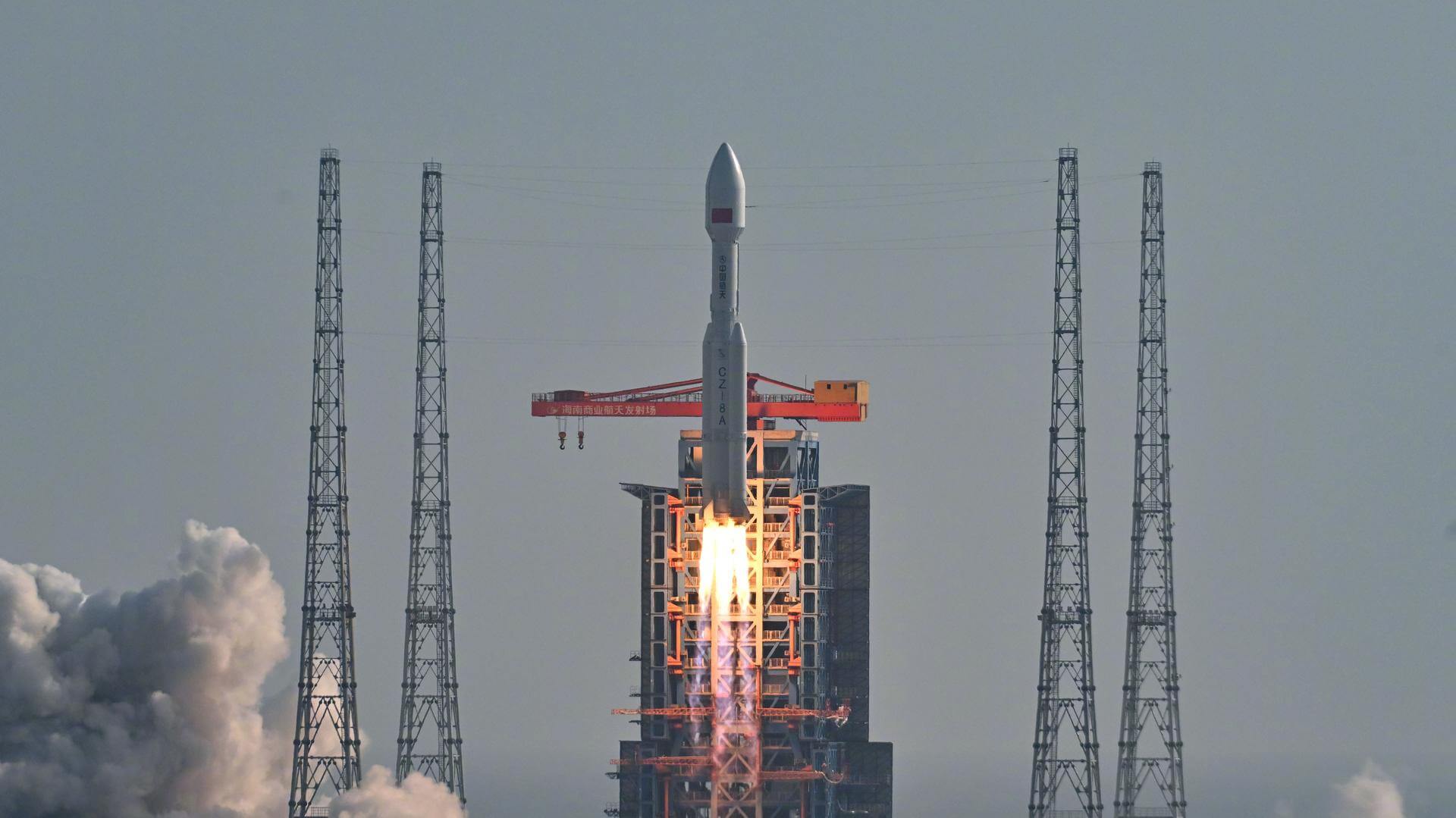
Launch Provider: China Aerospace Science and Technology Corporation – Government
Launch Date: March 12, 2026
Launch Time: 7:45 PM UTC
Vehicle: Long March 8A
Brief: Details TBD.
📽️ No Livestream scheduled yet
Unknown Payload
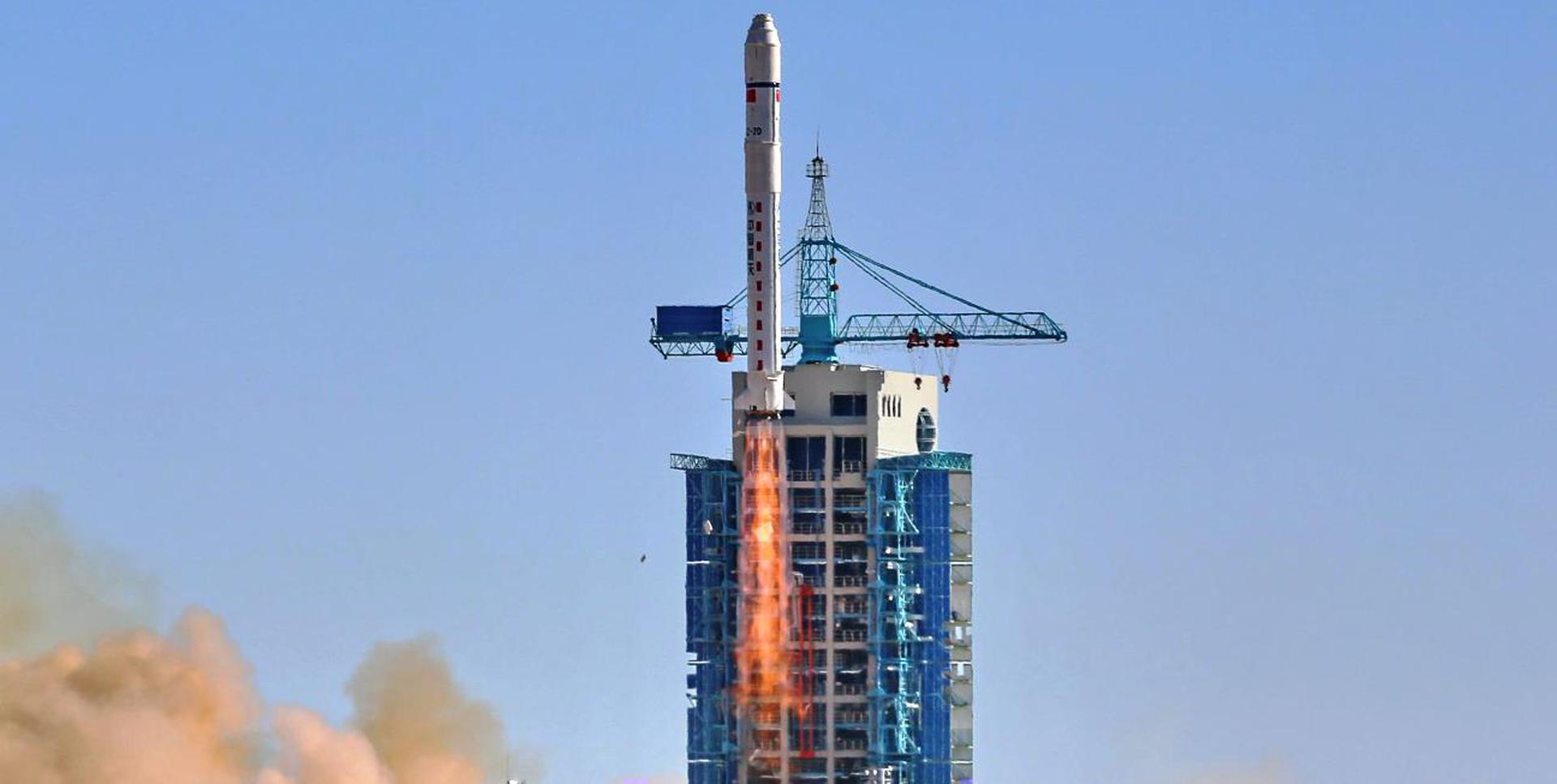
Launch Provider: China Aerospace Science and Technology Corporation – Government
Launch Date: March 12, 2026
Launch Time: 10:30 PM UTC
Vehicle: Long March 2D
Brief: Details TBD.
📽️ No Livestream scheduled yet
Starlink Group 17-31
Launch Provider: SpaceX – Commercial
Launch Date: March 13, 2026
Launch Time: 10:58 AM UTC
Vehicle: Falcon 9
Brief: A batch of 25 satellites for the Starlink mega-constellation – SpaceX’s project for space-based Internet communication system.
Starlink Group 10-46
Launch Provider: SpaceX – Commercial
Launch Date: March 15, 2026
Launch Time: 11:11 AM UTC
Vehicle: Falcon 9
Brief: A batch of 29 satellites for the Starlink mega-constellation – SpaceX’s project for space-based Internet communication system.

Leave a Reply