
The Daily Broadcast: Delays, Anomalies, and Deep-Space Science: A Pivotal Week in Aerospace

Artemis II Launch Slips to March After Hydrogen Leak
NASA has officially postponed the Artemis II mission’s launch from February to no earlier than March 6, 2026, following a hydrogen leak detected during a recent wet dress rehearsal at Kennedy Space Center. The leak occurred during cryogenic propellant loading exercises involving more than 700,000 gallons of liquid hydrogen and oxygen—an essential step in validating the Space Launch System’s readiness to carry astronauts around the Moon. Despite a successful “go” for tanking operations on February 2, engineers identified the issue during the countdown sequence, prompting mission managers to opt for caution over haste. The revised schedule provides five potential launch dates in early March. Canadian astronaut Jeremy Hansen remains part of the four-person crew slated to become the first to orbit the Moon since Apollo 17, underscoring Canada’s continued role in deep-space exploration through the Canadian Space Agency’s contributions to the Orion spacecraft’s Canadarm3 robotic system.
SpaceX Pauses Falcon 9 Flights After Upper Stage Anomaly
SpaceX has temporarily grounded its Falcon 9 fleet following an anomaly in the rocket’s upper stage during a launch on February 2, 2026. While the mission—believed to be a Starlink deployment—successfully reached orbit, telemetry indicated an unexpected issue during the second stage’s burn. The company has initiated a thorough review of flight data and will not conduct further launches until the root cause is identified and addressed. Given Falcon 9’s dominant role in both commercial and government missions—including cargo resupply to the International Space Station—this pause could ripple across the launch manifest. The timing is particularly sensitive as SpaceX supports ongoing Expedition 74 operations aboard the ISS, where crew members are currently preparing for the arrival of a Dragon spacecraft. SpaceX’s transparent but cautious approach reflects the high-stakes nature of maintaining reliability in a launch vehicle that has become the industry’s workhorse.

Gravitational Wave Signal Puts Einstein’s Relativity to the Test
In a breakthrough for fundamental physics, scientists with the LIGO-Virgo-KAGRA collaboration have used an exceptionally clear gravitational wave signal—dubbed GW250114—to conduct the most precise tests yet of Einstein’s general theory of relativity. Detected in January 2025 and analyzed using data from observatories in the U.S., Italy, and Japan, the signal originated from the merger of two massive black holes. The resulting waveform matched relativistic predictions with unprecedented fidelity, further confirming Einstein’s century-old framework under extreme conditions. Researchers at the Max Planck Institute for Gravitational Physics played a leading role, but the global effort included contributions from institutions worldwide. Notably, Canadian scientists at the University of Toronto and the Perimeter Institute have long participated in gravitational wave research, though this specific study did not highlight Canadian involvement. The findings, published in Physical Review Letters, not only validate general relativity but also sharpen tools for future multi-messenger astronomy—where gravitational waves, light, and particles combine to unveil cosmic secrets.

Citations
- “Artemis 2 slips to March” – https://spacenews.com/artemis-2-slips-to-march/
- “SpaceX pauses Falcon 9 launches after upper stage anomaly” – https://spacenews.com/spacex-pauses-falcon-9-launches-after-upper-stage-anomaly/
- “Gravitational wave triad puts relativity under intense scrutiny” – https://www.spacedaily.com/reports/Gravitational_wave_triad_puts_relativity_under_intense_scrutiny_999.html
Upcoming Launches
Starlink Group 6-103
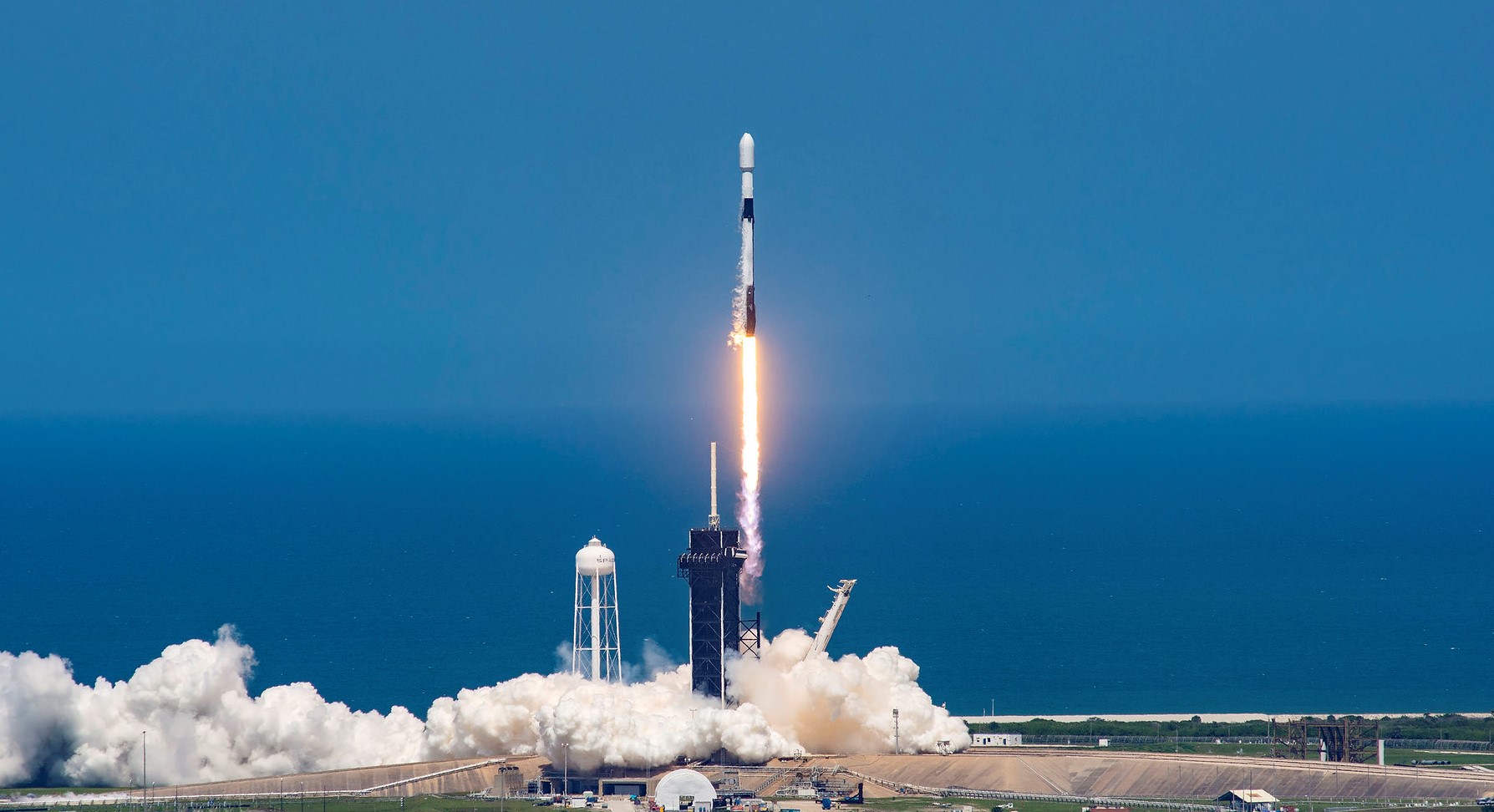
Launch Provider: SpaceX – Commercial
Launch Date: February 5, 2026
Launch Time: 9:20 PM UTC
Vehicle: Falcon 9
Brief: A batch of 29 satellites for the Starlink mega-constellation – SpaceX’s project for space-based Internet communication system.
Starlink Group 17-33
Launch Provider: SpaceX – Commercial
Launch Date: February 6, 2026
Launch Time: 5:05 PM UTC
Vehicle: Falcon 9
Brief: A batch of 25 satellites for the Starlink mega-constellation – SpaceX’s project for space-based Internet communication system.
Chinese Reusable Space Vehicle (???)
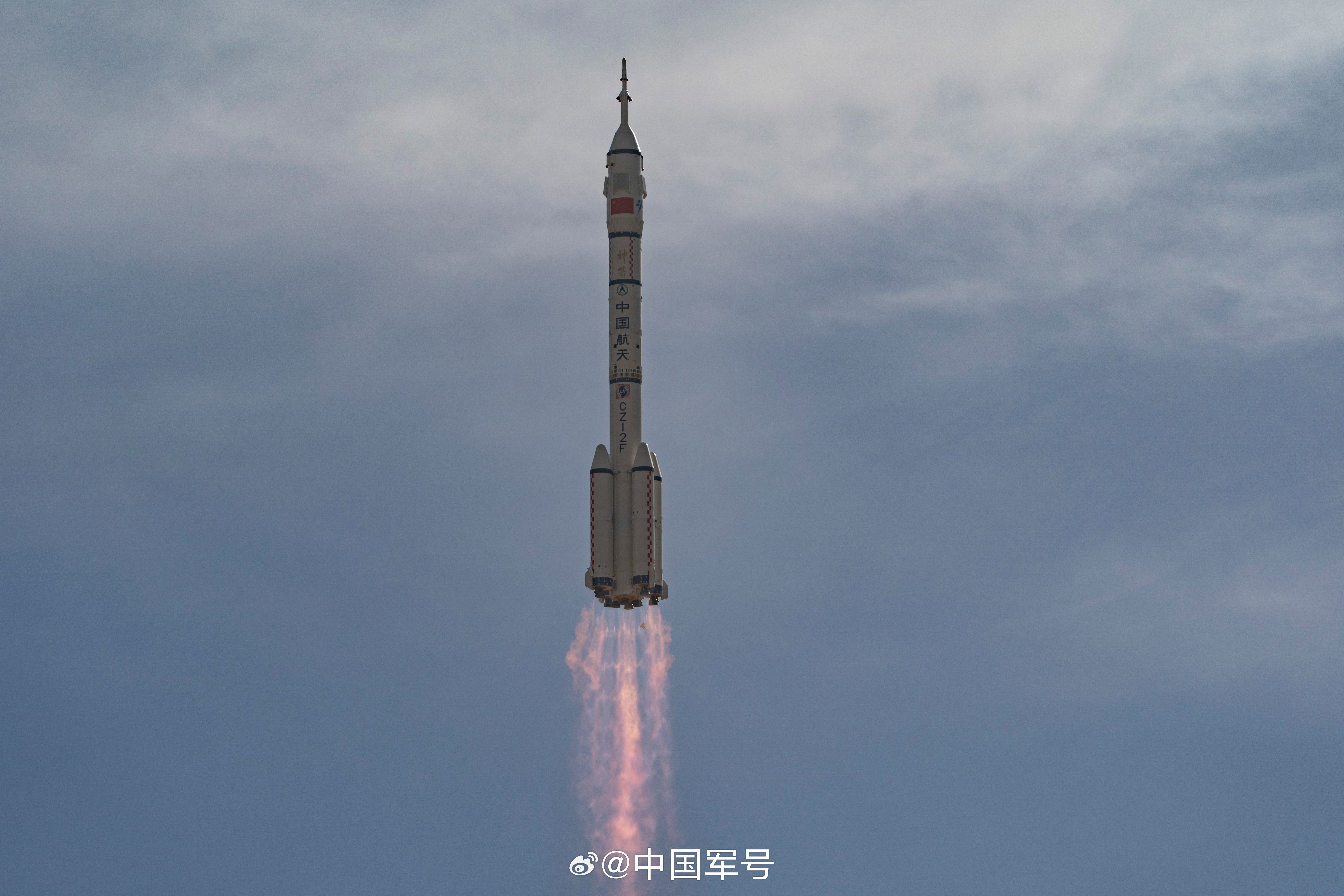
Launch Provider: China Aerospace Science and Technology Corporation – Government
Launch Date: February 7, 2026
Launch Time: 3:55 AM UTC
Vehicle: Long March 2F/G
Brief: Probable 4th flight of the Chinese spaceplane capable of returning to Earth.
Starlink Group 6-104
Launch Provider: SpaceX – Commercial
Launch Date: February 8, 2026
Launch Time: 10:46 AM UTC
Vehicle: Falcon 9
Brief: A batch of 29 satellites for the Starlink mega-constellation – SpaceX’s project for space-based Internet communication system.
Starlink Group 17-34
Launch Provider: SpaceX – Commercial
Launch Date: February 10, 2026
Launch Time: 2:07 PM UTC
Vehicle: Falcon 9
Brief: A batch of 25 satellites for the Starlink mega-constellation – SpaceX’s project for space-based Internet communication system.
