
The Daily Broadcast: Deflecting Disaster: New Planetary Defence Concepts Take Shape

Blue Origin Unveils NEO Hunter, a Dual-Mode Asteroid Deflector
On March 14, 2026, Blue Origin revealed its latest planetary defence concept: NEO Hunter, a spacecraft designed to safeguard Earth from potentially hazardous near-Earth objects (NEOs). Built upon the company’s versatile Blue Ring platform, NEO Hunter blends two deflection strategies into one mission architecture. First, it would dispatch CubeSats to study an asteroid’s composition, rotation, and structure. Then, it would station itself nearby and fire a continuous ion beam at the object—a contactless method that gently nudges the asteroid off course over weeks or months by imparting steady momentum. Should that prove insufficient for larger or more urgent threats, NEO Hunter carries a backup: a “Robust Kinetic Disruption” option. At nearly nine times the mass of NASA’s DART spacecraft, it could execute a high-energy impact, delivering 1.5 times more kinetic energy than DART did in 2022.
The Blue Ring platform supporting this concept is also slated for other missions, including a proposed Mars Telecommunication Orbiter. Structural load testing of a test article recently concluded at NASA’s Marshall Space Flight Center, while the first flight-ready Blue Ring unit undergoes verification at Blue Origin’s facilities. While NEO Hunter remains a concept and has not yet been approved for development or launch, its unveiling signals growing momentum in coordinated planetary defence efforts.

DART’s Ripple Effect: First-Ever Solar Orbit Shift Confirmed
New analysis of NASA’s 2022 Double Asteroid Redirection Test (DART) mission has yielded a historic discovery: humanity has, for the first time, measurably altered a celestial body’s orbit around the Sun. When DART struck the moonlet Dimorphos on September 26, 2022, at roughly 22,000 km/h, it shortened Dimorphos’ orbit around its parent asteroid Didymos by 33 minutes—a result that impressed scientists. But recent data published in Science Advances shows the impact also subtly changed the entire binary system’s solar orbit. The 770-day period was reduced by about 0.15 seconds, corresponding to a velocity shift of just 11.7 microns per second—roughly 1.7 inches per hour.
While infinitesimal, this effect is scientifically significant. It demonstrates that kinetic impactors don’t just shift orbits within a binary system—they can influence heliocentric trajectories too, thanks in part to momentum from the debris plume ejected during impact. Researchers tracked this minuscule change using radar data and 22 stellar occultations observed by volunteers worldwide between October 2022 and March 2025. The findings reinforce kinetic impact as a viable planetary defence tool, especially when combined with precise characterization of the target. This momentum will soon be complemented by the European Space Agency’s Hera mission, scheduled to arrive at Didymos-Dimorphos in November 2026 to study the impact crater and deploy two CubeSats for surface operations.

NEO Surveyor Moves Closer to 2027 Launch
As new deflection concepts emerge, detection capabilities are also advancing. NASA’s NEO Surveyor mission—a space-based infrared telescope designed to find potentially hazardous asteroids—remains on track for launch no earlier than mid-2027 aboard a SpaceX Falcon 9 rocket. Once deployed, it will operate from the Sun-Earth L1 Lagrange point, scanning the skies for NEOs larger than 140 metres, particularly those hidden in the Sun’s glare or detectable only at night from Earth. This mission is key to fulfilling a U.S. congressional mandate to catalog 90% of such objects.
NEO Surveyor’s importance can’t be overstated: early detection is the linchpin of any deflection strategy. Without sufficient warning time—ideally years or decades— even the most advanced spacecraft like NEO Hunter would have little chance to intervene. The telescope will complement ground-based surveys and international efforts like ESA’s planned planetary defence initiatives. While Canada isn’t directly involved in NEO Surveyor, Canadian astronomers and observatories have historically contributed to asteroid tracking through the Minor Planet Centre and other collaborative networks. As planetary defence evolves from science fiction to operational reality, global coordination—including Canadian participation in observation and data analysis—will remain essential to keeping Earth safe, one asteroid at a time.
Citations
- “Blue Origin Unveils NEO Hunter: A Hybrid Planetary Defense Concept” – https://www.nasaspaceflight.com/2026/03/blue-origin-neo-hunter-planetary-defense/
Upcoming Launches
Starlink Group 10-48

Launch Provider: SpaceX – Commercial
Launch Date: March 14, 2026
Launch Time: 12:37 PM UTC
Vehicle: Falcon 9
Brief: A batch of 29 satellites for the Starlink mega-constellation – SpaceX’s project for space-based Internet communication system.
Unknown Payload
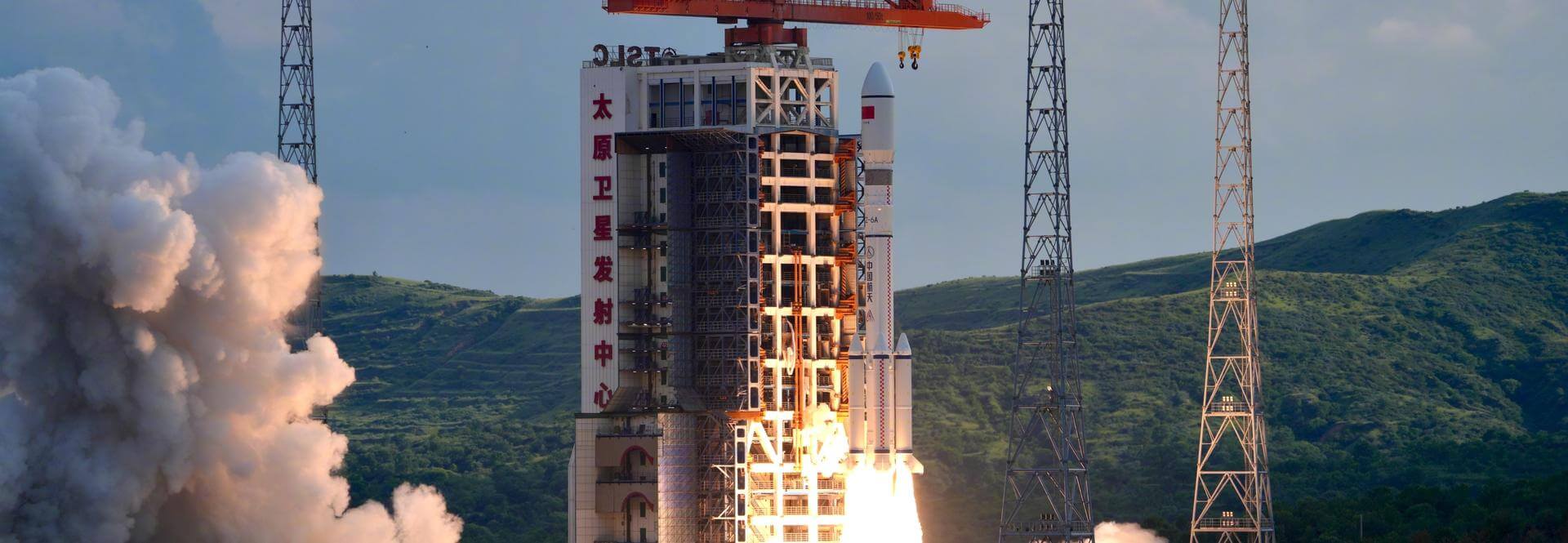
Launch Provider: China Aerospace Science and Technology Corporation – Government
Launch Date: March 15, 2026
Launch Time: 1:20 PM UTC
Vehicle: Long March 6A
Brief: Details TBD.
📽️ No Livestream scheduled yet
Unknown Payload
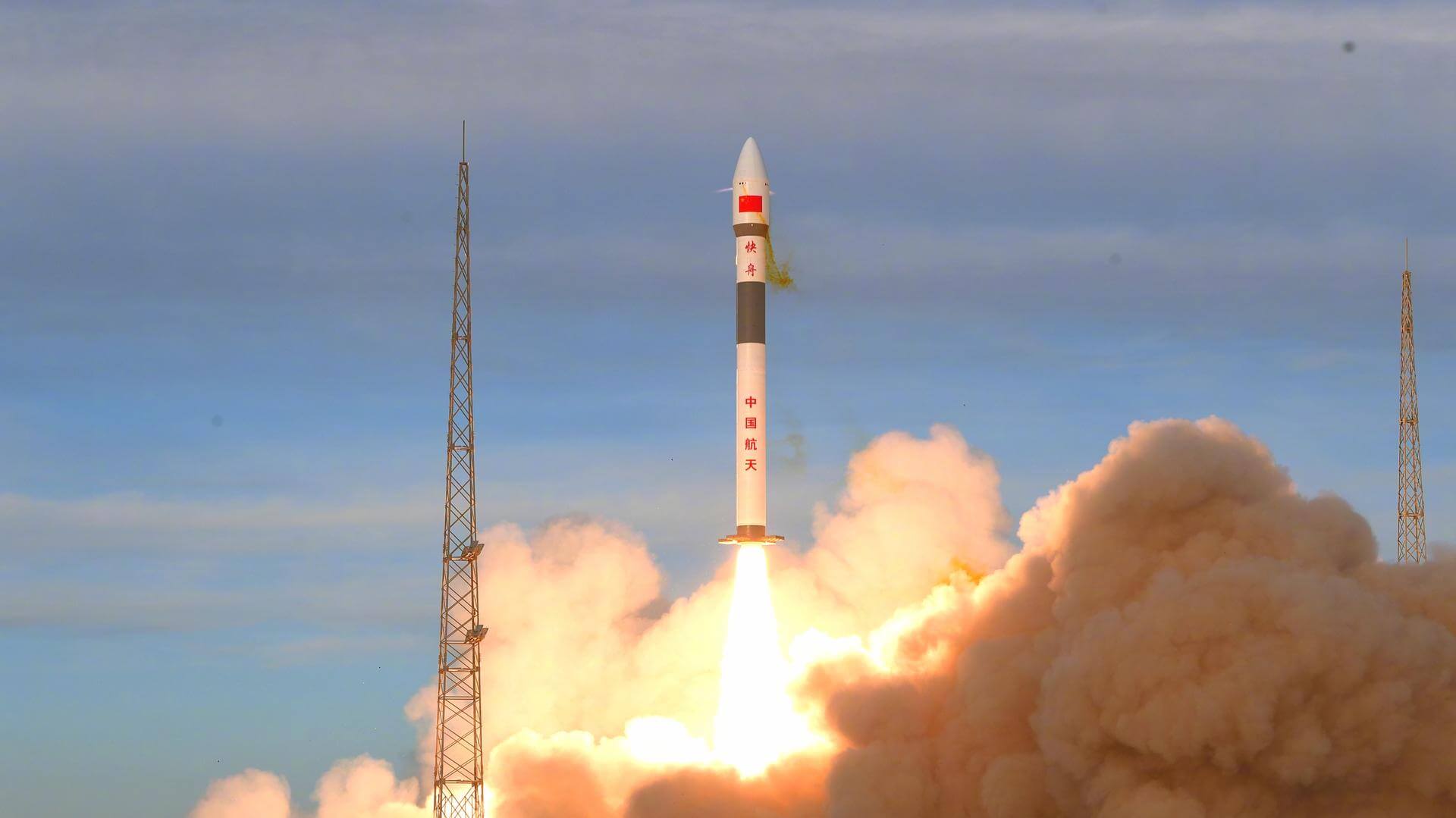
Launch Provider: ExPace – Commercial
Launch Date: March 16, 2026
Launch Time: 4:10 AM UTC
Vehicle: Kuaizhou 1A
Brief: Details TBD.
📽️ No Livestream scheduled yet
Starlink Group 17-24
Launch Provider: SpaceX – Commercial
Launch Date: March 17, 2026
Launch Time: 2:37 AM UTC
Vehicle: Falcon 9
Brief: A batch of 25 satellites for the Starlink mega-constellation – SpaceX’s project for space-based Internet communication system.
Starlink Group 10-46
Launch Provider: SpaceX – Commercial
Launch Date: March 17, 2026
Launch Time: 10:26 AM UTC
Vehicle: Falcon 9
Brief: A batch of 29 satellites for the Starlink mega-constellation – SpaceX’s project for space-based Internet communication system.

Leave a Reply