
The Daily Broadcast: Constellations, Cave Training, and Cosmic Wakes

Globalstar Stays Course on C-3 Satellite Constellation Despite Speculation
Globalstar appears to be staying the course on its ambitious C-3 satellite constellation, reaffirming plans during a December 29, 2025 meeting with the U.S. Federal Communications Commission (FCC). The company is moving ahead with its third-generation mobile satellite system, which will consist of 48 operational satellites in a Walker configuration—12 orbital planes with four satellites each—plus six on-orbit spares. All will be built by Canadian aerospace leader MDA Space using the AURORA software-defined digital satellite platform under a CAD $1.1 billion contract signed in February 2025.
This update comes amid earlier speculation that Globalstar might sell itself, with SpaceX reportedly interested in acquiring its valuable S-band spectrum for its direct-to-device ambitions. However, Globalstar has formally opposed any attempt by Starlink to use its licensed spectrum. Beyond the spacecraft themselves, Globalstar is building out significant ground infrastructure, including approximately 90 new Earth station antennas across 35 facilities in at least 25 countries. In Canada, construction is already underway at sites in High River, Alberta, and Smith Falls, Ontario, with completion expected in March and April 2026, respectively. A new Satellite Operations Control Center has also opened in Covington, Louisiana, with another in Toulouse, France, supporting global operations.

Chinese Astronauts Complete First Cave Survival Training
China’s Astronaut Center has wrapped up its first-ever cave survival training program, an intensive exercise designed to simulate the isolation, communication delays, and teamwork demands of deep-space missions. Held in the Wulong district of Chongqing, the nearly monthlong program brought together 28 astronauts and trainees who navigated subterranean environments while performing tasks like environmental monitoring, cave mapping, and simulated communications with “ground control.”
The training mirrors similar analog missions used by other space agencies—such as ESA’s CAVES program—to prepare crews for the psychological and operational challenges of exploring the Moon or Mars. In caves, crews face real risks like limited visibility, confined spaces, and unpredictable terrain, all while relying on each other for safety and decision-making. These conditions closely mimic extraterrestrial exploration, where delays in communication and reliance on autonomous problem-solving are inevitable. While China’s space program has rapidly expanded with its Tiangong space station and lunar ambitions, this marks a notable step toward preparing its astronauts for more complex, long-duration missions beyond low Earth orbit. It’s a reminder that sometimes, to reach the stars, you first have to go deep underground.

Hubble Reveals Betelgeuse’s Hidden Companion Carving a Cosmic Wake
Astronomers using NASA’s Hubble Space Telescope have uncovered compelling evidence of a companion star orbiting Betelgeuse—the famous red supergiant in Orion—and disturbing its extended atmosphere in dramatic fashion. The companion, recently named Siwarha, is carving a dense, comet-like wake through Betelgeuse’s outer layers as it moves through the giant star’s tenuous envelope of gas.
Lead researchers from the Center for Astrophysics | Harvard & Smithsonian combined Hubble’s high-resolution ultraviolet observations with ground-based data to trace this wake’s structure and link it to previously puzzling changes in Betelgeuse’s brightness and surface activity. Betelgeuse famously dimmed in 2019–2020, sparking speculation it might be nearing a supernova. While that turned out to be caused by a dust cloud, the new findings suggest its companion’s gravitational influence may also contribute to atmospheric instabilities. This discovery not only sheds light on the dynamics of binary systems involving supergiants but also offers a rare window into how stellar interactions shape the late stages of massive star evolution. As Betelgeuse continues its slow march toward an eventual explosive end, Hubble ensures we won’t miss a single ripple in its cosmic story.

Citations
- “Globalstar updates FCC on its planned C-3 satellite constellation” – https://spaceq.ca/globalstar-updates-fcc-on-its-planned-c-3-satellite-constellation/
- “Chinese astronauts hone extreme cave survival skills” – https://www.moondaily.com/reports/Chinese_astronauts_hone_extreme_cave_survival_skills_999.html
- “Hubble tracks Betelgeuse companion carving dense wake in giant star atmosphere” – https://www.spacedaily.com/reports/Hubble_tracks_Betelgeuse_companion_carving_dense_wake_in_giant_star_atmosphere_999.html
Upcoming Launches
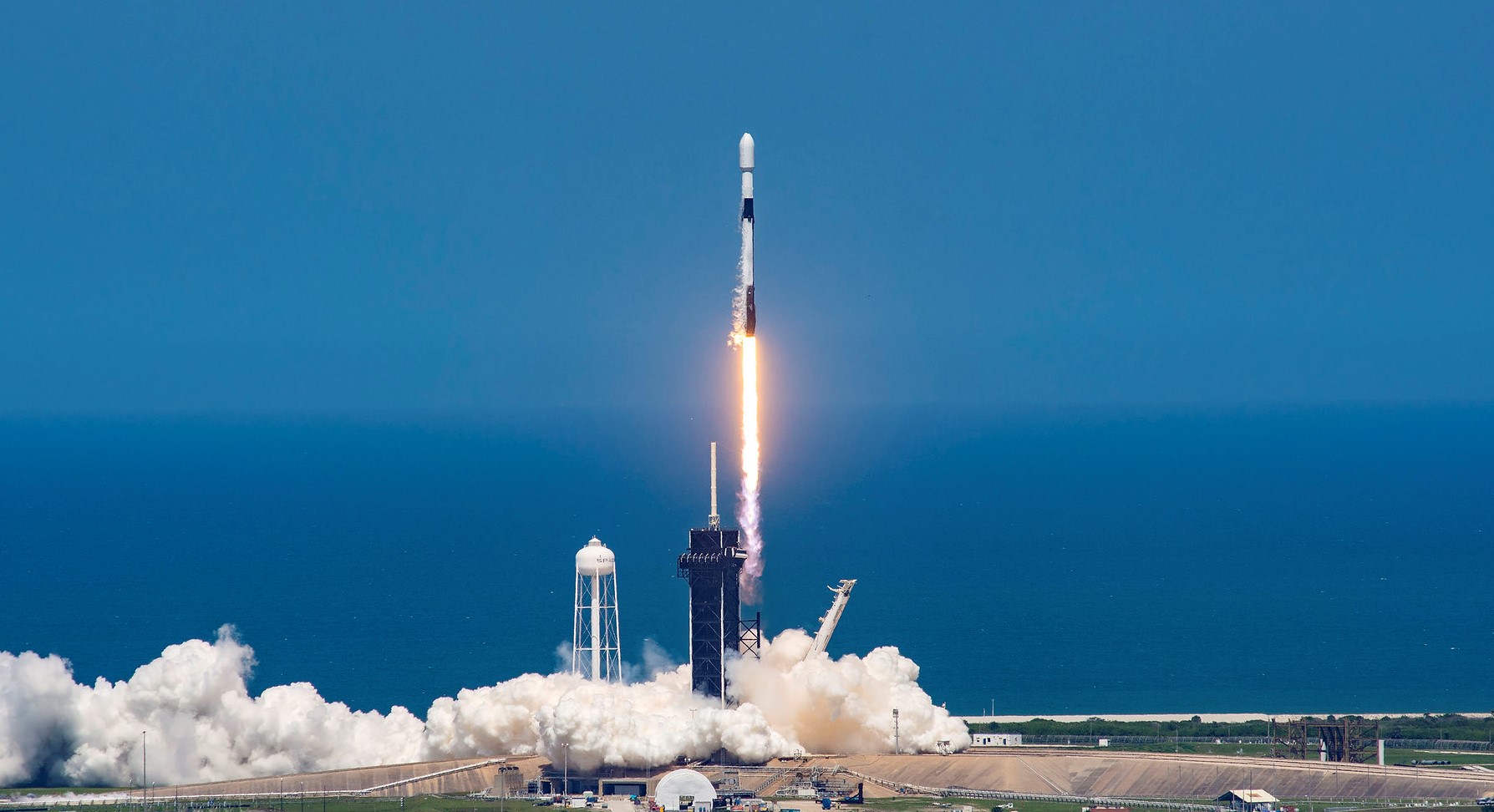
Starlink Group 6-96
Launch Provider: SpaceX – Commercial
Launch Date: January 8, 2026
Launch Time: 6:29 PM UTC
Vehicle: Falcon 9
Brief: A batch of 29 satellites for the Starlink mega-constellation – SpaceX’s project for space-based Internet communication system.
Starlink Group 6-97
Launch Provider: SpaceX – Commercial
Launch Date: January 10, 2026
Launch Time: 6:34 PM UTC
Vehicle: Falcon 9
Brief: A batch of 29 satellites for the Starlink mega-constellation – SpaceX’s project for space-based Internet communication system.
Pandora / Twilight rideshare mission
Launch Provider: SpaceX – Commercial
Launch Date: January 11, 2026
Launch Time: 1:09 PM UTC
Vehicle: Falcon 9
Brief: The Pandora small satellite was selected in 2021 as an inaugural mission in NASA’s Astrophysics Pioneers Program. It includes a 0.45-meter telescope that will improve our understanding of exoplanet atmospheres by disentangling exoplanet signals from their host stars, as well as studying host star variability with long-duration observations of 20 unique planets through visible-light photometry and near-infrared spectroscopy.
Also launching on this launch are ride-share payloads under the “Falcon 9 Twilight mission” manifested by Exolaunch, including satellites from Spire Global and Kepler Communications.
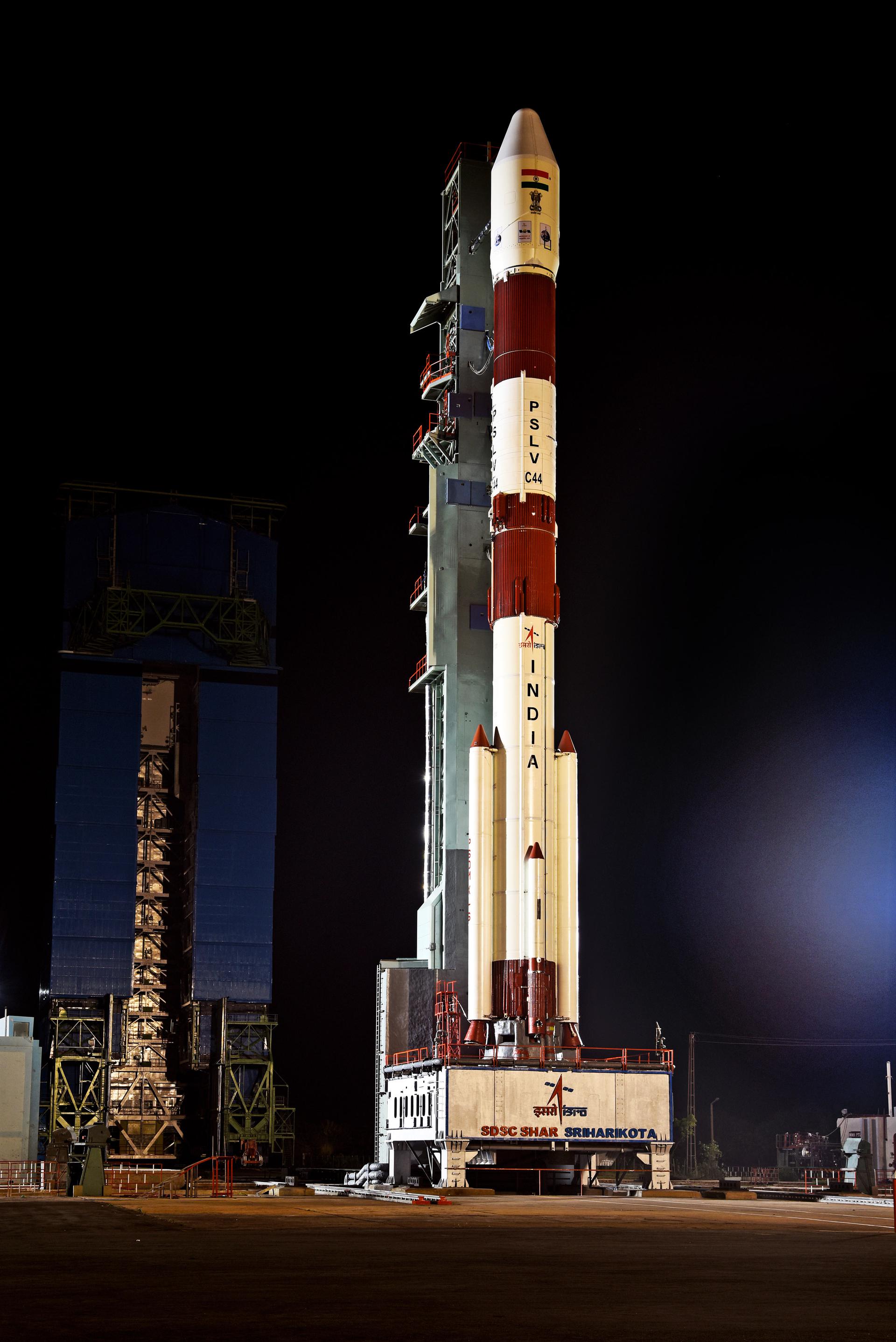
EOS-N1 and others
Launch Provider: Indian Space Research Organization – Government
Launch Date: January 12, 2026
Launch Time: 4:47 AM UTC
Vehicle: PSLV-DL
Brief: Small Earth observation satellite from NewSpace India Limited (NSIL) for an “Indian strategic user”, details TBD.
This launch will also carry 18 other ride-share payloads.
Starlink Group 6-98
Launch Provider: SpaceX – Commercial
Launch Date: January 13, 2026
Launch Time: 6:28 PM UTC
Vehicle: Falcon 9
Brief: A batch of 29 satellites for the Starlink mega-constellation – SpaceX’s project for space-based Internet communication system.
