
The Daily Broadcast: Beaming Power, Breached Servers, and Babies in Space

Canadian Startup Aims to Keep the Moon Lit Through the Night
Montreal-based Volta Space Technologies is developing a novel solution to one of lunar exploration’s thorniest problems: how to keep equipment running through the Moon’s frigid, 14-day-long night. Temperatures can plummet to -240°C, and without sunlight, solar-powered landers and rovers typically shut down. Current fixes—like radioisotope heaters or oversized batteries—can add over $200 million to mission costs due to mass, shielding, and regulatory hurdles.
Volta’s answer? A “lunar energy grid” called LightGrid: a constellation of low-lunar-orbit satellites that collect solar energy and beam it down via lasers to surface receivers known as LightPorts. Each LightPort weighs under 3 kg and can convert about 45% of the delivered optical power into electricity, with the rest used as waste heat to help keep instruments warm. The system is designed to deliver power over 200 km and focus all photons onto a 30 cm receiver—a precision that, if proven in orbit, could enable sustained operations in permanently shadowed polar craters where water ice is likely abundant. CEO Justin Zipkin compares the concept to terrestrial power grids: not cheap to build, but cost-effective when shared across many users. With lunar ambitions heating up globally, Volta’s idea could light the way—literally—for long-term presence on the Moon.
ESA Confirms Limited Data Breach—No Mission-Critical Systems Compromised
The European Space Agency (ESA) has confirmed a data breach affecting a small number of science servers, but emphasized that the incident was confined to systems outside its main corporate network and contained only unclassified documents. The disclosure follows online claims that surfaced on December 26 suggesting a more severe compromise. In its initial statement, ESA clarified that the affected servers were used for scientific collaboration and did not hold sensitive operational, personal, or mission-critical data.
While cybersecurity incidents in the space sector are increasingly common—given the strategic value of space infrastructure—ESA’s swift transparency is a reminder of the sector’s growing digital vulnerability. The agency has not identified the source of the breach nor confirmed what, if any, research data was accessed. However, the reassurance that core systems remain secure should ease concerns among international partners who rely on ESA for everything from Earth observation to deep-space communications. For now, it appears this was more of a digital hiccup than a crisis—but in an era where space assets are national priorities, even minor breaches warrant close scrutiny.
China’s Spacefaring Mouse Gives Birth After Orbital Journey
In a milestone for China’s space biology program, a female mouse that recently returned from a mission aboard the Tiangong space station has given birth to healthy pups on Earth. The mouse was one of four that flew as part of a full-cycle mammalian study led by the Technology and Engineering Center for Space Utilization (CSU) under the Chinese Academy of Sciences. Notably, the public helped name the rodent crew—a small but symbolic act of engagement in China’s expanding space narrative.
This experiment marks China’s first attempt to track mammalian reproduction from spaceflight through post-mission birth, offering insights into how microgravity and radiation affect fertility and embryonic development. While earlier missions (like those on the Space Shuttle or ISS) have studied rodent gestation in orbit, few have followed through to live births post-flight. The successful delivery suggests that short-duration space exposure may not preclude healthy reproduction afterward—a crucial data point as nations plan for long-term human presence beyond Earth. Of course, mice aren’t humans, but as any biologist (or sci-fi fan) will tell you: it’s a start. And perhaps, just perhaps, the first of many “astro-rodent” generations.
Citations
- “Volta Space is testing tech for a lunar power beaming application” – https://spaceq.ca/volta-space-is-testing-tech-for-a-lunar-power-beaming-application/
- “ESA Says Data Breach Was Limited to Servers with Unclassified Documents” – https://europeanspaceflight.com/esa-says-data-breach-was-limited-to-servers-with-unclassified-documents/
- “Space-traveled mouse gives birth as China names pioneering ‘flying mice’ crew” – https://www.spacedaily.com/reports/Space_traveled_mouse_gives_birth_as_China_names_pioneering_flying_mice_crew_999.html
Upcoming Launches
Unknown Payload
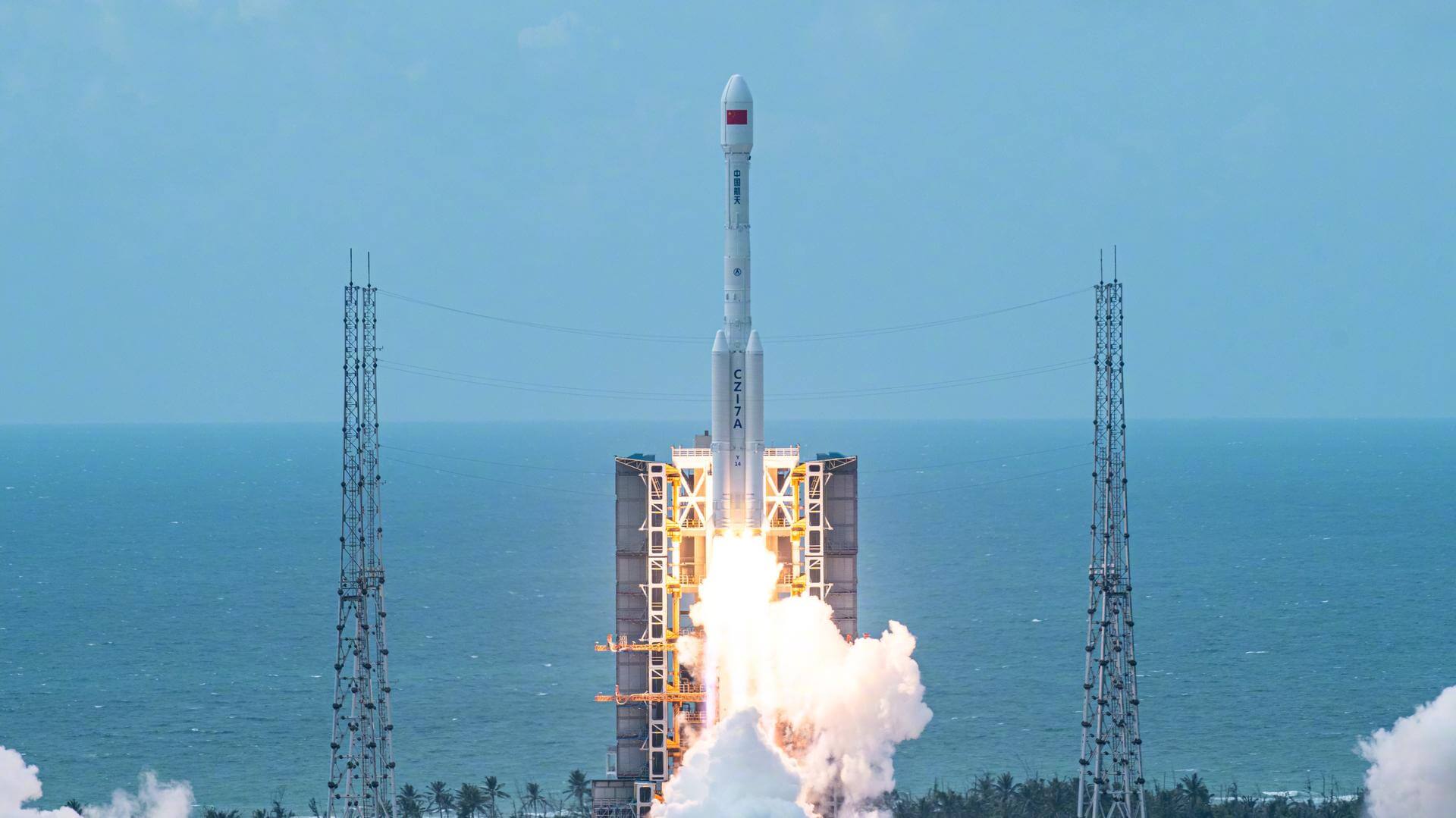
Launch Provider: China Aerospace Science and Technology Corporation – Government
Launch Date: December 30, 2025
Launch Time: 10:40 PM UTC
Vehicle: Long March 7A
Brief: Details TBD.
CSG-3

Launch Provider: SpaceX – Commercial
Launch Date: January 1, 2026
Launch Time: 2:09 AM UTC
Vehicle: Falcon 9
Brief: CSG-3 is an Earth observation satellite for the Italian Space Agency, part of a reconnaissance constellation using synthetic aperture radars operating in the X-band.
Starlink Group 6-88
Launch Provider: SpaceX – Commercial
Launch Date: January 3, 2026
Launch Time: 5:00 AM UTC
Vehicle: Falcon 9
Brief: A batch of 29 satellites for the Starlink mega-constellation – SpaceX’s project for space-based Internet communication system.
Starlink Group 6-96
Launch Provider: SpaceX – Commercial
Launch Date: January 7, 2026
Launch Time: 6:55 PM UTC
Vehicle: Falcon 9
Brief: A batch of 29 satellites for the Starlink mega-constellation – SpaceX’s project for space-based Internet communication system.
EOS-N1 and others
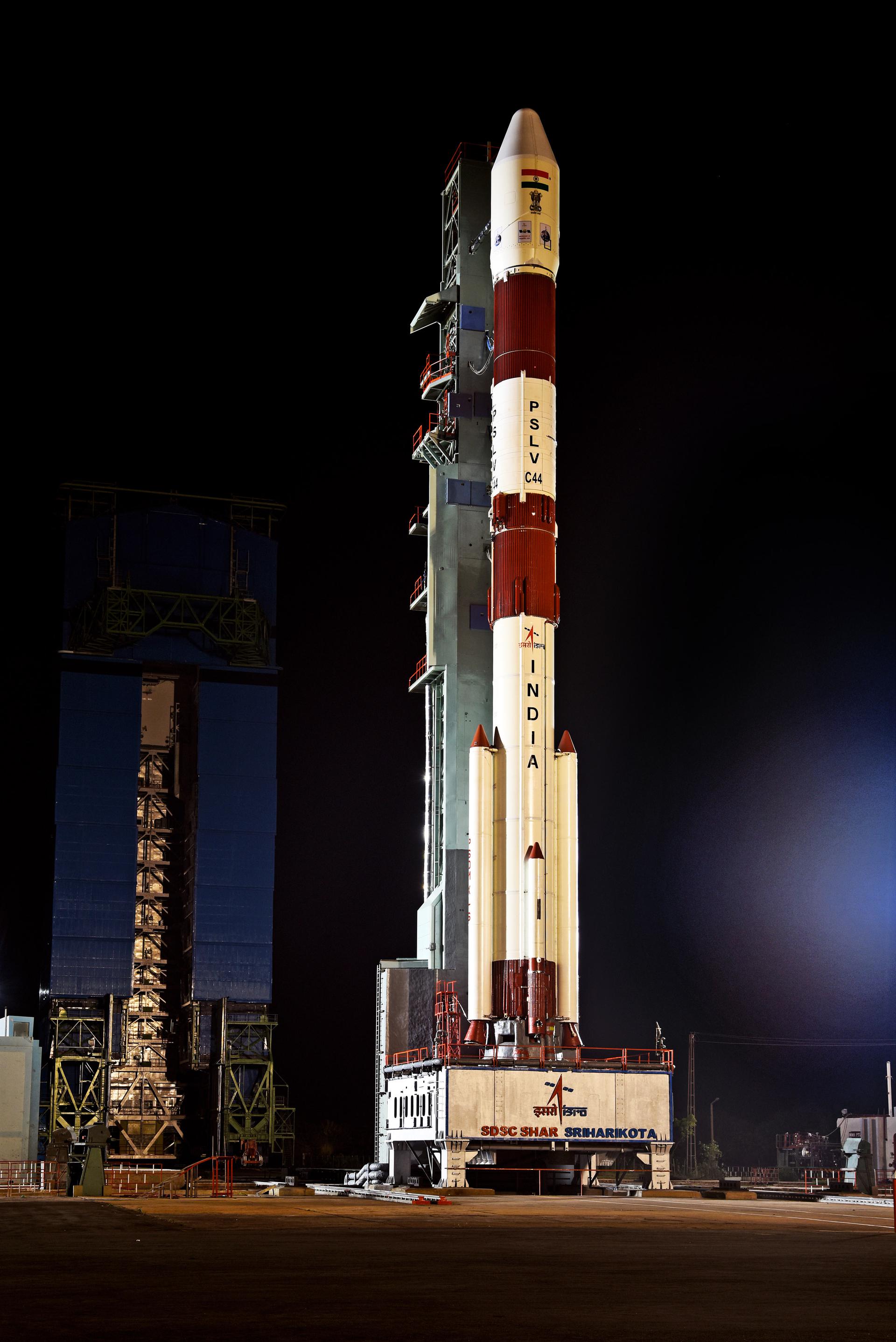
Launch Provider: Indian Space Research Organization – Government
Launch Date: January 10, 2026
Launch Time: 4:15 AM UTC
Vehicle: PSLV-DL
Brief: Small Earth observation satellite from NewSpace India Limited (NSIL) for an “Indian strategic user”, details TBD.
This launch will also carry 18 other ride-share payloads.
