
The Commercial Space: Reusable Rockets, Lunar Legacies, and Orbital Ambitions: February 2026 Roundup
Stoked Space Secures Major Funding as Nova Infrastructure Nears Completion
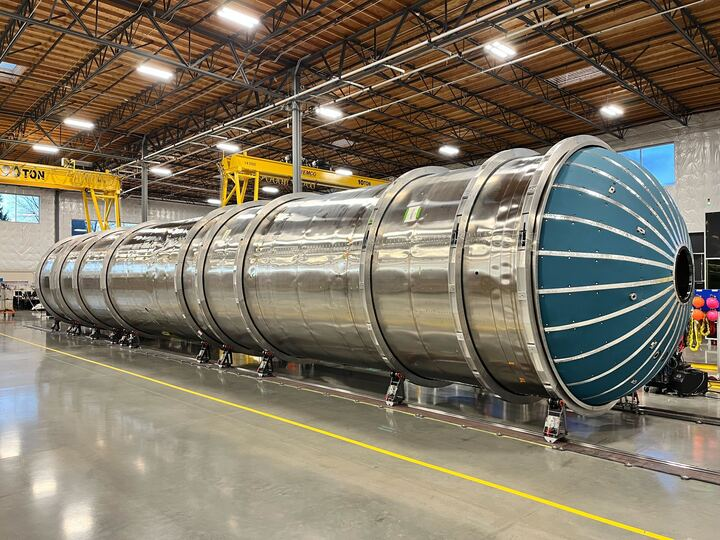
Stoke Space Technologies has significantly bolstered its financial runway, announcing on February 10, 2026, an extension of its Series D financing round to $860 million—a $350 million increase from the $510 million initially raised in October 2025. This brings the Kent, Washington-based company’s total funding to $1.34 billion, a clear signal of investor confidence in its fully and rapidly reusable Nova launch vehicle.
According to CEO Andy Lapsa, the additional capital will accelerate “future elements of its product roadmap” while supporting the activation of Launch Complex 14 (LC-14) at Cape Canaveral Space Force Station and expanding Nova production capacity. The company has been methodically building out its Florida launch site, recently completing the launch pad, installing oxygen and fuel “farms,” and finishing its horizontal integration facility. On February 20, Stoke raised the U.S. flag over LC-14 for the first time since breaking ground—marking a symbolic milestone in its transformation of a historic Mercury-era launch complex.
While no Canadian partnerships or payloads were mentioned in February’s updates, Canadian space enthusiasts may note that Stoke’s focus on high-tempo, aircraft-like launch operations aligns with growing global demand for responsive, low-cost access to space—potentially relevant to Canada’s future microsatellite and Earth observation missions. The company continues to test its Zenith engine and develop subsystems at its Moses Lake, Washington facility, with orbital launch still on the horizon.
Firefly Aims for Alpha Return-to-Flight, Celebrates Blue Ghost Anniversary
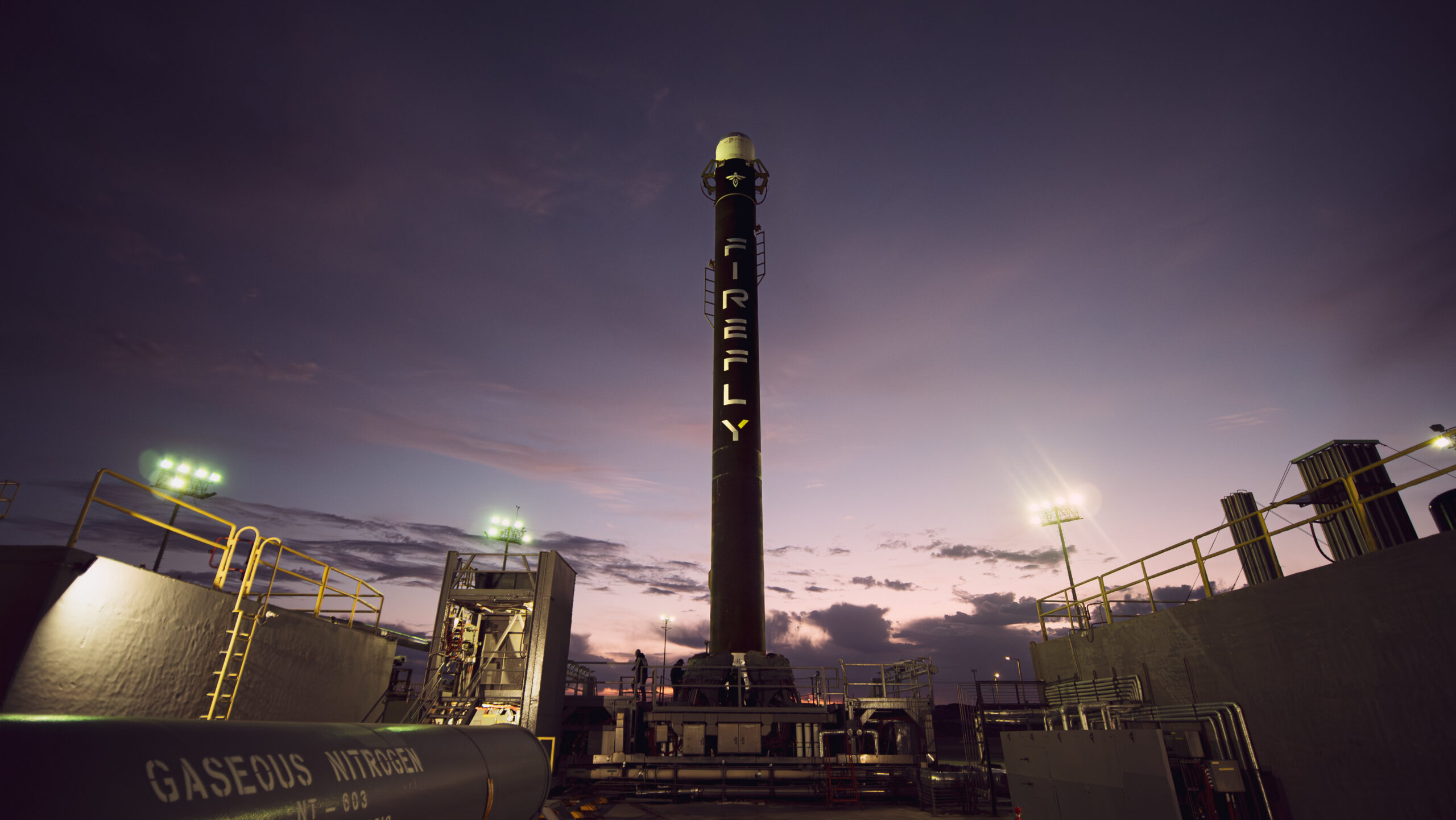
Firefly Aerospace is preparing for its next milestone: the “Stairway to Seven” mission, the seventh flight of its Alpha rocket, now targeting launch no earlier than February 27, 2026, from Vandenberg Space Force Base in California. The delay from an earlier February 18 window was due to severe local weather, the company confirmed on February 17. This flight serves as a dedicated return-to-flight test focused on achieving nominal performance from both stages—rather than deploying payloads—following a previous anomaly.
While the Alpha launch approaches, Firefly has spent much of February celebrating the one-year anniversary of its historic Blue Ghost lunar lander mission, which touched down on the Moon in late February 2025. The company has released retrospective content, including images of Earth from lunar orbit and mission highlights, and noted that Blue Ghost’s success earned it the Nelson P. Jackson Aerospace Award—joining the ranks of Apollo-era achievements. Firefly is also preparing for a second Moon mission, likely aboard a SpaceX Falcon 9, as hinted in a February 16 tweet.
From a Canadian perspective, while Firefly hasn’t yet flown Canadian payloads, its growing role in NASA’s Commercial Lunar Payload Services (CLPS) program could present opportunities for Canadian lunar science instruments or technology demonstrations in the future. For now, the company’s focus remains on proving Alpha’s reliability and building on its lunar legacy.
Relativity Space Advances Terran R Build Amid Steady Infrastructure Growth
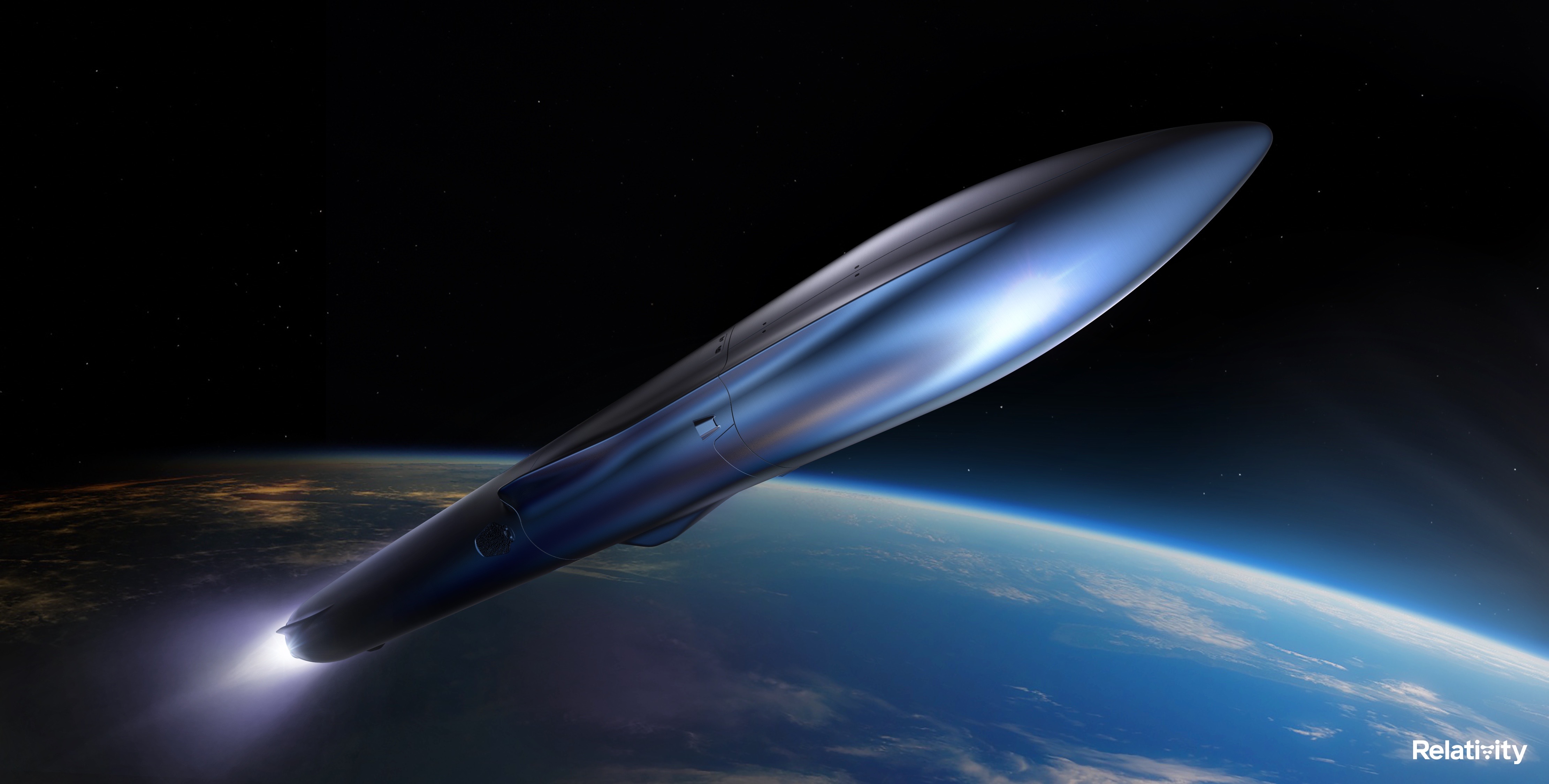
Relativity Space continues its methodical march toward the debut of its Terran R reusable rocket, with a detailed January 2026 progress update published on February 9. The company reported significant strides across design, manufacturing, testing, and launch infrastructure—though no launches or major tests occurred in February.
In design, Relativity released 1,856 flight parts, with both stage one and stage two shipping assemblies over 90% complete. Manufacturing is advancing in parallel: the stage one tank has moved off the friction stir welder into integration, while stage two has all cryogenic composite pressure vessels installed. Propulsion work continues at NASA’s Stennis Space Center, where more first-stage Aeon R engines have been shipped for acceptance testing, and Aeon V development testing remains underway.
At Cape Canaveral’s Launch Complex 16, construction is progressing through Florida’s winter. The horizontal integration facility’s booster section is nearly fully sided, insulation work is halfway done, and structural steel installation has begun on the launch mount following concrete curing. While Terran R’s inaugural flight remains unannounced, the company’s steady build-out suggests a launch is likely still months away.
There are no reported Canadian partnerships or payloads in Relativity’s current manifest, but as a future medium-to-heavy lift provider, it could eventually serve Canadian satellite operators seeking dedicated launches. For now, the company’s focus is squarely on hardware integration and ground systems maturation.
Axiom Space Lands $350M and NASA’s Fifth Private Mission
Axiom Space has had a banner February, securing $350 million in new financing on February 12 and confirming its fifth private astronaut mission (Ax-5) to the International Space Station under a NASA order signed in January. The funding round, co-led by Type One Ventures and Qatar Investment Authority, will accelerate development of both the Axiom Station—the planned commercial successor to the ISS—and the AxEMU spacesuit destined for NASA’s Artemis III Moon landing.
Ax-5 is currently scheduled to launch no earlier than January 2027 from Kennedy Space Center, with a 14-day docked stay planned. The crew has not yet been announced, but previous Axiom missions have included astronauts from Saudi Arabia, Turkey, India, and Poland—highlighting the company’s role in expanding global access to space. Notably, Ax-5 will include payload integration support from Voyager Technologies, Inc., a new teammate for the mission.
For Canadians, Axiom’s model offers a potential pathway to low-Earth orbit, especially as the ISS nears retirement. While no Canadian astronauts have flown on Axiom missions yet, the Canadian Space Agency’s interest in commercial LEO destinations could eventually lead to collaboration. Meanwhile, the AxEMU spacesuit has completed in-house technical evaluation and is now entering NASA’s Critical Design Review—a key step toward lunar surface operations by 2027.
Citations
- “Stoke Space Technologies Extends Previously Announced Series D Financing to $860 Million” – https://www.stokespace.com/stoke-space-technologies-extends-previously-announced-series-d-financing-to-860-million/
- “Firefly prepares Alpha Flight 7 stairway to seven mission” – https://www.spacedaily.com/reports/Firefly_prepares_Alpha_Flight_7_stairway_to_seven_mission_999.html
- “January 2026 Company Update” – https://www.relativityspace.com/press-release/2026/2/6/january-2026-company-updatenbspnbsp
- “Axiom Space Secures $350M in Financing to Accelerate Space Station, Spacesuit Development” – https://www.axiomspace.com/release/axiom-space-secures-350m-financing-to-accelerate-space-station-spacesuit-development
- “NASA Selects Axiom Space for Fifth Private Astronaut Mission to International Space Station” – https://www.axiomspace.com/release/nasa-selects-axiom-space-for-fifth-private-astronaut-mission-to-international-space-station
Upcoming Launches
Stairway to Seven
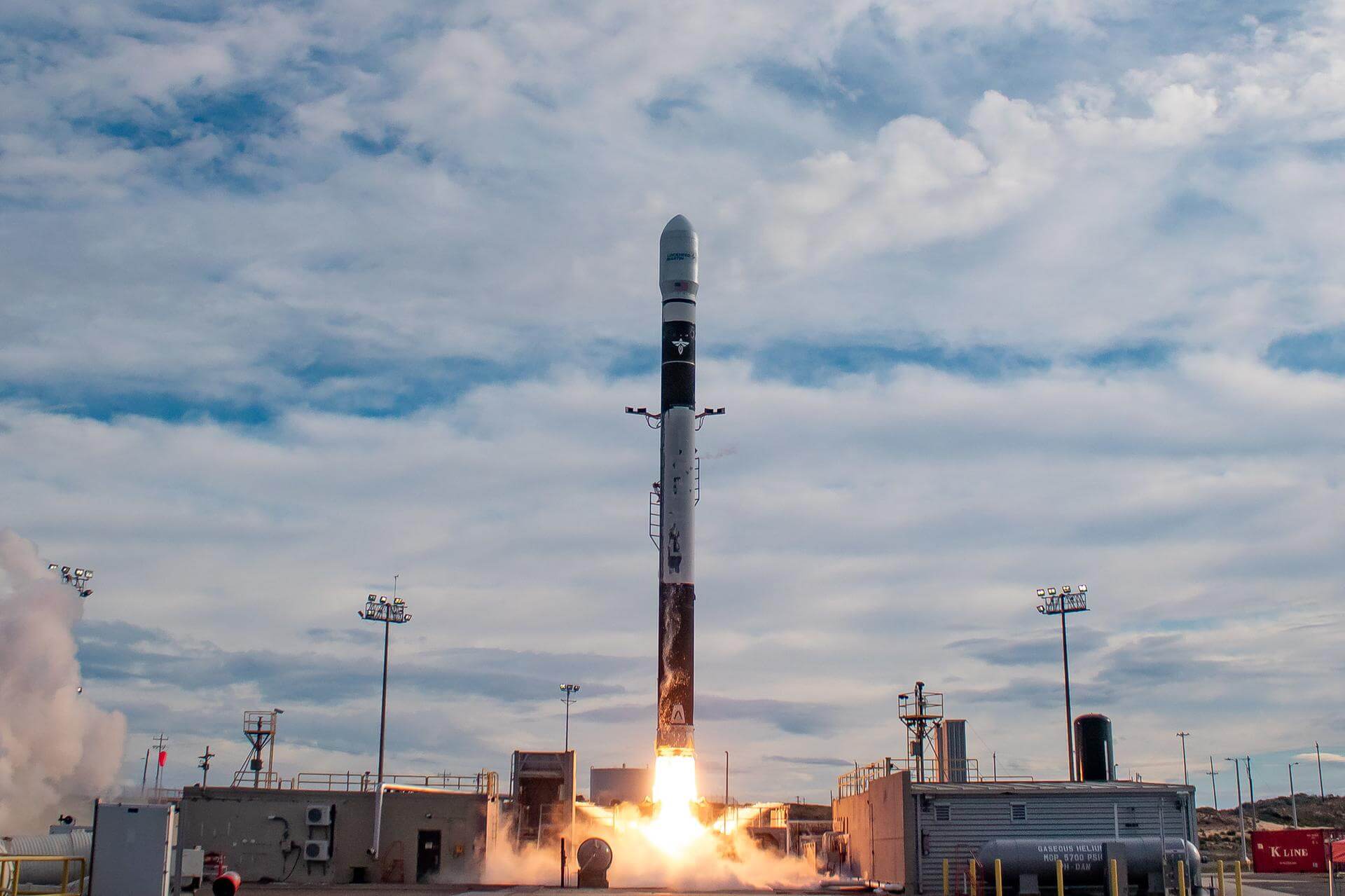
Launch Provider: Firefly Aerospace – Commercial
Launch Date: February 28, 2026
Launch Time: 12:50 AM UTC
Vehicle: Firefly Alpha
Brief: Firefly Alpha’s Flight 7 will be a test flight and return-To-Flight for the launch vehicle after its April 2025 launch failure. It will test and validate key systems ahead of Firefly’s Block II configuration upgrade on Flight 8 that’s designed to enhance reliability and manufacturability across the vehicle.
Flight 7 will be the last flown in Alpha’s current configuration and will test multiple Block II subsystems, including the in-house avionics and thermal improvements, to gain flight heritage and validate lessons learned ahead of the full configuration upgrade on Flight 8.
VICTUS HAZE Jackal
Launch Provider: Firefly Aerospace – Commercial
Launch Date: June 30, 2026
Launch Time: 12:00 AM UTC
Vehicle: Firefly Alpha Block 2
Brief: True Anomaly’s Jackal Autonomous Orbital Vehicle (AOV) will support U.S. Space Force Space Systems Command’s VICTUS HAZE Tactically Responsive Space (TacRS) mission with operations in orbit proximity with another spacecraft built by Rocket Lab National Security.
The spacecraft, once completed, will remain on call until the U.S. Space Force provides the notice to launch. The Firefly team will then have 24 hours to transport the payload fairing to the pad, mate the fairing to the Alpha rocket, fuel the rocket, and launch within the first available window.
QuickSounder
Launch Provider: Firefly Aerospace – Commercial
Launch Date: September 30, 2026
Launch Time: 12:00 AM UTC
Vehicle: Firefly Alpha Block 2
Brief: QuickSounder is the first satellite mission of the Near Earth Orbit Network (NEON) program of the National Oceanic and Atmospheric Administration (NOAA), which aims to replace the current Joint Polar Satellite System (JPSS) series of polar orbit weather satellites. This pathfinder mission will demonstrate NOAA’s ability to launch a small satellite within 3 years, flying a refurbished Advanced Technology Microwave Sounder (ATMS) instrument to polar orbit.
INCUS
Launch Provider: Firefly Aerospace – Commercial
Launch Date: October 31, 2026
Launch Time: 12:00 AM UTC
Vehicle: Firefly Alpha Block 2
Brief: The Investigation of Convective Updrafts (INCUS) is a NASA Earth science mission led by Colorado State University that will investigate the behavior of tropical storms in order to better represent these storms in weather and climate models. It consists of 3 SmallSats flying in tight coordination to study why convective storms, heavy precipitation, and clouds occur exactly when and where they form.
Each satellite will have a high frequency precipitation radar that observes rapid changes in convective cloud depth and intensities. 1 of the 3 satellites also will carry a microwave radiometer to provide the spatial content of the larger scale weather observed by the radars. By flying so closely together, the satellites will use the slight differences in when they make observations to apply a novel time-differencing approach to estimate the vertical transport of convective mass.
TacSat
Launch Provider: Firefly Aerospace – Commercial
Launch Date: December 31, 2026
Launch Time: 12:00 AM UTC
Vehicle: Firefly Alpha Block 2
Brief: First of up to 25 launches of Low Earth Orbit technology demonstration satellites to be built and operated by Lockheed Martin.
TacSat is an intelligence, surveillance and reconnaissance spacecraft with a mission to prove specialized sensing and communications capabilities on orbit. The satellite will participate in exercises that highlight cross-domain kill-web connectivity, enabling timely execution of tactical space missions.
TacSat will host a proven Lockheed Martin infrared sensor on board that brings previously developed technology to space for the first time. This sensor produces high quality imagery and it can interface with federated Battle Management Command & Control (BMC2) combat systems to provide joint forces with a comprehensive view of threats.
The satellite will also feature Lockheed Martin’s first 5G.MIL® payload on orbit. This provides cellular-like networking for military space assets, making satellite constellations more resilient. It also helps enable seamless connectivity with tools in the air, at sea and on land.
Launch operation will also again demonstrate responsive space pre-launch operation capabilities.

Leave a Reply