
The Bright Blue Origin: Blue Origin Shifts Gears: Moon Over Tourism, New Glenn on the Horizon
From Suborbital to Lunar: A Strategic Pivot
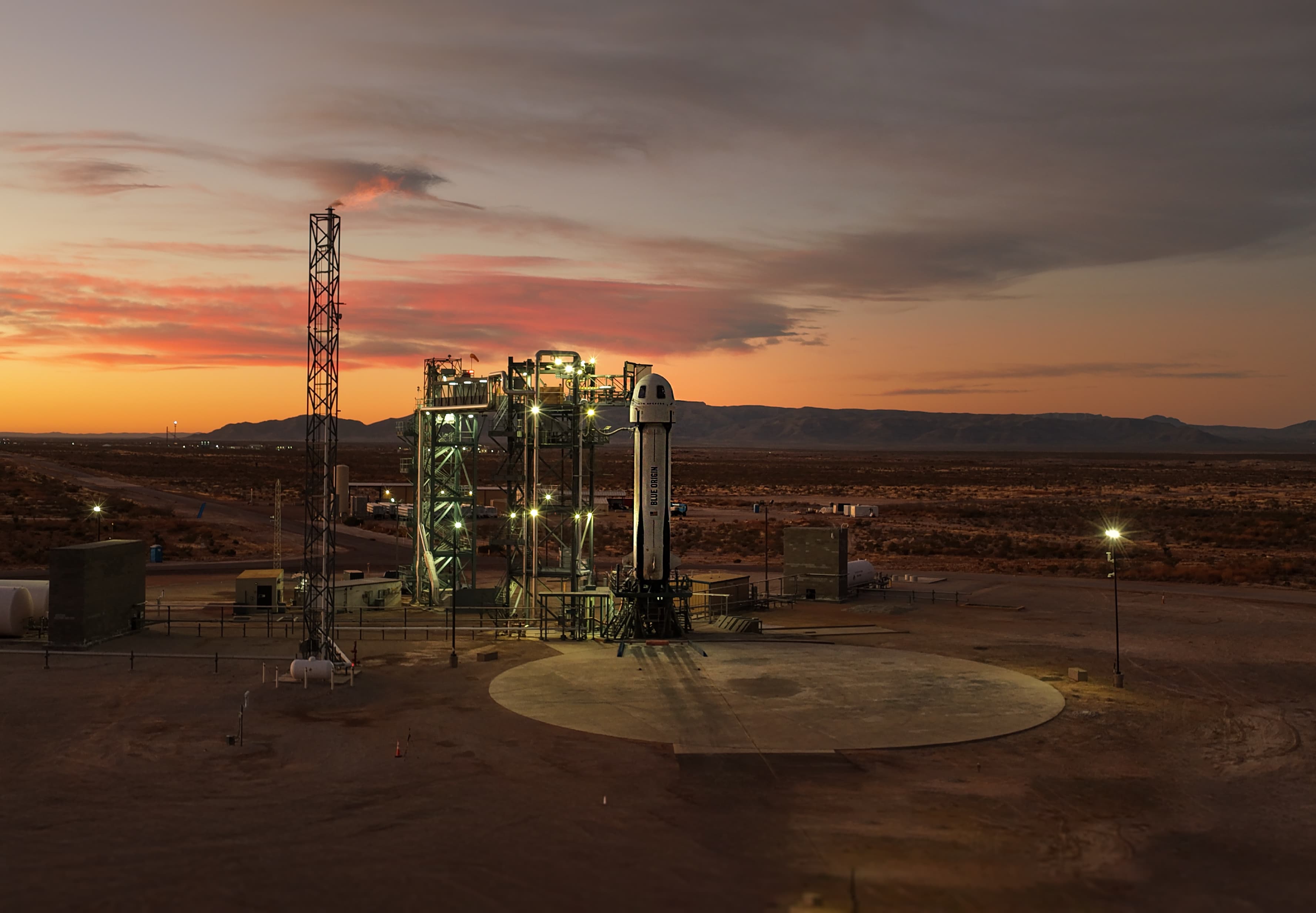
Blue Origin has officially paused its New Shepard suborbital space tourism program—for at least two years—to redirect resources toward its lunar ambitions. The announcement, made on January 30, 2026, marks a significant strategic shift for the Kent, Washington-based company. While New Shepard has successfully flown 38 missions and carried 98 humans above the Kármán line, the final flight of this phase, NS-38, took place on January 22, 2026, with a crew of six including Blue Origin’s own Dr. Laura Stiles, Director of New Shepard Launch Operations.
The decision underscores Blue Origin’s intensified focus on the Artemis program and its Blue Moon lunar lander. The company is now accelerating development of its human lunar capabilities, with the Blue Moon MK1 lander—recently named Endurance—undergoing critical thermal vacuum testing at NASA’s Johnson Space Center in Houston. According to Blue Origin CEO Dave Limp, the lunar lander entered Chamber A on February 13, 2026, for an 11-day test simulating the extreme conditions of space and the lunar surface.
While Canadian space enthusiasts may not see any direct local involvement in the New Shepard program, the pause could have ripple effects on microgravity research access. New Shepard has flown more than 200 scientific payloads, including experiments from academic institutions and government agencies. If Canadian researchers previously relied on this platform, they may now need to seek alternative suborbital or orbital opportunities—though Blue Origin hasn’t ruled out resuming flights after 2028.
New Glenn Preps for Third Flight, Eyes February Launch
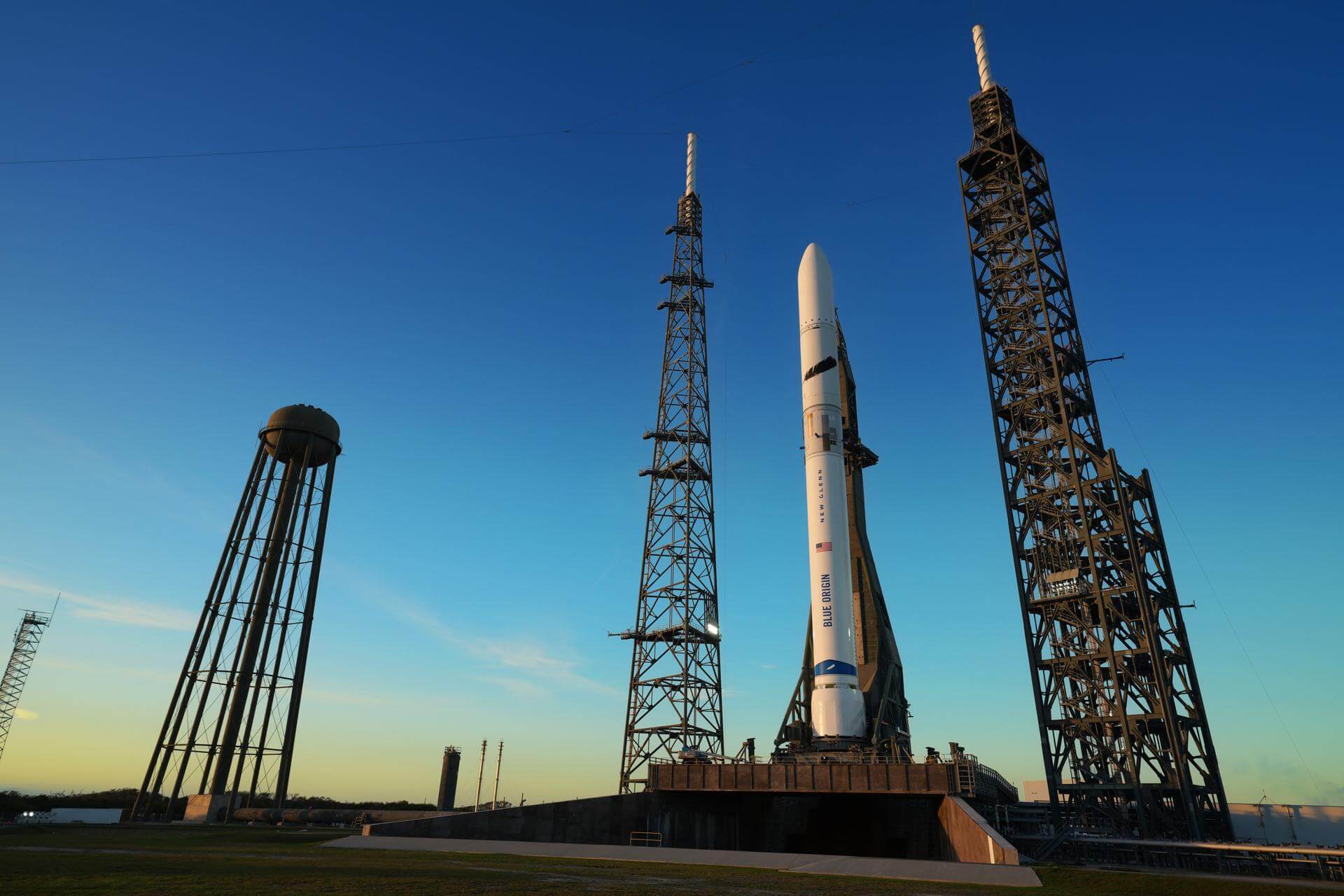
While suborbital tourism takes a back seat, Blue Origin’s heavy-lift orbital rocket, New Glenn, is moving full steam ahead. The company’s third mission, designated NG-3, is scheduled for launch no earlier than late February 2026 from Launch Complex 36 at Cape Canaveral Space Force Station in Florida.
NG-3 will carry AST SpaceMobile’s next-generation Block 2 BlueBird satellite, a key component of a cellular broadband network designed to enable standard mobile phones to connect directly to space-based coverage. This mission continues Blue Origin’s trend of securing commercial customers for its orbital launch services—a vital step in establishing New Glenn as a reliable alternative to competitors like SpaceX’s Falcon 9.
Notably, the booster for NG-3 is the same one that flew on the NG-2 mission, where it successfully landed under the name “Never Tell Me The Odds.” Its refurbishment and reuse demonstrate Blue Origin’s commitment to lowering launch costs through reusability—a philosophy that recently sparked internal debate, as a February 2026 Ars Technica report noted new job postings suggesting the company may be reconsidering plans to make the second stage reusable as well.
For Canadian observers, while there’s no direct Canadian payload on NG-3, the success of New Glenn could influence Canada’s future launch options, especially for larger satellites or national security missions. As Canada continues to develop its sovereign space capabilities, having additional U.S.-based heavy-lift providers strengthens strategic flexibility.
The Internet Of Amazon
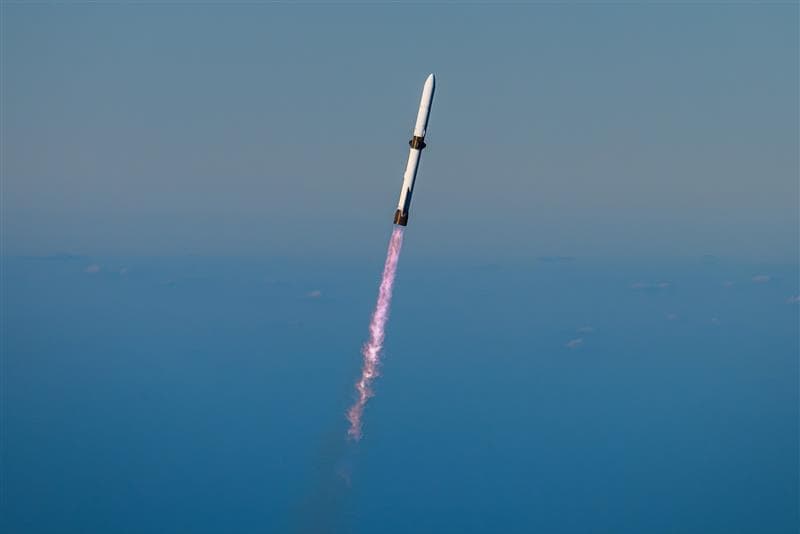
Though technically a separate entity under Amazon, the Amazon LEO (Low Earth Orbit) satellite internet project is often associated with Jeff Bezos’s broader space ambitions. On February 12, 2026, Amazon successfully launched its first “heavy-lift” mission, Leo Europe 1, using Europe’s new Ariane 64 rocket from Kourou, French Guiana. The mission deployed 32 satellites, bringing the total constellation to over 200.
This launch—conducted by Arianespace, not Blue Origin—marks Amazon’s move toward competing directly with Starlink. While Blue Origin’s New Glenn is also slated to carry future Amazon LEO satellites, this particular mission highlights the multinational nature of the new space race. For Canadian users, especially in remote northern communities, Amazon LEO could eventually offer another high-speed internet option, pending regulatory approval from the Canadian Radio-television and Telecommunications Commission (CRTC).

Blue Side Projects
Beyond rockets and lunar landers, Blue Origin is expanding its space infrastructure ambitions. On January 21, 2026, the company unveiled TeraWave—a planned satellite communications network designed to deliver symmetrical data speeds of up to 6 terabits per second (Tbps) anywhere on Earth. Unlike consumer-focused broadband constellations, TeraWave targets enterprise, government, and data centre clients requiring ultra-high-throughput, low-latency connectivity.
The architecture includes 5,408 optically interconnected satellites across low and medium Earth orbits, with deployment slated to begin in Q4 2027. While this is still years away, it signals Blue Origin’s intent to compete in the high-end data market—an area where Canadian telecoms and research institutions may eventually seek partnerships.
Additionally, Blue Origin’s docking system recently passed a major milestone. On January 27, 2026, the company confirmed successful soft capture system testing at NASA Johnson’s Six-Degree-Of-Freedom facility. This pressurized docking system, compliant with international standards, will first fly on the Blue Moon MK2 lunar lander and later on the Orbital Reef commercial space station—a project co-developed with Sierra Space.
Citations
- “Blue Origin to Pause New Shepard Flights for No Less Than Two Years” – https://www.blueorigin.com/news/new-shepard-to-pause-flights
- “New Glenn-3 to Launch AST SpaceMobile’s BlueBird Satellite” – https://www.blueorigin.com/news/new-glenn-3-to-launch-ast-spacemobile-bluebird-satellite
- “Blue Origin Completes 38th New Shepard Flight to Space” – https://www.blueorigin.com/news/new-shepard-ns-38-mission
- “Blue Origin Introduces TeraWave, a 6 Tbps Space-Based Network for Global Connectivity” – https://www.blueorigin.com/news/blue-origin-introduces-terawave-space-based-network-for-global-connectivity
- “To reuse or not reuse—the eternal debate of New Glenn’s second stage reignites” – https://arstechnica.com/space/2026/02/to-reuse-or-not-reuse-the-eternal-debate-of-new-glenns-second-stage-reignites/
- “First Ariane 64 launches Amazon Leo satellites” – https://spacenews.com/first-ariane-64-launches-amazon-leo-satellites/
- Blue Origin Twitter – https://x.com/blueorigin/status/2018333372473364779
- Dave Limp Twitter – https://x.com/davill/status/2022400032587289084
Upcoming Launches
BlueBird Block 2 #2
Launch Provider: Blue Origin – Commercial
Launch Date: March 31, 2026
Launch Time: 12:00 AM UTC
Vehicle: New Glenn
Brief: AST SpaceMobile’s Block 2 BlueBird satellites are designed to deliver up to 10 times the bandwidth capacity of the BlueBird Block 1 satellites, required to achieve 24/7 continuous cellular broadband service coverage in the United States, with beams designed to support a capacity of up to 40 MHz, enabling peak data transmission speeds up to 120 Mbps, supporting voice, full data and video applications. The Block 2 BlueBirds, featuring as large as 2400 square foot communications arrays, will be the largest satellites ever commercially deployed in Low Earth orbit once launched.
This launch will feature 1 satellite, BlueBird 7/BlueBird Block 2 FM2.
Amazon Leo (New Glenn #1)
Launch Provider: Blue Origin – Commercial
Launch Date: December 31, 2026
Launch Time: 12:00 AM UTC
Vehicle: New Glenn
Brief: Amazon Leo, formerly known as Project Kuiper, is a mega constellation of satellites in Low Earth Orbit that will offer broadband internet access, this constellation will be managed by Kuiper Systems LLC, a subsidiary of Amazon. This constellation is planned to be composed of 3,276 satellites. The satellites are projected to be placed in 98 orbital planes in three orbital layers, one at 590 km, 610 km and 630 km altitude.
61 satellites will be carried on each New Glenn launch.
BlueBird Block 2 #4
Launch Provider: Blue Origin – Commercial
Launch Date: December 31, 2026
Launch Time: 12:00 AM UTC
Vehicle: New Glenn
Brief: AST SpaceMobile’s Block 2 BlueBird satellites are designed to deliver up to 10 times the bandwidth capacity of the BlueBird Block 1 satellites, required to achieve 24/7 continuous cellular broadband service coverage in the United States, with beams designed to support a capacity of up to 40 MHz, enabling peak data transmission speeds up to 120 Mbps, supporting voice, full data and video applications. The Block 2 BlueBirds, featuring as large as 2400 square foot communications arrays, will be the largest satellites ever commercially deployed in Low Earth orbit once launched.
This launch will feature 8 satellites.
Blue Moon Pathfinder
Launch Provider: Blue Origin – Commercial
Launch Date: December 31, 2026
Launch Time: 12:00 AM UTC
Vehicle: New Glenn
Brief: First flight of Blue Origin’s Blue Moon MK1 lunar lander, MK1-SN001 “Endurance”.
Blue Moon Pathfinder Mission 2 & VIPER
Launch Provider: Blue Origin – Commercial
Launch Date: December 31, 2027
Launch Time: 12:00 AM UTC
Vehicle: New Glenn
Brief: 2nd of the National Team’s Blue Moon MK1 lunar lander test missions to validate the necessary technologies for its HLS lunar module. Some of the life support hardware will travel on this mission in preparation for the first crew Blue Moon flight.
This mission will also carry NASA’s VIPER (Volatiles Investigating Polar Exploration Rover) lunar rover. VIPER is designed to explore the relatively nearby but extreme environment of the Moon in search of ice and other potential resources. This mobile robot will land at the South Pole of the Moon on a 100-day mission, in order to teach us about the origin and distribution of water on the Moon and help determine how we can harvest the Moon’s resources for future human space exploration.
VIPER is designed to roam the Moon using its three instruments and a 1 meter long drill to detect and analyze various lunar soil environments at a range of depths and temperatures. The rover can venture into permanently shadowed craters, some of the coldest spots in the solar system, where ice reserves have endured for billions of years.
The rover was originally slated to launch on Astrobotic’s Griffin Mission One lunar lander (with the Falcon Heavy rocket), but the VIPER mission was cancelled in July 2024 due to budget cuts. After consulting with the industry to find alternative ways to deliver the rover to the lunar surface, NASA ultimately chose to launch it with Blue Origin’s 2nd Blue Moon MK1 lander mission.

Leave a Reply