
The Bright Blue Origin: Blue Origin Reuses Boosters, Reaches for the Stars—and Earth’s Internet
New hires, new projects, New Glenn reaching for the stars once more
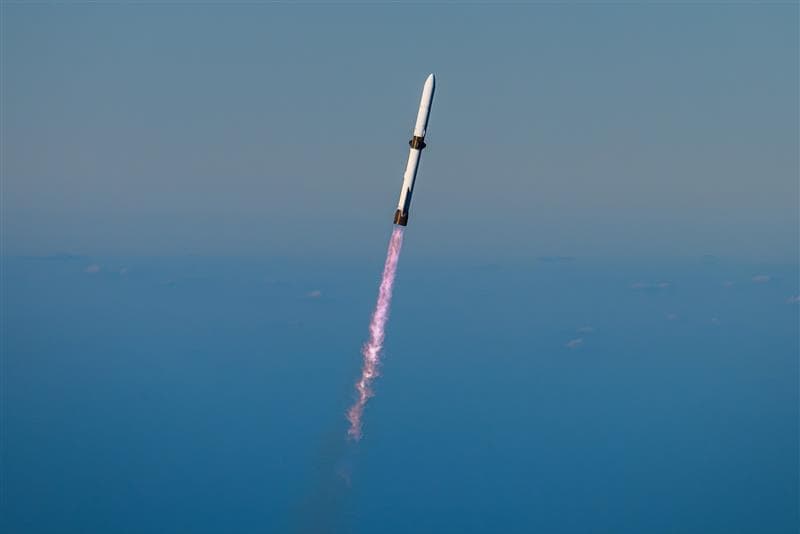
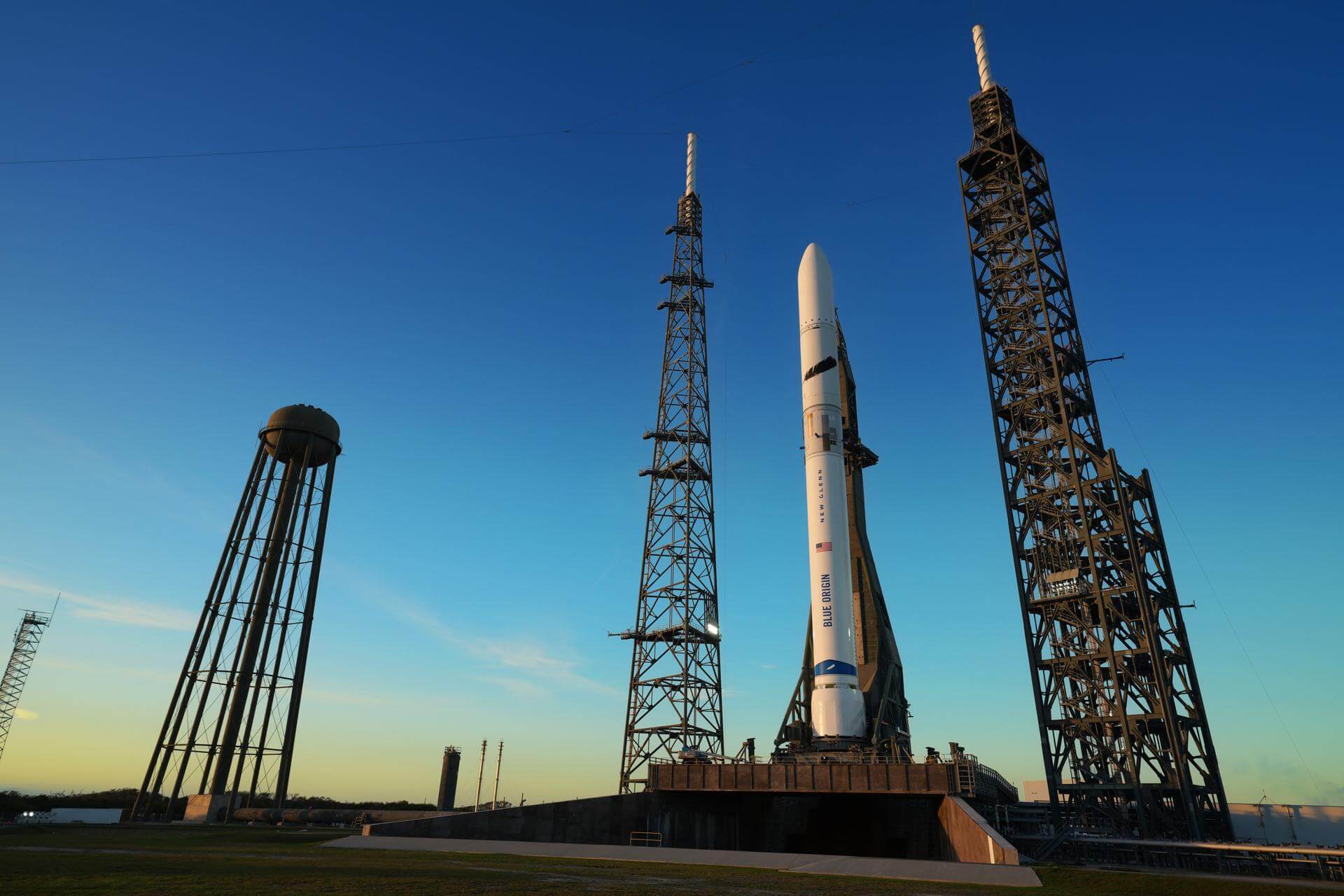
Blue Origin is making significant strides in reusability and infrastructure this month, with its New Glenn booster set to fly again on the NG-3 mission. Scheduled for late February 2026, NG-3 will carry AST SpaceMobile’s Block 2 BlueBird satellite from Launch Complex 36 at Cape Canaveral Space Force Station. Notably, this will be the first time Blue Origin reuses a New Glenn first stage—the same “Never Tell Me The Odds” booster that successfully landed after the NG-2 mission.
“Our customers need a reliable, cost-effective launch vehicle, and New Glenn is purpose-built to serve their needs,” said Dave Limp, CEO of Blue Origin. Reusing the booster not only cuts costs but also signals Blue Origin’s growing confidence in its hardware and operational tempo.
Adding to the company’s leadership depth, former United Launch Alliance (ULA) president and CEO Tory Bruno has joined Blue Origin as head of its newly formed National Security business unit. Bruno, who led ULA for nearly 12 years, brings invaluable experience in government and defence launch services—a critical market as Blue Origin eyes national security contracts.
Pale Blue Updates
On January 22, 2026, Blue Origin successfully completed its 38th New Shepard mission—the first of the year—carrying six passengers to space from Launch Site One in West Texas. The crew included paying customers Tim Drexler, Dr. Linda Edwards, Alain Fernandez, Alberto Gutiérrez, and Jim Hendren, along with Blue Origin’s own Dr. Laura Stiles, Director of New Shepard Launch Operations. Stiles replaced a crew member who withdrew due to illness, making her the first Blue Origin employee to fly on a mission while actively managing launch operations.
The NS-38 mission reached an apogee of 106 km (346,722 feet AGL), comfortably above the Kármán line, and returned safely after 10 minutes and 12 seconds of flight. This marked the 98th human flown by New Shepard (92 unique individuals), reaffirming the vehicle’s reliability for suborbital tourism and research.
Meanwhile, Blue Origin is preparing for the next phase of its orbital ambitions. The New Glenn-3 launch, slated for late February, will continue to demonstrate the company’s commitment to rapid reuse—a key requirement for maintaining competitive launch cadence. With the same booster flying back-to-back missions, Blue Origin is inching closer to the operational rhythm long mastered by rivals like SpaceX.

About Amazon Leo…
While not a Blue Origin project, Amazon’s Project Kuiper—branded as Amazon Leo—remains relevant to the broader space ecosystem, especially given Jeff Bezos’s role as founder of both ventures. Arianespace is set to launch the first 32 Amazon Leo satellites on February 12, 2026, aboard the new Ariane 64 configuration from French Guiana. This inaugural “LE-01” mission marks the beginning of Amazon’s ambitious plan to compete with Starlink in the global broadband market. Blue Origin is not involved in these launches, which are handled by Arianespace and ULA, but the two Bezos-backed initiatives continue to shape the commercial space landscape in parallel.

Blue Side Projects
Blue Origin also unveiled its new satellite internet constellation, TeraWave, on January 21, 2026. Unlike consumer-focused services like Starlink or Amazon Leo, TeraWave targets enterprise, data centre, and government clients with symmetrical speeds of up to 6 Tbps. The system will deploy 5,408 satellites across low Earth orbit (LEO) and medium Earth orbit (MEO), using both Q/V-band radio frequencies and optical interlinks. Deployment is scheduled to begin in Q4 2027.
Elsewhere, Blue Origin’s Honeybee Robotics subsidiary shipped the Sample Delivery Carousel to NASA’s Goddard Space Flight Centre for integration into the Dragonfly mission to Saturn’s moon Titan. The carousel is part of the Drill for Acquisition of Complex Organics (DrACO) system, which will extract and transfer icy samples for analysis.
Additionally, Blue Origin and Nimbus Power Systems validated advanced fuel cells for lunar life support, completing shock and vibration tests that simulate Artemis mission conditions. These gravity-independent fuel cells could play a crucial role in sustaining crews on the Moon—a timely development as Blue Origin’s Blue Moon MK1 lander undergoes thermal vacuum testing at NASA Johnson Space Centre.
Citations
- “Blue Origin to reuse New Glenn booster on next launch” – https://spacenews.com/blue-origin-to-reuse-new-glenn-booster-on-next-launch/
- “New Glenn-3 to Launch AST SpaceMobile’s BlueBird Satellite” – https://www.blueorigin.com/news/new-glenn-3-to-launch-ast-spacemobile-bluebird-satellite
- “Blue Origin Completes 38th New Shepard Flight to Space” – https://www.blueorigin.com/news/new-shepard-ns-38-mission
- “Blue Origin Introduces TeraWave, a 6 Tbps Space-Based Network for Global Connectivity” – https://www.blueorigin.com/news/blue-origin-introduces-terawave-space-based-network-for-global-connectivity
- “Former ULA president and CEO Tory Bruno joins Blue Origin” – https://spaceflightnow.com/2025/12/26/former-ula-president-and-ceo-tory-bruno-joins-blue-origin/
- “Blue Origin and Nimbus validate fuel cells for lunar life support” – https://www.spacedaily.com/reports/Blue_Origin_and_Nimbus_validate_fuel_cells_for_lunar_life_support_999.html
- “Arianespace to begin Amazon Leo launches in February” – https://spacenews.com/arianespace-to-begin-amazon-leo-launches-in-february/
Upcoming Launches
BlueBird Block 2 #2
Launch Provider: Blue Origin – Commercial
Launch Date: February 28, 2026
Launch Time: 12:00 AM UTC
Vehicle: New Glenn
Brief: AST SpaceMobile’s Block 2 BlueBird satellites are designed to deliver up to 10 times the bandwidth capacity of the BlueBird Block 1 satellites, required to achieve 24/7 continuous cellular broadband service coverage in the United States, with beams designed to support a capacity of up to 40 MHz, enabling peak data transmission speeds up to 120 Mbps, supporting voice, full data and video applications. The Block 2 BlueBirds, featuring as large as 2400 square foot communications arrays, will be the largest satellites ever commercially deployed in Low Earth orbit once launched.
This launch will feature 1 satellite, BlueBird 7/BlueBird Block 2 FM2.
Amazon Leo (New Glenn #1)
Launch Provider: Blue Origin – Commercial
Launch Date: December 31, 2026
Launch Time: 12:00 AM UTC
Vehicle: New Glenn
Brief: Amazon Leo, formerly known as Project Kuiper, is a mega constellation of satellites in Low Earth Orbit that will offer broadband internet access, this constellation will be managed by Kuiper Systems LLC, a subsidiary of Amazon. This constellation is planned to be composed of 3,276 satellites. The satellites are projected to be placed in 98 orbital planes in three orbital layers, one at 590 km, 610 km and 630 km altitude.
61 satellites will be carried on each New Glenn launch.
BlueBird Block 2 #4
Launch Provider: Blue Origin – Commercial
Launch Date: December 31, 2026
Launch Time: 12:00 AM UTC
Vehicle: New Glenn
Brief: AST SpaceMobile’s Block 2 BlueBird satellites are designed to deliver up to 10 times the bandwidth capacity of the BlueBird Block 1 satellites, required to achieve 24/7 continuous cellular broadband service coverage in the United States, with beams designed to support a capacity of up to 40 MHz, enabling peak data transmission speeds up to 120 Mbps, supporting voice, full data and video applications. The Block 2 BlueBirds, featuring as large as 2400 square foot communications arrays, will be the largest satellites ever commercially deployed in Low Earth orbit once launched.
This launch will feature 8 satellites.
Blue Moon Pathfinder
Launch Provider: Blue Origin – Commercial
Launch Date: December 31, 2026
Launch Time: 12:00 AM UTC
Vehicle: New Glenn
Brief: First flight of Blue Origin’s Blue Moon MK1 lunar lander, MK1-SN001 “Endurance”.
Blue Moon Pathfinder Mission 2 & VIPER
Launch Provider: Blue Origin – Commercial
Launch Date: December 31, 2027
Launch Time: 12:00 AM UTC
Vehicle: New Glenn
Brief: 2nd of the National Team’s Blue Moon MK1 lunar lander test missions to validate the necessary technologies for its HLS lunar module. Some of the life support hardware will travel on this mission in preparation for the first crew Blue Moon flight.
This mission will also carry NASA’s VIPER (Volatiles Investigating Polar Exploration Rover) lunar rover. VIPER is designed to explore the relatively nearby but extreme environment of the Moon in search of ice and other potential resources. This mobile robot will land at the South Pole of the Moon on a 100-day mission, in order to teach us about the origin and distribution of water on the Moon and help determine how we can harvest the Moon’s resources for future human space exploration.
VIPER is designed to roam the Moon using its three instruments and a 1 meter long drill to detect and analyze various lunar soil environments at a range of depths and temperatures. The rover can venture into permanently shadowed craters, some of the coldest spots in the solar system, where ice reserves have endured for billions of years.
The rover was originally slated to launch on Astrobotic’s Griffin Mission One lunar lander (with the Falcon Heavy rocket), but the VIPER mission was cancelled in July 2024 due to budget cuts. After consulting with the industry to find alternative ways to deliver the rover to the lunar surface, NASA ultimately chose to launch it with Blue Origin’s 2nd Blue Moon MK1 lander mission.
