
Rocket Lab Roundup: Rocket Lab’s March Momentum: New Contracts, Completed Launches, and a Neutron Reality Check
Rocket Lab Expands Its Space Systems Empire
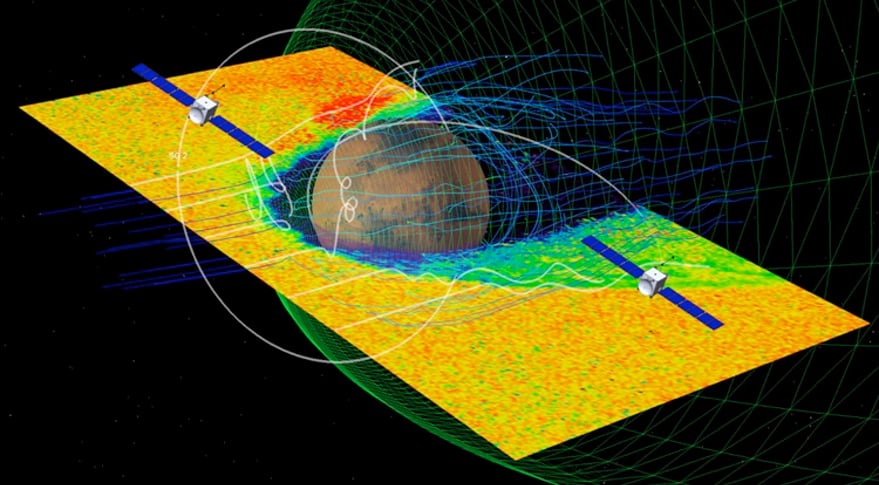
Rocket Lab isn’t just launching rockets—it’s steadily building a vertically integrated space empire, and February 2026 was a banner month for its spacecraft and component divisions. On February 26, the company announced it had completed commissioning for NASA’s twin ESCAPADE Mars-bound spacecraft, dubbed Blue and Gold. Built by Rocket Lab for the University of California Berkeley’s Space Sciences Laboratory, the probes are now loitering near the Earth–Sun Lagrange Point 2 (L2), roughly 1.5 million kilometres from Earth. They’ll remain there until November 2026, when they’ll slingshot toward Mars, arriving in September 2027 to study how solar wind strips molecules from the Martian atmosphere—a key puzzle for future human missions.
That same day, Rocket Lab revealed it had acquired Optical Support, Inc. (OSI), a Tucson-based specialist in high-precision optical and optomechanical systems. OSI’s tech has flown on missions as prestigious as the James Webb Space Telescope and will now bolster Rocket Lab’s national security payload capabilities, particularly for programs like the Space Development Agency’s Proliferated Warfighter Space Architecture. The acquisition adds 20 engineers and 22,000 square feet of advanced manufacturing space to Rocket Lab’s growing Arizona footprint.
Also on February 26, Rocket Lab unveiled its new silicon solar arrays, designed to power future gigawatt-scale space-based data centres. With terrestrial data centres straining under power and water demands, orbit offers cold temperatures, zero land constraints, and unlimited solar energy. Rocket Lab’s new arrays reduce reliance on geopolitically sensitive materials like gallium arsenide, using radiation-hardened silicon cells that can be mass-produced at lower cost—critical for mega-constellations and emerging orbital infrastructure.
And if hardware wasn’t enough, Rocket Lab also acquired Precision Components Ltd. in Auckland, New Zealand, establishing the new Auckland Machine Complex. This facility will support high-volume production of Electron components and feed into the delayed—but still progressing—Neutron rocket program. Combined with New Zealand’s recent regulatory update allowing up to 1,000 annual launches from Mahia Peninsula, Rocket Lab is clearly betting big on its Kiwi roots.
Recent Launches: Two Successful Missions in One Week
Rocket Lab kicked off March with back-to-back launch successes from opposite sides of the Pacific—a testament to its growing operational tempo.
First, on February 27, 2026, at 7:00 p.m. EST, Rocket Lab’s HASTE (Hypersonic Accelerator Suborbital Test Electron) vehicle lifted off from Launch Complex 2 at NASA’s Wallops Flight Facility in Virginia. The mission, named “That’s Not A Knife,” carried the DART AE scramjet-powered aircraft developed by Australian firm Hypersonix. The launch successfully deployed the vehicle into a suborbital hypersonic environment, marking Rocket Lab’s second HASTE mission in three months and its seventh overall—all with 100% success. The flight supports the U.S. Department of War’s Defense Innovation Unit in advancing hypersonic technology for national security.
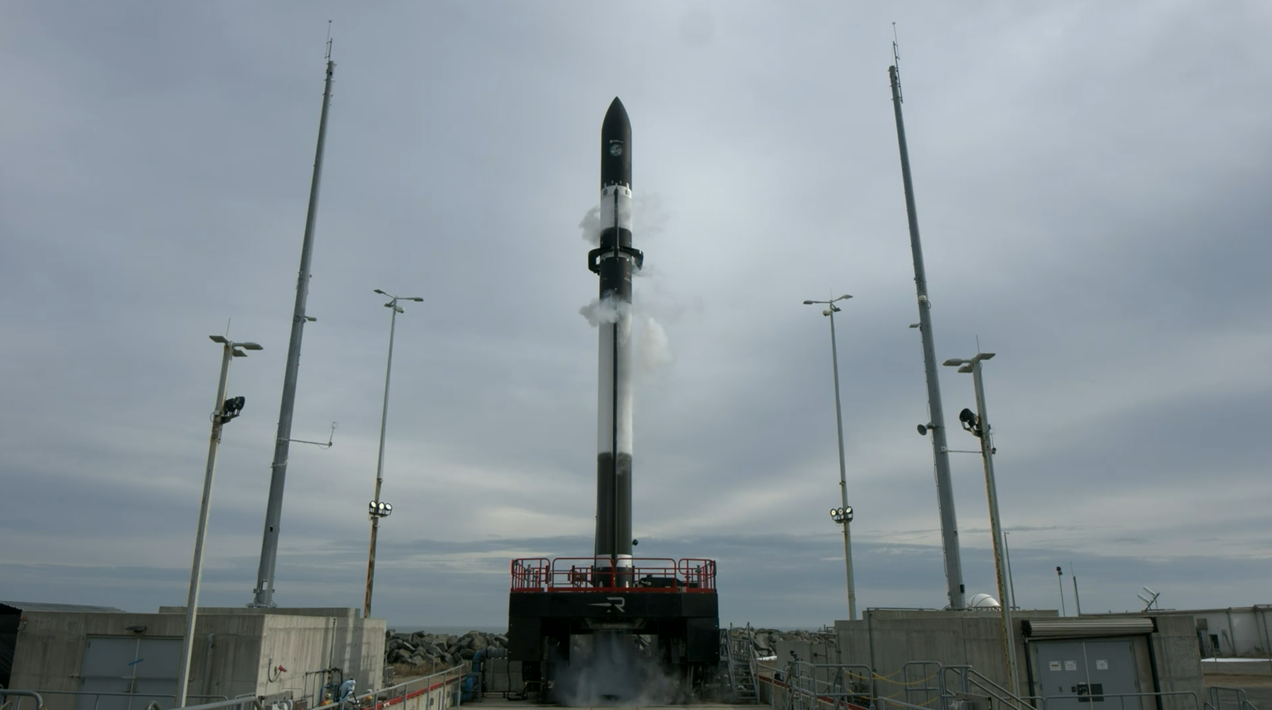
Just six days later, on March 5, 2026, at 6:53 p.m. EST (March 6, 12:53 p.m. NZDT), Rocket Lab launched its 83rd mission overall: “Insight At Speed Is A Friend Indeed.” An Electron rocket lifted off from Launch Complex 1 in Mahia, New Zealand, carrying a single satellite for an undisclosed customer—though strong evidence points to BlackSky. The payload was deployed into a 470-kilometre mid-inclination orbit using Rocket Lab’s Motorized Lightband separation system. The mission closely mirrors November 2025’s “Follow My Speed” launch, which BlackSky later confirmed carried its third Gen-3 Earth observation satellite. With BlackSky’s CEO recently stating the company has “the next satellite already at the launch site,” it’s highly likely this was the fourth Gen-3 spacecraft. BlackSky aims to have eight or nine such satellites in orbit by year’s end, all riding on Electron.

Neutron’s Debut Pushed to Late 2026
Rocket Lab’s much-anticipated medium-lift rocket, Neutron, won’t be flying as early as hoped. On January 21, 2026, a first-stage propellant tank ruptured during a hydrostatic pressure test at Rocket Lab’s Maryland facility. CEO Peter Beck confirmed the failure stemmed from a manufacturing defect in a critical composite joint—ironically, during testing beyond expected flight loads to assess safety margins.
While disappointing, the company is using the delay productively. Future tanks will be built using an automated fiber placement machine to eliminate human error, and minor design tweaks will increase structural margins. Beck emphasized reliability over speed: “The priority will always be to bring a reliable rocket to market, even if it means taking a few extra months.” As a result, Neutron’s inaugural flight is now no earlier than the fourth quarter of 2026. The setback hasn’t dampened demand for Electron, which remains the workhorse for smallsat operators worldwide.

Canadian Connection: Quiet but Confident
While no Canadian payloads or partnerships were explicitly announced this month, there’s a subtle but meaningful Canadian tie-in worth noting. On March 6, 2026, the Canadian Space Agency (CSA) tweeted a simple message: “100% mission success” with a video clip—coinciding precisely with Rocket Lab’s “Insight At Speed” launch. Though the CSA didn’t name the mission, the timing and context suggest Canadian interest, possibly related to downstream data services or ground station support for BlackSky’s constellation, which has Canadian government and commercial users.
More broadly, Rocket Lab’s expansion of responsive, dedicated smallsat launch aligns well with Canada’s growing emphasis on Earth observation and Arctic monitoring. As Rocket Lab’s launch cadence increases—targeting over 25 missions in 2026—Canadian operators seeking rapid, tailored access to orbit may find Electron an increasingly attractive option, especially as Neutron eventually opens up mid-size opportunities.
Citations
- “Rocket Lab Completes Spacecraft Commissioning for NASA’s ESCAPADE Mars Mission” – https://rocketlabcorp.com/updates/rocket-lab-completes-spacecraft-commissioning-for-nasas-escapade-mars-mission/
- “Rocket Lab Acquires Optical Support, Inc., Strengthening National Security Payload Capability” – https://rocketlabcorp.com/updates/rocket-lab-acquires-optical-support-inc-strengthening-national-security-payload-capability/
- “Rocket Lab Introduces Advanced Silicon Solar Arrays To Power Space-Based Data Centers” – https://rocketlabcorp.com/updates/rocket-lab-introduces-advanced-silicon-solar-arrays-to-power-space-based-data-centers/
- “Rocket Lab Establishes New Precision Machining Complex, Expands Manufacturing Footprint with Acquisition of Precision Components Ltd” – https://rocketlabcorp.com/updates/rocket-lab-establishes-new-precision-machining-complex-expands-manufacturing-footprint-with-acquisition-of-precision-components-ltd/
- “Mission Success: Rocket Lab Launches 2nd Hypersonic Test Mission in Three Months for Defense Innovation Unit” – https://rocketlabcorp.com/updates/mission-success-rocket-lab-launches-2nd-hypersonic-test-mission-in-three-months-for-defense-innovation-unit/
- “Mission Success: Rocket Lab Completes 83rd Launch” – https://rocketlabcorp.com/updates/mission-success-rocket-lab-completes-83rd-launch/
- “Rocket Lab launches satellite for undisclosed customer” – https://spacenews.com/rocket-lab-launches-satellite-for-undisclosed-customer/
- “Rocket Lab delays Neutron debut to late 2026” – https://spacenews.com/rocket-lab-delays-neutron-debut-to-late-2026/
- “NASA Wallops Supports First Rocket Lab HASTE Launch of 2026” – https://www.nasa.gov/image-article/nasa-wallops-supports-first-rocket-lab-haste-launch-of-2026/
- Peter Beck Tweet, March 6, 2026 – https://x.com/Peter_J_Beck/status/2029775489309847724

Leave a Reply