
Rocket Lab Roundup: Electrons Soar, Deals Close: Rocket Lab’s Busy March from a Canadian View
Expanding Horizons: Contracts, Acquisitions, and Strategic Moves
Rocket Lab wrapped up March 2026 with a flurry of strategic developments that underscore its growing role in both commercial and defence space sectors. Most notably, on March 30, the company announced it had received regulatory approval from Germany’s Federal Ministry for Economic Affairs and Energy to acquire Munich-based laser communications firm Mynaric. The roughly US$150 million deal, initially proposed in March 2025, faced months of scrutiny over national security concerns but ultimately cleared the final hurdle, with closure expected in April.
For Rocket Lab, this acquisition isn’t just about expanding its product portfolio—it’s about securing a critical technology bottleneck. Mynaric’s CONDOR Mk3 optical terminals, already integrated into Rocket Lab–built satellites for the U.S. Space Development Agency, enable high-bandwidth, secure data transfer between spacecraft via laser links. As next-generation constellations—military and commercial alike—increasingly rely on optical inter-satellite links, in-house access to this capability strengthens Rocket Lab’s vertical integration. Notably, Mynaric will remain headquartered in Munich, marking Rocket Lab’s first European operational foothold.
In parallel, Rocket Lab secured a major defence contract that further cements its role in U.S. national security infrastructure. On March 18, the company revealed it had won a US$190 million Pentagon deal for 20 hypersonic test flights under the Multi-Service Advanced Capability Hypersonic Test Bed (MACH-TB 2.0) program. These missions, scheduled over the next four years, will use Rocket Lab’s HASTE (Hypersonic Accelerator Suborbital Test Electron) vehicle—a suborbital variant of Electron—to loft experimental payloads at speeds exceeding Mach 5. The tests replicate the extreme thermal and aerodynamic stresses of hypersonic flight, conditions notoriously difficult to simulate on Earth. This contract bumps Rocket Lab’s total launch backlog to over 70 missions, with more than US$2 billion in contracted revenue.
While these developments are primarily U.S.- and Europe-focused, Canadian readers may take note of the broader implications. As Canada invests in resilient space infrastructure—particularly in secure communications and Arctic surveillance—technologies like optical inter-satellite links and responsive launch could become increasingly relevant to domestic programs. Though no Canadian entities were directly involved in March’s announcements, Rocket Lab’s growing capabilities align with trends shaping Canada’s own space strategy.

Recent Launches: Two Successful Missions in Quick Succession
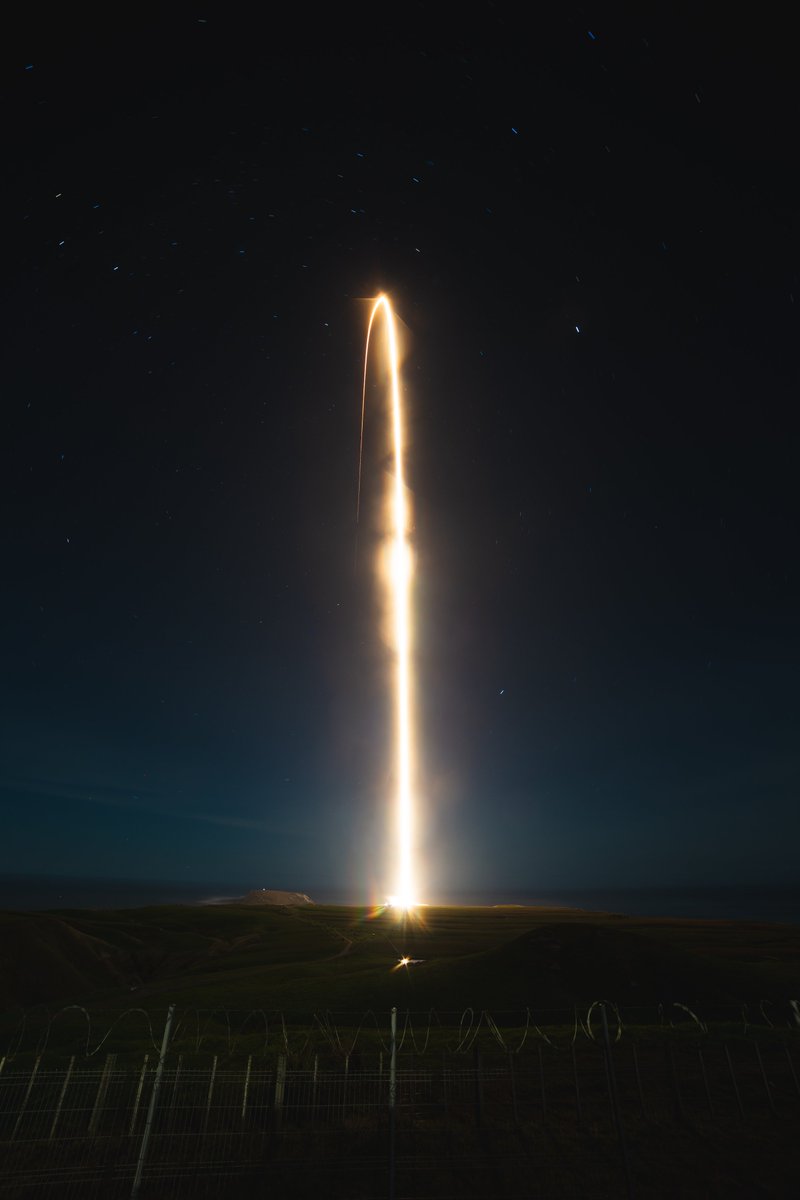
Rocket Lab completed two successful Electron launches in March 2026, reinforcing its reputation for reliable, dedicated small satellite delivery.
On March 20 at 2:10 p.m. EDT (18:10 UTC), Electron lifted off from Launch Complex 1 on New Zealand’s Māhia Peninsula on the “Eight Days A Week” mission, delivering the eighth StriX synthetic aperture radar (SAR) satellite for Japanese Earth observation company Synspective. The satellite was deployed into a 573-kilometre low Earth orbit (LEO) with an inclination of 50.2 degrees, joining four other operational StriX spacecraft already in orbit. Synspective aims to complete a 30-satellite constellation by 2028 and has contracted 19 Electron launches through the decade—though it has also signed a separate agreement with SpaceX for five launches, indicating a diversified launch strategy.

Just eight days later, on March 28 at 5:14 a.m. EDT (09:14 UTC), Electron launched again from the same site on the “Daughter Of The Stars” mission—the company’s 85th overall launch. This dedicated flight carried two navigation technology demonstration satellites, IOD-1 and IOD-2, for the European Space Agency (ESA). The payloads were deployed into a 510-kilometre LEO to begin testing components of ESA’s planned LEO-PNT (Low Earth Orbit Positioning, Navigation, and Timing) system, a potential augmentation to the existing Galileo constellation. This marked Rocket Lab’s first dedicated mission for ESA and further demonstrated Electron’s ability to provide precise, schedule-controlled access to space—a key selling point echoed in the company’s March 31 tweet: “Rideshare is great for some. Not for others.”
Neutron Updates
While Rocket Lab’s Neutron medium-lift rocket remains in development, recent social media activity hints at continued progress. On March 24, the company highlighted its manufacturing scale, noting that over 800 Rutherford engines—used on Electron—have flown to space, with more than 1,000 expected by year’s end. The post also emphasized that Neutron’s Archimedes engine incorporates 3D-printed components such as turbo pump housings and thrust chambers, leveraging lessons from Rutherford production.
No major Neutron milestones—such as static fires or structural testing—were reported in March, and the vehicle’s debut launch, originally anticipated in 2026, has not yet been officially scheduled. Rocket Lab continues to position Neutron as a reusable, cost-effective solution for larger payloads and constellations, but for now, Electron and HASTE remain the workhorses of its launch manifest.
Additional Updates: Powering Artemis and Beyond
Though not a launch or acquisition, a notable contribution from Rocket Lab emerged in early April with implications for deep space exploration. In a series of tweets on April 4, the company confirmed its solar cells are powering NASA’s Orion spacecraft for the upcoming Artemis II mission—the first crewed lunar flyby since Apollo. While this news falls just outside March, it underscores Rocket Lab’s expanding role beyond launch services into critical spacecraft subsystems.
From a Canadian perspective, this involvement is a quiet reminder of the interconnected nature of modern spaceflight. Canadian companies and researchers often contribute specialized components to international missions—much like Rocket Lab’s solar arrays—highlighting how niche expertise can support flagship programs. As Canada continues to participate in Artemis through contributions like Canadarm3 for the Lunar Gateway, collaborations like these reinforce the value of reliable, high-performance space hardware, wherever it originates.

Citations
- “Rocket Lab wins $190 million Pentagon deal for hypersonic test flights” – https://spacenews.com/rocket-lab-wins-190-million-pentagon-deal-for-hypersonic-test-flights/
- “Rocket Lab wins German approval for Mynaric deal” – https://spacenews.com/rocket-lab-wins-german-approval-for-mynaric-deal/
- “Rocket Lab launches eighth Synspective radar imaging satellite” – https://spacenews.com/rocket-lab-launches-eighth-synspective-radar-imaging-satellite/
- “Launch Preview: https://www.nasaspaceflight.com/2026/03/launch-preview-031626/
- Rocket Lab Twitter feed (March–April 2026) – https://x.com/RocketLab
undefined

Leave a Reply