
Canada From Orbit: Canada’s Space Ambitions Light Up the North and Reach for the Moon
Canadian Space Agency Bolsters Lunar Safety and National Security
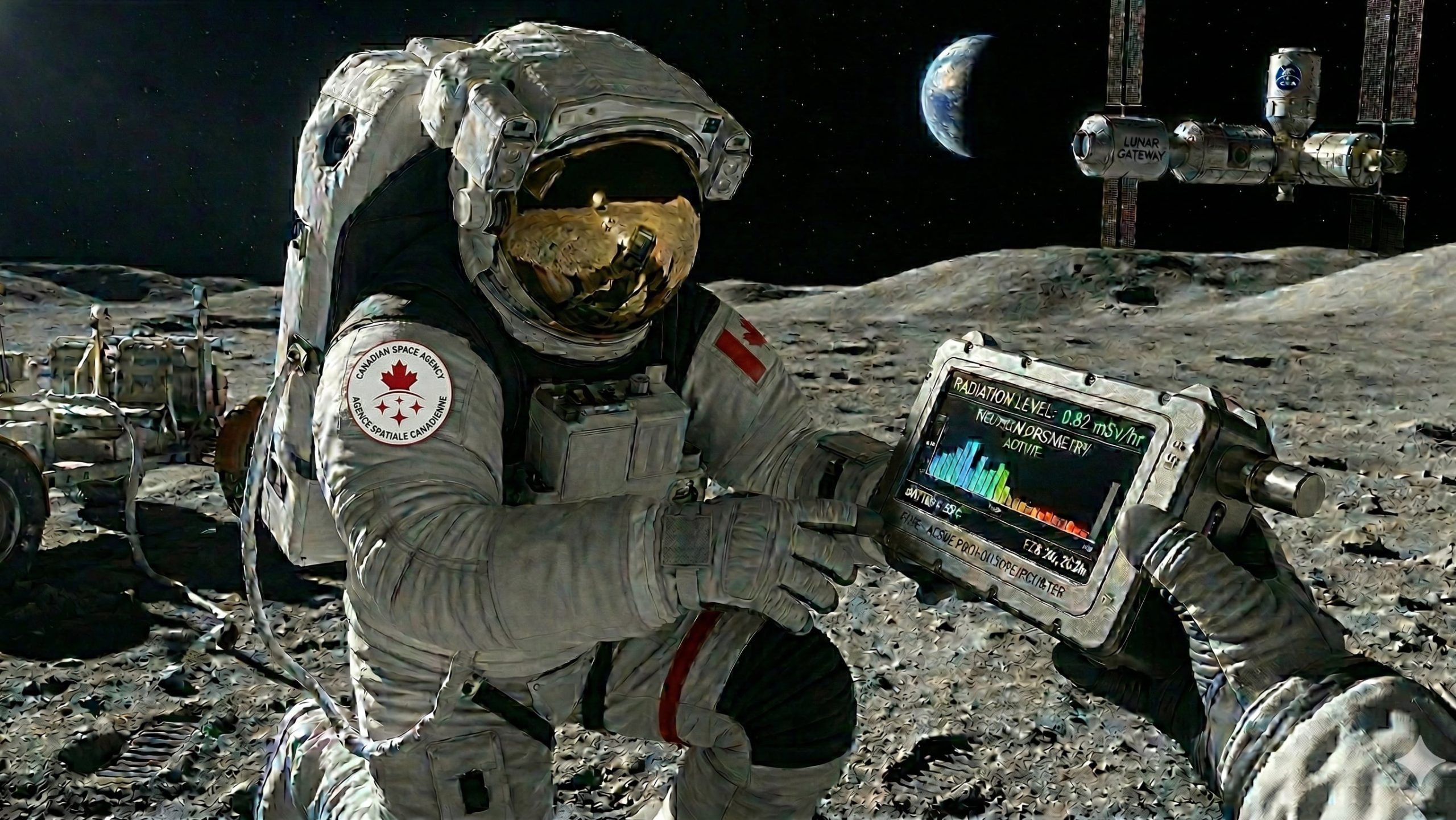
As Canada prepares to play a pivotal role in humanity’s return to the Moon, the Canadian Space Agency (CSA) has committed $5.5 million to a groundbreaking radiation-monitoring instrument set to safeguard Artemis astronauts. The contract, awarded to Ontario-based Bubble Technology Industries (BTI), funds development of the Canadian Active Neutron Spectrometer (CANS)—a next-generation, real-time radiation tracker designed to measure neutron radiation in deep space. Neutrons account for roughly 30% of total radiation exposure aboard spacecraft and pose serious biological risks, making precise monitoring essential for missions lasting six months or longer.
CANS builds on BTI’s legacy aboard the International Space Station, where its Radi-N and Radi-N2 bubble detectors have already provided valuable data on neutron exposure. The new instrument will operate autonomously, transmitting data back to Earth in real time—a critical upgrade for future lunar missions. Beyond spaceflight, the CSA notes that CANS could also advance cancer therapy, improve radiation protection for aircrews, and support nuclear threat detection on Earth.
In parallel, national security concerns are taking centre stage in Canada’s space strategy. Brigadier-General Christopher Horner, Commander of 3 Canadian Space Division, recently issued a sobering warning about the fragility of our satellite-dependent way of life. Speaking on CBC’s The House, Horner described the catastrophic consequences of a high-altitude nuclear detonation—an electromagnetic pulse (EMP) that could disable satellites across thousands of kilometres and cripple everything from GPS to financial systems. “Everything that we have come to rely on… would be wiped out,” he cautioned.
While Canada has no plans to develop space-based weapons, Horner emphasized a dual-track approach: strengthening international alliances to uphold the rules-based order in space and investing in sovereign capabilities to ensure resilience. That includes the recently allocated $183 million for domestic launch infrastructure, which aims to give Canada the ability to deploy its own satellites without relying on foreign providers during a crisis. “We have to harden the infrastructure we rely on and be resilient in the face of threats,” Horner said.
Nord Space Accelerates Domestic Launch Ambitions
NordSpace, the Canadian launch startup founded in 2022, is broadening its role beyond rockets by launching a new venture arm aimed at strengthening the nation’s entire space ecosystem. Through NordSpace Ventures, founder and CEO Rahul Goel has made a significant undisclosed investment in Wyvern, an Edmonton-based hyperspectral imaging company, to support hardware development for its sixth satellite—slated for deployment later this year.
But rockets remain central to the plan. NordSpace is scheduled to conduct the first flight of its suborbital Taiga rocket this spring from its Atlantic Spaceport Complex in Newfoundland. Later in 2026, the company plans a second launch from the same site and will also send its own Terra Nova remote sensing satellite to low Earth orbit aboard a SpaceX mission this fall. Looking ahead, the company’s orbital-class Tundra rocket is targeted for its maiden flight in 2028 and is “under very active development.”
Goel stressed that sustainable growth in Canada’s space sector requires more than just launch vehicles: “Completing the value chain is vital to the long-term sustainment not just of NordSpace, but Canada’s space sector.” The venture arm also offers portfolio companies access to NordSpace’s manufacturing and testing facilities, future launch services, and ground station partnerships—aiming to give Canadian startups the speed and support they need to compete globally.

Maritime Launch Services Courts Global Partners
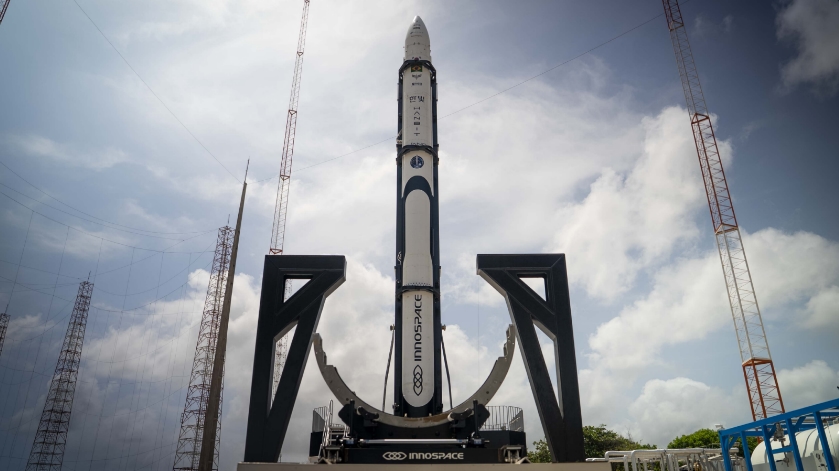
On March 3, 2026, Maritime Launch Services (MLS) announced a strategic Letter of Intent with South Korean launch provider INNOSPACE to explore operating the HANBIT rocket family from Spaceport Nova Scotia in Canso. The non-binding agreement, which runs through December 31, 2026, could position Nova Scotia as INNOSPACE’s North American hub—offering the firm a workaround to launch restrictions at its home base in South Korea, where geopolitical constraints limit orbital inclinations.
For MLS, the partnership represents a significant step toward validating its spaceport as a multi-user, commercially viable launch site. “Spaceport Nova Scotia is being developed as a full-service, dual-use responsive spaceport,” said MLS President and CEO Stephen Matier, highlighting its licensed infrastructure, range coordination, and scalable multi-pad design. INNOSPACE, already active in Brazil, Australia, and Norway, sees North America as a key market for small satellite launch demand and has expressed interest in prioritizing services for Canadian government and private-sector clients.
While no launch dates have been set, the LOI signals growing international confidence in Canada’s emerging launch infrastructure. If a definitive agreement is reached, it could mark the first time a non-North American commercial launch provider establishes a permanent operational base in Canada.
Canadian Innovation Shines from Aurora to Agriculture
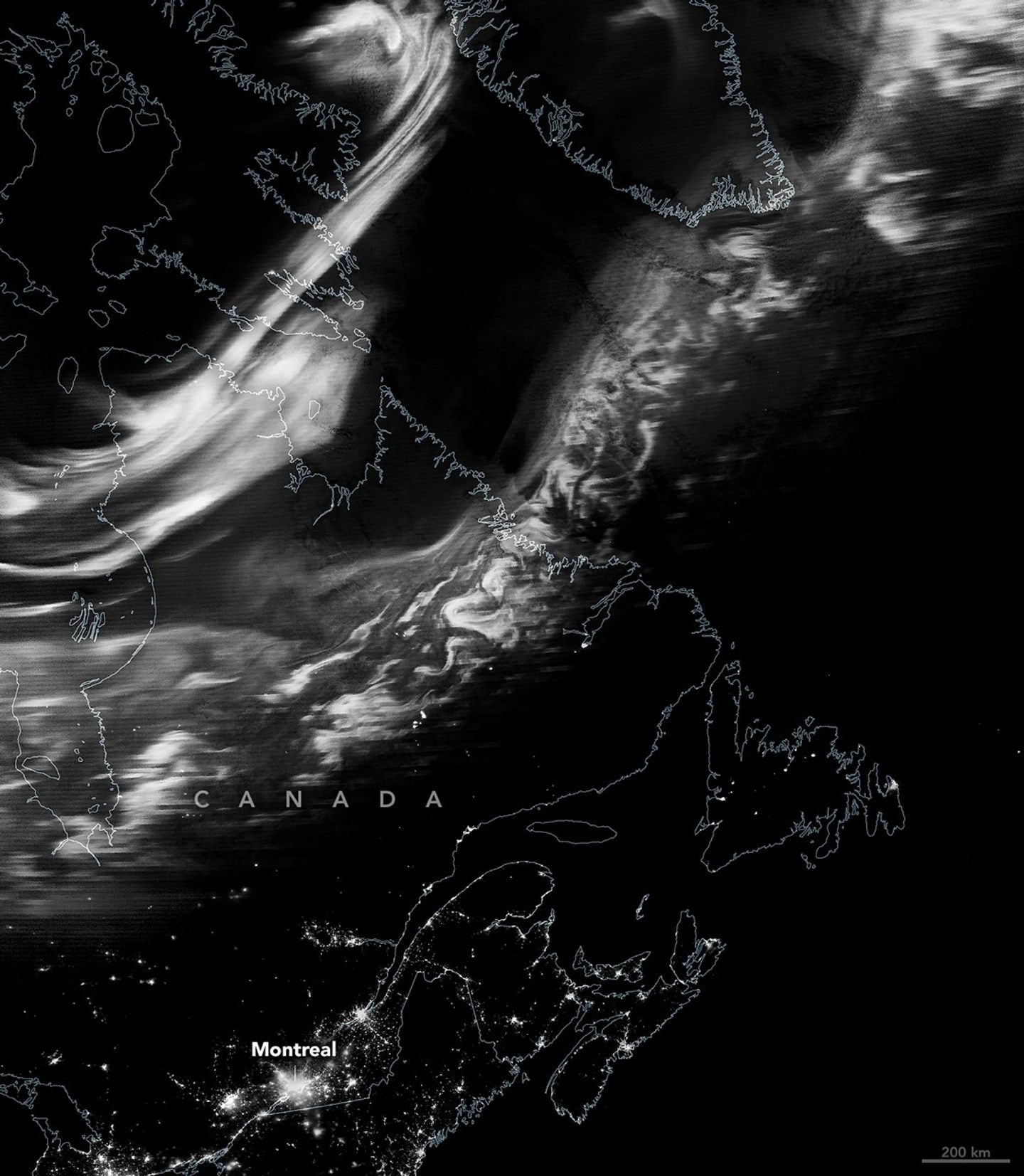
February 2026 delivered a celestial spectacle for skywatchers across Québec and Newfoundland and Labrador, as a G1–G2 geomagnetic storm painted the night sky with vivid auroras. Captured by NASA’s Suomi NPP satellite in the early hours of February 16, the display—visible as far south as New York—was part of natural space weather driven by solar wind from a coronal hole. While the aurora itself is a passive phenomenon, Canadian researchers are actively studying it; data from NASA’s GNEISS mission, launched February 10 from Alaska, will help create 3D models of auroral electrical currents, improving our understanding of space weather that affects satellites and power grids.
Meanwhile, Canadian space startups are turning orbital data into real-world impact. Wyvern, now backed by NordSpace Ventures, is expanding its commercial hyperspectral constellation, which already offers global coverage with a 1.5-day revisit rate. The company’s data is proving especially valuable in precision agriculture, where it helps farmers optimize nitrogen use and reduce fertilizer runoff, and in forestry, where improved tree speciation could enhance wildfire risk modeling. Wyvern recently launched a “bottom-of-atmosphere” data product to simplify analysis for non-expert users—a move aimed at broadening access across industries.
Together, these developments reflect a maturing Canadian space sector: one that’s not only reaching for the Moon but also delivering tangible benefits at home, from safer spaceflight to smarter farming.
Citations
- “Northern Glow Spans Iceland and Canada” – https://science.nasa.gov/earth/earth-observatory/northern-glow-spans-iceland-and-canada/
- “NordSpace founder backs Wyvern with new Canada-focused venture arm” – https://spacenews.com/nordspace-founder-backs-wyvern-with-new-canada-focused-venture-arm/
- “South Korean launch provider INNOSPACE eyes Canadian expansion via Spaceport Nova Scotia” – https://spaceq.ca/south-korean-launch-provider-innospace-eyes-canadian-expansion-via-spaceport-nova-scotia/
- “Real-time radiation tracking: Canada’s newest contribution to the Moon race” – https://spaceq.ca/real-time-radiation-tracking-canadas-newest-contribution-to-the-moon-race/
- “Canada’s space commander on protecting satellites from jamming and potential nuclear risks” – https://spaceq.ca/canadas-space-commander-on-protecting-satellites-from-jamming-and-potential-nuclear-risks/
- “INNOSPACE Signs Letter of Intent with Maritime Launch to Explore Launch Operations at Spaceport Nova Scotia” – https://www.maritimelaunch.com/news/innospace-signs-letter-intent-maritime-launch-explore-launch-operations-spaceport-nova-scotia
Upcoming Launches
No upcoming launches scheduled at this time.

Leave a Reply