
Canada From Orbit: Canada Builds Toward Sovereign Space Access — From the Moon to the Arctic
Artemis, AI, and Arctic Eyes: Canada’s Space Agency in Full Swing
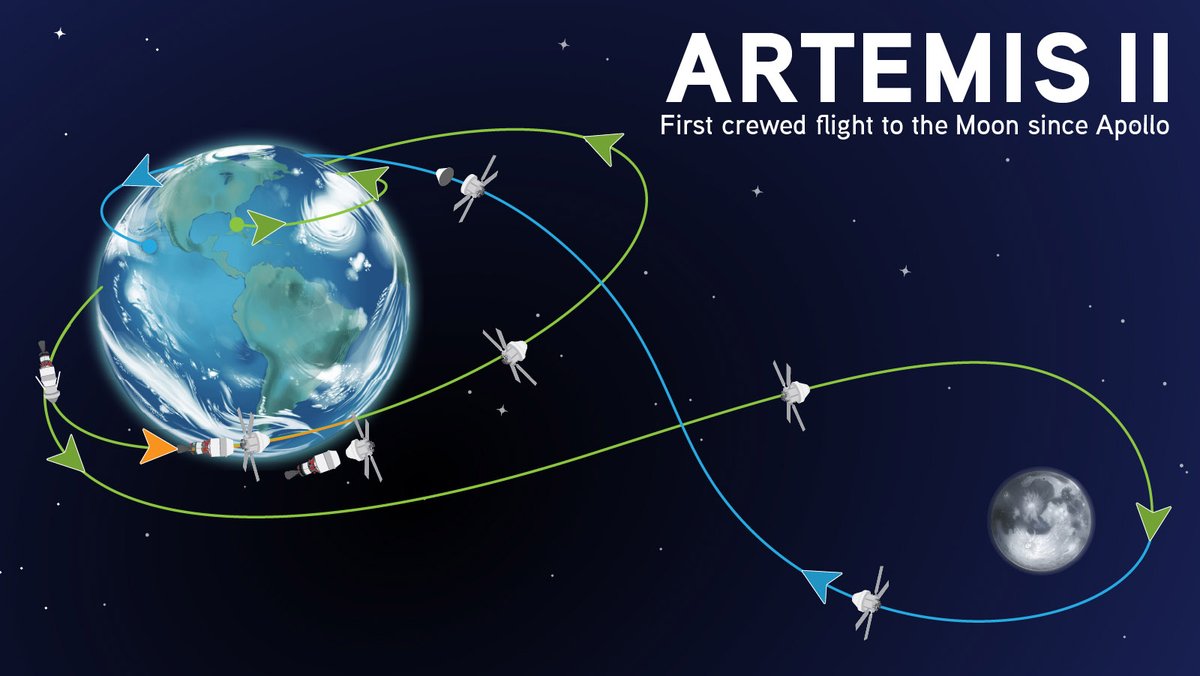
December 2025 has been a banner month for the Canadian Space Agency (CSA), with Artemis II preparations dominating headlines and Canadian scientists making waves in exoplanet research. CSA astronaut Jeremy Hansen continues his final pre-launch engagements before becoming the first Canadian to orbit the Moon. In a recent visit to the CSA headquarters, he was met with cheers and standing ovations—a symbolic send-off ahead of the historic flight currently targeted for no later than April 2026.
The Orion spacecraft that will carry Hansen and three NASA crewmates offers just 9 cubic meters of habitable space—about the size of a compact campervan. But don’t worry: the crew will sleep in floating sleeping bags clipped to handrails like microgravity hammocks, and they’ll even have time for onboard exercise to keep fit during the nearly 10-day mission, which includes two orbits around Earth before looping around the Moon’s far side.
Meanwhile, Canadians aren’t just watching—they’re participating. The CSA is encouraging all Canadians to add their names to a NASA flash drive that will fly aboard Artemis II. It’s a small but meaningful way to hitch a ride around the Moon without leaving your living room.
Back on Earth, Canadian astronomers are contributing to groundbreaking discoveries using the James Webb Space Telescope. Three Canadian researchers were part of the team that found the strongest evidence yet of an atmosphere on the rocky exoplanet TOI-561 b. In another study, a Canadian-led team used Webb’s sensitivity to uncover surprising details about the volcanic exoplanet LP 791-18 c.
Domestically, the CSA awarded nearly $4 million in contracts to five Canadian organizations to develop science instrument concepts for Canada’s future lunar utility rover—a critical step toward supporting long-term lunar exploration. On the economic front, the latest State of the Canadian Space Sector Report revealed that the industry supported over 26,000 jobs in 2023, contributed $3.4 billion to GDP, and generated $5.1 billion in revenues.
Nord Space Accelerates Toward End-to-End Sovereignty
Nord Space is rapidly evolving from a launch startup into a full-spectrum space missions company. In early December, the Markham-based firm officially launched its Space Systems Lab and unveiled Terra Nova, its first self-funded, Canadian-built satellite. Slated to launch in 2026 aboard SpaceX’s Transporter-17 mission, Terra Nova will test edge-AI capabilities in orbit using an NVIDIA processor to detect wildfires, “dark vessels” in the Arctic, and non-emitting objects for space domain awareness.
The company also received the Innovation Award from the Markham Board of Trade, recognizing its “Canada-first” approach to building sovereign space capabilities. Nord Space’s Atlantic Spaceport Complex (ASX) in Newfoundland and Labrador has been invited to join NATO’s STARLIFT initiative—a collaborative effort to enable rapid satellite deployment across allied nations. ASX’s location offers launch inclinations from 46° to 100°, making it uniquely versatile for both polar and mid-inclination missions.
Looking ahead, Nord Space is hosting the second Canadian Space Launch Conference (CSLC) on May 5, 2026, at the Canada Aviation and Space Museum in Ottawa. The theme? “Building a Spacefaring Nation”—a fitting reflection of Canada’s push toward orbital launch sovereignty.

Maritime Launch Services Marks Progress in Nova Scotia
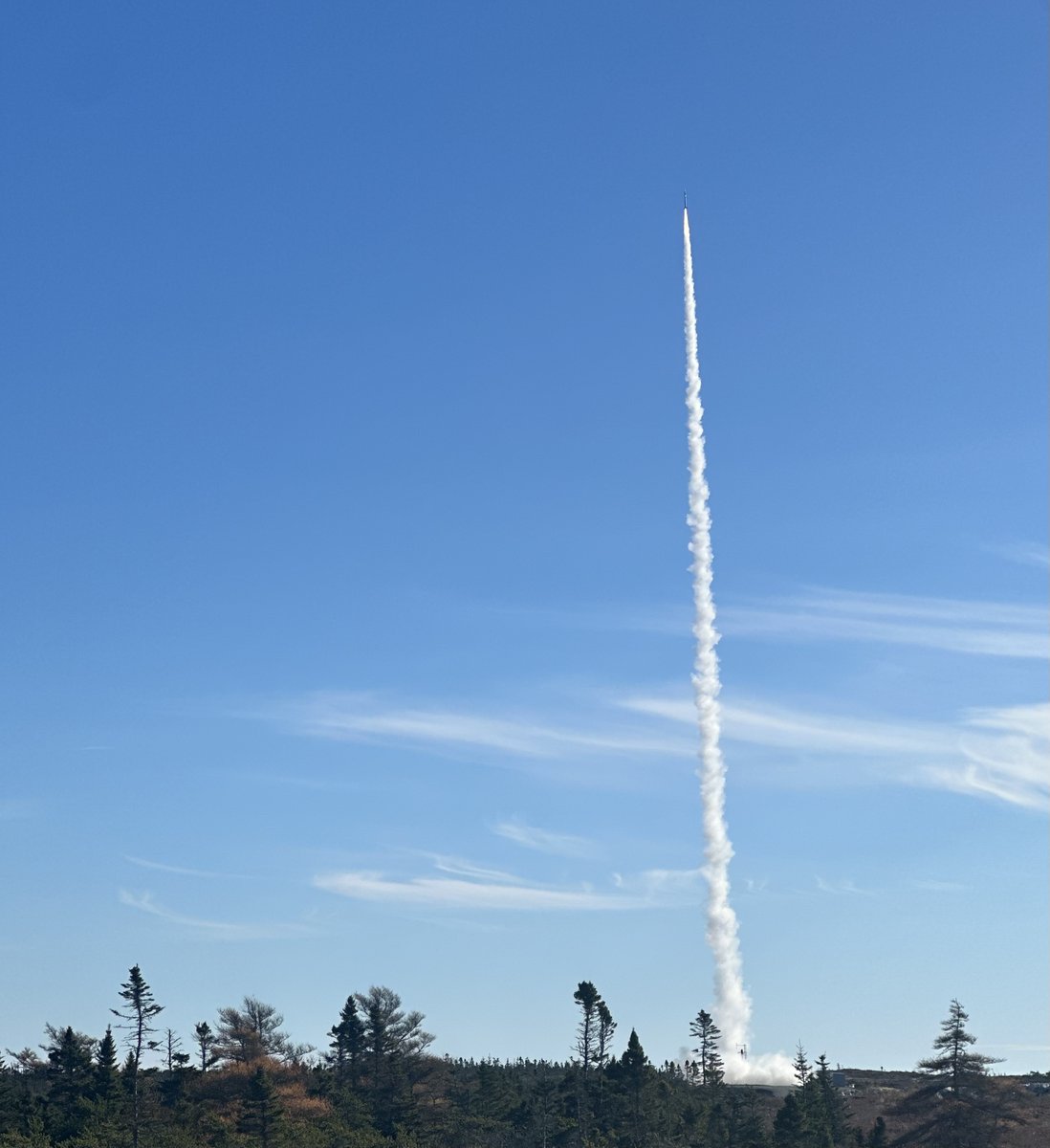
Maritime Launch Services (MLS) successfully completed its second suborbital demonstration from Spaceport Nova Scotia on November 20, 2025, launching T-Minus Engineering’s Barracuda vehicle to an altitude of approximately 120 kilometers. The mission carried the STORIES of Space payload—featuring original stories and artwork from students and writers across Canada—marking a creative fusion of public engagement and technical readiness.
MLS also welcomed Ian McLeod, Vice President of Corporate Development at MDA Space, to its Board of Directors. This appointment strengthens the strategic alignment between the two companies following MDA’s recent investment in MLS. Both are now deeply embedded in Canada’s push for sovereign launch capability.
In early December, MLS joined Canadian Department of National Defence representatives at NATO STARLIFT meetings in the Netherlands. The company highlighted Spaceport Nova Scotia’s ability to support launch inclinations from 38° to 98° and its multi-vehicle business model as key assets for the alliance’s rapid-response space needs.
Canadian News From Orbit: Radar, AI, and Europe
Canada is doubling down on Earth observation and international collaboration. MDA Space secured a $44.7 million contract from Public Services and Procurement Canada to begin procuring long-lead parts for a replenishment satellite to augment the RADARSAT Constellation Mission (RCM)—a critical move to ensure continuity of Canada’s all-weather, day-and-night imaging capability. The government signaled it intends to award MDA the full build-and-launch contract in 2026.
In parallel, the Canadian Armed Forces are exploring a new Arctic communications constellation. Telesat and MDA Space have been contracted to study options for a multibillion-dollar military network that would provide secure, resilient connectivity across Canada’s North—a region where traditional infrastructure is sparse but strategic importance is growing.
On the commercial imaging front, Victoria-based Pacific Geomatics partnered with South Korea’s SI Analytics to bring super-resolution satellite imagery capabilities to Canadian users. The collaboration will enhance how industries like agriculture, urban planning, and emergency response interpret geospatial data.
Perhaps the biggest international move came in November, when Canada committed $528.5 million to European Space Agency (ESA) programs—the largest investment in its 46-year partnership with ESA. As the agency’s only non-European Cooperating State, Canada gains access to optional ESA missions and ensures Canadian companies can compete for high-value contracts across Europe’s space sector.

Citations
- “Canadian radar satellite contract positions MDA Space for RADARSAT replenishment role” – https://www.spacedaily.com/reports/Canadian_radar_satellite_contract_positions_MDA_Space_for_RADARSAT_replenishment_role_999.html
- “Canada picks Telesat and MDA to study Arctic military communications constellation” – https://spacenews.com/canada-picks-telesat-and-mda-to-study-arctic-military-communications-constellation/
- “Pacific Geomatics and SI Analytics Announce Strategic Partnership to Deliver Super-Resolution Capabilities Across Canada” – https://spacenews.com/pacific-geomatics-and-si-analytics-announce-strategic-partnership-to-deliver-super-resolution-capabilities-across-canada/
- “Canada Commits $528.5 Million to European Space Agency Programmes” – https://europeanspaceflight.com/canada-commits-528-5-million-to-european-space-agency-programmes/
- “NordSpace Launches Space Systems Lab with Dual-Use Demo Satellite for SDA, Wildfires, Arctic Launching 2026 with SpaceX” – https://www.einpresswire.com/article/5684321/nordspace-launches-space-systems-lab-with-dual-use-demo-satellite-for-sda-wildfires-arctic-launching-2026-with-spacex
- “Statement on Maritime Launch Participation in Canada’s Delegation to NATO STARLIFT Meetings in the Netherlands” – https://www.maritimelaunch.com/news/statement-maritime-launch-participation-canadas-delegation-nato-starlift-meetings-netherlands
- “Maritime Launch Appoints Ian McLeod to Board of Directors as Company Enters a New Phase of Growth Advancing Orbital Launch Capability in Canada” – https://www.maritimelaunch.com/news/maritime-launch-appoints-ian-mcleod-board-directors-company-enters-new-phase-growth-advancing
- “Maritime Launch Completes Second Successful Suborbital Demonstration from Spaceport Nova Scotia Launching T-Minus Engineering’s Barracuda Vehicle” – https://www.maritimelaunch.com/news/maritime-launch-completes-second-successful-suborbital-demonstration-spaceport-nova-scotia
- Canadian Space Agency tweets (multiple dates, November–December 2025) – https://x.com/csa_asc
- Nord Space tweets (multiple dates, November–December 2025) – https://x.com/Nord_Space
- Maritime Launch Services tweets (multiple dates, November–December 2025) – https://x.com/maritimelaunch


2 Comments