
The Daily Broadcast: From the Moon to Mars and the Skies in Between

Canadians Gear Up to Track Artemis 2’s Historic Lunar Flyby
As NASA’s Artemis 2 mission edges closer to its scheduled launch no earlier than February 6, 2026, Canadian eyes—and antennas—are turning skyward. The Canadian Space Agency, the University of New Brunswick, and amateur radio enthusiast Scott Tilley have been selected by NASA as part of a global network of 47 ground assets across 14 countries to passively monitor the Orion spacecraft’s radio signals during its 10-day journey around the Moon. This volunteer effort, part of NASA’s Space Communication and Navigation (SCaN) programme, aims to supplement the agency’s aging Deep Space Network (DSN), which is currently operating with one of its three global sites—Goldstone in California—offline until May 2026.
Canadian astronaut Jeremy Hansen, the first Canadian to travel to lunar distance, will be aboard the spacecraft alongside NASA crewmates Reid Wiseman, Victor Glover, and Christina Koch. His seat was secured through Canada’s contribution of the Canadarm3 robotic system for the future Gateway lunar space station. Though NASA’s established networks will handle primary mission communications, the additional data from Canadian and international participants will help the agency assess broader tracking capabilities for future Moon and Mars missions. Notably, this initiative follows a similar effort during the uncrewed Artemis 1 flight in 2022.

NASA and GE Advance Hybrid Jet Engine Toward Commercial Flight
In a step that could reshape the future of air travel, NASA and GE Aerospace have successfully completed a ground test of a hybrid-electric jet engine system, bringing the technology closer to potential use in commercial airliners. The test, conducted in December 2025 at GE’s Peebles Test Operation facility in Ohio, demonstrated the engine’s ability to operate at performance levels consistent with those required for real-world flight. While the hardware may look like a standard jet engine to the untrained eye, it integrates electric power generation and propulsion components that could significantly reduce fuel burn and emissions.
The project is part of NASA’s broader Electrified Powertrain Flight Demonstration (EPFD) initiative, which aims to mature hybrid-electric technologies for single-aisle aircraft—the workhorses of global air travel. If scaled successfully, such systems could enter service in the 2030s, offering a more sustainable path for aviation. The timing is critical: as space and air domains increasingly intersect in both technology and environmental considerations, innovations like this underscore how aerospace progress on Earth can complement ambitions beyond it. For Canadian readers, this development is particularly relevant as Transport Canada evaluates future regulatory frameworks for next-generation aircraft, and Canadian aerospace firms explore roles in emerging green propulsion supply chains.

Webb Telescope Maps Dark Matter with Unprecedented Detail
The James Webb Space Telescope (JWST) has delivered its most detailed map yet of dark matter—the invisible cosmic scaffolding that shapes the universe. Published in Nature Astronomy and based on observations in the constellation Sextans, the new map reveals how dark matter has guided the formation of galaxies, stars, and planetary systems over billions of years. By combining gravitational lensing data with Webb’s unparalleled infrared sensitivity, scientists have traced the distribution of dark matter with finer resolution than ever before.
This achievement not only deepens our understanding of cosmic structure but also demonstrates Webb’s expanding role beyond exoplanet and early galaxy studies. The findings come at a time when NASA’s Deep Space Network is under strain from multiple high-priority missions—including Artemis 2—prompting managers to issue notices about potential scheduling impacts for science operations. Canadian astronomers, who hold guaranteed access to JWST through the Canadian Space Agency’s contribution of the Fine Guidance Sensor and Near-Infrared Imager and Slitless Spectrograph (NIRISS), may see minor adjustments to observation windows, though no major disruptions are expected. As one researcher put it, “We’re not just seeing the universe—we’re seeing its hidden architecture.”

Citations
- “NASA enlists Canadians to help track Artemis 2 Moon mission” – https://spaceq.ca/nasa-enlists-canadians-to-help-track-artemis-2-moon-mission/
- “NASA and GE run hybrid jet engine test toward commercial flight” – https://www.spacedaily.com/reports/NASA_and_GE_run_hybrid_jet_engine_test_toward_commercial_flight_999.html
- “Webb sharpens view of dark matter shaping the cosmos” – https://www.spacedaily.com/reports/Webb_sharpens_view_of_dark_matter_shaping_the_cosmos_999.html
Upcoming Launches
Starlink Group 17-19
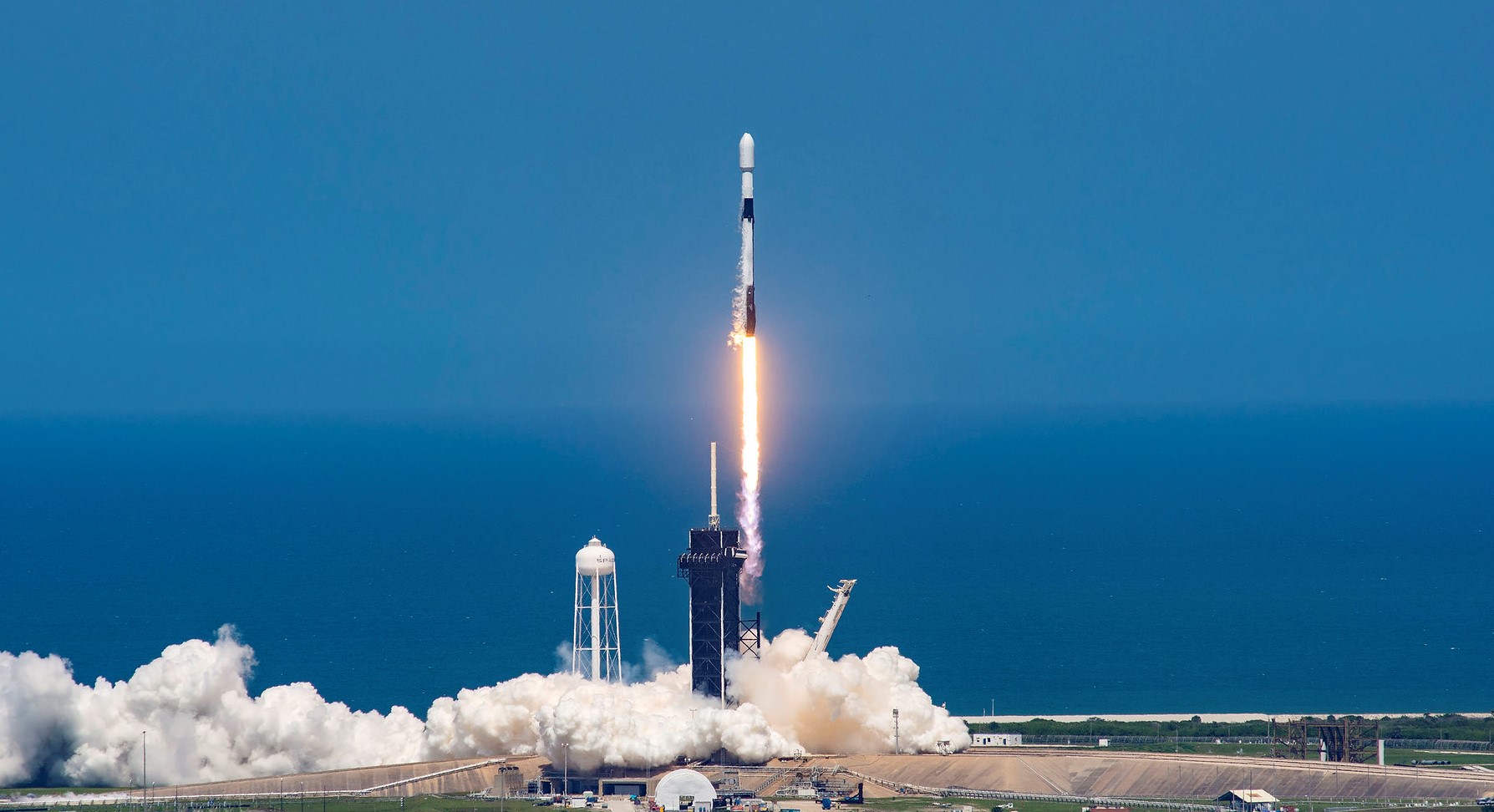
Launch Provider: SpaceX – Commercial
Launch Date: January 29, 2026
Launch Time: 3:17 PM UTC
Vehicle: Falcon 9
Brief: A batch of 25 satellites for the Starlink mega-constellation – SpaceX’s project for space-based Internet communication system.
Bridging The Swarm (NeonSat-1A)
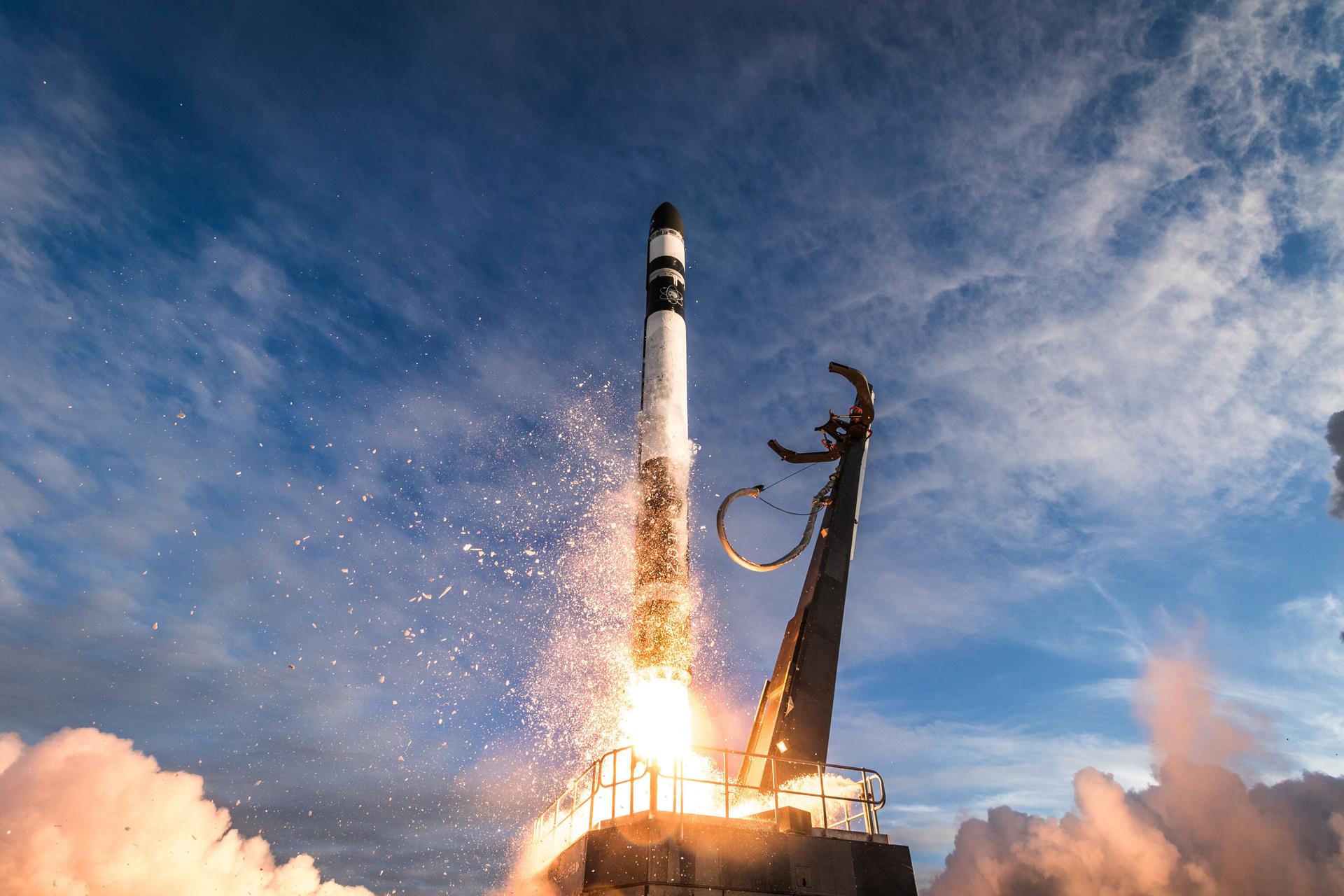
Launch Provider: Rocket Lab – Commercial
Launch Date: January 30, 2026
Launch Time: 12:55 AM UTC
Vehicle: Electron
Brief: The NeonSat-1A, carrying a high-resolution optical camera, is designed to test the constellation capabilities of the South Korean government’s Earth observation micro-satellite constellation NeonSat (New-space Earth Observation Satellite), in particular technology improvements identified from operations of NeonSat-1 after its launch in April 2024. These technologies will in turn be incorporated into the next 10 NeonSat under construction, as well as providing more site re-visiting capabilities along with NeonSat-1.
The NeonSat constellation is the first satellite system developed by the government using a mass-production approach for precise monitoring of the Korean Peninsula, lead by the Satellite Technology Research Center (SaTReC) at the Korea Advanced Institute of Science and Technology (KAIST), Korea’s leading university dedicated to science and technology. Designed to capture near-real time natural disaster monitoring for the Korean peninsula, KAIST’s NEONSAT constellation is a collaboration across multiple Korean academic, industry, and research institutions, including SaTReC, which is leading the program’s system design and engineering.
The NEONSAT program is funded by the Korean government’s Ministry of Science and ICT (MSIT).
Starlink Group 6-101
Launch Provider: SpaceX – Commercial
Launch Date: January 30, 2026
Launch Time: 4:00 AM UTC
Vehicle: Falcon 9
Brief: A batch of 29 satellites for the Starlink mega-constellation – SpaceX’s project for space-based Internet communication system.
Unknown Payload
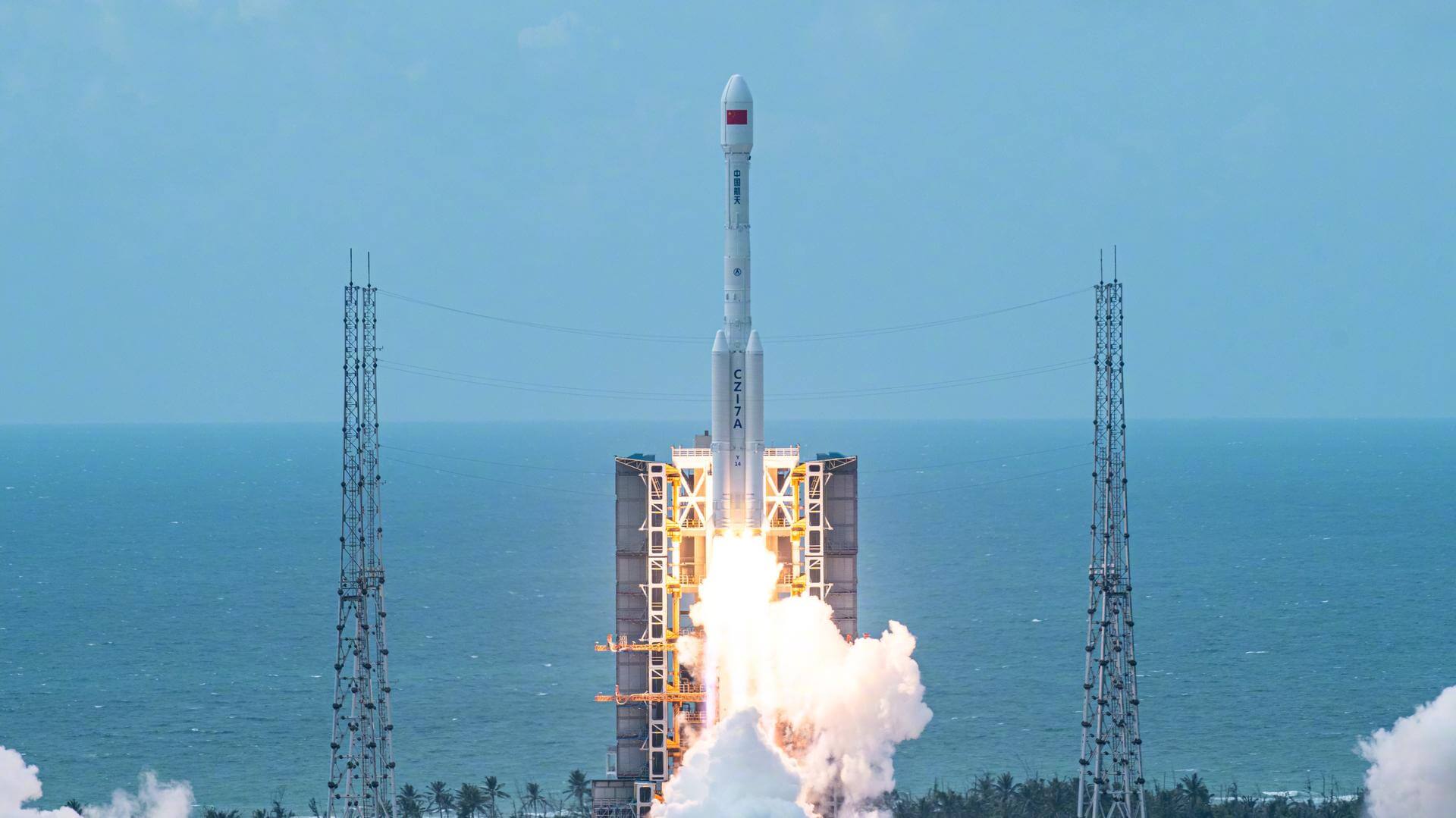
Launch Provider: China Aerospace Science and Technology Corporation – Government
Launch Date: January 31, 2026
Launch Time: 12:00 AM UTC
Vehicle: Long March 7A
Brief: Details TBD.
Unknown Payload

Launch Provider: China Rocket Co. Ltd. – Commercial
Launch Date: January 31, 2026
Launch Time: 12:00 AM UTC
Vehicle: Smart Dragon 3
Brief: Possibly an Earth observation satellite for the Pakistan government’s SUPARCO, details TBD.
