
The Daily Broadcast: From Ottawa to Orbit: Canadian Ingenuity Meets Global Space Challenges

Canadian Startup NordSpace Secures $335K to Advance Rocket Engine Manufacturing
Markham-based aerospace firm NordSpace has received up to $335,000 in funding and advisory support from the National Research Council of Canada’s Industrial Research Assistance Program (IRAP) to refine its additive manufacturing techniques for next-generation rocket engines. The company is partnering with Germany’s Fraunhofer Institute for Laser Technology and engineering firm SWMS to integrate Extreme High-speed Laser Material Deposition (EHLA) and AI-driven path planning into its production line. This initiative supports NordSpace’s goal to scale from light-lift to medium-lift launch capability—with its “Titan” class vehicle targeting more than 5,000 kg to orbit by the early 2030s.
According to CEO Rahul Goel, the collaboration is a strategic move to enhance domestic competitiveness while reducing costs and development timelines. “Canada’s growing demand for responsive and cost-effective medium-lift space launch requires continuous investment in disruptive manufacturing technologies,” he said. The project builds on last fall’s Advanced Manufacturing for Aerospace Lab launch and follows a Canadian trade delegation to the Space Tech Expo Europe in Bremen. NordSpace plans to share engine validation results at the Canadian Space Launch Conference in Ottawa this May.

ESA Launches Study Into Falcon 9 Breakup Over Poland
The European Space Agency (ESA) has issued a call for tender to investigate the uncontrolled re-entry of a SpaceX Falcon 9 upper stage that broke apart over Poland in the early hours of 19 February 2025. The study aims to reconstruct the breakup dynamics, assess debris dispersion, and evaluate risks associated with uncontrolled re-entries—particularly as launch frequency increases globally. At least four fragments were confirmed to have reached the ground, though no injuries or significant damage were reported.
This investigation reflects growing international concern about space sustainability and the need for improved end-of-life protocols for launch vehicles. While SpaceX has enhanced its controlled re-entry capabilities for recent missions, this incident underscores the complexities of orbital mechanics and atmospheric re-entry for older or mission-specific upper stages. The ESA-led study may inform future regulations and best practices for launch operators worldwide, including those eyeing access to European markets.

Blue Origin Pushes Reusability Forward with New Glenn Booster Reuse
Blue Origin has confirmed it will reuse a New Glenn first-stage booster for the first time on its next launch, carrying an AST SpaceMobile satellite. This marks a significant milestone for the company’s heavy-lift vehicle, which completed its inaugural flight in 2025. Unlike SpaceX’s rapid reusability cadence, Blue Origin has taken a measured approach—prioritizing validation and reliability before operational reuse. The upcoming mission will test the refurbished booster’s performance under real flight conditions, a critical step toward lowering launch costs and increasing flight frequency.
The reuse announcement coincides with Blue Origin’s unveiling of TeraWave, a laser-based satellite communications network promising symmetrical, high-speed data links for enterprise users. Together, these developments signal Blue Origin’s dual focus on launch infrastructure and space-based services. As the global launch market heats up—with Florida’s Eastern Range now supporting same-day fueling for both SLS and Vulcan rockets—reusability remains a key competitive lever. For Canada, which lacks its own launch range but boasts a growing ecosystem of satellite and payload developers, reliable, cost-effective access to space via providers like Blue Origin could prove increasingly valuable.

Citations
- “NordSpace receives $335k grant for additive manufacturing development” – https://spaceq.ca/nordspace-receives-335k-grant-for-additive-manufacturing-development/
- “ESA to Study Falcon 9 Breakup Over Poland” – https://europeanspaceflight.com/esa-to-study-falcon-9-breakup-over-poland/
- “Blue Origin to reuse New Glenn booster on next launch” – https://spacenews.com/blue-origin-to-reuse-new-glenn-booster-on-next-launch/
Upcoming Launches
Starlink Group 17-20

Launch Provider: SpaceX – Commercial
Launch Date: January 25, 2026
Launch Time: 3:17 PM UTC
Vehicle: Falcon 9
Brief: A batch of 25 satellites for the Starlink mega-constellation – SpaceX’s project for space-based Internet communication system.
GPS III SV09
Launch Provider: SpaceX – Commercial
Launch Date: January 26, 2026
Launch Time: 4:46 AM UTC
Vehicle: Falcon 9
Brief: Ninth of ten GPS III missions.
Unknown Payload
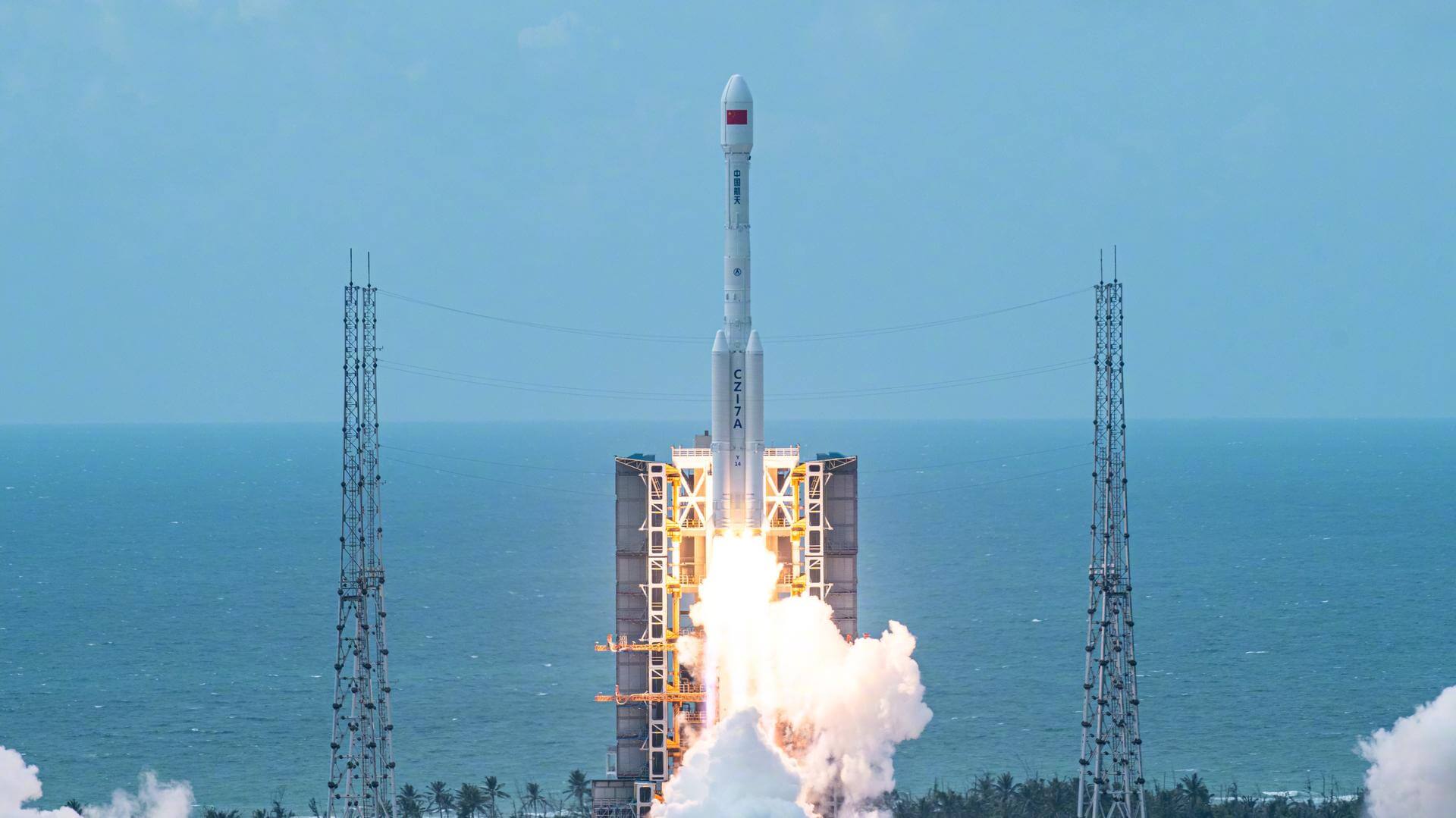
Launch Provider: China Aerospace Science and Technology Corporation – Government
Launch Date: January 26, 2026
Launch Time: 9:00 PM UTC
Vehicle: Long March 7A
Brief: Details TBD.
Bridging The Swarm (NeonSat-1A)
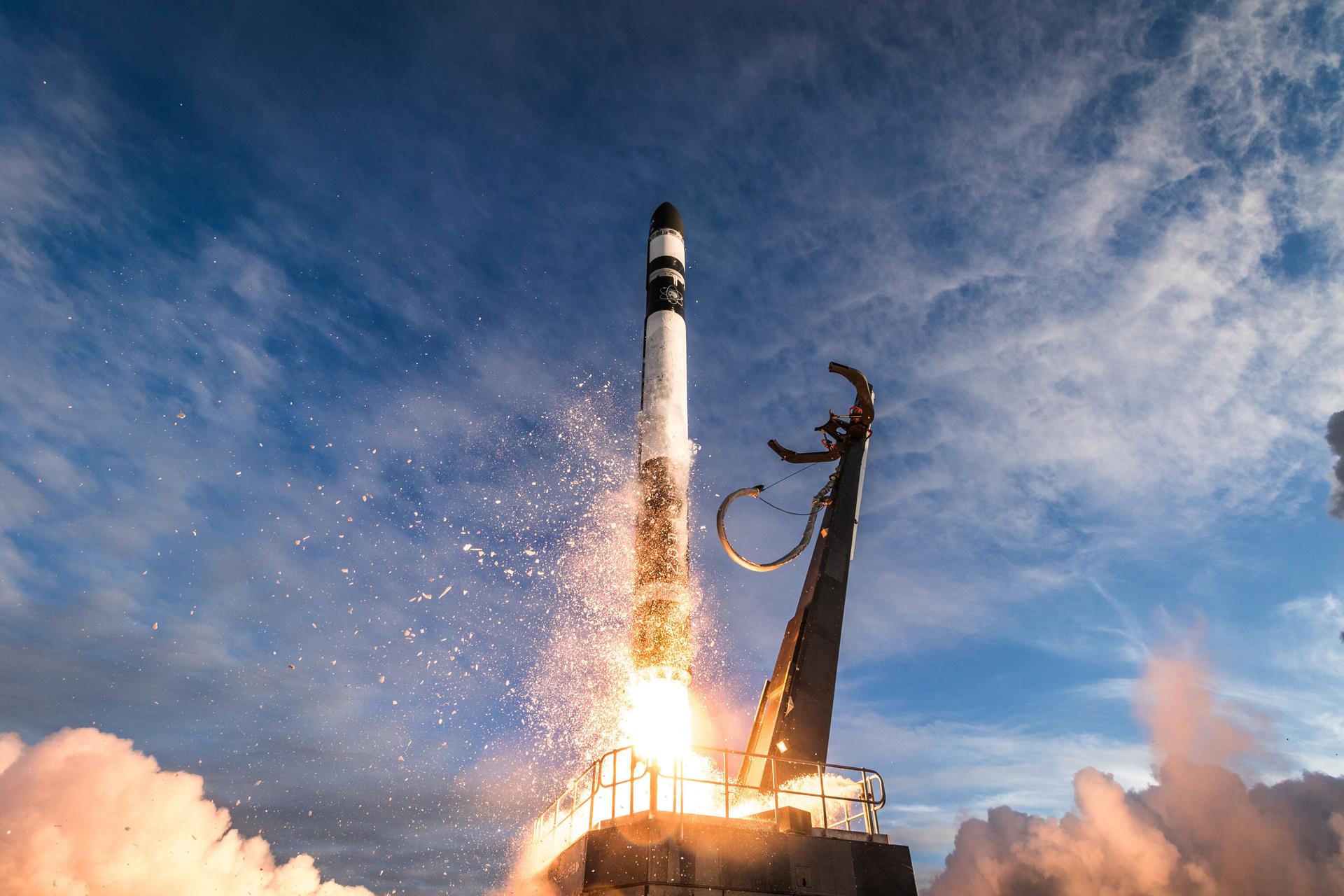
Launch Provider: Rocket Lab – Commercial
Launch Date: January 26, 2026
Launch Time: 10:45 PM UTC
Vehicle: Electron
Brief: The NeonSat-1A, carrying a high-resolution optical camera, is designed to test the constellation capabilities of the South Korean government’s Earth observation micro-satellite constellation NeonSat (New-space Earth Observation Satellite), in particular technology improvements identified from operations of NeonSat-1 after its launch in April 2024. These technologies will in turn be incorporated into the next 10 NeonSat under construction, as well as providing more site re-visiting capabilities along with NeonSat-1.
The NeonSat constellation is the first satellite system developed by the government using a mass-production approach for precise monitoring of the Korean Peninsula, lead by the Satellite Technology Research Center (SaTReC) at the Korea Advanced Institute of Science and Technology (KAIST), Korea’s leading university dedicated to science and technology. Designed to capture near-real time natural disaster monitoring for the Korean peninsula, KAIST’s NEONSAT constellation is a collaboration across multiple Korean academic, industry, and research institutions, including SaTReC, which is leading the program’s system design and engineering.
The NEONSAT program is funded by the Korean government’s Ministry of Science and ICT (MSIT).
Starlink Group 6-101
Launch Provider: SpaceX – Commercial
Launch Date: January 29, 2026
Launch Time: 4:00 AM UTC
Vehicle: Falcon 9
Brief: A batch of 29 satellites for the Starlink mega-constellation – SpaceX’s project for space-based Internet communication system.
