
The Daily Broadcast: Homecomings, Hurdles, and High Hopes for Sovereign Launch

Canadian Industry Rallies Behind $105M Sovereign Launch Challenge
Canada’s ambition to establish independent access to space just got a serious shot of momentum. The application window for the Department of National Defence’s $105-million “Launch the North” IDEaS Challenge closed this week, and early indications suggest strong interest from the domestic aerospace sector. While official numbers remain under wraps, industry sources tell SpaceQ that more than a dozen proposals may have been submitted—far exceeding initial expectations. Only up to three teams will be selected for Phase 1, sharing $25 million to develop concepts for responsive light-lift launch vehicles capable of carrying ~200 kg payloads.
The challenge isn’t just about rockets—it’s about national resilience. Objectives include reducing reliance on foreign launch providers, enhancing defence capabilities through rapid satellite deployment, and stimulating dual-use innovation in propulsion, mobile launch infrastructure, and flight safety systems. Winners, expected to be announced by mid-March, will advance to two subsequent phases with up to $40 million each year. A follow-on stream targeting medium-lift capability over a 10-year horizon is also in the works. As CEO Mina Mitry of Kepler Communications recently noted, Canada is increasingly focused on building “sovereign, high-performance infrastructure” in space—a vision that “Launch the North” aims to launch, quite literally.
Crew-11 Begins Early Return from the International Space Station
In a reminder that spaceflight remains an inherently dynamic endeavor, NASA and SpaceX have set Wednesday, January 14, 2026, for the undocking and return of the Crew-11 mission from the International Space Station. Originally scheduled for a longer stay, the mission’s early conclusion stems from an undisclosed medical condition affecting one of the four astronauts—a decision made out of an abundance of caution. The Crew Dragon spacecraft is expected to undock at 5 p.m. EST and splash down in the Pacific Ocean several hours later.
Preparations are already well underway. Expedition 74 crew members have completed spacesuit checks, stowed research samples, and finalized cargo transfer to the Dragon capsule. Despite the abrupt timeline shift, the team maintained its scientific output, recently wrapping up experiments in space biology and artificial intelligence. Once recovered, the astronauts will undergo standard medical evaluations before reuniting with family. While the specifics of the medical issue are being kept private—a practice consistent with astronaut health confidentiality—the smooth execution of the return plan underscores the robust contingency protocols baked into modern human spaceflight. As always, the priority remains the crew’s safety, even if it means cutting a mission short.

Artemis II Nears Launch Pad for First Integrated Rollout

NASA’s Artemis II mission—the first crewed voyage around the Moon since Apollo—is taking its final steps toward reality. The agency has confirmed that the Space Launch System (SLS) rocket and Orion spacecraft will soon roll out to Launch Pad 39B at Kennedy Space Center for integrated testing and launch rehearsals. This marks the first time the fully stacked Artemis II vehicle will make the 4.2-mile journey from the Vehicle Assembly Building to the pad, a milestone that traditionally signals the home stretch before launch.
Current planning targets a launch no earlier than April 2026, though NASA emphasizes that the schedule remains fluid based on testing outcomes. The mission will carry four astronauts, including Canadian Space Agency astronaut Jeremy Hansen—who recently addressed common public questions about the flight in a CSA video. Meanwhile, key hardware is undergoing final checks: the RS-25 engines are secure under L3Harris ownership (following their decision to retain them amid a broader business sale), and booster manager Dave Reynolds continues overseeing integration with the focus of someone who’s waited decades for this moment. With Artemis II, humanity isn’t just returning to the Moon—we’re preparing to stay.
Citations
- “Race for Canadian sovereign launch – $105M ‘Launch the North’ challenge draws strong interest” – https://spaceq.ca/race-for-canadian-sovereign-launch-105m-launch-the-north-challenge-draws-strong-interest/
- “Crew-11 To Begin Return Home on Wednesday” – https://spacepolicyonline.com/news/crew-11-to-begin-return-home-on-wednesday/
- “Final Steps Underway for NASA’s First Crewed Artemis Moon Mission” – https://www.nasa.gov/missions/artemis/artemis-2/final-steps-underway-for-nasas-first-crewed-artemis-moon-mission/
Upcoming Launches
Pandora / Twilight rideshare mission

Launch Provider: SpaceX – Commercial
Launch Date: January 11, 2026
Launch Time: 1:19 PM UTC
Vehicle: Falcon 9
Brief: The Pandora small satellite was selected in 2021 as an inaugural mission in NASA’s Astrophysics Pioneers Program. It includes a 0.45-meter telescope that will improve our understanding of exoplanet atmospheres by disentangling exoplanet signals from their host stars, as well as studying host star variability with long-duration observations of 20 unique planets through visible-light photometry and near-infrared spectroscopy.
Also launching on this launch are 39 other ride-share payloads under the “Falcon 9 Twilight mission” manifested by Exolaunch, including satellites from Spire Global and Kepler Communications.
EOS-N1 and others
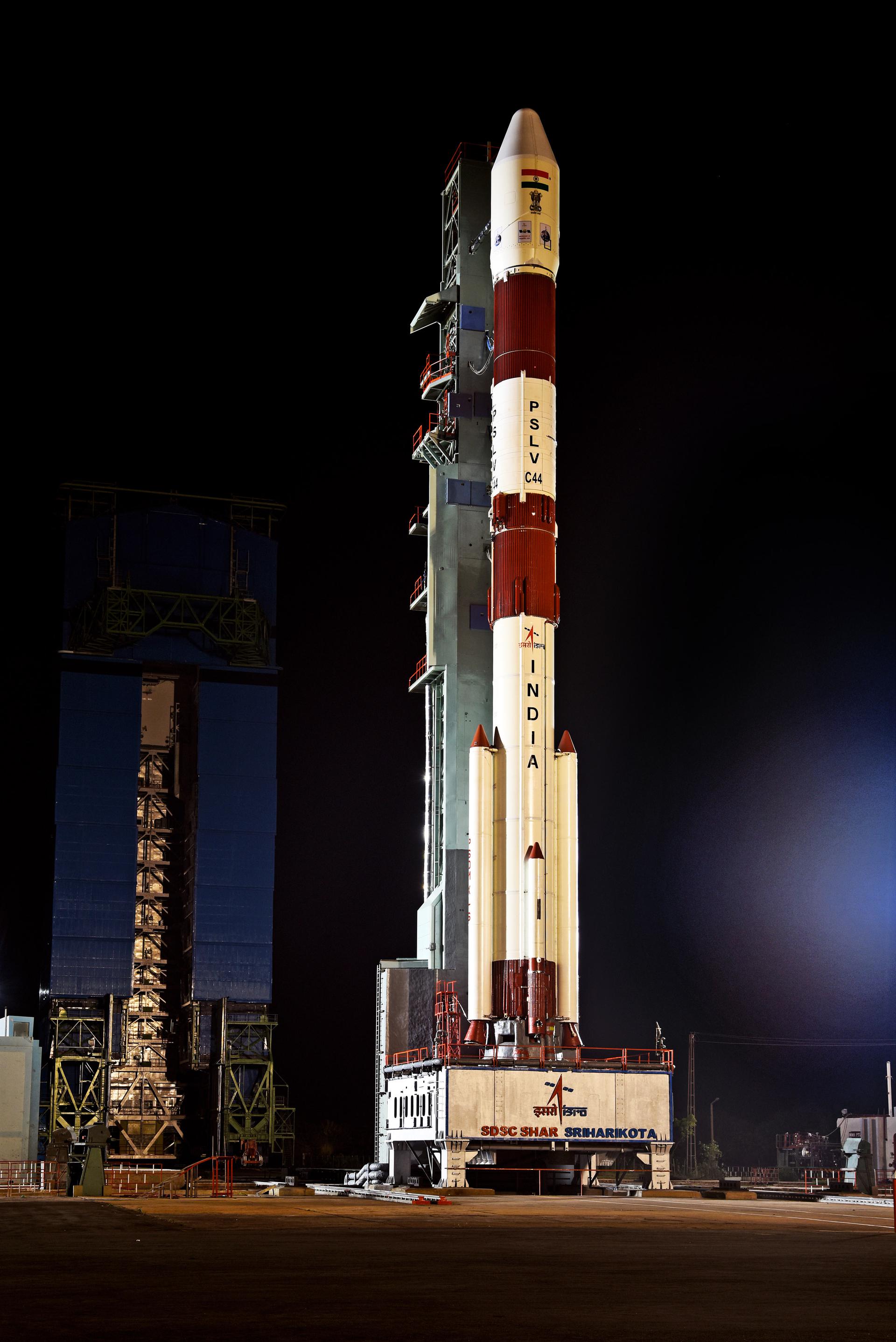
Launch Provider: Indian Space Research Organization – Government
Launch Date: January 12, 2026
Launch Time: 4:47 AM UTC
Vehicle: PSLV-DL
Brief: Small Earth observation satellite from NewSpace India Limited (NSIL) for an “Indian strategic user”, details TBD.
This launch will also carry 18 other ride-share payloads.
Starlink Group 6-97
Launch Provider: SpaceX – Commercial
Launch Date: January 12, 2026
Launch Time: 5:42 PM UTC
Vehicle: Falcon 9
Brief: A batch of 29 satellites for the Starlink mega-constellation – SpaceX’s project for space-based Internet communication system.
Unknown Payload
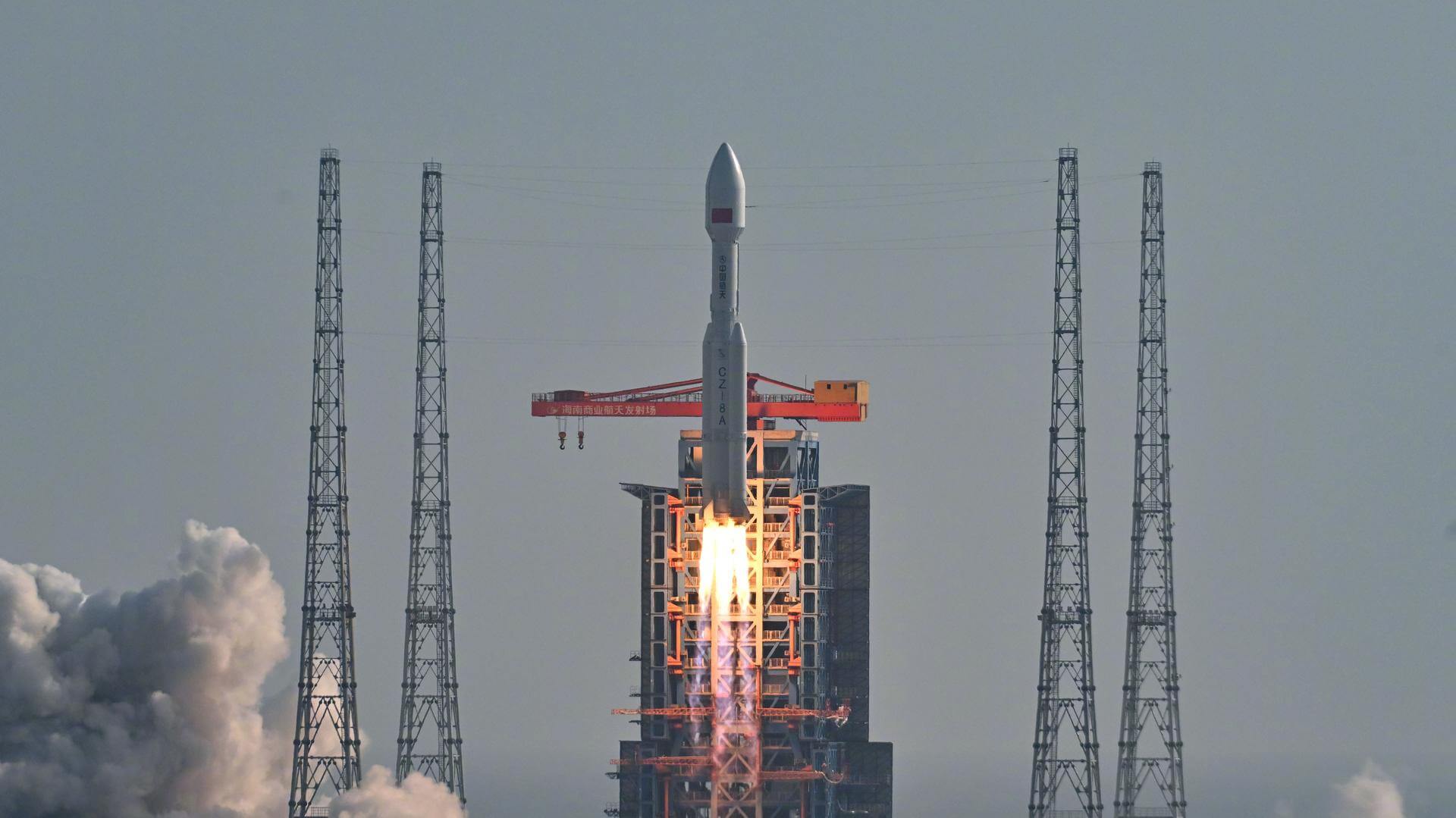
Launch Provider: China Aerospace Science and Technology Corporation – Government
Launch Date: January 13, 2026
Launch Time: 3:45 PM UTC
Vehicle: Long March 8A
Brief: Details TBD.
Starlink Group 6-98
Launch Provider: SpaceX – Commercial
Launch Date: January 14, 2026
Launch Time: 6:01 PM UTC
Vehicle: Falcon 9
Brief: A batch of 29 satellites for the Starlink mega-constellation – SpaceX’s project for space-based Internet communication system.
