
The Daily Broadcast: Orbit, Radar, and Recognition: Canadian Contributions in a Global Space Era

Peter Annan Honoured with Appointment to the Order of Canada
Canadian geophysicist and space scientist Dr. Peter Annan has been named a Member of the Order of Canada—an honour that recognizes his more than five decades of transformative work in near-surface geophysics. Governor General Mary Simon highlighted Annan’s pioneering role in developing airborne electromagnetic and ground-penetrating radar systems, technologies now widely used in resource exploration, environmental studies, and infrastructure assessment. Annan’s space legacy dates back to the Apollo 17 mission in 1972, where he served as a lead investigator for the Surface Electrical Properties (SEP) experiment. That instrument used radio waves to probe up to several kilometres beneath the Moon’s surface near the Taurus-Littrow landing site—a feat that laid groundwork for future planetary subsurface studies. Through his companies, including Sensors & Software Inc., Annan has commercialized these technologies for global scientific and industrial applications. His recognition underscores how foundational Canadian contributions often emerge not from grand launches, but from precise, enduring scientific instrumentation. While Canada’s space profile may lean toward robotics and Earth observation, Annan’s story is a timely reminder that Canadian expertise has been embedded in lunar soil—and in the very language of how we “see” beneath planetary surfaces—for over half a century.

ESA’s Proba-3 Achieves Millimetre-Precision Formation Flying
In a remarkable demonstration of orbital choreography, the European Space Agency’s Proba-3 mission has successfully executed autonomous formation flying with millimetre-level accuracy between two separate spacecraft. The mission, conceived as a coronagraph to study the Sun’s faint outer atmosphere, requires one satellite to precisely block sunlight while the other captures images—effectively creating a 150-metre-long virtual telescope in space. What makes this achievement stand out is that the two spacecraft maintain their relative positions without ground intervention, using GPS, laser metrology, and optical sensors to adjust in real time. According to Ian Carnelli, ESA Head of Systems Department, “Proba-3 proves that bold in-orbit experimentation is essential to turning breakthrough ideas into real space capabilities.” Beyond solar science, the technology has implications for future interferometric missions, distributed sensor networks, and even in-orbit assembly. For Canadian observers, this milestone is particularly relevant as Canada explores its own distributed satellite concepts—such as those under the Canadian Space Agency’s Strategic Innovation Fund. While Canada isn’t directly involved in Proba-3, the mission exemplifies the kind of precision autonomy that could inform next-generation Earth observation or deep-space systems where reliability and coordination are non-negotiable.

MDA Space Teams Up on Next-Gen Military Satellite Communications
Ottawa’s space sector is getting a strategic boost with MDA Space announcing a new partnership alongside the Department of National Defence (DND) and Telesat to develop next-generation military satellite communications (MILSATCOM) for the Canadian Armed Forces. The collaboration aims to deliver secure, high-capacity, and resilient satcom capabilities—critical for Arctic operations, maritime surveillance, and joint NATO missions. MDA, long known for its robotics and radar expertise, will leverage its spacecraft design and integration experience, while Telesat contributes its low-Earth orbit (LEO) infrastructure and secure data transport protocols. Though specific technical details remain classified, the initiative aligns with Canada’s broader push to modernize defence infrastructure in an era of contested space domains. Interestingly, this effort runs parallel to allied developments like the U.S. Space Development Agency’s missile-tracking constellation and NATO’s recent investments in mission-critical visualization systems. For a country that prides itself on peacekeeping but faces real Arctic sovereignty and surveillance challenges, robust MILSATCOM isn’t just tactical—it’s territorial. And while the hardware may be built in Brampton or Ottawa, the signal it carries could one day safeguard a patrol in the Northwest Passage or coordinate a humanitarian response overseas. Sometimes, the most Canadian thing you can do in space is ensure your team stays connected—no matter where they are.

Citations
- “Peter Annan appointed to the Order of Canada” – https://spaceq.ca/peter-annan-appointed-to-the-order-of-canada/
- “ESA reaches new benchmark in autonomous formation flying” – https://www.spacedaily.com/reports/ESA_reaches_new_benchmark_in_autonomous_formation_flying_999.html
- “MDA Space partners with Canada defence department and Telesat to deliver next generation military satcom” – https://www.spacewar.com/reports/MDA_Space_partners_with_Canada_defence_department_and_Telesat_to_deliver_next_generation_military_satcom_999.html
Upcoming Launches
CSG-3

Launch Provider: SpaceX – Commercial
Launch Date: January 3, 2026
Launch Time: 2:09 AM UTC
Vehicle: Falcon 9
Brief: CSG-3 is an Earth observation satellite for the Italian Space Agency, part of a reconnaissance constellation using synthetic aperture radars operating in the X-band.
Starlink Group 6-88
Launch Provider: SpaceX – Commercial
Launch Date: January 4, 2026
Launch Time: 5:00 AM UTC
Vehicle: Falcon 9
Brief: A batch of 29 satellites for the Starlink mega-constellation – SpaceX’s project for space-based Internet communication system.
Starlink Group 6-96
Launch Provider: SpaceX – Commercial
Launch Date: January 7, 2026
Launch Time: 6:55 PM UTC
Vehicle: Falcon 9
Brief: A batch of 29 satellites for the Starlink mega-constellation – SpaceX’s project for space-based Internet communication system.
EOS-N1 and others
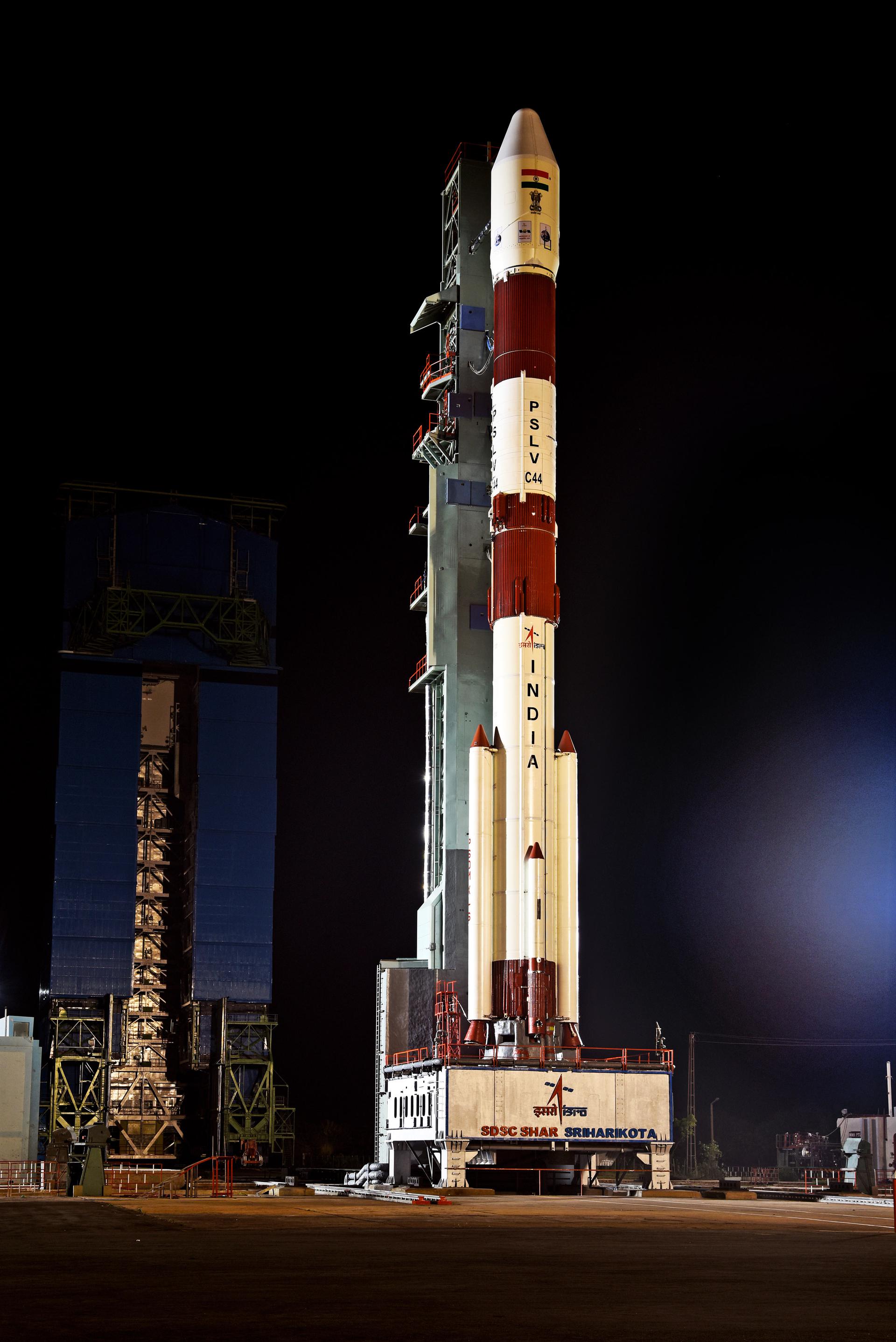
Launch Provider: Indian Space Research Organization – Government
Launch Date: January 10, 2026
Launch Time: 4:15 AM UTC
Vehicle: PSLV-DL
Brief: Small Earth observation satellite from NewSpace India Limited (NSIL) for an “Indian strategic user”, details TBD.
This launch will also carry 18 other ride-share payloads.
Starlink Group 6-97
Launch Provider: SpaceX – Commercial
Launch Date: January 10, 2026
Launch Time: 6:34 PM UTC
Vehicle: Falcon 9
Brief: A batch of 29 satellites for the Starlink mega-constellation – SpaceX’s project for space-based Internet communication system.
