
The Daily Broadcast: Launches, Setbacks, and Sky Maps: A Busy Week in Orbit

China Marks 90th Launch of 2025 with Weather Satellite and Megaconstellation Expansion
China has officially hit 90 orbital launches in 2025—a record pace that underscores its accelerating space ambitions. The latest milestone came with back-to-back Long March missions from the Hainan Commercial Space Launch Site. One carried another batch of satellites for the Guowang broadband megaconstellation, China’s answer to global low-Earth orbit internet networks. The other successfully delivered the Fengyun-4C satellite into geostationary orbit (GEO). Fengyun-4C is an advanced meteorological spacecraft equipped with high-resolution imagers and atmospheric sounders, enhancing China’s weather forecasting and climate monitoring capabilities. With this launch, China maintains its position as the world’s second-most active launch nation after the United States, though its government-led model contrasts sharply with the increasingly commercialized approaches seen elsewhere. What’s notable is that nearly a third of China’s launches this year supported its own domestic constellations, signaling a strategic shift toward self-reliance in space infrastructure.
H3 Rocket Suffers Another Setback During Japanese Military Satellite Launch
Japan’s space ambitions hit turbulence this week when its flagship H3 rocket failed during an attempted launch of a geolocation satellite. The Japan Aerospace Exploration Agency (JAXA) reported that the second-stage engine shut down prematurely after liftoff from the Tanegashima Space Center on December 22, 2025. The rocket never reached orbit, and the payload—intended to support Japan’s new defense-oriented satellite constellation—was lost. This marks the second major failure for the H3 program, following a high-profile abort in 2023. Despite successful test flights in between, the H3 remains a work in progress for JAXA and Mitsubishi Heavy Industries, its prime contractor. The setback is particularly significant given Japan’s growing emphasis on space-based surveillance amid regional security concerns. Interestingly, Japan is also turning to commercial providers like Synspective—a Tokyo-based SAR satellite startup—to supplement its military imaging needs, indicating a pragmatic pivot even as national launch capabilities mature. For now, JAXA says it will convene an investigation panel to determine the cause, with no firm date yet for the next H3 attempt.
SPHEREx Unveils First Full-Sky Infrared Map, Opening New Windows on the Cosmos
After nine months of near-infrared observations, NASA’s SPHEREx space telescope has delivered its first all-sky survey—a vibrant, data-rich map of the entire celestial sphere. Launched in March 2025, SPHEREx is designed to scan the sky in 102 near-infrared colors, cataloging over 450 million galaxies and probing the history of cosmic inflation. The initial map, released this week, showcases both stars within our Milky Way and vast interstellar clouds of gas and dust in unprecedented detail. Unlike optical telescopes, SPHEREx sees through obscuring material, revealing hidden stellar nurseries and galactic structures. Scientists are particularly excited about its potential to trace the distribution of ices in star-forming regions—clues to how water and organic molecules become incorporated into planetary systems. Canadian astronomers, though not leading the mission, are part of international teams analyzing SPHEREx data through collaborations with NASA and the Canadian Space Agency’s data archive initiatives. The mission’s full dataset, expected by 2027, could reshape our understanding of galaxy evolution and the origins of life-friendly chemistry in the universe—proving that sometimes, the best way to explore the cosmos is by seeing it in a whole new light.
Citations
- “China hits 90 launches as Guowang deployment continues, Fengyun-4C heads to GEO” – https://spacenews.com/china-hits-90-launches-as-guowang-deployment-continues-fengyun-4c-heads-to-geo/
- “Japan’s flagship H3 rocket fails to launch satellite” – https://www.spacedaily.com/reports/Japans_flagship_H3_rocket_fails_to_launch_satellite_999.html
- “SPHEREx produces first all-sky map, highlights entire universe in infrared light” – https://www.nasaspaceflight.com/2025/12/spherex-first-map/
Upcoming Launches
Unknown Payload
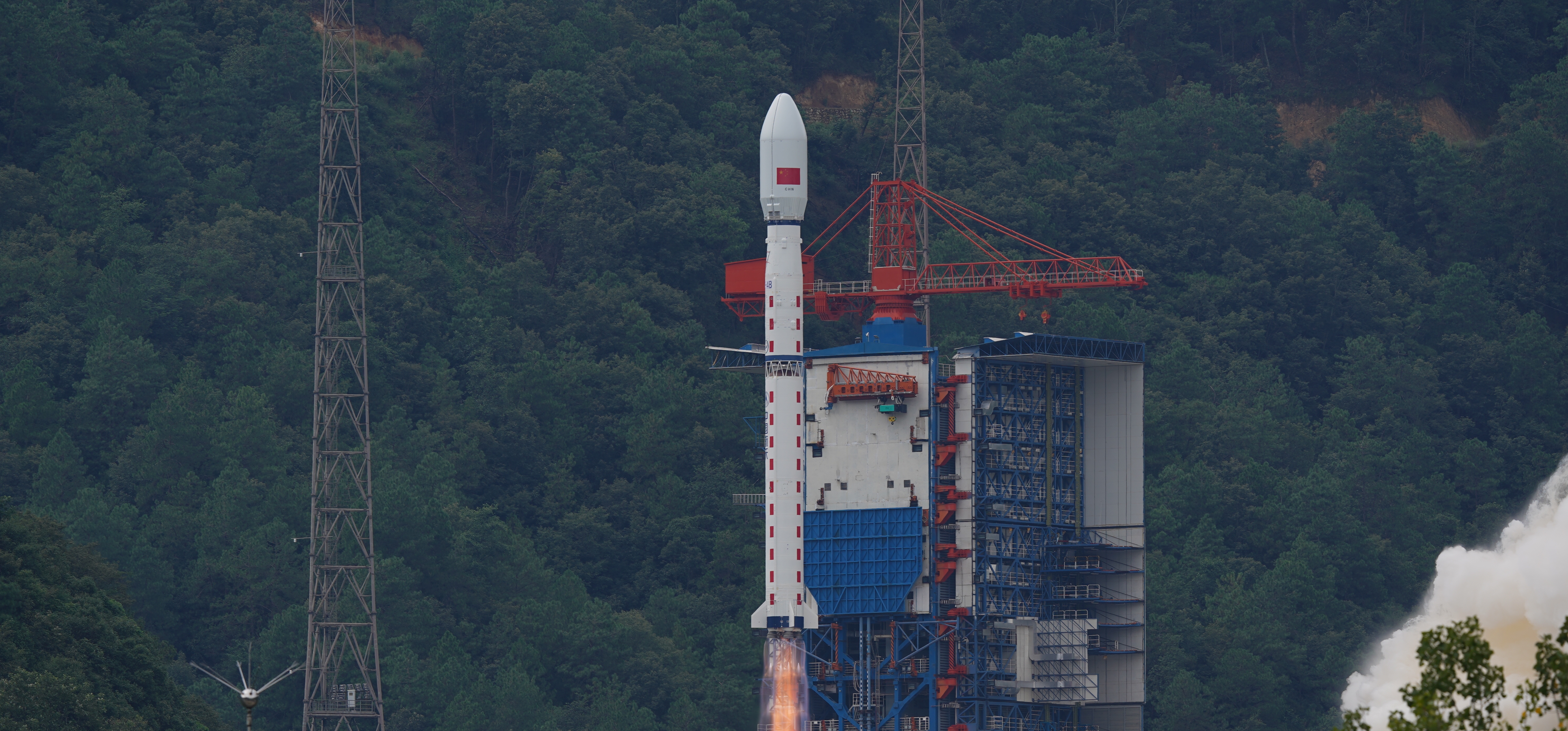
Launch Provider: China Aerospace Science and Technology Corporation – Government
Launch Date: December 30, 2025
Launch Time: 4:10 AM UTC
Vehicle: Long March 4B
Brief: Details TBD.
Unknown Payload
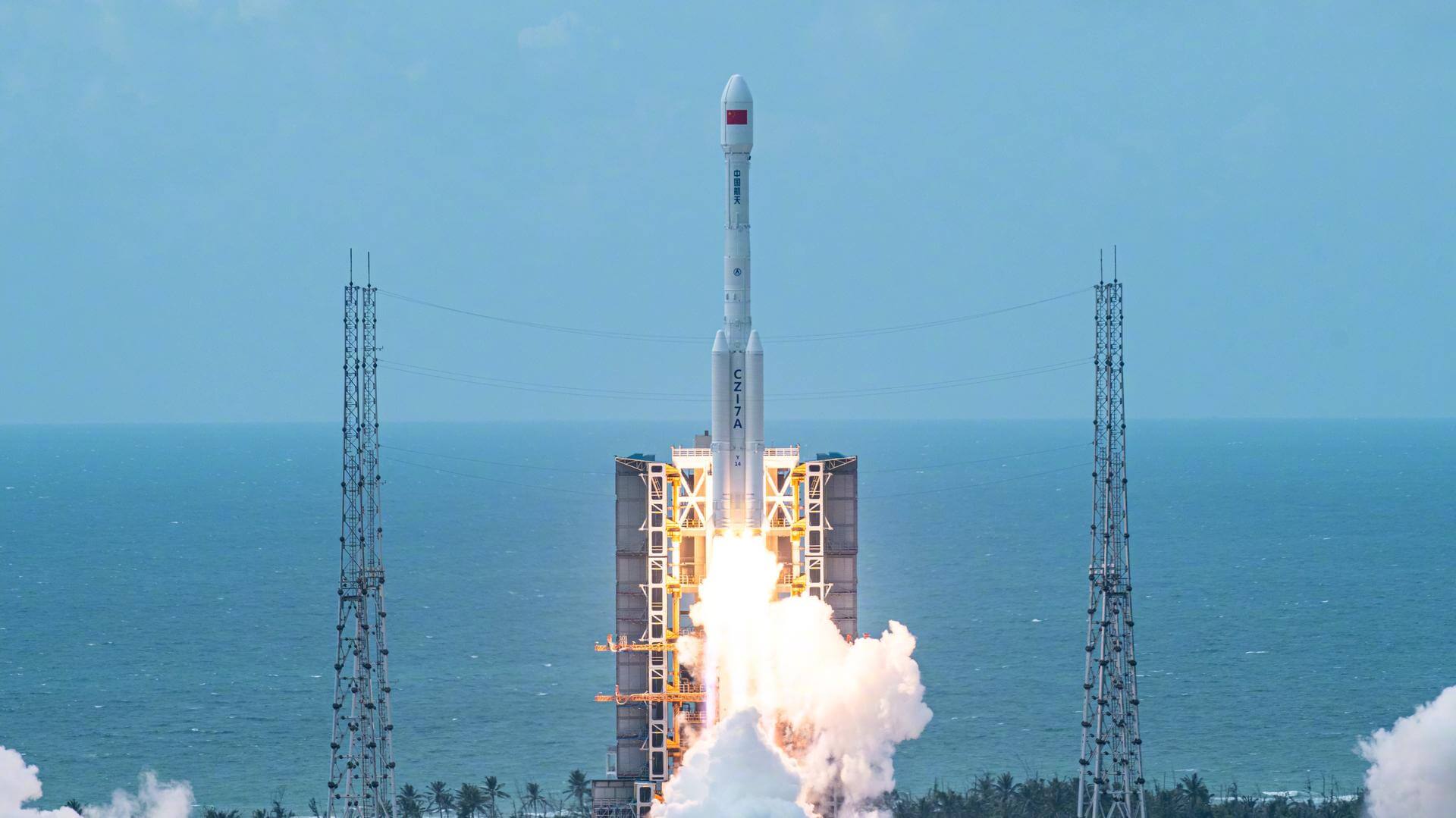
Launch Provider: China Aerospace Science and Technology Corporation – Government
Launch Date: December 30, 2025
Launch Time: 10:40 PM UTC
Vehicle: Long March 7A
Brief: Details TBD.
CSG-3
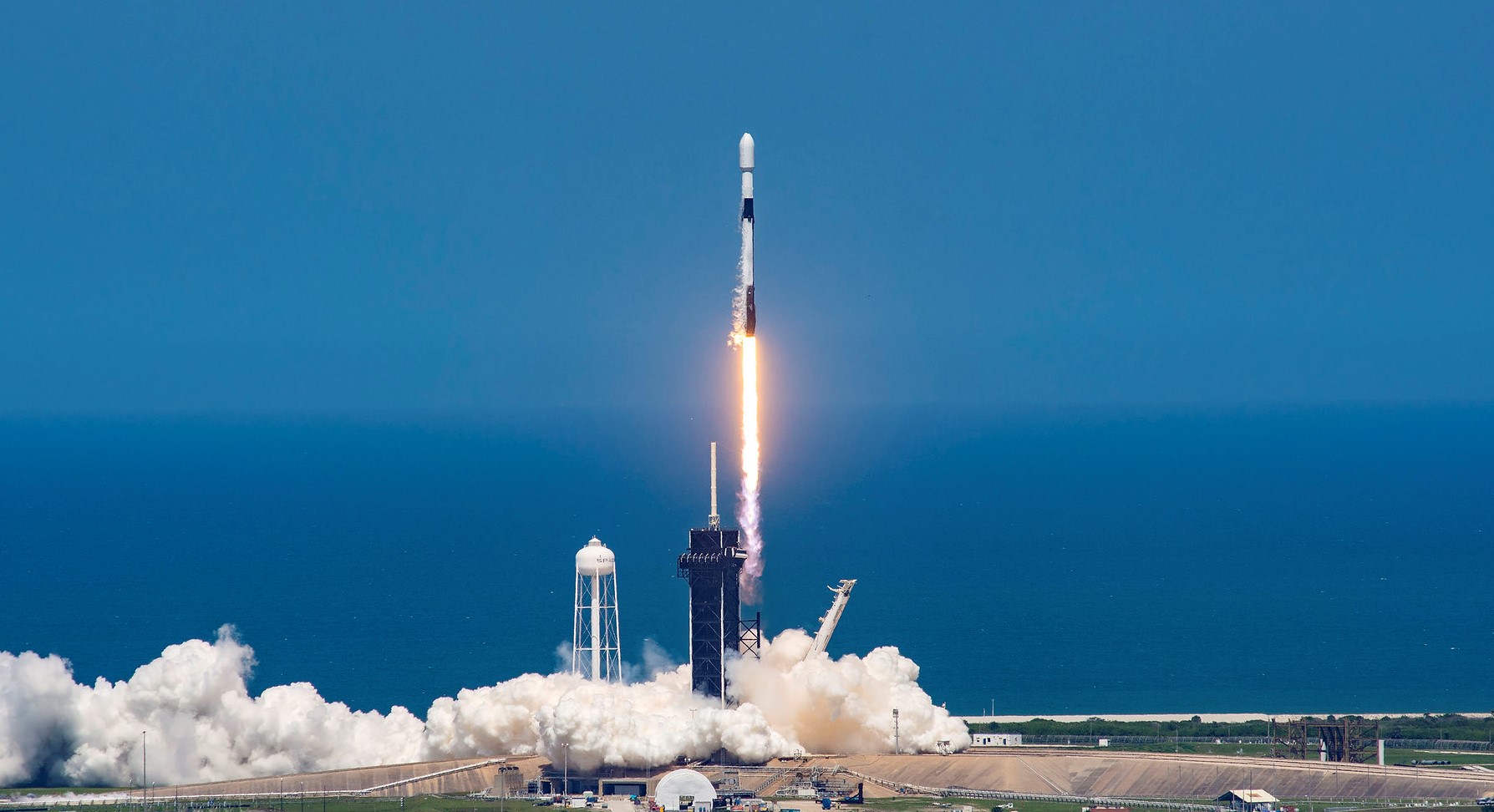
Launch Provider: SpaceX – Commercial
Launch Date: December 31, 2025
Launch Time: 2:09 AM UTC
Vehicle: Falcon 9
Brief: CSG-3 is an Earth observation satellite for the Italian Space Agency, part of a reconnaissance constellation using synthetic aperture radars operating in the X-band.
Starlink Group 6-88
Launch Provider: SpaceX – Commercial
Launch Date: January 3, 2026
Launch Time: 5:00 AM UTC
Vehicle: Falcon 9
Brief: A batch of 29 satellites for the Starlink mega-constellation – SpaceX’s project for space-based Internet communication system.
Pandora / Twilight rideshare mission
Launch Provider: SpaceX – Commercial
Launch Date: January 5, 2026
Launch Time: 12:00 AM UTC
Vehicle: Falcon 9
Brief: The Pandora small satellite was selected in 2021 as an inaugural mission in NASA’s Astrophysics Pioneers Program. It includes a 0.45-meter telescope that will improve our understanding of exoplanet atmospheres by disentangling exoplanet signals from their host stars, as well as studying host star variability with long-duration observations of 20 unique planets through visible-light photometry and near-infrared spectroscopy.
Also launching on this launch are ride-share payloads under the “Falcon 9 Twilight mission”, including satellites from Spire Global and Kepler Communications.
